The Transformative Power of Kindergarten Learning Toys for Toddlers: A Comprehensive Guide to Early Development
Title: The Transformative Power of Kindergarten Learning Toys for Toddlers: A Comprehensive Guide to Early Development
The early years of a child’s life—often defined as the period from birth to age five—represent a critical window for cognitive, social, emotional, and physical development. During this time, the brain forms neural connections at an astonishing rate, laying the foundation for all future learning. Among the most effective tools for harnessing this developmental potential are kindergarten learning toys for toddlers. These are not mere playthings; they are carefully designed instruments that blend fun with education, turning everyday play into meaningful learning experiences. In kindergarten settings and at home alike, the right toys can help toddlers master essential <a href="https://www.playlearningguide.com/category/skills/”>skills such as problem-solving, language acquisition, fine motor coordination, and social interaction. This article explores the multifaceted role of these toys, examines the most beneficial types, offers guidance on selecting age-appropriate options, and highlights the scientific principles that make them so effective. By understanding the profound impact of learning toys, parents and educators can create enriching environments that nurture curious, confident, and capable young learners.
Why Kindergarten Learning Toys Matter for Toddlers
Toddlers are naturally driven to explore, touch, and manipulate their surroundings. This innate curiosity is the engine of early learning. Kindergarten learning toys channel that curiosity into structured activities that promote specific developmental milestones. Unlike passive entertainment such as screen-based media, these toys require active engagement. When a toddler stacks blocks, she is not just building a tower; she is developing spatial awareness, hand-eye coordination, and an understanding of cause and effect. When she fits a shape into a corresponding hole, she is practicing problem-solving and pattern recognition. The importance of these toys extends beyond academic preparation. They also foster essential life skills: patience, perseverance, creativity, and the ability to focus. Moreover, play-based learning aligns with how the toddler brain naturally absorbs information—through repetition, sensory feedback, and joyful discovery. Studies in early childhood education consistently show that children who engage with high-quality learning toys in a supportive environment demonstrate stronger pre-literacy and pre-math skills, better emotional regulation, and enhanced social competence when they enter formal schooling.
Key Categories of Kindergarten Learning Toys for Toddlers
To maximize developmental benefits, it is helpful to understand the main categories of learning toys available for toddlers. Each category targets specific areas of growth.
1. Sensory and Fine Motor Toys
Sensory toys stimulate a toddler’s five senses while refining small muscle movements. Examples include play dough, sand tables, water play sets, textured balls, and lacing beads. These toys encourage exploration of different materials, temperatures, and textures, which builds neural pathways. Fine motor toys such as pegboards, threading activities, and simple puzzles also strengthen the finger and hand muscles necessary for writing later on. The repetitive motions involved in grasping, pinching, and manipulating objects improve dexterity and coordination.
2. Building and Construction Toys
Blocks of all kinds—wooden unit blocks, magnetic tiles, interlocking plastic bricks—are timeless kindergarten staples. They teach spatial reasoning, geometry, balance, and gravity. When toddlers build a structure and it falls, they learn about stability and cause and effect. Collaborative building with peers or adults also introduces concepts of sharing, negotiation, and teamwork. Construction toys are open-ended, meaning there is no single correct way to play, which encourages creativity and divergent thinking.
3. Pretend Play and Role-Playing Toys
Dramatic play is a cornerstone of early childhood development. Toy kitchens, doctor kits, tool sets, dolls, and action figures allow toddlers to imitate real-world scenarios. Through pretend play, children practice language by narrating their actions, develop empathy by taking on others’ roles, and learn social rules like taking turns and following scripts. These toys also help toddlers process their own experiences and emotions—for example, a child who has visited the doctor may use a toy stethoscope to understand that visit better.
4. Puzzles and Problem-Solving Toys
Puzzles range from simple wooden inset puzzles with large knobs for two-year-olds to more complex jigsaw puzzles for older toddlers. They teach logical thinking, shape recognition, and visual perception. Matching games, memory cards, and sorting activities (by color, size, or shape) fall into this category as well. These toys challenge toddlers to concentrate, compare, and categorize, all of which are foundational math and science skills.
5. Language and Literacy Toys
Alphabet puzzles, letter magnets, picture books, and storytelling puppets introduce toddlers to the world of language. Interactive toys that sing the ABCs or name objects when pressed can be effective, though they should be used in moderation alongside human interaction. The best language toys encourage conversation—for instance, a toy telephone or a set of animal figurines that a parent can use to ask questions: “What does the cow say?” This builds vocabulary, listening comprehension, and early phonics awareness.
6. Music and Movement Toys
Simple instruments like tambourines, maracas, xylophones, and drums help toddlers develop a sense of rhythm, auditory discrimination, and gross motor coordination. Dancing to music or following a musical toy that prompts actions (like “shake your hands!”) also supports body awareness and large muscle development. Music activities have been linked to improved memory, language processing, and even mathematical ability.
How to Choose the Best Kindergarten Learning Toys for Your Toddler
With an overwhelming number of toys on the market, selecting the right ones can be daunting. Yet the most effective toys are often the simplest. Here are research-backed criteria to guide your choices.
Age Appropriateness and Safety
Always check the manufacturer’s age recommendations. Toys for toddlers should not contain small parts that pose choking hazards. Edges should be smooth, and materials non-toxic. For children under three, avoid toys with long strings or cords that could become tangled. Beyond safety, the toy must match the child’s developmental level. A toy that is too advanced will frustrate; one that is too simple will bore. Look for toys that offer a slight challenge—something the child can do with a little effort or guidance.
Open-Ended vs. Closed-Ended Play
Open-ended toys, such as blocks, art supplies, and play dough, have no fixed outcome. They allow a child to use imagination and creativity in endless ways. Closed-ended toys, like a shape sorter or a puzzle, have a single correct solution. Both types are valuable. Closed-ended toys teach mastery and logical sequencing, while open-ended toys foster innovation and adaptability. A balanced toy collection includes both.
Encouragement of Active Engagement
The best learning toys are those that require the toddler to actively do something—push, pull, stack, sort, pretend. Avoid battery-operated toys that do all the work. Toys that light up and sing automatically may capture attention briefly but often lead to passive consumption. Instead, choose toys that respond to the child’s actions: a wooden train set that a child manually connects and pushes, or a set of nesting cups that she can stack, fill, and empty.
Promotion of Social Interaction
While solitary play is important, kindergarten learning toys should also encourage interaction with others. Toys that require two or more players, such as cooperative games, large floor puzzles, or dress-up costumes, help toddlers learn to share, wait, and communicate. Even toys that seem solitary, like a dollhouse, can become social when a parent or sibling joins in.
Cultural and Gender Inclusivity
Toys should reflect diverse people, families, and roles. Offer dolls of different ethnicities, toy foods from various cuisines, and construction sets that show both boys and girls building. Avoid rigid gender stereotypes. A toddler’s play should not be limited by societal expectations—every child deserves the chance to play with a fire truck, a baby doll, a science kit, and a tea set.
Integrating Learning Toys into Daily Routines
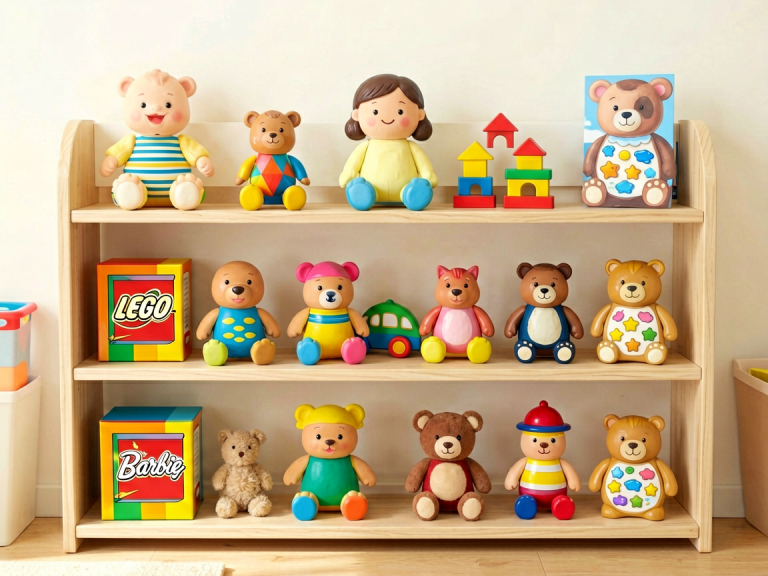
Having the right toys is only half the equation. The environment and the adult’s role are crucial. In a kindergarten or home setting, toys should be organized at the child’s eye level, on low shelves or in baskets, so toddlers can independently choose what to play with. Rotating toys every few weeks keeps the collection fresh and prevents overwhelm. Equally important is the adult’s participation. A parent or teacher who sits on the floor, follows the child’s lead, and asks open-ended questions (“What happens if we put the big block on top?” “How can we make this tower taller?”) dramatically boosts the learning value. This type of scaffolding—where the adult provides just enough support for the child to succeed—helps toddlers stretch their abilities without feeling discouraged.
In addition, learning toys can be woven into daily activities. For example, during snack time, a toddler can count apple slices or sort them by color—turning an ordinary moment into a math lesson. Bath time can incorporate measuring cups and waterproof toys that teach volume and floating. The key is to view every interaction as an opportunity for discovery.
The Science Behind Play: Why These Toys Work
Neuroscience provides compelling support for the use of kindergarten learning toys. During the toddler years, the brain undergoes a process called synaptic pruning: connections that are used frequently are strengthened, while those that are neglected are eliminated. Play that engages multiple senses—touching a rough wooden block, seeing its color, hearing the sound it makes when dropped—creates rich, multi-sensory neural networks. Furthermore, play stimulates the release of brain-derived neurotrophic factor (BDNF), a protein that supports the growth and survival of neurons. When a toddler laughs and feels joy while playing, the brain releases dopamine, which enhances memory and motivation. This is why children often remember things they learned through play far better than information delivered through direct instruction. The combination of novelty, repetition, and emotional engagement makes play the most efficient learning mechanism for the developing brain.
Conclusion
Kindergarten learning toys for toddlers are far more than distractions or pacifiers. They are the building blocks of a child’s future intellect, character, and well-being. By providing open-ended opportunities for exploration, problem-solving, and social interaction, these toys transform everyday moments into profound lessons that last a lifetime. Whether it is a simple set of wooden blocks, a colorful puzzle, or a pretend kitchen, each toy holds the potential to spark curiosity and ignite a love for learning. As parents, educators, and caregivers, our role is to choose wisely, play alongside, and trust in the process. In doing so, we give toddlers the greatest gift: a childhood filled with meaningful play that prepares them not just for kindergarten, but for the wonderful adventure of life itself.