Building the Future: The Ultimate Guide to the Best STEM Toys for Kids
Introduction: Why STEM Toys Matter More Than Ever
In an era where technology evolves at lightning speed and scientific breakthroughs reshape our daily lives, the importance of equipping children with strong foundations in science, technology, engineering, and mathematics (STEM) cannot be overstated. Yet for many parents and educators, the challenge lies not in recognizing this need but in finding engaging, age-appropriate tools that transform abstract concepts into hands-on play. Enter STEM toys—the perfect bridge between fun and learning. Unlike passive entertainment, well-designed STEM toys encourage curiosity, problem-solving, critical thinking, and creativity. They turn a child’s natural inclination to build, break, and rebuild into a structured journey of discovery. This article explores the best STEM toys for kids across different age groups, breaks down what makes each category effective, and offers practical advice for selecting the right toy for your child’s unique interests and developmental stage. Whether you’re a parent, a teacher, or a gift-giver, this guide will help you make informed choices that spark a lifelong love for learning.
Why STEM Toys? The Science Behind the Play
Before diving into specific recommendations, it’s worth understanding why STEM toys stand apart from traditional playthings. Research in developmental psychology shows that children learn most effectively when they are actively engaged—when they can touch, manipulate, and experiment. STEM toys capitalize on this principle by integrating core STEM concepts into play scenarios. For example, a simple building block set teaches balance, symmetry, and spatial reasoning. A robotics kit introduces coding logic, sensors, and mechanical design. The best STEM toys do not simply provide instructions; they invite open-ended exploration, allowing children to ask “what if” and then test their hypotheses. This process mirrors the scientific method itself—observe, question, hypothesize, experiment, and conclude. Moreover, STEM toys foster resilience. When a bridge collapses or a robot fails to move, a child is prompted to troubleshoot, revise, and try again. That iterative process builds grit and a growth mindset, qualities far more valuable than any single fact learned.
Best STEM Toys by Age Group: Tailoring Complexity to Development
Not all STEM toys are created equal—what fascinates a five-year-old may frustrate a twelve-year-old, and vice versa. Below, I break down top recommendations into three broad age categories: early childhood (ages 3–6), middle childhood (ages 7–10), and pre-teens (ages 11–14). Each section highlights toys that match cognitive abilities and motor skills while still challenging young minds.
Early Childhood (Ages 3–6): Laying the Foundation
At this stage, children are naturally curious about how things work, but their attention spans are short and fine motor skills are still developing. The best STEM toys for this group emphasize sensory exploration, simple cause-and-effect, and building basic vocabulary around numbers, shapes, and patterns.
1. Magnetic Building Tiles
Products like Magna-Tiles or Picasso Tiles are perennial favorites. These translucent, magnetic squares, triangles, and rectangles click together to form 2D and 3D structures. Children as young as three can stack them into towers, castles, or simple geometric shapes. The magnetic connection provides satisfying feedback, and the lack of small parts makes them safe. As they play, kids intuitively learn about magnetism, balance, structural integrity, and symmetry. Older preschoolers can even explore fractions by combining four small squares to form a larger square.
2. Simple Coding Robots (Screen-Free)
For introducing coding concepts without screens, toys like the Fisher-Price Code ’n Learn Kinderbot or the Learning Resources Botley the Coding Robot are excellent. Botley, for instance, can be programmed using a remote control with directional arrows—no tablet required. Children sequence commands to make Botley move, turn, and even detect objects. This teaches algorithmic thinking, sequencing, and debugging in a tangible, frustration-free way. The tactile nature of pressing buttons and watching immediate results keeps young learners engaged.
3. Building Blocks and Gears
Classic wooden blocks never go out of style, but specialized sets like the Gearation or Learning Resources Gears! Gears! Gears! add mechanical elements. Kids connect colorful plastic gears of different sizes, insert pegs, and then turn a crank to see the entire mechanism spin. They learn about gear ratios, cause and effect, and chain reactions. Because the gears only fit together in certain ways, children also develop spatial reasoning and problem-solving skills.
4. Water and Sand Play Kits
Though often overlooked in STEM discussions, water tables and kinetic sand sets introduce concepts of volume, displacement, flow, and texture. Adding measuring cups, funnels, and small boats transforms bath time or outdoor play into a physics lab. For a structured kit, consider the Learning Resources Primary Science Lab Set, which includes test tubes, beakers, and a microscope—all with large, easy-to-handle pieces.
Middle Childhood (Ages 7–10): Building Proficiency and Confidence
By ages 7–10, children can handle more complex instructions, follow multi-step procedures, and sustain attention for longer projects. They also begin to grasp abstract ideas like electrical circuits, coding syntax, and mechanical advantage. The best toys for this group blend guided projects with open-ended creativity.
1. LEGO Technic or LEGO Boost Kits
LEGO has long been a gold standard for STEM play, but the Technic and Boost lines take it further. Technic sets feature gears, axles, beams, and powered functions—kids build working cranes, cars with steering, or robotic arms. The instructions are detailed, teaching engineering principles like gear reduction and torque. For a more interactive experience, LEGO Boost (e.g., the Boost Creative Toolbox) combines LEGO bricks with a motor, a color sensor, and an app. Children build models like a robot, a guitar, or a cat, then program behaviors using a simple drag-and-drop coding environment. This bridges physical construction and digital logic seamlessly.
2. Circuit Kits: Snap Circuits
Snap Circuits by Elenco is arguably the most popular electronics kit for this age. Color-coded plastic components (switches, motors, lights, resistors, capacitors) snap onto a grid base with no soldering or wiring required. Children follow project manuals to build alarms, radios, doorbells, and even FM transmitters. Along the way, they learn about parallel and series circuits, voltage, and conductivity. The modular design means mistakes are easy to fix—just unsnap and rearrange. Many kits include over 100 projects, providing months of engagement.
3. Robotics Kits: Sphero BOLT or Wonder Workshop Dash
Robotics brings together coding, engineering, and sometimes art. Sphero BOLT is a durable, waterproof robotic ball that glows and communicates via Bluetooth. Using the Sphero Edu app, kids program it with block-based code (similar to Scratch) or JavaScript. They can make it roll in patterns, change colors based on sensor readings, or navigate through mazes. Dash by Wonder Workshop is a charming blue robot that responds to voice commands and can be programmed via drag-and-drop coding. Both robots teach loops, conditionals, variables, and event-driven programming—all while feeling like play.
4. Chemistry and Biology Kits
For children with a passion for experiments, the Thames & Kosmos Science Kits are top-tier. Their “Chemistry C1000” or “Biology” sets come with safe chemicals, equipment, and a full-color manual. Kids perform reactions, create crystals, extract DNA from a strawberry, or build a model of a cell. These kits emphasize safety and scientific method: each experiment requires reading instructions, making observations, and recording results. The sense of accomplishment when a test tube changes color or a crystal forms is immense.
Pre-Teens (Ages 11–14): Advanced Challenges and Real-World Applications
As children enter middle school, they crave autonomy, complexity, and relevance. They are ready for projects that mirror real engineering and computer science. The best STEM toys for this age group often involve coding, advanced mechanics, or data analysis.
1. Arduino Starter Kits or Raspberry Pi
Arduino and Raspberry Pi are not toys in the traditional sense—they are open-source hardware platforms used by professional engineers and hobbyists. However, beginner-friendly starter kits (like the “Elegoo Mega 2560 Project Kit” or “Raspberry Pi 4 Desktop Kit”) include tutorials that guide kids through building a temperature sensor, a motion-activated alarm, or a simple weather station. They learn about microcontrollers, programming in C++ or Python, and electronic components like breadboards, resistors, and LED displays. This is a gateway to a lifelong skill set.
2. Advanced Robotics: VEX IQ or LEGO Mindstorms
VEX IQ is a plastic, snap-together robotics system designed for competition. Kids build robots that can lift, push, and navigate obstacles, then program them using a graphical interface. The kits are highly modular, encouraging iterative design. Similarly, LEGO Mindstorms Robot Inventor Kit (51515) includes a programmable brick, motors, sensors, and 949 LEGO Technic pieces. The companion app uses Scratch-based or Python coding. Children can build a robot that follows lines, plays drums, or even sorts objects by color. The challenge lies in fine-tuning code and mechanical adjustments, teaching precision and patience.
3. 3D Printing Pens and Modeling Kits
While not strictly a toy, a 3D printing pen (like the MYNT3D Professional) introduces additive manufacturing. Kids draw in three dimensions, creating bridges, sculptures, or working models. It requires spatial thinking and manual dexterity. Paired with a simple modeling software like Tinkercad, they can design original parts on a computer and then “draw” them. This merges digital design with physical creation—a core modern engineering workflow.
4. Math and Logic Puzzles
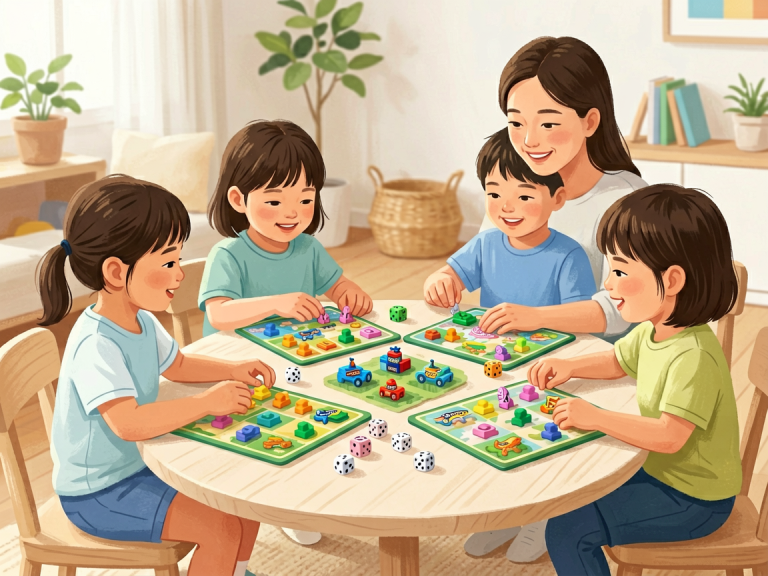
Don’t overlook classic puzzles. The “ThinkFun Gravity Maze” is a marble-run logic game where players place towers to guide a marble to a target. It teaches spatial planning and cause-and-effect. For older kids, the “Codebreaker Puzzle” or “Rush Hour” expand logical reasoning. Board games like “Prime Climb” make arithmetic fun, while “Sushi Go” introduces probability and strategy. These are excellent for family game nights and reinforce computational thinking without screens.
How to Choose the Best STEM Toy for Your Child
With so many options, selection can feel daunting. Here are five criteria to consider:
- Age and Ability Alignment – Always check the manufacturer’s age recommendation, but also consider your child’s individual maturity and fine motor skills. A bright 8-year-old might be ready for a 10+ robotics kit if they have prior experience. Conversely, a 10-year-old who struggles with frustration may benefit from a simpler snap-circuit kit before moving to advanced programming.
- Interest-Driven – A child who loves animals might prefer a biology kit or a animal-shaped robot. One who enjoys building will thrive with LEGO Technic or magnetic tiles. The goal is to meet them where their curiosity already lies.
- Open-Endedness – Look for toys that offer multiple projects or allow free creation. Kits with a single outcome can be completed quickly and discarded. Sets that encourage improvisation (like building blocks or generic robotics platforms) provide far more long-term value.
- Screen vs. Screen-Free Balance – Not all STEM learning needs a tablet. Young children especially benefit from tactile, analog play. For older kids, screen-based coding toys are powerful, but be mindful of total screen time. Many of the best toys (like Snap Circuits or K’Nex) require no app at all.
- Scalability – Some toys have expansion packs or compatible kits that extend the challenge. LEGO, VEX, and Arduino all have thriving ecosystems. Investing in a platform rather than a one-off toy can grow with your child for years.
Conclusion: Beyond the Toy—Fostering a STEM Mindset
Ultimately, the best STEM toys are not just objects; they are catalysts for a way of thinking. They invite children to ask questions, make mistakes, and persist. They replace the fear of failure with the thrill of discovery. When a child spends an hour debugging a robot or reconfiguring a bridge, they are practicing the very skills that will define the innovators of tomorrow: adaptability, logical reasoning, and creative problem-solving. As you browse shelves or scroll through online stores, remember that the most powerful toy is the one that ignites a spark. A single kit can lead to a science fair project, a summer camp passion, or even a career. So whether you choose a simple set of magnetic tiles or a full-fledged Arduino kit, you are not just buying a gift—you are planting a seed for the future. And that is the best investment any of us can make.
*(Word count: approximately 1,150 words)*