Unlocking Potential: The Power of Early Learning Activities for Toddlers
Introduction
The first three years of a child’s life are a period of extraordinary brain development. During this window, neural connections are formed at a breathtaking rate—up to one million every second. For parents and caregivers, this presents both an opportunity and a responsibility. Early learning activities for toddlers are not about forcing academic skills onto a two-year-old; rather, they are about nurturing curiosity, building foundational cognitive and motor abilities, and strengthening the bond between child and adult. This article explores why these activities matter, what kinds of activities are most effective, and how to integrate them seamlessly into daily routines. From sensory play to language-rich interactions, every moment can be a learning moment.
Why Early Learning Activities Matter
Toddlers are natural explorers. Their drive to touch, taste, climb, and ask “why” is the engine of development. Well-designed early learning activities capitalize on this innate curiosity. Research in developmental psychology and neuroscience shows that stimulating environments during the toddler years positively influence language acquisition, problem-solving skills, emotional regulation, and social competence.
Critically, early learning is not about “teaching” in the traditional sense. A toddler does not need flashcards or worksheets. Instead, they need responsive interactions—an adult who notices their interest in a spinning wheel and elaborates by saying, “Yes, the red wheel goes round and round. Let’s watch it spin again.” Such exchanges build vocabulary and causal reasoning. Moreover, early learning activities provide structure and predictability, which help toddlers feel safe and confident. When a child successfully completes a simple puzzle or stacks three blocks, they experience a sense of mastery that fuels their willingness to try harder tasks.
Types of Effective Early Learning Activities
The most powerful activities are those that engage multiple senses and invite active participation. Below are several categories, each with specific examples that can be adapted to a toddler’s age and interests.
*Sensory Play*
Sensory bins filled with rice, beans, sand, or water allow toddlers to explore textures, practice scooping and pouring, and develop fine motor skills. Adding scoops, funnels, and small toys encourages problem-solving: “How do I get the ball out of the water?” Sensory play also supports language development as adults describe sensations—“soft, wet, cold, rough.”
*Language and Literacy Activities*
Reading aloud remains the gold standard. Board books with bright pictures, rhyming text, and tactile elements engage toddlers. But language activities extend beyond books. Simple finger plays like “Itsy Bitsy Spider,” singing nursery rhymes, and naming objects during a walk (“Look, a big red truck!”) all build phonological awareness and vocabulary. For older toddlers, picture cards with common objects can be used for matching games or “I spy” style prompts.
*Gross Motor Play*
Toddlers need opportunities to run, jump, climb, and balance. Obstacle courses made of pillows, tunnels, and low stepping stones develop coordination and body awareness. Dance parties with music encourage rhythm and self-expression. Even simple activities like rolling a ball back and forth teach turn-taking and spatial awareness.
*Fine Motor and Manipulative Play*
Puzzles with large knobs, shape sorters, stacking rings, and threading beads all strengthen the small muscles in hands and fingers. These skills are precursors to writing. Play-dough is another excellent tool: toddlers can pinch, roll, and flatten it, while also engaging in pretend play (making “cookies” for a stuffed animal).
*Pretend and Imaginative Play*
Role-playing with dolls, play kitchens, and simple costumes allows toddlers to practice real-world scenarios. Pretend play develops executive function—the ability to plan, remember rules, and inhibit impulses. It also fosters empathy as children take on the roles of caregiver, doctor, or shopkeeper. A cardboard box can become a spaceship, a cave, or a car; the only limit is imagination.
*Nature and Outdoor Exploration*
Outdoor time offers unmatched sensory variety. Collecting leaves, watching ants, splashing in puddles, and digging in dirt all provide authentic learning. Adults can scaffold by asking open-ended questions: “What do you think that bug is doing?” “How many yellow flowers can we find?” Nature also teaches cause and effect (kicking a pebble makes it roll) and encourages physical activity.
Practical Tips for Parents and Caregivers
Integrating early learning activities into daily life does not require elaborate preparation. Here are actionable strategies:
*Follow the Child’s Lead*
Observe what your toddler is naturally drawn to. If they are fascinated by the kitchen cabinets, turn that into a learning moment by providing safe plastic containers for stacking and sorting. When a child chooses the activity, engagement and learning deepen.
*Keep Sessions Short and Sweet*
Toddlers have short attention spans—typically a few minutes per activity. Instead of planning a long lesson, offer a variety of short, low-pressure experiences throughout the day. A five-minute puzzle session followed by a song is often more effective than a twenty-minute attempt to complete a worksheet.
*Use Everyday Moments*
Mealtime is a sensory experience: talk about textures and tastes, count pieces of fruit, encourage self-feeding with a spoon (messy but valuable). Bath time offers water play and vocabulary like “float,” “sink,” and “splash.” Dressing provides opportunities to name body parts and colors. Even diaper changes can become a counting game or a silly song.
*Create a Yes Space*
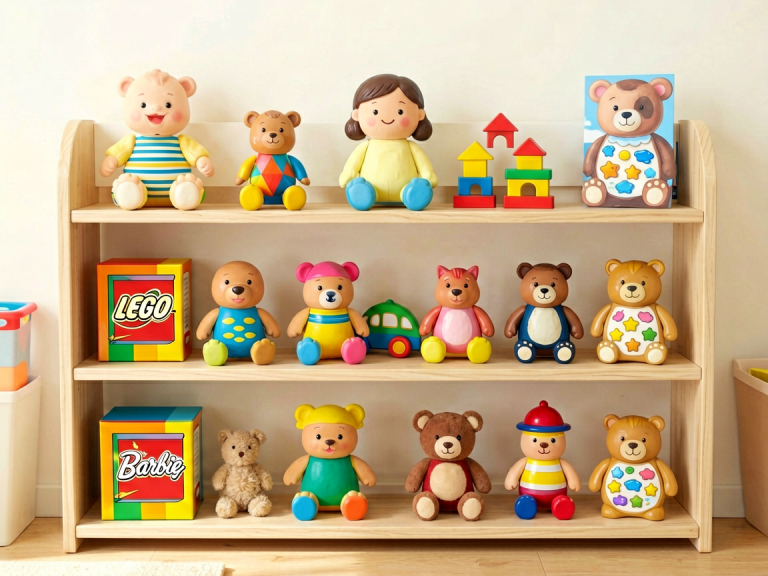
Design a safe area where the toddler can explore freely without constant “no’s.” A low shelf with a few rotated toys, a soft mat, and child-safe mirrors or sensory bottles encourages independent play. This fosters concentration and self-directed learning.
*Model and Speak Aloud*
Toddlers learn language by hearing it. Describe your actions: “I’m pouring the milk into your cup. Now I’m stirring it.” This provides a running commentary that builds vocabulary and comprehension. Also, model problem-solving: “Hmm, this puzzle piece doesn’t fit. Let’s turn it around. There! It fits now.”
*Limit Screen Time*
The American Academy of Pediatrics recommends no screen time for children under 18 months (except video chatting) and very limited, high-quality programming for toddlers 18–24 months. Real-world, interactive experiences are far superior for brain development. If screens are used, co-view and talk about what you see.
The Role of Play in Development
It is worth reiterating that for toddlers, play is the primary vehicle of learning. When a child stacks blocks and the tower falls, they are learning about gravity, balance, and cause and effect. When they pretend to feed a doll, they practice empathy and sequence. When they chase a bubble, they refine visual tracking and motor planning.
Structured activities have a place, but unstructured free play is equally vital. Too much adult direction can stifle creativity. A balanced approach allows for both guided activities (e.g., a parent setting up a sensory bin) and child-initiated exploration (e.g., the child deciding to use the same rice to “cook” in a toy pot). The best early learning environments are those where the adult is a responsive partner—offering support and stimulation without taking over.
Choosing Age-Appropriate Materials
Not every toy or activity marketed to toddlers is beneficial. Look for materials that are open-ended: blocks that can become anything, art supplies that allow free expression (crayons, washable paint, paper), and simple manipulatives. Avoid toys with flashing lights and loud sounds that do the work for the child; such toys tend to overstimulate without encouraging active problem-solving. A simple cardboard tube, a set of wooden spoons, and a collection of fabric scraps often provide richer learning than a battery-powered gadget.
Conclusion
Early learning activities for toddlers are not about rushing development or achieving milestones ahead of schedule. They are about honoring the beautiful, messy, joyful process of growing. Every time we sing a silly song, point to a bird outside the window, or help a toddler fit a shape into a sorter, we are laying the neural groundwork for a lifetime of curiosity and learning. The key ingredients are attention, patience, and a willingness to see the world through a toddler’s eyes. In that space, every activity—no matter how small—becomes a foundation for the future. As parents and caregivers, we are not teachers in the traditional sense. We are gardeners, providing the soil, water, and sunlight that allow these young minds to flourish at their own pace. And that, perhaps, is the most important lesson of all.