A Parent’s Guide to Safe Toy Shopping: Strategies for Choosing Playthings That Protect and Inspire
—
Introduction: Why Safe Toy Shopping Matters More Than Ever
Every year, millions of toys are sold around the world, bringing joy, creativity, and learning into children’s lives. Yet behind the bright packaging and cheerful advertisements lie hidden risks: choking hazards, toxic materials, sharp edges, and even long-term health concerns from exposure to harmful chemicals. For parents, the responsibility of selecting toys that are both fun and safe can feel overwhelming. The good news is that safe toy shopping is not a matter of luck—it is a skill that can be learned and practiced. By understanding key safety principles, recognizing reliable certifications, and adopting a mindful approach to purchasing, parents can create a play environment that nurtures development while minimizing preventable dangers. This article provides a comprehensive framework for how parents can use safe toy shopping to protect their children and make informed, confident decisions.
—
1. Understanding Toy Safety Fundamentals
1.1 Age Appropriateness: The First Line of Defense
The single most important rule in safe toy shopping is to match the toy to the child’s developmental stage. Age labels on toy packaging are not arbitrary marketing suggestions—they are based on safety standards that consider physical, cognitive, and behavioral abilities. For example, a toy designed for a three-year-old may contain small parts that pose a choking hazard to a baby who still explores with their mouth. Parents should always read the manufacturer’s age recommendation carefully and resist the temptation to buy “advanced” toys too early. Additionally, consider the child’s individual maturity: a two-year-old who still puts everything in their mouth should not receive toys with detachable components, even if the box says “ages 2+.”
1.2 Material Safety: What Toys Are Made Of
Modern toys are made from a wide variety of materials, including plastic, wood, fabric, metal, and electronic components. Each material carries its own safety considerations. Plastics should be free of phthalates, lead, and bisphenol A (BPA), which are endocrine disruptors linked to developmental problems. Look for labels such as “BPA-free,” “phthalate-free,” or “non-toxic.” Wooden toys should be solid, splinter-free, and finished with water-based, lead-free paint or varnish. Fabric toys, such as stuffed animals, should be machine washable and have securely sewn eyes and noses to prevent detachment. Electronic toys must meet safety standards for battery compartments (e.g., secured with screws to prevent access) and low voltage to avoid electrical hazards.
1.3 Choking, Sharp Edges, and Strangulation Risks
Small parts are the leading cause of toy-related injuries in young children. A simple test: if a toy or any removable part fits completely inside a standard toilet paper roll (approximately 1.25 inches in diameter), it is a choking hazard for children under three. Parents should also inspect toys for sharp edges, points, or rough surfaces that could cut or scratch. String, cord, or ribbon longer than 12 inches poses a strangulation risk and should be removed or avoided. Toys with magnets—especially powerful rare-earth magnets—are extremely dangerous if swallowed; they can cause intestinal perforations or blockages. Parents should avoid any toy with loose magnets for children who cannot reliably keep objects out of their mouths.
—
2. Recognizing Trusted Safety Certifications and Standards
2.1 Global and Regional Certification Marks
Safety certifications provide an independent verification that a toy has been tested against recognized standards. In the United States, the most common mark is the ASTM F963 label, which indicates compliance with the American Society for Testing and Materials’ toy safety standard. The CPSC (Consumer Product Safety Commission) also oversees mandatory safety regulations. In Europe, look for the CE mark, which signals conformity with EU safety directives, though parents should be aware that CE marking is self-declared and not always reliable. More rigorous European certifications include the GS mark (Geprüfte Sicherheit, or “tested safety”), which involves third-party testing. In Canada, the CSA (Canadian Standards Association) mark is a good indicator. For global shoppers, the ISO 8124 standard governs toy safety internationally. Parents should also watch for the UL mark on electronic toys, which tests for fire and electrical hazards.
2.2 The Role of Third-Party Testing Organizations
Beyond government certifications, independent organizations like Intertek, SGS, and TÜV Rheinland conduct rigorous testing that goes beyond minimum requirements. Some toy brands voluntarily submit their products for additional testing and publish the results on their websites. Parents can also check for recalls by visiting the CPSC’s recall database (www.cpsc.gov/recalls) or similar national agencies. A quick search before purchase—especially for toys bought secondhand or from online marketplaces—can reveal whether a product has ever been flagged for safety issues.
2.3 Beware of Counterfeit and Unregulated Toys
Counterfeit toys are a growing concern, particularly when shopping on unregulated online platforms or from street vendors. These toys often lack any safety certification, may be made from recycled or toxic plastics, and frequently have sharp edges or loose parts. To avoid counterfeits, buy from reputable retailers, official brand stores, or directly from the manufacturer. If a deal seems too good to be true, it likely is. Parents should also be cautious of “surprise” toys inside food products or cheap novelty items at discount stores, as these are often exempt from rigorous testing.
—
3. Practical Strategies for Safe Toy Shopping
3.1 Pre-Shopping Research: Read Reviews and Recall Alerts
Before stepping into a store or clicking “add to cart,” spend five minutes researching the toy. Look for reviews from other parents who mention safety concerns, such as parts that break off easily or paint that peels. Websites like Consumer Reports and Safe Kids Worldwide provide safety ratings and recall information. Subscribe to recall alerts from the CPSC or your country’s equivalent agency. Many toy brands also maintain transparent safety pages on their websites, detailing their materials and testing processes.
3.2 In-Store Inspection: Use Your Senses
When shopping in person, parents can conduct a simple physical inspection. Open the packaging if possible (or ask for a display model). Smell the toy: a strong chemical odor may indicate volatile organic compounds (VOCs) or other toxins. Feel the surface for sharp points, rough edges, or loose components. Squeeze soft toys to ensure stuffing is evenly distributed and seams are strong. Shake the toy to see if any small parts rattle or fall off. For electronic toys, check that battery compartments are secured with a screwdriver-required screw—not just a simple tab. Also, ensure that volume controls are adjustable; toys with extremely loud sounds can damage hearing.
3.3 Online Shopping: Verify Sellers and Read Fine Print
Online marketplaces pose unique challenges. Buy only from verified sellers with high ratings and transparent return policies. Look for product descriptions that mention safety certifications, material composition, and age recommendations. Avoid listings that use generic stock photos or lack detailed information. If the toy is imported, check whether it meets local safety standards—some toys sold from international sellers may not comply with your country’s regulations. After purchase, save the receipt and product information in case you need to report a defect or initiate a recall return.
3.4 Secondhand and Hand-Me-Down Toys: Extra Caution Required
Gently used toys can be economical and eco-friendly, but they require extra scrutiny. Hand-me-downs may have been manufactured before current safety standards were enacted—for example, older toys might contain lead paint or phthalates that are now banned. They may also have missing parts, frayed strings, or weakened structures. Before passing on a toy, check its age: any toy made before the 2008 U.S. lead paint ban should be discarded or tested. Wash fabric toys thoroughly, and avoid used toys with battery compartments that are corroded or non-secure. For wooden toys, sand down any rough spots and re-seal with a non-toxic finish.
—
4. Beyond Safety: Choosing Toys That Promote Healthy Development
4.1 Open-Ended Play and Cognitive Growth
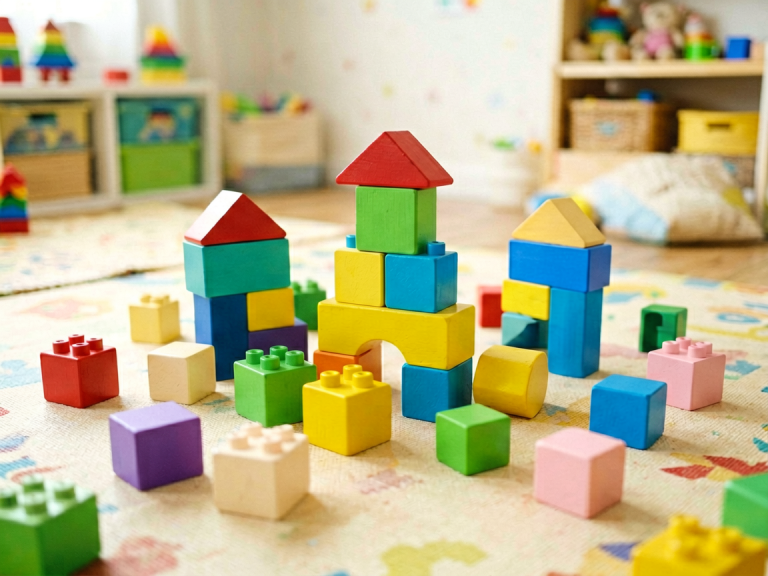
Safe toy shopping is not just about avoiding harm—it is also about selecting toys that support a child’s physical, emotional, and intellectual development. Open-ended toys, such as building blocks, art supplies, and pretend-play sets, encourage creativity and problem-solving without prescribing a single “correct” way to play. These toys are often safer because they have fewer small parts and are made of simple, durable materials. For example, a set of solid wooden blocks from a certified brand is far safer than a battery-operated plastic toy that may break or overheat.
4.2 Avoiding Over-Stimulation and Loud Noises
Many modern toys feature flashing lights, loud sounds, and rapid movements designed to capture attention. However, excessive sensory input can overstimulate young children and interfere with language development and focus. The American Academy of Pediatrics recommends choosing toys that encourage active, interactive play rather than passive entertainment. When selecting electronic toys, choose ones with adjustable volume controls, auto-shutoff features, and replaceable batteries (which should be kept out of reach). Parents can also test the noise level by holding the toy near their own ear; if it is uncomfortably loud for an adult, it is too loud for a child.
4.3 Gender-Neutral and Culturally Inclusive Toys
Safety extends to emotional well-being. Toys that reinforce harmful stereotypes or exclude certain groups can negatively impact a child’s self-esteem and social development. Look for toys that represent diverse races, abilities, and family structures. Avoid toys that promote violence or aggressive behavior, as these can normalize unsafe interactions. Instead, choose toys that teach empathy, cooperation, and respect—such as dolls with different skin tones, puzzles showing various cultures, or cooperative board games.
—
5. Building a Long-Term Safety Mindset
5.1 Regular Toy Audits and Maintenance
Safe toy shopping does not end at the checkout counter. Parents should conduct periodic toy audits: once every few months, gather all toys and inspect them for wear and tear. Discard any that are broken, have chipped paint, or have loose parts. Batteries should be removed from toys that are not in use to prevent leakage. Clean toys regularly according to manufacturer instructions—for instance, plastic toys can be washed with mild soap and water, while electronic toys should be wiped with a damp cloth. Rotate toys to keep children engaged and reduce clutter, which can also be a safety hazard (tripping, hiding small parts).
5.2 Teaching Children About Toy Safety
As children grow older, parents can involve them in the safety process. Teach a toddler to always ask an adult before putting a toy in their mouth. For preschoolers, explain that toys with small parts are “for big kids” and should be kept away from babies. School-age children can learn to inspect their own toys for damage and to put away small pieces in a designated container. Empowering children with knowledge not only keeps them safer but also builds lifelong habits of awareness.
5.3 Advocating for Safer Products
Finally, parents can use their purchasing power to drive industry change. Choose brands that prioritize safety, transparency, and sustainability. Support companies that publish their testing results and use eco-friendly, non-toxic materials. When you encounter unsafe products, report them to the CPSC or relevant agency. Write reviews that mention safety features—or the lack thereof. By voting with your wallet and your voice, you contribute to a marketplace where safe toy shopping becomes the norm, not the exception.
—
Conclusion: The Joy of Safe Play
Safe toy shopping is not about wrapping children in bubble wrap or eliminating all risks. It is about making thoughtful choices that allow children to explore, learn, and grow with confidence—while parents rest easier knowing that the toys in their home have been carefully vetted. By understanding age guidelines, materials, and certifications; by inspecting toys both before and after purchase; and by fostering a mindset of continuous awareness, parents can transform the simple act of buying a toy into a powerful investment in their child’s health and happiness. After all, the best toy is one that sparks imagination, builds skills, and—most importantly—keeps a child safe enough to enjoy it for years to come.