Play Activities for 2-Year-Olds: A Comprehensive Guide to Developmental Fun
Two‑year‑olds are at a magical crossroads of development: they are bursting with curiosity, beginning to assert their independence, yet still deeply reliant on caregivers for guidance and safety. Play is not merely a pastime for this age—it is the primary vehicle through which toddlers learn about their world, refine motor skills, explore social interactions, and build the foundation for language and cognitive thinking. The right play activities can channel a two‑year‑old’s boundless energy into meaningful growth while strengthening the bond between child and parent. This article offers a detailed, research‑backed overview of play activities tailored specifically for two‑year‑olds, organized by developmental domains, and includes practical tips for implementation.
Sensory Play: Engaging the Senses and Building Neural Connections
At age two, children are natural sensory explorers. Their brains are rapidly forming connections, and sensory play—activities that stimulate touch, sight, sound, smell, and even taste—provides rich input that supports neural development. Sensory bins are a classic choice: fill a shallow plastic container with materials such as dry rice, uncooked pasta, sand, or water beads (always supervise closely to avoid choking hazards). Add scoops, small cups, and safe objects like plastic animals or scoops. Two‑year‑olds will delight in pouring, sifting, and hiding objects. This activity strengthens fine motor control (grasping and releasing), teaches cause‑and‑effect (what happens when you pour rice?), and offers calming, repetitive sensory input that many toddlers find soothing.
Another excellent sensory activity is finger painting with child‑safe, non‑toxic paints. Spread a large sheet of paper on a tray or a high‑chair table, and let the toddler use their hands—or even feet—to create swirls and dots. The tactile experience of cold, smooth paint sliding between fingers is both stimulating and joyful. To avoid a massive cleanup, use washable paint and dress the child in an apron or old clothes. You can also make edible paint using yogurt mixed with food coloring for a taste‑safe alternative. Beyond fun, finger painting encourages creativity, introduces cause‑and‑effect (mixing colors), and develops hand‑eye coordination.
For auditory sensory play, fill small, sealed plastic bottles with different materials—rice, bells, marbles, or salt—to create shakers. A two‑year‑old will enjoy shaking them to hear different sounds, mimicking rhythms, or simply exploring volume and pitch. This activity supports auditory discrimination and can be extended by playing simple stop‑and‑go games: “Shake fast when the music is fast, shake slow when it’s slow.”
Water play is another sensory winner. Fill a sink or a plastic tub with lukewarm water, add plastic cups, funnels, spoons, and floating toys. Let the toddler pour water from one container to another, splash, and scoop. Water play builds an early understanding of volume, gravity, and fluid dynamics (in a very basic way), and it is inherently calming for many children. Always maintain constant supervision during water play—a child can drown in as little as one inch of water.
Gross Motor Activities: Building Strength, Balance, and Coordination
Two‑year‑olds are on the move—running, jumping, climbing, and tumbling. Gross motor activities help them develop larger muscle groups, improve balance, and gain confidence in their bodies. A simple obstacle course set up in the living room or backyard can provide hours of engaged play. Use cushions to create “mountains” to crawl over, a low stool or a soft box to step onto and off, and a tunnel (or a cardboard box with both ends open) to crawl through. Guide the toddler through the course, encouraging them to “go under,” “over,” and “through.” This activity enhances spatial awareness, sequencing (doing steps in order), and gross motor strength.
Ball play is another fantastic choice. A soft, large ball (like a beach ball) can be rolled back and forth, kicked gently, or thrown into a laundry basket. Two‑year‑olds are still mastering the coordination to catch, but rolling a ball to them and asking them to roll it back teaches turn‑taking and hand‑eye coordination. For a more dynamic game, set up a simple “bowling” using empty plastic bottles as pins—the child can knock them down by rolling or kicking a ball. This introduces the concept of target practice and helps with aim and force control.
Dancing and movement songs are gross motor gold. Put on favorite children’s music like “Head, Shoulders, Knees, and Toes” or “The Wheels on the Bus,” and model the actions. Toddlers love to imitate, and following along with the lyrics helps them learn body parts, sequencing, and rhythm. Create a “freeze dance” by stopping the music randomly and encouraging the child to freeze like a statue. This builds listening skills and impulse control—a critical skill for two‑year‑olds who are still learning to manage their emotions and actions.
Outdoor play is irreplaceable. Taking a two‑year‑old to a safe playground with low slides, small climbing structures, and open space to run is ideal. Pushing them gently on a toddler swing helps develop core strength and vestibular sense (balance and spatial orientation). Remember that two‑year‑olds have short attention spans and tire easily, so 10–15 minutes of structured gross motor play is usually plenty before they need a break or a different type of activity.
Fine Motor and Manipulative Play: Preparing Little Fingers for Writing
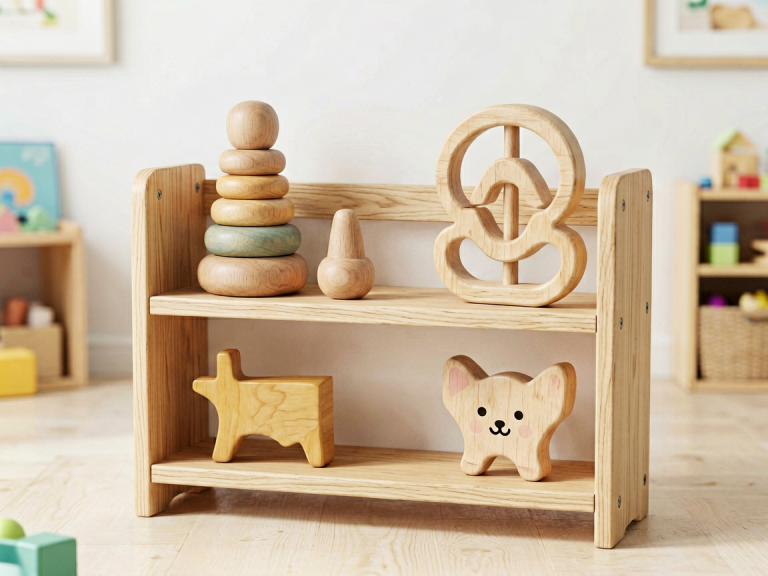
Fine motor skills—the ability to control small muscles in the hands and fingers—are crucial for later tasks like drawing, writing, buttoning, and using utensils. Play activities that require pinching, grasping, stacking, and twisting directly strengthen these muscles. Stacking blocks is a timeless activity: give a two‑year‑old a set of 8–12 lightweight wooden or plastic blocks and let them build towers. At first they may simply knock them down, which is actually a valuable cause‑and‑effect lesson. Over time they will attempt to stack two, then three, and eventually more blocks. This activity improves hand‑eye coordination, spatial reasoning, and patience.
Puzzles with large, chunky knobs or pieces are perfect for two‑year‑olds. Start with simple shape sorters (circle, square, triangle) or inset puzzles where each piece has a picture (e.g., animal faces). Encourage the child to rotate the piece to fit the slot. If they struggle, provide gentle guidance rather than taking over. Success builds self‑esteem and problem‑solving skills. Wooden peg puzzles are also excellent because the pegs help little fingers grasp the pieces easily.
Lacing and threading activities can be introduced with large, plastic “needles” and chunky wooden beads. Show the child how to push the “needle” through the bead hole, then pull it out. The repetitive motion strengthens hand muscles and bilateral coordination (using both hands together). Do not expect perfect results—simply letting the toddler practice the motion is beneficial.
Play‑dough is a fine motor powerhouse. Two‑year‑olds love to squeeze, roll, poke, and flatten dough. Provide safe plastic tools like a blunt knife, a rolling pin, cookie cutters, and a garlic press (child‑safe). Poking the dough with fingers or a stick builds finger strength; rolling it into balls uses the palm muscles; cutting it introduces controlled pressure. You can make homemade play‑dough with flour, salt, water, and cream of tartar for a non‑toxic, edible (though not tasty) option. Adding a few drops of peppermint or lavender essential oil (diluted) can add a calming sensory element.
Pretend Play and Social‑Emotional Development: The Power of Imagination
Around age two, children begin to engage in pretend play—imitating everyday actions like feeding a doll, talking on a toy phone, or “cooking” in a play kitchen. This is a critical milestone for social‑emotional growth, language development, and understanding of the world. Set up a small play corner with a doll, a soft blanket, a toy bottle, and a few plastic dishes. Encourage the toddler to “feed the baby” or “put the baby to bed.” Narrate what they are doing: “Oh, you are giving the baby some milk! That is so gentle.” This activity promotes empathy, sequencing (first feed, then burp, then sleep), and language comprehension.
Toy telephones (or even an old, deactivated real phone) provide endless opportunities for imaginative conversation. Your two‑year‑old may pick up the phone and babble, mimicking adult speech patterns. Ask them “Who are you talking to? Is it Grandma?” Answer the “phone” yourself and have a simple back‑and‑forth with them. This builds turn‑taking in conversation, vocabulary, and the understanding that words carry meaning.
Dress‑up is another wonderful pretend activity. Provide simple items like a hat, a scarf, a pair of oversized shoes, a cape, or a child‑size apron. Two‑year‑olds love to put on and take off clothing—this also supports fine motor skills (buttons, snaps, zippers if available). As they dress up, they experiment with roles: a firefighter, a chef, a superhero. Join them in the play and follow their lead. If they insist on wearing a cape backward, let them! The goal is not perfect dress‑up but the joy of imagination.
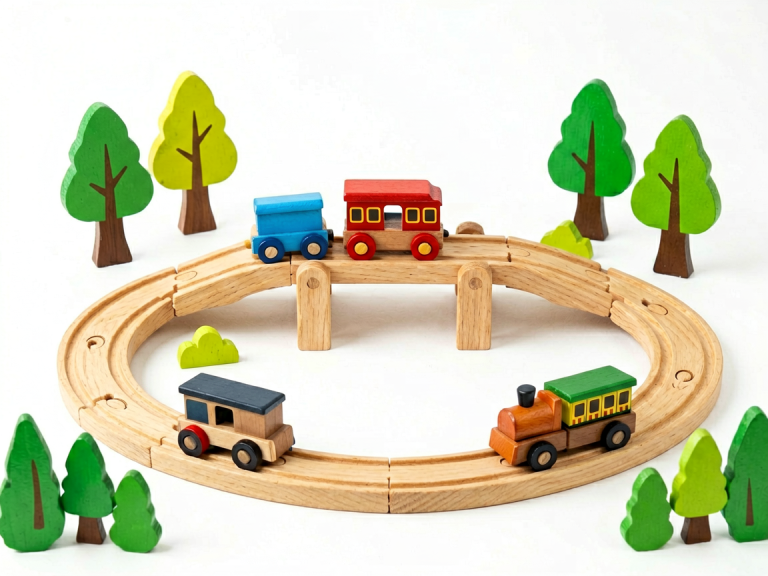
Social play with peers becomes more common at this age, though it is still parallel play (playing alongside rather than with). Arrange a playdate with another toddler, and provide duplicate toys to avoid conflict. Simple games like rolling a ball back and forth or playing with a toy car track allow children to observe each other and practice sharing (with adult prompting). Do not force interaction; simply being near another child is valuable social exposure.
Cognitive and Language Play: Building Thinking and Vocabulary
Two‑year‑olds are language sponges, absorbing new words at a remarkable rate. Play activities that incorporate naming, describing, sorting, and matching can accelerate this process. Simple sorting games—for example, separating red and blue blocks into two piles, or sorting plastic animals by type (farm vs. zoo)—help develop categorization skills. Use clear, descriptive language: “This is a red block. Can you find another red block? Put it in the red bowl.” Sorting works on visual discrimination, logic, and vocabulary.
Matching games with picture cards or objects are also effective. Create pairs of identical pictures (e.g., from a printable memory game) and lay them face‑up. Ask the child to “find the one that looks the same.” At age two, they may not be ready for the classic memory game (turning cards over), but matching face‑up items is a great start. This activity strengthens memory, attention to detail, and language as you name each object.
Reading together is perhaps the single most powerful play activity for language development. Choose board books with bright, simple pictures and only a few words per page. Point to objects and name them: “Look, a dog! What does a dog say? Woof woof!” Let the toddler turn the pages (fostering fine motor control) and ask them to point to items you name. Interactive books with flaps, textures, or sounds are especially engaging for this age group. Read the same book multiple times—repetition supports vocabulary retention and a sense of predictability that toddlers find comforting.
Simple cause‑and‑effect toys, like a jack‑in‑the‑box or a pop‑up toy that responds to pushing a button, teach logical reasoning. Talk about what happened: “You pushed the button, and the elephant jumped up! That’s so funny.” You can also create your own cause‑and‑effect play by building a “ramp” with a cardboard tube or a piece of cardboard propped on a block, then rolling a small car down it. Encourage the child to place the car at the top and watch it go. Ask, “What will happen if we put the car here?” This builds prediction skills.
Practical Tips for Successful Play with a Two‑Year‑Old
Even the best activities can fall flat if the environment or approach isn’t tailored to a two‑year‑old’s needs. Keep these guiding principles in mind:
- Keep sessions short and flexible. A two‑year‑old’s attention span is typically 3–5 minutes for a single activity, though they may revisit the same toy multiple times in a day. Do not force an activity when the child loses interest; follow their lead and switch to something else.
- Provide limited choices. Toddlers crave control but can be overwhelmed by too many options. Offer two or three toys at a time. For example, “Do you want to play with the blocks or the play‑dough today?” This reduces decision fatigue and empowers them.
- Focus on process, not product. The goal of play is exploration, not a finished masterpiece or a perfect puzzle solution. Praise effort and curiosity: “You worked so hard to stack that tower! I love how you tried a different way.” Avoid correcting or criticizing mistakes.
- Prioritize safety. Two‑year‑olds explore with their mouths as much as their hands. Remove small parts, sharp edges, and toxic materials. Supervise all water, sensory, and outdoor play. Ensure furniture is stable to prevent tipping when the child climbs.
- Model language and behavior. Narrate your own actions and the child’s actions. Use simple, short sentences. Smile, use animated tones, and get down to their eye level. Your enthusiasm is contagious.
Conclusion
Play activities for two‑year‑olds are far more than ways to pass time—they are carefully designed opportunities for holistic development. From sensory bins that wire the brain for learning, to obstacle courses that build strong bodies, to pretend play that nurtures empathy and creativity, each activity contributes to the incredible growth happening during this second year of life. By offering a rich variety of experiences and allowing the child to lead, caregivers can foster a love of learning that lasts a lifetime. Remember: the best play is joyful, safe, and done together. So clear some floor space, gather a few simple materials, and get ready to see the world through your toddler’s eyes—one scoop, one stack, one giggle at a time.