The Power of Play: How Early Learning Toys Shape Emotional Development in Babies
Introduction
The first years of life are a whirlwind of discovery, not just of the physical world but also of the emotional landscape that defines human relationships. While parents often focus on cognitive milestones—first words, first steps—the equally crucial domain of emotional learning frequently receives less deliberate attention. Yet emotional intelligence, the ability to recognize, understand, and manage one’s own feelings as well as empathize with others, begins its formation in infancy. During this period, babies are not passive recipients of emotional input; they are active learners, and the tools they interact with—especially early learning toys—play a pivotal role in shaping their emotional wiring. Far from being mere distractions, thoughtfully designed toys can serve as catalysts for emotional growth, teaching babies about cause and effect in feelings, mirroring social cues, and providing safe opportunities for self-regulation. This article explores the intricate relationship between early learning toys for babies and the development of emotional skills, offering insights into why playthings matter beyond their bright colors and squeaky sounds.
The Foundations of Emotional Learning in Infancy
Emotional learning does not start in a classroom; it begins the moment a baby is born. In the first months, infants rely on caregivers to help them regulate overwhelming feelings—hunger, discomfort, fear—through soothing tones, gentle touch, and predictable routines. This co-regulation is the cornerstone of emotional security. As babies grow, they start to internalize these patterns, gradually learning to self-soothe and to recognize emotional states in others. Research in developmental psychology, such as the work of John Bowlby on attachment theory, underscores that secure attachment forms when caregivers respond consistently to emotional cues.
But what happens when a baby is alone with a toy? Contrary to the common notion that solitary play is purely cognitive, even a simple rattle can become an emotional learning tool. When a baby shakes a rattle and hears its sound, they experience a burst of surprise or delight—a rudimentary emotional response. If the rattle produces a predictable result, the baby learns a sense of agency, which builds confidence. Conversely, if a toy is frustratingly difficult to operate, the baby might feel anger or distress, initiating a mini-opportunity to practice coping. Thus, the toy itself becomes a non-human partner in the emotional dialogue, extending the lessons start by caregivers.
How Early Learning Toys Facilitate Emotional Recognition
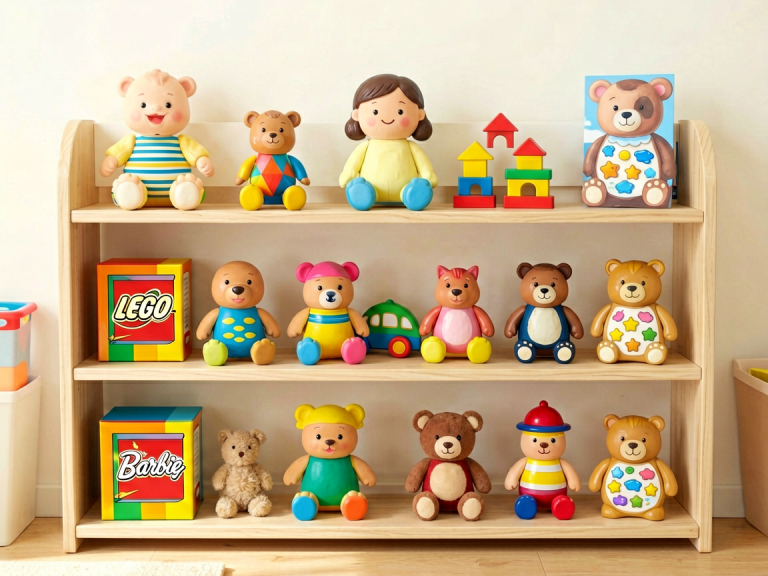
One of the first emotional skills babies develop is the ability to recognize and interpret facial expressions. By around four months, infants can distinguish between happy, sad, and surprised faces, and they prefer looking at happy expressions. Early learning toys that incorporate faces—dolls with simple, exaggerated features, or plush toys with embroidered smiles—can accelerate this recognition. A baby’s fascination with a smiling teddy bear is not just visual; it triggers an emotional resonance. When a baby sees a smiling face on a toy and the caregiver mirrors that smile, the baby begins to associate the visual pattern with a positive feeling.
Moreover, toys that change expression, such as puppets with movable mouths or books with mirror pages, invite babies to experiment with their own facial movements. Mirror toys are particularly powerful: when a baby sees their own grin reflected, they are simultaneously practicing self-awareness and emotional identification. They learn that their internal feeling (happiness) has an external marker (a smile). Some advanced early learning toys now include light-up faces or sounds that change based on the baby’s action—for example, a block that plays a happy tune when stacked correctly and a sad sound when knocked over. These cause-and-effect designs teach babies that different behaviors elicit different emotional responses, laying the groundwork for emotional vocabulary later on.
Toys That Encourage Empathy and Social Interaction
Empathy—the ability to understand and share another’s feelings—develops gradually, but its roots are visible in infancy. Babies as young as six months will cry when they hear another baby cry, a primitive form of empathic distress. Early learning toys that simulate social scenarios can nurture this nascent empathy. For instance, a set of soft dolls with different expressions allows a baby to “give the sad doll a hug.” While the baby does not consciously think “this doll needs comfort,” the act of hugging a soft object in response to a sad face reinforces a behavioral pattern of caregiving.
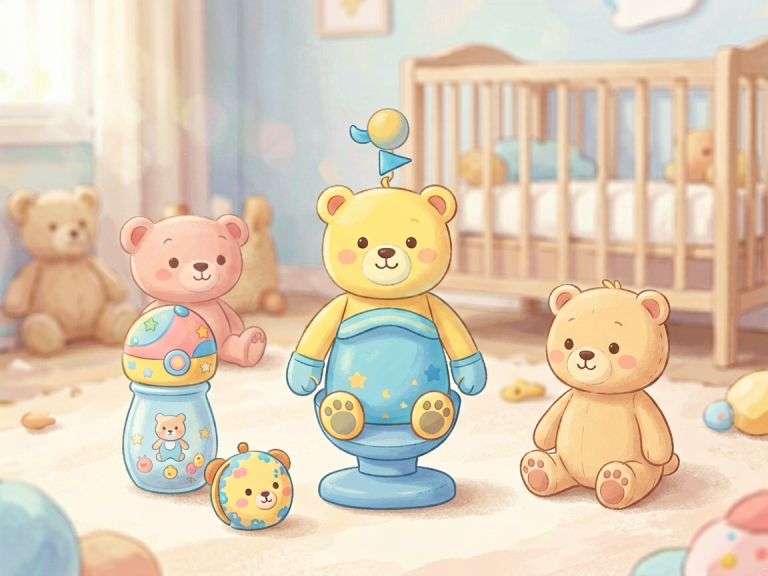
Role-playing toys, such as toy telephones or miniature kitchen sets, also contribute to emotional learning. When a toddler picks up a toy phone and pretends to talk to a friend, they are practicing turn-taking and tone of voice—both essential for emotional communication. Similarly, animal toys that come with a “feeding” bottle or a blanket encourage nurturing behavior. These toys create a safe space for babies to project feelings, experiment with relationships, and rehearse the scripts of empathy. A baby who repeatedly offers a toy animal a “sip” of water is not just playing; they are internalizing the idea that others have needs that can be met through gentle action.
Importantly, toys that require joint attention—like a simple ball that a caregiver rolls back and forth—also teach the emotional rewards of shared experience. The anticipation of the ball returning, the eye contact, and the laughter create a positive emotional loop. The toy here is not just a object; it is a medium through which the baby learns that interaction with another person can be joyful, predictable, and safe. This lays the foundation for more complex social-emotional skills like cooperation and turn-taking.
The Role of Sensory Toys in Emotional Regulation
A baby’s emotional state is deeply tied to their sensory experience. When overstimulated—by loud noises, bright lights, or too many people—a baby may become fussy, crying or arching their back. Conversely, when under-stimulated, they may become listless or anxious. Sensory early learning toys are powerful tools for emotional regulation because they provide a controlled dose of input that can calm or alert the baby. For example, a textured fabric square with varied tags and ribbons offers a soothing tactile experience; the act of rubbing the soft fabric can lower a baby’s heart rate and shift them from distress to relaxation.
Weighted stuffed animals or plush toys with gentle vibration functions are increasingly popular for their calming effect, mimicking the feeling of a caregiver’s hug. Auditory toys, such as a white noise machine built into a soft bear, help babies learn to associate sound with safety and sleep. Even simple objects like a transparent plastic ball filled with floating glitter provide a visual “time-out” for an overwhelmed baby; watching the glitter swirl can gently guide their attention away from a meltdown.
Through repeated use, babies begin to develop their own “toolkit” for self-soothing. A toddler might learn that grabbing a certain soft toy helps them feel less scared during a thunderstorm. This is emotional regulation in action: the baby is using an external object to modulate an internal feeling. Over time, the reliance on the toy may decrease as the baby internalizes the calming technique, but the early learning toy served as a bridge. Parents can facilitate this by offering a “calm-down” box of sensory toys and modelling their use during moments of mild upset, showing the baby that it is okay to seek a soothing object.
Selecting the Right Toys for Emotional Development
Not all toys marketed as “educational” support emotional learning equally. Factors such as the baby’s age, temperament, and context matter. For newborns (0–3 months), high-contrast black-and-white toys or soft mobiles with simple faces are ideal for visual engagement and early emotional recognition. At 3–6 months, toys that encourage reaching and grasping, like a soft rattle or a crinkle book, promote a sense of accomplishment—which is linked to positive self-esteem.
From 6 to 12 months, babies benefit from toys that encourage cause-and-effect in emotional contexts: a pop-up toy that reveals a smiling face, or a set of nesting cups that can be knocked down (and rebuilt). These teach tolerance for frustration as well as joy in mastery. For toddlers (12–24 months), pretend-play toys like dolls, stuffed animals, and simple dress-up items become central to emotional exploration. Parents should look for toys that represent diverse emotions and social scenarios, avoiding overly gendered options that might limit a child’s emotional range (e.g., only “happy” princesses).
It is also crucial to consider the toy’s use in conjunction with caregiver interaction. A toy is most effective when a parent or caregiver actively engages, naming emotions (“You look so happy when the ball goes in!”) and modelling appropriate responses. Electronic toys that talk or sing can be helpful, but they should never replace human interaction. The goal is not to digitize emotional learning but to use tangible objects as props for real-world emotional exchanges.
Conclusion
Early learning toys for babies are far more than colorful diversions; they are instruments for shaping the brain’s emotional architecture. Through face-recognition games, role-playing scenarios, and sensory regulation tools, these toys help babies learn to identify feelings, practice empathy, and develop self-soothing skills. While no toy can substitute for the warmth and responsiveness of a loving caregiver, the right toys can amplify and extend the lessons of emotional intelligence in safe, repeatable ways. As parents and educators become more intentional about selecting toys that support both mind and heart, we can nurture a generation of children who are not just smart but also emotionally resilient. The next time you hand a baby a stuffed animal or a rattle, remember: you are not just giving them a plaything—you are giving them a partner in the most important learning journey of all, the journey toward understanding themselves and others.