Building Skills Without Screens: The Essential Guide to Screen-Free Fine Motor Toys
—
Introduction
In an era where toddlers swipe before they stack, and preschoolers tap screens before they tie shoelaces, the quiet art of fine motor play is under siege. The World Health Organization recommends that children under two have zero screen time, yet many parents find themselves handing over tablets as digital pacifiers. While educational apps claim to teach letters and numbers, they often neglect a critical domain of early development: fine motor skills. These are the small muscle movements in the hands, fingers, and wrists that enable everything from grasping a crayon to buttoning a shirt. Without deliberate practice, children may struggle with handwriting, self-care tasks, and even cognitive tasks that require hand-eye coordination. Enter screen-free fine motor toys—the humble blocks, beads, and tweezers that have quietly built the dexterity of generations. This article explores why these analog tools are irreplaceable, how they work, and which ones deserve a place in every child’s toy box.
—
What Are Fine Motor Skills and Why Do They Matter?
Fine motor skills involve the coordinated movement of small muscles, typically in the hands and fingers, often in conjunction with the eyes. They are the foundation for countless everyday activities: writing, cutting with scissors, using a fork, zipping a jacket, or manipulating small objects.
The development of these skills follows a predictable sequence. An infant first grasps reflexively; by six months, they can transfer a toy from one hand to another; by age two, they can scribble; by four, they can draw a simple shape; and by six, they can write their name. Each stage builds on the previous one.
But the stakes go beyond practical tasks. Neuroscientists have long linked fine motor activity to cognitive growth. When a child picks up a small bead or turns a puzzle piece, they activate neural pathways that strengthen attention, problem-solving, and spatial reasoning. Hand movements stimulate the same brain regions involved in language and math. In fact, research from the University of Denver found that children who engaged in more fine motor play at age three showed higher math and reading scores in kindergarten.
The danger of screen-heavy play is that fingers rarely perform nuanced actions on a smooth glass surface. Tapping, swiping, and dragging require only gross motor patterns or simple repetitive gestures. They do not challenge the opposition of thumb and index finger, the graded force needed to hold a pencil, or the bilateral coordination required to stabilize a paper with one hand while cutting with the other. Screen-free fine motor toys fill this gap by providing rich, variable sensory feedback—pressure, texture, weight, and resistance—that no app can replicate.
—
The Case for Screen-Free: How Traditional Toys Outshine Digital Alternatives
It is tempting to believe that a well-designed app can teach fine motor skills. After all, many “educational” games ask children to trace letters or drag puzzle pieces. But the comparison is misleading for several reasons.
Tactile feedback is irreplaceable. When a child pushes a peg into a board, they feel the resistance of the wood, hear the satisfying *click* as it seats, and see the three-dimensional result. This multisensory input helps the brain calibrate force and precision. A digital screen offers only visual and auditory feedback; the finger glides across glass without real resistance. Studies on haptic learning show that children who manipulate physical objects retain concepts longer than those who only see them on a screen.
Cause and effect is more concrete. In the physical world, a block tower falls when the base is weak. A bead drops through a hole if the string is not threaded. These tangible consequences teach trial-and-error, patience, and logical thinking in a way that a reset button cannot. Digital environments often provide instant gratification or automatic corrections, robbing children of the learning that comes from frustration and perseverance.
No distraction, no passivity. Screen-based toys frequently combine motor tasks with flashing animations, sounds, and timers. This overstimulation can shift the child’s focus from the motor challenge to the entertainment. Screen-free toys, by contrast, demand active engagement. A child must decide where to place the next block, how to hold the lacing string, or which hole the shape fits. This mindful concentration is exactly the state that builds executive function and self-regulation.
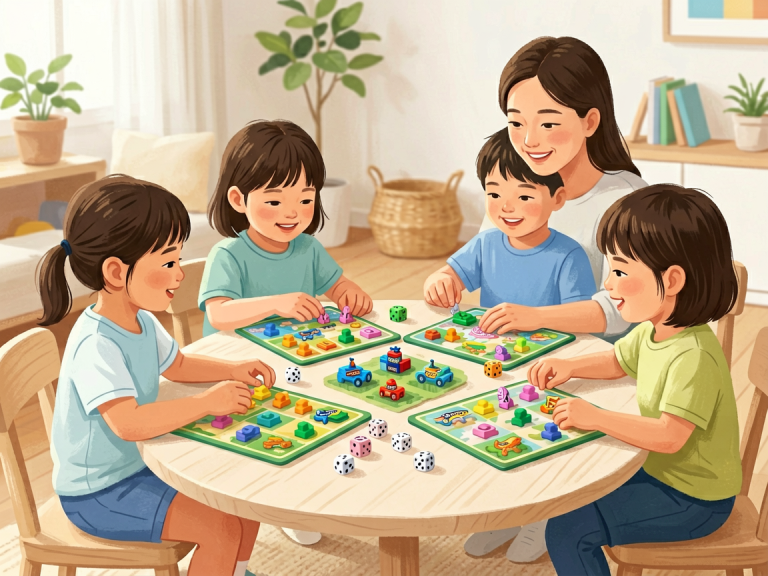
Moreover, screen-free toys encourage social interaction. A set of wooden blocks can be shared, negotiated over, and built collaboratively. A tablet game, even a cooperative one, often isolates the child in a self-contained digital world. The benefits of face-to-face communication, turn-taking, and language exchange are lost.
—
Top Categories of Screen-Free Fine Motor Toys
Not all toys are created equal. The most effective screen-free fine motor toys share key characteristics: they require precision, offer graduated difficulty, and invite repetition. Here are the most valuable categories:
Building and Stacking Sets
Classic wooden blocks, interlocking bricks (like LEGO Duplo), and magnetic tiles are staples. They strengthen hand muscles through grasping, lifting, and aligning. When a child stacks a tower, they must carefully position each block—a task that demands visual-spatial judgment and steady hands. For older toddlers, smaller blocks or construction sets with nuts and bolts add a twisting motion that builds wrist rotation.
Lacing and Threading Toys
Lacing cards, bead strings, and sewing cards are superb for developing the pincer grasp (thumb and index finger). The act of pushing a string through a small hole requires eye-hand coordination and bilateral coordination (one hand holds the card, the other guides the thread). These toys also introduce the concept of sequence and pattern. For a three-year-old, large wooden beads are a gentle start; by age five, they can handle tiny plastic beads or even simple embroidery.
Puzzles
From chunky wooden puzzles for infants to 24-piece floor puzzles for preschoolers, puzzles train the fingers to grasp, rotate, and fit shapes. The cognitive load—matching shapes, recognizing colors, and visualizing the whole—adds a mental challenge that strengthens concentration. The slight resistance of a puzzle piece snapping into place provides satisfying feedback.
Play Dough and Modeling Materials
Squeezing, rolling, pinching, and flattening play dough builds hand strength and flexibility. Adding tools like rolling pins, cookie cutters, and plastic knives takes it further. Children can practice cutting, poking, and sculpting, all of which refine finger isolation and coordination. For an extra challenge, hide small objects inside the dough for the child to excavate with tweezers—a dual fine motor and sensory activity.
Cutting and Pasting Tools
Safety scissors, hole punches, and glue sticks are often overlooked as toys, but they are powerful fine motor trainers. Cutting along a line requires bilateral coordination (holding the paper with one hand, operating scissors with the other) and controlled hand movement. Start with snipping play dough strips, then move to paper. Sticker books and peel-and-stick activities also work on pincer grasp.
Sorting and Transferring Sets
Items like counting bears, tweezers, and sorting trays ask children to pick up small objects and place them in designated spots. Using child-safe tweezers or tongs forces the hand to maintain a static grip while the arm moves—a skill directly transferable to writing. Pouring activities (e.g., from a small pitcher into a cup) can be added for older preschoolers.
Pegboards and Marble Runs
Pegboards with pegs require pushing, pulling, and sometimes twisting. Marble runs demand careful placement of tracks and ramps, and the child must anticipate gravity. Both toys offer an open-ended challenge that can be repeated with increasing complexity.
—
Choosing the Right Toys for Different Ages and Stages
Fine motor toys should match the child’s current abilities while offering a slight stretch. A toy that is too easy bores; one that is too hard frustrates.
Ages 0–12 months: Focus on grasping and reaching. Soft rattles, fabric books with crinkle pages, and high-contrast toys that can be held. Avoid small parts due to choking risk.
Ages 1–2 years: Introduce chunky puzzles (single-shape pieces), large beads for lacing (with a stiff string tipped with a wooden “needle”), stacking rings, and fat crayons for scribbling. Play dough should be supervised.
Ages 3–4 years: This is the golden age for fine motor development. Offer smaller blocks, 12–24 piece puzzles, child-safe scissors for snipping, lacing cards, sorting sets with large tweezers, and modeling clay. Children this age can also start simple sewing cards.
Ages 5–6 years: Move to tiny beads, small LEGO bricks, mazes, sewing with blunt needles, hole punches, and complex marble runs. Encourage writing-related activities like tracing letters with fingers in sand or using stencils.
Ages 7+: Fine motor toys can become more precise: knitting kits, model building, origami, calligraphy pens, and circuit kits with small wires. These activities maintain hand strength and coordination through the elementary years.
—
Beyond Motor Skills: Cognitive and Emotional Benefits
The value of screen-free fine motor toys extends far beyond dexterity. They cultivate a host of soft skills that are increasingly rare in a swipe-right world.
Focus and patience. A child threading beads or fitting a puzzle piece must sustain attention for minutes at a time. There is no “skip” button. This slow, deliberate play trains the brain to tolerate frustration and delay gratification—key components of emotional regulation.
Creativity and problem-solving. Open-ended toys like blocks or play dough have no single correct outcome. A child must imagine, plan, and revise. When a tower falls, they analyze why and try again. This iterative process builds a growth mindset.
Confidence and independence. Mastering a task—tying a knot, cutting a straight line, completing a 48-piece puzzle—gives a child a tangible sense of achievement. They learn that effort leads to results. This confidence spills over into academic and social settings.
Sensory integration. Many fine motor toys also stimulate the proprioceptive and tactile systems. Squeezing dough, manipulating sand, or pressing pegs provides calming input that helps children regulate their arousal levels. For children with sensory processing differences, these toys can be therapeutic.
—
Conclusion
In a world that increasingly defaults to digital, screen-free fine motor toys stand as quiet but powerful tools for building the foundational skills that children need. They are not nostalgic relics but essential instruments of development. They teach the hand to be precise, the mind to be patient, and the spirit to persevere.
For parents and educators, the choice is simple: prioritize toys that require touch, manipulation, and thought over those that flicker and beep. A set of wooden blocks, a box of beads, a pair of safety scissors—these humble items will do more for a child’s future handwriting, problem-solving, and self-confidence than any app ever could. The best learning happens in the real world, one tiny pinch at a time.
So put away the tablet. Bring out the play dough. And watch as small hands build big skills.