Unlocking Young Minds: The Best Play-Based Learning Toys for 5-Year-Olds
Introduction: Why Play-Based Learning Matters at Age Five
At five years old, a child stands at a remarkable crossroads. They have outgrown the simple sensory explorations of toddlerhood and are now stepping into a world of structured thought, social interaction, and early academic skills. Yet they are still years away from formal classroom drills. This is precisely why play-based learning is so powerful for this age group. Research in developmental psychology consistently shows that children learn best when they are actively engaged, intrinsically motivated, and having fun. The right toys do not merely entertain; they become tools for cognitive growth, emotional regulation, language development, and problem-solving.
But not every toy labeled “educational” delivers on its promise. The best play-based learning toys for 5-year-olds are those that strike a delicate balance – challenging enough to stretch a child’s abilities, yet open-ended enough to allow for creativity and repeated play. They should encourage exploration, trial-and-error, collaboration with peers, and self-directed discovery. In this article, we will explore a curated selection of toy categories that excel at turning playtime into a rich learning experience. From construction sets that teach physics to board games that build social skills, each recommendation is chosen for its ability to nurture a five-year-old’s developing mind while keeping the joy of play front and center.
1. Construction and Building Toys: Engineering the Imagination
Why They Work
Five-year-olds are natural engineers. They love to stack, connect, assemble, and knock down. Construction toys like classic wooden blocks, magnetic tiles, and interlocking brick sets (such as LEGO Duplo or standard LEGO) provide a hands-on introduction to spatial reasoning, symmetry, balance, and cause-and-effect. When a child builds a tower and watches it topple because the base is too narrow, they are internalizing physics concepts that textbooks cannot replicate.
Top Picks
- Magnetic Tiles (e.g., Magna-Tiles or Picasso Tiles): These translucent, magnetic shapes click together easily, allowing children to build 2D patterns or 3D structures. They teach geometry, symmetry, and even fractions (e.g., two triangles make a square). The satisfying magnetic snap also strengthens fine motor control.
- LEGO Classic Bricks: A classic for a reason. At age five, children can follow simple pictorial instructions to build a car or a house, but they also enjoy free-building. This dual use encourages both sequential thinking and pure imagination.
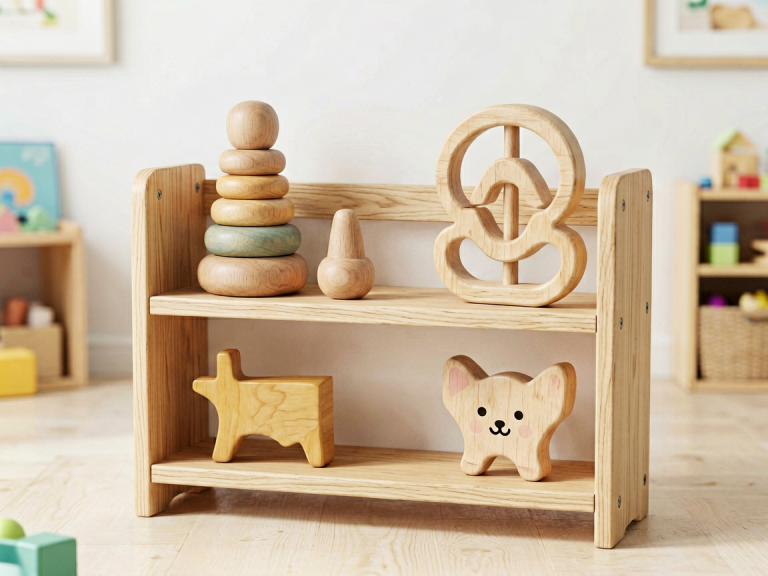
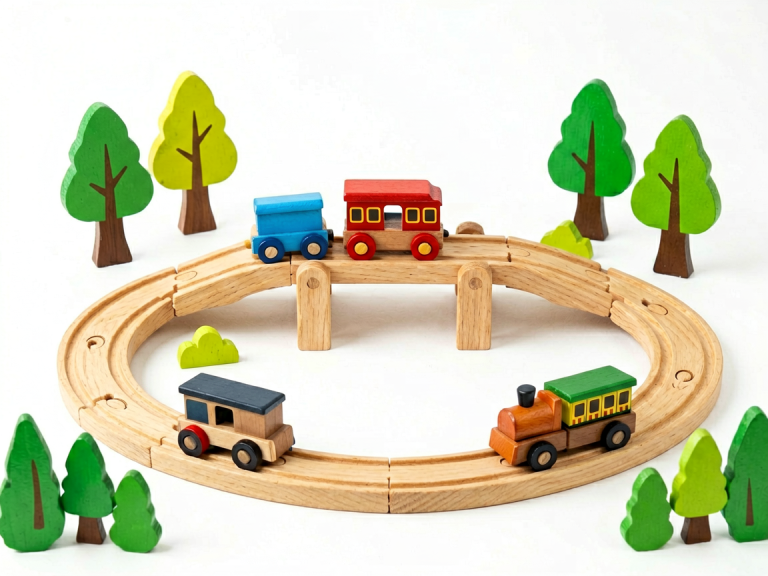
- Wooden Unit Blocks: Unpainted, simple blocks in standardized sizes. They are the ultimate open-ended toy. A child may use them to create a city, a bridge, or a spaceship. Block play is linked to later mathematical achievement because it involves measurement, estimation, and problem-solving.
Learning Outcomes
Through construction play, five-year-olds develop fine motor dexterity, hand-eye coordination, and persistence. They learn to plan, modify, and adapt when their designs fail. Socially, building with a sibling or friend teaches negotiation and cooperation – “You hold this while I add the roof.” These are foundational skills that go far beyond the playroom.
2. Pretend Play and Role-Playing Sets: The Social-Emotional Gymnasium
Why They Work
Imaginative play peaks around age five. Children begin to craft elaborate narratives, assign roles, and act out real-life scenarios. This is not mere fantasy; it is how they make sense of the world. A play kitchen, a doctor’s kit, or a construction worker’s tool belt allows them to practice language, empathy, and decision-making in a safe, low-stakes environment.
Top Picks
- Play Kitchens with Accessories: A well-equipped wooden or plastic kitchen with pots, pans, play food, and utensils invites endless scenarios. A child can play chef, customer, or waiter, using vocabulary like “ingredients,” “recipe,” or “order.” This builds narrative skills and introduces early math through counting plates or setting timers.
- Doctor’s Kit: Stethoscope, syringe, bandages, and patient chart. Role-playing a doctor helps children process their own experiences with medical visits, reducing anxiety. They also learn empathy by taking care of a stuffed animal “patient.”
- Dress-Up Costumes: Firefighter helmets, princess dresses, astronaut suits, or animal masks. Costumes allow children to step into another identity, which develops perspective-taking and emotional intelligence. They also encourage physical movement – a firefighter must “rescue” a toy, which involves running, climbing, and problem-solving.
Learning Outcomes
Pretend play is directly linked to language development. Studies show that children who engage in rich dramatic play use more complex sentences and a wider vocabulary. They also improve their executive functions – working memory, inhibitory control, and cognitive flexibility – because they must remember their role, follow a storyline, and adjust when a peer changes the plot. For a five-year-old, this is the ultimate brain workout disguised as fun.
3. Puzzles and Strategy Games: Sharpen Logical Reasoning
Why They Work
Five-year-olds are ready for more structured challenges. Puzzles and simple board games teach patience, pattern recognition, and logical deduction. They also introduce the concept of rules, turn-taking, and graceful winning/losing – critical social lessons.
Top Picks
- Floor Puzzles (48-100 pieces): Large, sturdy pieces that require careful observation of shapes and colors. Completing a puzzle gives a tremendous sense of accomplishment and reinforces the idea of breaking a big task into smaller steps.
- Memory Matching Games: A classic card game where players flip over two cards at a time to find pairs. This strengthens visual memory and concentration. Many themed versions (animals, letters, numbers) add educational content.
- Cooperative Board Games (e.g., “Hoot Owl Hoot!” or “Race to the Treasure!”): Unlike competitive games that create winners and losers, cooperative games require all players to work together toward a common goal. This is ideal for five-year-olds because it reduces emotional pressure while teaching teamwork and strategic thinking.
Learning Outcomes
Puzzles and games improve visual-spatial skills, attention span, and problem-solving. Cooperative games, in particular, foster a growth mindset – children learn that failure is a group challenge to overcome, not a personal defeat. They also practice impulse control (waiting for one’s turn) and verbal reasoning (“If we move our piece here, we can avoid the monster!”).
4. Art and Creative Expression: The Language of Innovation
Why They Work
Art is often dismissed as “just fun,” but for a five-year-old, it is a complex cognitive activity. When a child draws a picture, they must plan, make choices about colors and shapes, and translate mental images into physical marks. Art toys that allow open-ended creation are among the most powerful learning tools.
Top Picks
- Washable Markers, Crayons, and Colored Pencils with Large Paper Pads: Simple but essential. The key is to provide high-quality materials that allow for expression without frustration (e.g., markers that don’t dry out quickly).
- Play-Doh or Modeling Clay: Squeezing, rolling, and shaping clay strengthens hand muscles needed for writing. It also teaches three-dimensional thinking and gives children a medium to sculpt their ideas. Add simple tools like plastic knives and rolling pins for even more exploration.
- Watercolor Sets and Sponge Painting Kits: Experimenting with mixing colors introduces basic science concepts (yellow + blue = green) while encouraging creativity. The process is more important than the product.
Learning Outcomes
Art toys develop fine motor skills, hand-eye coordination, and creativity. They also support emotional regulation – a child who is frustrated can pound clay or scribble aggressively, then calm down and refine their work. Most importantly, art gives children a sense of agency: they can create something entirely their own, boosting self-esteem and intrinsic motivation.
5. Science and Exploration Kits: Nurture Curiosity
Why They Work
Five-year-olds are relentless askers of “why?” Science toys channel that curiosity into structured investigation. Simple experiments with magnets, magnifying glasses, or growing crystals teach scientific method – hypothesis, observation, conclusion – in a playful way.
Top Picks
- Magnifying Glass and Bug Catcher: A classic outdoor exploration kit. Children can observe ants, leaves, or water droplets up close, developing observational skills and vocabulary (e.g., “texture,” “veins,” “transparent”).
- Magnet Set: Bar magnets, horseshoe magnets, and iron filings. Children discover that some objects attract and others repel, learning about invisible forces.
- Simple Chemistry Kits (e.g., baking soda and vinegar experiments): Many kits designed for ages 4-6 include safe, non-toxic ingredients for fizzing reactions, color changes, and even slime making. These experiments teach cause-and-effect and often spark a lifelong love of science.
Learning Outcomes
Science toys cultivate critical thinking and analytical skills. They also teach patience – a crystal takes days to grow, and an experiment may fail if steps are not followed. Importantly, they show children that the world is full of mysteries to be discovered, which fosters a growth mindset and a love of learning.
6. Movement and Gross Motor Toys: Learning Through Physical Activity
Why They Work
Five-year-olds have abundant energy, and physical play is crucial for brain development. Gross motor toys that involve running, jumping, balancing, or throwing improve coordination, body awareness, and even cognitive function due to increased blood flow to the brain.
Top Picks
- Balance Bike or Scooter: These develop leg strength and balance, which are prerequisites for bike riding. The safety aspect also teaches risk assessment.
- Obstacle Course Sets (e.g., stepping stones, tunnels, and cones): A simple set of plastic stones to step on, a crawl tunnel, and a few cones to weave through can be set up in the backyard or living room. Navigating an obstacle course improves motor planning and sequencing.
- Bean Bags and Target Games: Throwing bean bags into a hoop or at a target improves hand-eye coordination and spatial estimation. These can be turned into math games by adding numbers to the targets.
Learning Outcomes
Physical play reduces stress, improves sleep, and enhances focus for sedentary learning activities. It also builds resilience – a child who falls off a balance bike and gets back up learns persistence. Socially, active games often involve cooperation and rule-following, such as “Simon Says” or simple relay races.
Conclusion: Choosing Toys That Grow with Your Child
The best play-based learning toys for five-year-olds are not the most expensive or the most technologically advanced. They are the ones that invite interaction, encourage imagination, and allow for multiple levels of challenge. A single set of magnetic tiles can be used for shape sorting today and for building a castle next week. A wooden kitchen can host a birthday tea party or a pretend restaurant. The magic lies in the child’s ability to layer meaning onto the toy.
When selecting toys for a five-year-old, look for those that are open-ended, durable, and aligned with the child’s current interests. Avoid toys that promise “academic results” but are actually passive (e.g., flashcard-style electronic games). Instead, choose toys that demand active engagement. Remember that the most powerful learning happens when a child is in charge of their own play. As an adult, your role is simply to provide the raw materials – and then step back and watch the wonder unfold.
By investing in thoughtful, play-based learning toys, you are not just buying entertainment. You are giving a five-year-old the tools to build a more resilient, curious, and capable mind. And you are giving them the greatest gift of childhood: the joyful freedom to learn through play.