Nurturing Little Mathematicians: Engaging Math Activities for 3-Year-Olds
Introduction
When we think of mathematics, images of complex equations and abstract symbols often come to mind. Yet for a three-year-old, math is an entirely different universe—a world of playful discovery, sensory exploration, and joyful repetition. At this tender age, children are naturally curious about quantities, shapes, patterns, and relationships. They count their steps as they walk up the stairs, sort their toy cars by color, and notice that the big cookie is larger than the small one. These seemingly simple moments are the building blocks of mathematical thinking. Introducing math activities for 3-year-olds does not mean pushing them into formal lessons or worksheets; rather, it means creating a rich environment where numerical and spatial concepts unfold through play, conversation, and hands-on experiences. Research shows that early exposure to foundational math skills—such as number sense, spatial reasoning, and pattern recognition—strongly predicts later academic success in both mathematics and literacy. More importantly, when math is presented as an enjoyable and meaningful part of daily life, children develop a positive attitude toward the subject that can last a lifetime. This article offers a comprehensive guide to developmentally appropriate math activities for three-year-olds, organized by key mathematical domains. Each activity is designed to be low-prep, highly engaging, and deeply rooted in the child’s natural curiosity. Whether you are a parent, a preschool teacher, or a caregiver, you will find practical ideas that turn ordinary moments into extraordinary learning opportunities.
Why Math Matters for Toddlers: The Foundations of Early Numeracy
Before diving into specific activities, it is essential to understand why math education should begin so early. The brain of a three-year-old is undergoing rapid neural development, and experiences during this critical window shape the architecture of learning. Early math skills are not merely about memorizing numbers; they encompass a wide range of cognitive abilities including problem-solving, logical reasoning, and the ability to recognize patterns. Studies have demonstrated that children who enter kindergarten with strong number sense—understanding that numbers represent quantities, that adding one increases a set, and that “five” is more than “three”—are more likely to excel in later math classes. Moreover, early math exposure fosters executive function skills such as attention, working memory, and self-control. When a child sorts objects by size, they practice focusing on a rule and inhibiting the impulse to sort by color instead. These cognitive muscles are crucial for all learning. Additionally, math activities provide rich language opportunities. As a parent says, “You have three crackers, and I have two. Who has more?” the child learns comparative vocabulary and the logic of counting. The goal is not to rush mastery but to weave mathematical language and experiences into the fabric of everyday life. The activities that follow are designed to be playful, child-led, and respectful of each child’s unique pace. Remember: a three-year-old who counts “one, two, three, ten” is not making a mistake; they are experimenting with the rhythm of counting, a perfectly normal stage of development.
Counting Activities: Making Numbers Tangible
Counting is the cornerstone of early mathematics, but for a three-year-old, counting should never be a rote recitation. Instead, it should be linked to real objects and meaningful contexts. One classic activity is the “Snack Counting” game. During snack time, give your child a small bowl of raisins, berries, or crackers. Ask them to count out three pieces for themselves, then two for their stuffed animal. Use a slow, deliberate voice as you count together: “One… two… three.” Point to each item as you say its number, reinforcing one-to-one correspondence. This activity can be extended by using different numbers throughout the day—counting steps as you climb stairs, counting the number of red cars you see on a drive, or counting how many times your child can hop on one foot. Another powerful tool is the number line made from everyday objects. Place five small toys in a row on the floor. Walk alongside them, touching each one and saying its number. Then ask your child, “Can you show me number three?” As they point to the third toy, they are connecting the abstract numeral with an ordinal position. For a more sensory approach, fill a shallow tray with sand, salt, or rice and let your child use their finger to draw numbers. They can also press toy animals into the sand to make “number prints.” Remember that counting is not limited to forward counting; backward counting (like a countdown before a rocket launch) is equally valuable and surprisingly fun for toddlers. The key is to keep the activity short, playful, and integrated—never forcing a child to count when they are tired or uninterested.
Shape Exploration: Seeing Geometry in the World
Three-year-olds are natural shape detectives. They notice circles in wheels, squares in windows, and triangles in roofs. To deepen this awareness, create a “Shape Hunt” game. Go around the house or backyard with a simple shape card (a circle drawn on paper) and challenge your child to find objects that match. “Let’s find something that is round like a circle!” A ball, a plate, a clock, a button—each discovery reinforces the concept that shapes are not just pictures but properties of real objects. For a more structured activity, make a shape sorting box. Cut holes in the lid of a shoebox in the shapes of a circle, square, triangle, and rectangle. Provide your child with corresponding wooden or plastic shape pieces and encourage them to push each one through its matching hole. This activity develops fine motor skills along with geometric reasoning. Another delightful idea is shape stamping: cut sponges into different shapes, dip them in washable paint, and let your child stamp patterns on paper. Talk about the shapes as they print: “You made a red triangle! And now a blue circle!” Playdough is also a fantastic medium. Roll playdough into long snakes and then form them into circles, squares, and triangles. Ask your child to make a “tall triangle” or a “squished circle.” Through these hands-on experiences, children begin to understand that shapes have defining attributes—a triangle always has three sides, a square has four equal sides. You can even introduce the concept of “same and different” by comparing shapes. “This square has four corners, and this triangle has three. Are they the same? No, they are different!” Such conversations build vocabulary and logical thinking.
Sorting and Classifying: The Logic of Categories
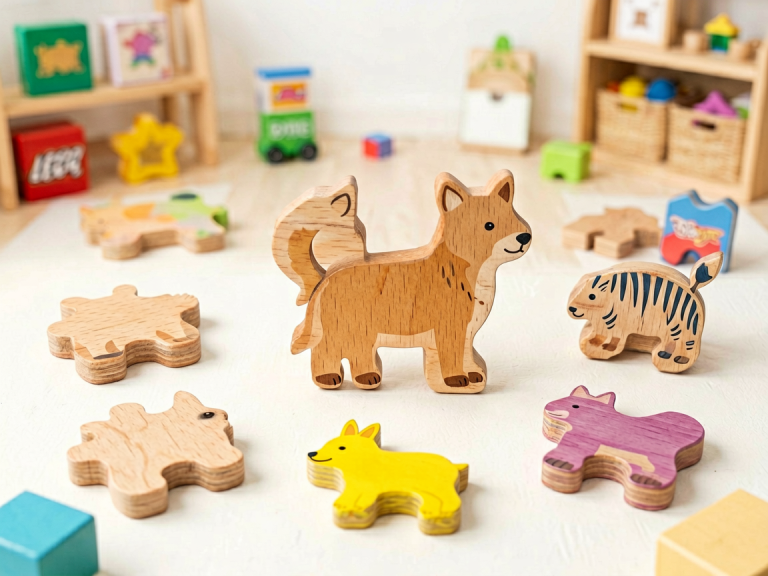
Sorting is one of the earliest and most powerful mathematical activities because it teaches children to identify attributes and create categories. At age three, children are often fascinated by sorting—their toys, their clothes, their snacks. Capitalize on this by providing a simple collection of items: a basket of mixed buttons (different colors, sizes, and numbers of holes), a pile of toy animals (farm vs. wild), or a bowl of pasta shapes. Then present two or three empty containers and say, “Can you put the red buttons in this bowl and the blue buttons in that bowl?” Start with one attribute (color) and later introduce a second (size or shape). This seems simple, but it requires children to hold a rule in their mind and systematically examine each item. To make it more playful, turn sorting into a “rescue mission.” Scatter a mix of teddy bears and toy cars across the floor. Say, “Oh no! The bears need to go to their house (a blue blanket), and the cars need to go to their garage (a red towel). Can you help them get home?” As your child sorts, use mathematical language: “You have three bears and two cars. Let’s count them together!” Another engaging variant is “Nature Sorting” during a walk. Collect leaves, pebbles, and twigs. At home, sort them by type, then by size, then by color. This connects math to the natural world. Sorting also builds the foundation for graphing. After sorting a batch of teddy grahams by color, you can line them up in rows on a plate to create a simple bar graph. “Look, there are more red bears than yellow bears!” This visual representation helps children compare quantities without formal numbers.
Pattern Recognition: The Rhythms of Math
Patterns are everywhere—in music, nature, daily routines, and mathematics. Recognizing and creating patterns is a key early math skill that supports algebraic thinking later on. For a three-year-old, start with simple ABAB patterns: red, blue, red, blue. Use large, colorful beads and a shoelace to create a pattern necklace. Say the pattern aloud as you string: “Red, blue, red, blue.” Then ask your child to continue the pattern. If they struggle, model it slowly and point to each bead. You can also create body movement patterns: clap, stomp, clap, stomp. Let your child lead and then copy them. Another idea is to use everyday objects like forks and spoons. Lay them in an alternating pattern on the table: fork, spoon, fork, spoon. Ask, “What comes next?” For a more open-ended activity, provide pattern cards made from colored stickers on index cards. For example, a card showing a row of green, orange, green, orange. Give your child a tray of colored bear counters and ask them to match the pattern. Once they can copy a given pattern, encourage them to invent their own. Pattern activities also help develop working memory because children must remember the sequence. You can even make snack patterns: a grape, a cracker, a grape, a cracker. Eating the pattern is a delightful reward! Additionally, patterns in nature—like the stripes on a zebra, the spots on a ladybug, or the alternating colors on a rainbow—can be pointed out during outdoor time. The more children notice patterns, the more their brains become attuned to structure and order.
Measurement and Comparison: Big and Small, More and Less
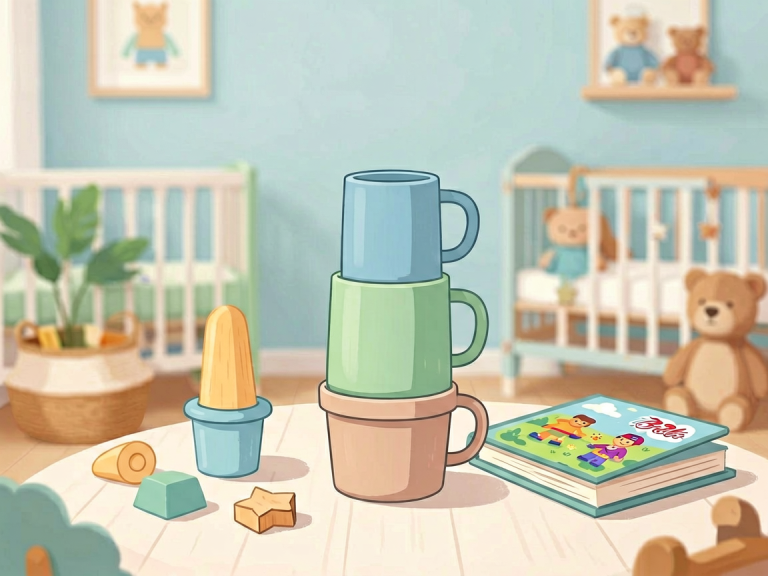
Measurement for a three-year-old is all about comparison, not standard units. They naturally want to know who is taller, which block tower is higher, or which cup holds more water. Capitalize on this by providing opportunities for direct comparison. Gather a set of stuffed animals of various sizes. Have your child line them up from smallest to largest, or sort them into “big” and “small” groups. Use comparative language: “This bear is bigger than that bear.” You can also introduce a simple balance scale and a collection of small toys. Let your child place a toy in each pan and observe which side goes down. Say, “The car is heavier than the block. The block is lighter.” This builds an intuitive understanding of weight. For volume, fill several containers of different sizes (a small cup, a medium bowl, a large pitcher) with water during bath time or outdoor water play. Provide a scoop and let your child pour water back and forth. Ask questions like, “Which container holds more water? Can you fill the big bowl using the small cup? How many scoops does it take?” Counting the scoops integrates number sense with measurement. Another classic activity is measuring length using non-standard units. How many footsteps long is the living room rug? How many paper clips long is your child’s arm? Let them walk heel-to-toe along the rug and count each step. They will delight in discovering that the rug is “12 steps long” while the hallway is “20 steps long.” This introduces the idea that measurement requires a unit and that different units yield different numbers. For older threes, you can use a ruler as a tool, but focus on comparing lengths rather than reading precise numbers.
Incorporating Math into Daily Routines: Learning Without Worksheets
The most effective math activities for three-year-olds are often the ones that are seamlessly woven into daily life. Morning routines, mealtimes, chores, and transitions all present rich mathematical opportunities. While dressing, count buttons, zippers, and socks. Ask, “Do you want the blue shirt or the red shirt?” This is a simple sorting decision. While setting the table, ask your child to place one plate, one fork, and one cup at each seat. This practices one-to-one correspondence. While cleaning up toys, say, “Let’s put all the blocks in the basket. How many blocks are on the floor? Let’s count them as we pick them up.” Even waiting in line or at a doctor’s appointment can become a math game: “I spy something round,” “Let’s count the ceiling tiles,” or “How many people are wearing red shoes?” Baking together is a goldmine for math—measuring cups, counting eggs, and dividing dough into equal pieces. Grocery shopping offers categories (fruits, vegetables) and comparisons (which apple is bigger?). Reading picture books with mathematical themes—such as Eric Carle’s “The Very Hungry Caterpillar” (counting, days of the week) or Stuart Murphy’s “Mouse Shapes” (geometry)—strengthens the connection between language and math. The key is to use mathematical language naturally: “more,” “less,” “enough,” “too many,” “the same,” “bigger,” “smaller,” “first,” “last,” “in front,” “behind,” “next to.” These words build a rich conceptual vocabulary long before formal instruction begins.
Tips for Parents and Educators: Creating a Math-Rich Environment
To maximize the benefits of math activities for three-year-olds, consider these practical tips. First, follow the child’s lead. If your child is fascinated by trains, use train counting, train sorting by color, and train track patterns. Math should feel like a game, not a lesson. If a child resists an activity, drop it and try something else tomorrow. Second, keep activities short—five to ten minutes is ideal for this age group. Attention spans are brief, and forced engagement can backfire. Third, model a curious and positive attitude toward math. Narrate your own thinking out loud: “I wonder how many raisins are in this bowl. Let’s count them together. Oh, there are eight! That’s more than I thought.” Your enthusiasm is contagious. Fourth, use concrete objects rather than abstract worksheets. A three-year-old learns through touch, movement, and manipulation. A pile of rocks, a handful of buttons, or a tray of sand is far more powerful than a printed page. Fifth, celebrate effort and process, not correctness. If your child counts “one, two, five,” say, “Good counting! You said one, two, and then five. Let’s try it again slowly.” Avoid negative corrections that might create math anxiety. Finally, remember that every child develops at their own pace. Some three-year-olds will confidently count to ten; others will still skip numbers. Both are perfectly normal. The goal is to nurture a love for discovery, pattern, and logic—not to produce a prodigy.
Conclusion
Math activities for three-year-olds are not about accelerating academic achievement; they are about opening doors to a world of wonder, order, and creativity. Through counting snacks, sorting buttons, building block towers, and finding shapes in clouds, children develop the foundational thinking skills that support all future learning. More importantly, they learn that math is not a dry, intimidating subject but a playful, meaningful part of their everyday lives. The activities described in this article—counting games, shape hunts, sorting challenges, pattern play, and measurement explorations—are just starting points. As you engage with your child, you will discover endless opportunities to turn ordinary moments into mathematical adventures. The laundry pile becomes a sorting task; the walk to the park becomes a counting journey; the bedtime story becomes a pattern hunt. By providing a rich, language-filled, and hands-on environment, you are not only building a strong mathematical foundation but also strengthening your bond with your child through shared discovery. So pick up a handful of pebbles, point to a bright yellow circle of sun, and ask, “How many stars can you count in the sky tonight?” In that simple question, a lifelong journey of mathematical curiosity begins.
Start with the complete guide: Beyond Counting: The Best Early Math Toys That Build a Foundation for Lifelong Numeracy.