The Power of Play: Unlocking Learning Potential in 8-Year-Olds
Introduction
At the age of eight, children stand at a fascinating crossroads of development. They have outgrown the purely imaginative, self-centered play of early childhood, yet they have not fully entered the abstract, logic-driven world of later elementary years. This is a golden age for learning through play — a time when structured and unstructured activities can simultaneously build cognitive skills, social competence, emotional resilience, and physical coordination. For parents and educators of eight-year-olds, understanding how to harness play as a deliberate learning tool is not merely a luxury but a necessity. Research in developmental psychology, neuroscience, and education consistently shows that play-based learning at this age produces deeper, more durable understanding than traditional drill-and-practice methods. This article explores why play is so effective for eight-year-olds, what types of play deliver the richest learning outcomes, and how adults can create environments that foster genuine growth through joyful engagement.
The Developmental Landscape of an Eight-Year-Old
To appreciate why play works so powerfully for eight-year-olds, we must first understand their unique developmental profile. At age eight, children typically demonstrate marked improvements in executive functions, including attention control, working memory, and cognitive flexibility. They can follow multi-step instructions, plan ahead in games, and begin to manage frustration when things do not go as expected. Their language skills have matured enough to engage in complex negotiations during group play, and their reading ability often reaches a point where they can decode rules, follow written instructions in board games, or even create their own game manuals. Socially, eight-year-olds are highly motivated by peer approval and fairness; they are capable of understanding rules and enforcing them with remarkable consistency. Their sense of humor becomes more sophisticated, involving wordplay, irony, and shared jokes. Physically, they have better fine-motor control, allowing for intricate construction toys, detailed drawing, and coordination-heavy activities like jump rope or simple sports. All these developments mean that play for an eight-year-old can be far more structured, rule-based, and collaborative than for a younger child, yet it still must retain the essential elements of choice, intrinsic motivation, and enjoyment that define true play.
Why Play is a Superior Learning Mechanism for This Age
Play is not merely a break from learning; it is learning in its most natural and efficient form. For eight-year-olds, several key mechanisms make play superior to direct instruction. First, play provides immediate, low-stakes feedback. When a child builds a tower of blocks and it falls, or when a strategy in a board game fails, the consequence is immediate and tangible. The child can see cause and effect without fear of a grade or a reprimand. This freedom to fail safely encourages experimentation and iteration — the very heart of scientific thinking. Second, play naturally engages intrinsic motivation. An eight-year-old will spend an hour mastering the rules of a complex card game not because a teacher told them to, but because they want to beat their friend or unlock a new level. This self-directed persistence builds grit and focus far more effectively than external rewards. Third, play integrates multiple domains simultaneously. A single session of building with LEGO or creating a pretend market can involve counting money, measuring lengths, negotiating roles, reading labels, and resolving disputes. This cross-modal learning strengthens neural connections and makes knowledge more retrievable later. Fourth, play promotes “flow” — a state of optimal engagement where challenge matches skill. An eight-year-old adjusting the difficulty of a game by choosing a different opponent or modifying rules learns the metacognitive skill of self-regulation. Finally, play is social: it teaches perspective-taking, turn-taking, compromise, and leadership. These are not soft skills but foundational abilities that predict academic and life success.
Types of Play That Maximize Learning
Not all play is equal in its learning potential. The key is to select activities that challenge the child’s current abilities while remaining enjoyable. Here are several types of play that are especially powerful for eight-year-olds.
*Strategy and Board Games*: Games like chess, checkers, Settlers of Catan (junior version), or even simpler games like “Guess Who?” require planning, pattern recognition, and flexible thinking. When eight-year-olds play strategic games, they practice working memory (remembering opponents’ moves), inhibition (resisting the urge to make an impulsive move), and cognitive flexibility (changing strategy when one approach fails). Many modern board games also incorporate math, reading, and logical deduction in a context that feels like fun, not schoolwork.
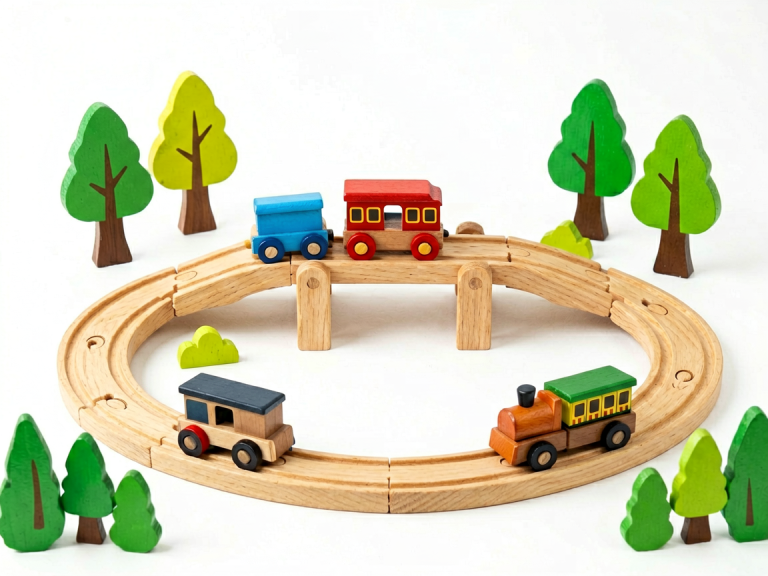
*Construction and Building Play*: LEGO, K’NEX, magnetic tiles, and other construction toys allow children to apply principles of physics, geometry, and engineering. An eight-year-old designing a stable bridge or a working pulley system learns through trial and error. Adding challenges — “build the tallest tower that can hold a small ball” — turns free play into a problem-solving exercise. Research shows that construction play correlates with improved spatial reasoning, which is a strong predictor of later success in STEM fields.
*Imaginative and Role-Playing*: At eight, pretend play shifts from simple fantasy to more complex scenarios like running a restaurant, operating a spaceship, or being a news reporter. These activities require children to adopt perspectives, create narratives, and use language in flexible ways. More importantly, they provide a safe laboratory for practicing social scripts — how to order politely, how to handle a dissatisfied customer, how to lead a team. Teachers and parents can gently scaffold this by providing props, suggesting dilemmas, or asking open-ended questions. Such play also builds literacy: children often write menus, create signs, or compose scripts.
*Physical and Outdoor Play*: Eight-year-olds need active play for their developing bodies and brains. Games with rules — dodgeball, tag, soccer, obstacle courses — teach spatial awareness, motor planning, and teamwork. Recess and free outdoor play are not luxuries: studies confirm that physical activity boosts attention, memory, and mood. Even simple activities like climbing trees or balancing on a beam require risk assessment and proprioceptive learning. Unstructured outdoor play, where children themselves create games, is especially valuable for fostering creativity and social negotiation.
*Digital Play (with Purpose)*: It is a mistake to dismiss all screen time as passive. Many digital games for eight-year-olds offer robust learning opportunities. Coding games like Scratch Jr. or Lightbot teach computational thinking through play. Math apps like DragonBox or Prodigy turn algebra into puzzle-solving. Strategy games like “Minecraft” in creative mode allow for sophisticated engineering and collaboration. The key is to choose games that require active thinking, not just tapping or watching. Parents should play alongside, discuss strategies, and set limits to ensure balance.
Practical Strategies for Parents and Educators
Adults play a critical role in facilitating learning through play. Here are actionable strategies for maximizing the educational value of play for eight-year-olds.
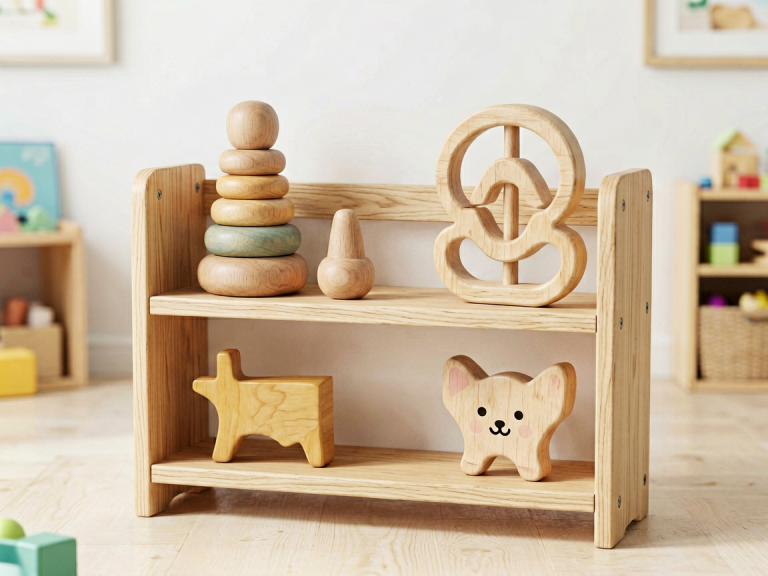
*Create a Rich Environment*: Provide a variety of open-ended materials: building blocks, art supplies, board games, costumes, books, and puzzles. Rotate toys to maintain novelty. Ensure there is adequate time for uninterrupted play — school-age children need at least an hour of free play daily, not just during recess but also at home.
*Be a Play Partner, Not a Director*: The most effective adults join the play as co-learners, asking questions like “What would happen if we changed this rule?” or “How did you figure that out?” Avoid taking over or correcting mistakes immediately. Let the child experience consequences and discover solutions. After play, engage in reflective conversation: “What was the hardest part? What did you learn about making a strong argument in that debate game?”
*Incorporate Academic Skills Naturally*: Seize opportunities within play to practice reading, writing, and math. When playing a board game, ask the child to read the instructions aloud. When playing store, have them calculate change. When building, measure lengths. These embedded learning moments are far more effective than worksheets because they are contextual and meaningful.
*Balance Structure and Freedom*: Some structured play (like a board game with fixed rules) is valuable, but children also need unstructured, child-led play where they invent their own rules. Both types build different skills. A good weekly schedule might include a family board game night, a block of free building time, and outdoor play with neighbors.
*Observe and Adapt*: Pay attention to what types of play your eight-year-old gravitates toward. Some thrive in competitive games; others prefer collaborative building. Some love dramatic play; others enjoy solitary puzzles. Follow their interests while gently introducing new forms of play to stretch their abilities.
Overcoming Common Challenges
Despite the clear benefits, obstacles often arise. One challenge is the pressure from schools and parents to prioritize “academic” work over play. It is important to understand that play is not at odds with academic achievement — it is a direct pathway to it. When a child struggles with math, a well-designed board game can revisit the same concepts in a low-anxiety context. Another challenge is screen time; the solution is not to ban screens but to curate high-quality interactive content and set clear boundaries. A third challenge is the tendency to overschedule children with extracurricular activities, leaving no time for free play. Guarding unstructured playtime is essential. Finally, some adults feel they need to justify play with measurable outcomes. While it is fine to note that a child improved in reading after playing a word game, the greatest gift of play is that children learn without realizing they are learning — and that joy itself is a valid outcome.
Conclusion
Learning through play is not a new concept, but it remains one of the most underutilized tools in education and parenting. For eight-year-olds, whose cognitive, social, and emotional abilities are blossoming, play offers an unmatched opportunity to build skills in a way that is natural, joyful, and lasting. Whether through a chess match that sharpens logic, a building project that teaches physics, or a pretend bakery that hones math and empathy, play transforms abstract concepts into living experiences. As educators and parents, our task is not to replace play with worksheets but to elevate play by being thoughtful observers, enthusiastic participants, and wise designers of environments. When we trust in the power of play, we give eight-year-olds the most precious gift: the confidence that learning is something they can do — and want to do — every single day. Let us champion play, not as a break from education, but as its most authentic and powerful form.