The Power of Unplugged Play: Screen-Free Learning Through Play for Kids
Introduction: Why Screen-Free Play Matters in a Digital Age
In an era where children as young as two years old can swipe a tablet before they can tie their shoes, the concept of screen-free learning through play has become both a nostalgic ideal and a pressing necessity. The average child in the United States spends over seven hours a day in front of screens, according to the American Academy of Pediatrics, and this number has only risen since the pandemic. Yet research consistently shows that the most profound learning happens not through glowing pixels but through hands-on, unstructured, and imaginative play. Screen-free learning through play is not about rejecting technology entirely; it is about intentionally creating space for the kind of deep, embodied, and social learning that screens cannot provide. This article explores why play is the brain’s preferred way of learning, what types of screen-free play yield the richest cognitive and emotional benefits, and how parents and educators can integrate these practices into daily life. By the end, you will understand that turning off the screen is not a deprivation but an invitation to a richer world of discovery.
The Science Behind Play-Based Learning
How Play Shapes the Developing Brain
Neuroscientific research has illuminated why play is so essential for children’s learning. When a child engages in free play—whether building a fort, pretending to be a superhero, or digging in the sand—multiple regions of the brain are activated simultaneously. The prefrontal cortex, responsible for executive functions like planning, self-regulation, and decision-making, is exercised as children negotiate rules and roles. The limbic system, which processes emotions, helps children navigate frustration, joy, and cooperation. Meanwhile, the motor cortex and cerebellum are honed through physical movement. This holistic activation is difficult to replicate on a screen, where learning is often passive and compartmentalized. Dr. Stuart Brown, founder of the National Institute for Play, argues that play is a biological drive, as essential as sleep and nutrition. In his studies, animals deprived of play grew up unable to navigate social hierarchies or solve novel problems. Human children are no different: screen-free play provides the raw material for neural connections that underpin creativity, empathy, and resilience.
The Limitations of Screen-Based Learning
While educational apps and videos have their place, they often fall short of true learning. Studies show that children under two learn less from screens than from real-life interactions—a phenomenon known as the “video deficit effect.” For older children, screen-based learning can lead to shorter attention spans, reduced ability to delay gratification, and lower levels of intrinsic motivation. Screens tend to reward speed and immediate feedback, whereas real-world play teaches patience, trial and error, and the satisfaction of slow mastery. Moreover, screens eliminate the sensory richness of learning: the feel of rough bark under fingers, the sound of leaves crunching, the smell of mud after rain. These sensory inputs are crucial for building a child’s understanding of the physical world. Screen-free learning through play does not just teach academic concepts; it teaches children how to learn.
Types of Screen-Free Play That Foster Deep Learning
Imaginative and Pretend Play
The most powerful screen-free learning often looks like “just playing.” When a four-year-old dresses up as a doctor and treats a stuffed animal, she is not merely entertaining herself. She is practicing language skills: she narrates the diagnosis, asks questions, and uses new vocabulary. She is developing empathy by imagining the patient’s feelings. She is learning problem-solving as she decides which toy stethoscope to use or how to bandage an invisible wound. This kind of open-ended, unstructured pretend play builds what psychologists call “theory of mind”—the ability to understand that others have thoughts and feelings different from one’s own. It also strengthens narrative skills, which are the foundation of reading comprehension. To encourage this, parents can provide simple props (old clothes, boxes, kitchen utensils) and then step back. The magic happens when adults resist the urge to direct the play.
Construction and Building Play
Blocks, LEGO bricks, magnetic tiles, and even sticks and stones are tools for learning physics, geometry, and engineering. When a child builds a tower that keeps falling over, they are conducting experiments in gravity, balance, and material strength. They learn that a wider base provides more stability—a principle that later appears in physics class. Construction play also teaches persistence: a child who fails multiple times before finally erecting a stable bridge learns that failure is not final but a step toward success. Unlike screen-based building games, real blocks offer immediate physical feedback. The tower actually collapses; the child feels the vibration and hears the clatter. This multisensory feedback is critical for embodied cognition—the understanding that knowledge is grounded in bodily experience. Parents can enhance this learning by asking open-ended questions: “What do you think will happen if you put this big block on top?” or “How could you make the bridge stronger?”
Nature and Outdoor Play
No screen can replicate the complexity of the natural world. A child playing in a garden or a forest engages in what biologist E.O. Wilson called “biophilia”—the innate human tendency to connect with living things. Picking up a caterpillar, watching ants carry crumbs, or splashing in puddles are science lessons in real time. Nature play teaches observation, categorization, and hypothesis testing. For example, a child who notices that some rocks are wet under a tree might hypothesize that rainwater drips from the leaves. They can then test this by waiting for rain or watering the tree. Outdoor play also promotes physical development: climbing, running, balancing, and digging build gross motor skills and body awareness. Moreover, time in nature has been shown to reduce stress, improve attention, and even mitigate symptoms of ADHD. Screen-free learning outdoors is not just about science; it is about cultivating wonder and a sense of belonging in the world.
Cooperative and Social Games
Board games, card games, and group games like tag or hide-and-seek are powerful vehicles for social-emotional learning. When children play a game with rules, they learn to take turns, follow instructions, handle winning and losing gracefully, and collaborate toward a common goal. Unlike solitary screen time, these games require reading facial expressions, interpreting tone of voice, and negotiating conflicts. For instance, a game of “Duck, Duck, Goose” teaches impulse control (waiting for your turn) and empathy (not chasing too aggressively). Strategy games like chess or checkers build planning and foresight. Even simple games like “I Spy” sharpen observational skills and vocabulary. The key is that these interactions are face-to-face, which helps children develop the social intelligence that is increasingly rare in a screen-saturated world.
Arts, Crafts, and Sensory Play
Painting with fingers, molding clay, cutting paper, or mixing playdough are not just mess-making activities—they are foundational for cognitive development. Sensory play activates neural pathways associated with fine motor skills, hand-eye coordination, and spatial reasoning. When a child mixes red and blue paint and sees purple, they are learning about cause and effect, color theory, and the joy of discovery. Craft projects that involve cutting, gluing, and assembling teach sequencing, planning, and attention to detail. Moreover, art allows for emotional expression: a child who is angry might scribble fiercely, while a calm child might make gentle swirls. Unlike screen-based drawing apps, real art provides tactile feedback—the resistance of paper, the smell of glue, the texture of fabric. It also encourages divergent thinking (multiple solutions to a problem) rather than convergent thinking (one correct answer). Parents can set up a low-stakes art station with recyclable materials and let the child’s imagination lead.
Practical Strategies for Integrating Screen-Free Play into Daily Life
Create a Play-Friendly Environment
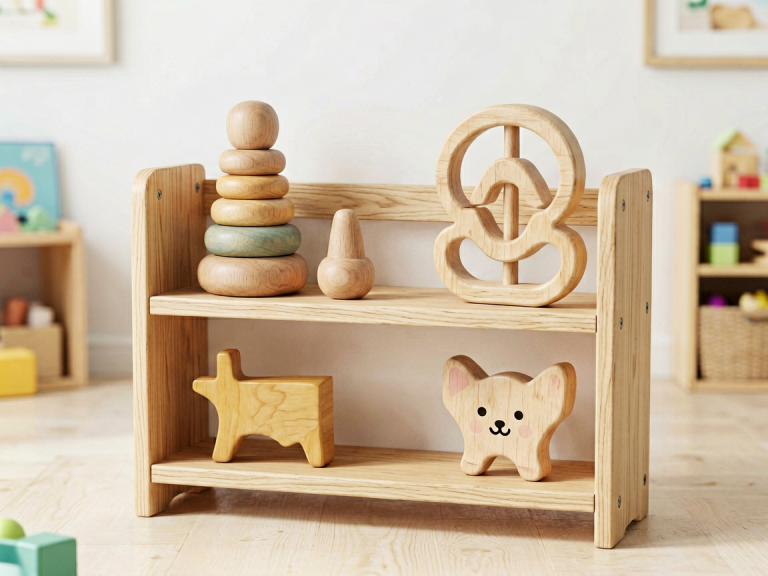
The first step in promoting screen-free learning through play is to design the physical space to invite it. This means having accessible, organized shelves with open-ended toys (blocks, art supplies, costumes, books) rather than bins of single-purpose plastic toys. Rotate toys regularly to keep interest high. Minimize clutter so that a child can find what they need without frustration. Crucially, remove screens from the play area. A TV in the corner, even if turned off, sends a subconscious signal that the screen is always an option. Instead, designate a “screen-free zone” in the home—perhaps the living room during certain hours—where everyone engages in real-world activities. Parents should model this behavior by reading, cooking, or doing crafts themselves rather than scrolling on phones.
Establish Screen-Free Routines
Habits are built through consistency. Designate specific times of the day as screen-free learning windows: for example, after school from 3:00 to 5:00 pm, or during meals, or the hour before bedtime. Use these times for family play: a board game, a walk in the park, or a collaborative art project. The predictability of a routine helps children accept the lack of screens because they know what to expect. For younger children, a visual schedule can help: a picture of blocks next to a clock showing 3 pm. For older children, explain the “why” behind the no-screen time—that playing in real life helps their brain grow stronger. Avoid using screens as a reward for completing playtime; this can inadvertently devalue play. Instead, frame screen-free play as the primary, valuable activity.
Embrace Boredom
One of the greatest enemies of screen-free play is the adult impulse to constantly entertain or structure children’s time. Boredom is not a problem to be solved; it is a catalyst for creativity. When children are bored, they are forced to invent their own games, stories, and worlds. This is where the deepest learning occurs. Resist the urge to provide a digital pacifier. Instead, say, “I’m sure you’ll think of something,” and then step back. You might be surprised at the elaborate spaceship built from couch cushions or the intricate fairy village crafted from leaves and acorns. Learning to tolerate boredom is itself a life skill that screens erode.
Combine Learning Goals with Play Naturally
Parents often worry that screen-free play is not “educational” enough. But learning can be woven into play without turning it into a lesson. For example, a child playing store learns math (counting money, making change), literacy (writing price tags), and social skills (customer service). A child building a fort learns geometry (angles, triangles) and physics (structural integrity). Parents can gently scaffold this learning by asking open-ended questions: “How many more blocks do you need to make the wall as tall as this?” or “What happens if you make the door smaller?” The goal is not to quiz the child but to follow their curiosity. This kind of guided play—where the adult sets up the environment and asks thoughtful questions—has been shown to be even more effective for learning than either pure free play or direct instruction.
Overcoming Challenges and Resistance
Dealing with Screen Addiction
Many children, especially those who have had extensive screen exposure, will initially resist screen-free time. Screens are designed to be addictive, activating dopamine pathways in the brain. Transitioning away from them can cause withdrawal-like symptoms: whining, tantrums, and complaints of boredom. The first few days or weeks may be difficult. The key is to be firm and consistent while also offering rich alternatives. If a child cries for a tablet, calmly acknowledge their feeling: “I know you want to watch your show right now, but our screen-free time is from now until dinner. Let’s go outside and see if we can find any worms.” Over time, as the pleasures of real-world play reengage their natural reward system, the resistance fades. Children often rediscover a joy they had forgotten.
Balancing with Other Obligations
Modern families are busy, and screen-free play can feel like one more demand on a packed schedule. However, screen-free play does not have to be elaborate or time-consuming. Even 20 minutes of focused, unstructured play a day is beneficial. It can happen while you cook dinner—give a toddler some plastic bowls and spoons on the kitchen floor. It can happen in the car—play “I Spy” or listen to an audio story rather than a video. It can happen during bath time with floating toys and cups. Be creative about integrating play into existing routines. Also, remember that play includes outdoor free time, which does not require adult direction. Let children play in the backyard or at a park while you sit nearby. Quality matters more than quantity.
Addressing Concerns About Academic Readiness
Some parents worry that stepping away from educational apps will put their child behind academically. The evidence suggests the opposite. The World Economic Forum and numerous educational research organizations have identified creativity, collaboration, and critical thinking as the top skills needed for the 21st-century workforce. These are exactly what screen-free play cultivates. Moreover, foundational academic skills like literacy and numeracy are often learned more deeply through playful contexts than through rote drills. A child who bakes cookies with a parent learns fractions (measuring cups), reading (following a recipe), and chemistry (how heat transforms ingredients). The real risk of too much screen time is not that children will fall behind in academics; it is that they will lose the capacity for deep focus, original thinking, and genuine human connection.
Conclusion: A Call to Reclaim Play
Screen-free learning through play is not a rejection of modernity but a reclamation of childhood’s birthright. The most powerful learning moments are often the ones that leave no digital trace: the mud pie baked in the garden, the fort that stood against the wind, the whispered secret shared with a friend behind the sofa. These experiences build the cognitive, social, and emotional foundations that screens can only simulate. As parents, educators, and societies, we have a responsibility to create environments where children can play freely—not because it is cute or nostalgic, but because it is the most effective, humane way to learn. The next time a child asks for a screen, consider offering them a box of old cardboard tubes, a handful of pebbles, or a trip to the nearest patch of dirt. You might just witness the start of something extraordinary: a mind at play, discovering the world on its own terms. That is the kind of learning that lasts a lifetime.