The Power of Screen-Free Language Toys: Cultivating Communication and Creativity in a Digital Age
Introduction
In an era where digital screens dominate every corner of a child’s life—from tablets at breakfast to smartphone games during car rides—parents and educators are increasingly concerned about the impact of excessive screen time on language development. The American Academy of Pediatrics has long warned that passive screen exposure can delay speech acquisition, reduce conversational turns, and weaken social-emotional skills. Yet the solution is not to ban technology outright, but to rediscover the profound value of analog, hands-on play. Screen-free language toys—simple, tactile, and imagination-driven—offer a powerful antidote. They transform learning into a dynamic, sensory-rich experience, nurturing vocabulary, grammar, narrative abilities, and above all, the joy of human connection. This article explores what these toys are, why they work, and how they can reshape the way children acquire language.
—
What Are Screen-Free Language Toys?
Screen-free language toys are physical objects designed to promote verbal communication, listening comprehension, and literacy without the use of screens, internet connectivity, or digital audio. Unlike electronic talking books or language apps, these toys rely entirely on a child’s manual manipulation and social interaction with caregivers or peers.
Common examples include:
- Alphabet blocks and magnetic letters – for letter recognition, spelling, and word formation.
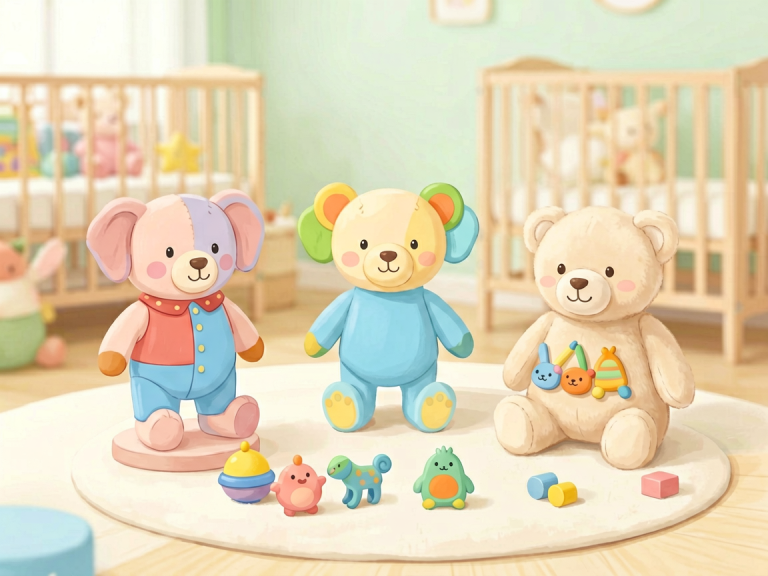
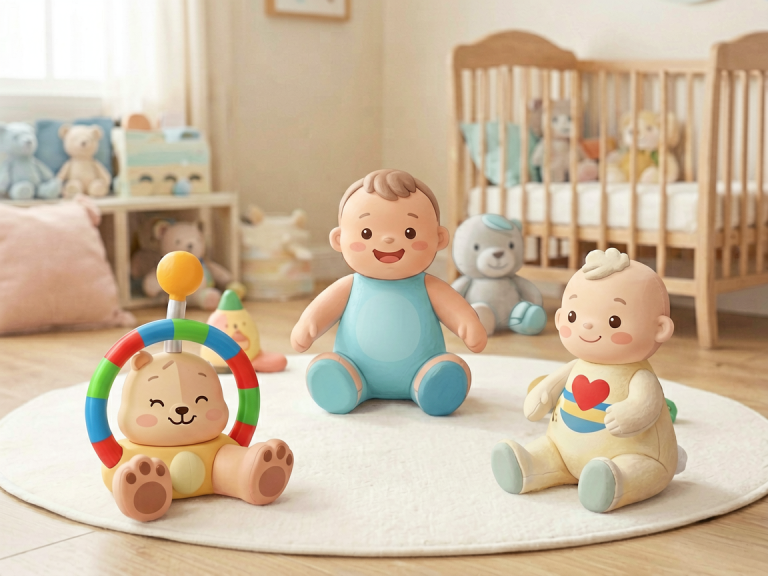
- Puppets and finger dolls – for role-playing dialogue and storytelling.
- Storytelling cards or sequencing cards – for building narratives and logical order.
- Picture books with textured pages – for vocabulary expansion and sensory engagement.
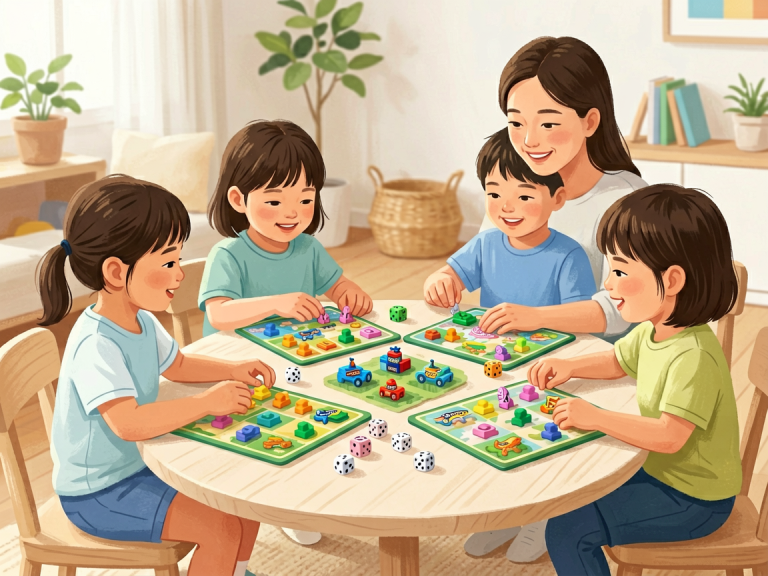
- Board games that require verbal instruction – such as “I Spy,” “Simon Says,” or cooperative memory games.
- Lacing beads with letters – for fine motor skills and letter-sound association.
- Play telephones (non-digital) – for practicing conversational turn-taking.
What unites these toys is their open-ended nature. A set of wooden blocks can become a castle, a spaceship, or a marketplace—each scenario demanding new words, questions, and explanations. Because there is no predetermined script or algorithm, the child must actively generate language, adapt to the reactions of playmates, and negotiate meaning. This active construction of language is far more beneficial than passively absorbing pre-recorded phrases.
—
The Cognitive and Linguistic Benefits of Analog Play
Screen-free language toys are not just nostalgic artifacts; they are scientifically grounded tools that support key aspects of language development.
1. Active vs. Passive Learning
When children use a screen-based app, they often receive ready-made answers and rewards. The app “feeds” them information. In contrast, playing with a set of alphabet magnets requires the child to decide which letters to pick, in what order, and what word to spell. If the word is misspelled, a parent or peer can gently correct it in real time. This active trial-and-error process deepens neural connections and enhances long-term retention of vocabulary and spelling patterns.
2. Vocabulary Growth Through Context
A puppet introduces new words not through a voiceover but through the child’s own voice. “The bear is hungry. What does he want to eat?” The child must retrieve food-related words from memory and even invent new ones. Studies show that children who engage in guided pretend play with screen-free toys demonstrate significantly larger receptive and expressive vocabularies than those who spend equivalent time with screen media. The reason is simple: real objects create concrete, multisensory associations (texture, weight, smell) that anchor words in a child’s brain.
3. Narrative Skills and Grammar
Storytelling cards or sequence puzzles encourage children to order events logically: “First the caterpillar ate a leaf, then it made a cocoon.” This sequential thinking is the bedrock of syntax and story grammar. When children describe what they are building or acting out, they naturally experiment with past tense, conjunctions (“and,” “but,” “because”), and complex sentences. A screen-based game rarely prompts a child to explain “why” something happened—but a frustrated puppet character asking “Why did you take my honey?” does.
4. Social Interaction and Turn-Taking
Language is inherently social. Screen-free toys almost always require another person—a parent, sibling, or friend—to function fully. A telephone game, for example, demands that the child listen, respond, and wait for a reply. These back-and-forth exchanges are the very essence of conversational competence. Research from the *Journal of Child Language* shows that each conversational turn a child engages in with a caregiver is linked to higher language scores at age 2–3. Screen-free toys naturally increase the number of these turns.
5. Attention and Self-Regulation
Screens are designed to capture attention with rapid scene changes and bright effects. In contrast, building a story with wooden figures requires sustained focus. A child must hold a narrative thread in mind, remember what happened earlier, and plan what comes next. This ability to delay gratification and maintain concentration is crucial for later reading comprehension and academic success.
—
Comparing Screen-Based and Screen-Free Language Learning
While screens are not inherently evil, a growing body of evidence highlights critical differences between digital and analog language environments.
The Screen Problem
- Passive consumption: Even “educational” apps often present language as a one-way stream. The child taps, the app speaks. This does not teach the child how to *produce* language.
- Reduced social interaction: A child watching a cartoon or playing a solo app misses opportunities for spontaneous conversation with caregivers. Studies from the University of Washington found that for every additional minute of screen time, infants heard 7 fewer adult words and gave 5 fewer vocalizations.
- Fragmented attention: Fast-paced digital media trains the brain to expect constant novelty, making it harder for children to engage with slower, intentional conversation.
- Lack of multisensory feedback: A plastic letter has a shape, a weight, a temperature, and a texture. A virtual letter on a screen has none of these. Sensory inputs strengthen memory and meaning.
Why Screen-Free Succeeds
- Open-ended possibilities: A single puppet can be a doctor, a chef, or a dragon—generating dozens of distinct conversations. A language app has fixed responses.
- Parental scaffolding: With screen-free toys, parents naturally comment, ask questions, and expand on what the child says. This “language nutrition” is irreplaceable.
- No algorithmic pressure: There are no timers, scores, or rewards. The child is free to explore at their own pace, reducing anxiety and fostering intrinsic motivation.
- Physical engagement: Manipulating toys strengthens fine motor skills and hand-eye coordination, which are linked to neural pathways for language (the same area of the brain governs both finger movements and speech articulation).
Of course, screens can be useful tools for older children learning a second language, but for early language development (ages 0–6), screen-free toys consistently outperform digital alternatives.
—
Practical Examples of Screen-Free Language Toys in Action
To understand how these toys work, let’s walk through three real-life play scenarios.
Scenario 1: Alphabet Blocks at the Kitchen Table
A 3-year-old named Leo sits with his mother and a basket of wooden letter blocks. She says, “Let’s spell your name: L-E-O.” Leo picks the L, then E, then O. “What sound does L make?” His mother asks. “Llll,” he says. She claps. Next, Leo sees the block “C” and says, “That’s for cat!” He builds a tower of blocks, labeling each: “This is the cat’s house. The cat is sleeping.” His mother expands: “The tired cat is sleeping in a cozy house.” This single play session teaches letter recognition, phonemic awareness, sentence expansion, and narrative—all without a single beep or flash.
Scenario 2: Storytelling Cards During Playdate
Two 5-year-olds, Maya and Jake, sit with a stack of picture cards showing a dog, a tree, a rainstorm, and a rainbow. They must arrange the cards in order and tell a story. “First the dog was happy,” says Maya. “Then it started raining.” Jake adds, “The dog hid under the tree. Then the rainbow came and the dog danced!” They argue playfully about whether the dog should dance or jump. In this negotiation, they practice conjunctions, sequencing words (“first,” “then,” “finally”), and emotional vocabulary. No app could replicate the spontaneous creativity of this interaction.
Scenario 3: Puppet Role-Play at Bedtime
A father uses a hand puppet (a friendly dinosaur) to help his 4-year-old daughter, Emma, prepare for a new sibling. The dinosaur asks, “What do babies eat?” Emma answers, “Milk.” Dinosaur: “Do babies play?” Emma: “No, they just sleep and cry.” Dinosaur: “I’m a little scared of the baby. Are you?” Emma: “No, I’m going to teach her how to share.” This puppet-mediated conversation allows Emma to express emotions and practice future-tense verbs, all within a safe, non-judgmental space.
—
Why Parents and Educators Should Embrace These Toys
The benefits of screen-free language toys extend beyond language itself.
For Parents:
- Quality bonding: Playing together strengthens attachment and creates positive associations with learning.
- Reduced guilt: No more worrying about “just one more episode.” You know your child is actively growing.
- Cost-effective: A set of wooden blocks or a pack of storytelling cards can be used for years, unlike subscriptions to digital apps.
For Educators:
- Classroom versatility: Teachers can use puppets for circle time, magnetic letters for literacy centers, and sequence cards for small-group instruction.
- Differentiation: Screen-free toys can be adapted for children with different language levels. A beginning speaker might just name objects; an advanced speaker can write a full story.
- No tech issues: No batteries, Wi-Fi, or updates. Play happens immediately.
For Children:
- Autonomy: The child controls the narrative, not the software. This fosters confidence and a sense of ownership over learning.
- Resilience: When a block tower falls, the child learns to problem-solve and rephrase their plan. Screens rarely offer such rich failure-and-recovery experiences.
- Creativity: A cardboard tube becomes a telescope, a scarf becomes a cape. Language expands to describe these imagined worlds.
Many early childhood experts now advocate for “screen-free zones” at home and in classrooms. Even the World Health Organization recommends no screen time for children under 2 and limited screen time for older preschoolers. Replacing even 30 minutes of daily screen exposure with screen-free language play can dramatically improve a child’s vocabulary, sentence complexity, and social communication.
—
Conclusion: A Call to Return to Tangible Play
In the rush to digitize childhood, we must not forget that language is a human art—one that thrives on touch, sound, movement, and face-to-face interaction. Screen-free language toys are not a rejection of technology; they are a mindful choice to prioritize the kind of play that builds the foundation for all future learning. A child who learns to weave a story with wooden puppets will later have the narrative skills to write a compelling essay. A child who learns to negotiate a turn with a friend over a set of alphabet cards will later have the conversational grace to collaborate in a boardroom.
The next time you see a shiny new language app promising to teach your toddler to read, pause. Reach instead for a set of unplugged blocks, a fabric puppet, or a deck of picture cards. Sit down on the floor. Ask a question. Listen to the answer. That simple act—without a screen, without a charger, without a subscription—is the most powerful language lesson a child can ever receive. Let us give our children the gift of silence, space, and the endless stories that only their own hands and voices can create.
[Word count: 1,218]