Imaginative Play and Language Growth: Engaging Play Ideas for 7-Year-Old Girls
Language development in early childhood is a dynamic process that flourishes best when woven into meaningful, joyful activities. For seven-year-old girls, play is not merely a pastime—it is the primary vehicle through which they explore vocabulary, sentence structure, narrative thinking, and social communication. At this age, children typically possess a vocabulary of several thousand words, begin to understand more complex grammar, and enjoy creating elaborate stories. However, the most effective language learning occurs not through drills or worksheets but through immersive, playful experiences that spark curiosity and imagination. This article presents a curated collection of play ideas specifically designed for seven-year-old girls, each carefully chosen to nurture different aspects of language development. From dramatic role-play to word games, outdoor adventures to creative writing, these activities transform language practice into natural, joyful discovery. Parents, educators, and caregivers can use these ideas to create rich linguistic environments where girls feel empowered to express themselves, experiment with new words, and build confidence in their communication skills.
Storytelling Theater: Puppets, Props, and Performance
One of the most powerful ways to enhance language development is through storytelling, and for seven-year-old girls, transforming stories into mini-theater productions is irresistible. Gather a collection of simple hand puppets—sock puppets, finger puppets, or even paper bag puppets—and encourage the child to create her own characters. Provide props such as small scarves, toy furniture, or cardboard boxes that can become castles, forests, or kitchens. The process of inventing a plot, assigning dialogue, and performing for an audience (even an audience of stuffed animals) demands that the child organize her thoughts into coherent sequences. She must decide who speaks first, how characters resolve conflicts, and what happens at the end. This narrative thinking directly strengthens her ability to tell complete stories in conversation and writing.
To maximize language growth, introduce specific prompts. For example, ask: “What would happen if a dragon came to your school?” or “Tell me a story about a girl who finds a magic key.” These open-ended questions encourage the child to use descriptive language, explore cause-and-effect relationships, and experiment with different tenses. As she performs, she naturally practices dialogue, which requires using varied sentence structures (“The dragon said, ‘I’m hungry!’” versus “The dragon roared, ‘I want pizza!’”). You can also join in by taking a second character, modeling richer vocabulary or more complex sentences, and then inviting her to mimic or build upon them. Over time, this activity expands her lexicon, improves her understanding of story grammar (beginning, middle, end), and boosts her confidence in public speaking—all while she gigs and laughs.
Word Games and Rhyming Challenges: Playful Phonics and Vocabulary
Seven-year-old girls are often fascinated by wordplay, riddles, and anything that feels like a puzzle. Board games such as “Boggle Junior” or “Scrabble Junior” are excellent starting points, but homemade versions can be even more engaging. Create a simple “rhyme race” where you say a word (e.g., “cat”) and the child has to name as many rhyming words as possible within thirty seconds. This reinforces phonemic awareness, a critical skill for reading and spelling. For a more advanced twist, ask her to make up a silly sentence using two or three of the rhyming words: “The fat cat sat on a mat and ate a bat.” This encourages syntactic flexibility and creativity.
Another idea is “Story Cubes”—dice with pictures on each face. Roll the dice, and the child must incorporate the images into a short spoken story. This activity pushes her to make quick connections between unrelated objects, use transition words (“first,” “then,” “because”), and build a cohesive narrative. You can also create a “word jar” filled with interesting adjectives, verbs, and nouns on slips of paper. Each day, pull out three words and challenge her to use all three in a single sentence. For example, “glimmering,” “whisper,” and “telescope” might become “I saw a glimmering star through my telescope and heard a whisper from the sky.” This expands her vocabulary and teaches her how to combine parts of speech grammatically.
Role-Playing and Pretend Play: Real-World Language in Action
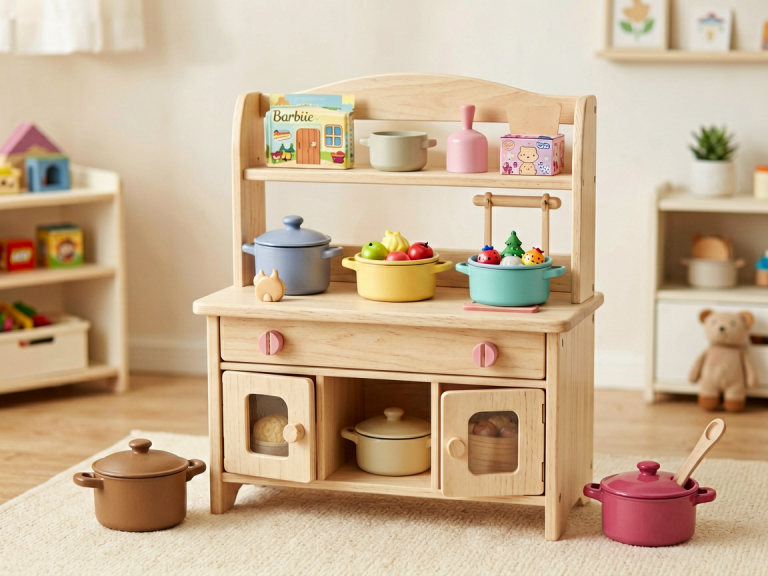
Imaginative role-play is a cornerstone of language development at age seven. Girls love to pretend they are teachers, doctors, shopkeepers, astronauts, or princesses. This type of play is not just fun—it immerses them in authentic language contexts. Set up a “restaurant” at home with a simple menu, notepad, and pretend food. The child takes on the role of server, taking orders, asking questions (“Would you like cheese on your burger?”), and describing the dishes (“Our special today is spaghetti with a creamy tomato sauce”). Meanwhile, you or a sibling play the customer, using polite requests and follow-up questions. This interactive dialogue teaches conversational turn-taking, question formation, and the use of polite language.
For a more structured language extension, introduce “interview” play. Have the child pretend to be a famous explorer, inventor, or character from a book. You act as a journalist asking questions: “What was the most exciting part of your journey?” “How did you feel when you discovered the hidden cave?” She must formulate answers that are logical, descriptive, and expressive. This activity strengthens her ability to answer open-ended questions—a skill that directly supports comprehension and writing. Additionally, role-play often involves negotiating roles and resolving pretend conflicts, which encourages the use of persuasive language (“But I was the doctor last time, so now it’s my turn to be the patient”) and emotional vocabulary (“I feel frustrated when you don’t listen”).
Creative Writing and Journaling: From Oral to Written Language
While spoken language is often more natural at this age, transitioning to written expression is a key developmental milestone. Creative writing activities that feel like play rather than homework are highly effective. Provide a “magic notebook” decorated with stickers, and let the child keep a daily or weekly journal. However, instead of asking “What did you do today?” (which can feel boring), offer playful prompts: “Write a letter to your favorite book character,” “Describe the best birthday party you could ever imagine,” or “If you had a pet unicorn, what would you name it and what adventures would you have?” These prompts spark imaginative writing while requiring the child to organize thoughts on paper.
Another engaging activity is “story chains.” Start a story with one sentence written on a piece of paper: “Once upon a time, a little girl found a mysterious key in her backyard.” The child then adds the next sentence, then you add another, and so on. This collaborative writing builds narrative skills, encourages the use of transition words, and allows her to see how stories develop logically. She also learns to read back what has been written, reinforcing print awareness and spelling. For girls who struggle with handwriting, allow dictation—she tells you the words, and you write them down. This removes the physical barrier and lets her focus on language creativity. Later, she can copy her own dictated story, reinforcing letter formation and vocabulary.
Board Games and Card Games: Structured Social Language
Structured games offer a different but equally valuable language learning experience. Games like “Guess Who?” require asking yes-or-no questions, which helps children formulate grammatically correct interrogative sentences (“Does your person have red hair?”). “Charades” or “Pictionary” encourage describing actions or objects without words (in charades) or with limited words (in Pictionary), pushing the child to find alternative ways to express meaning. The social negotiation involved in games—taking turns, explaining rules, congratulating winners—builds pragmatic language skills, including tone, politeness, and the ability to repair misunderstandings.
For vocabulary expansion, try “I Spy” with a twist. Instead of just colors, use categories: “I spy something that starts with the letter S,” “I spy something that is a synonym for ‘happy’,” or “I spy something that is a compound word.” This turns a simple game into a linguistic treasure hunt. Similarly, “Twenty Questions” can be adapted to practice descriptive adjectives. The child thinks of an object, and you ask questions like “Is it soft?” “Is it bigger than a loaf of bread?” She must provide accurate answers, which reinforces her ability to categorize and describe. These games also improve listening comprehension and memory, both of which are fundamental to language development.
Outdoor Scavenger Hunts: Learning Language Through Exploration
The outdoors provides a rich, multisensory environment for language growth. Create a scavenger hunt list that includes not only objects to find (a pinecone, a feather, a smooth stone) but also linguistic challenges. For example, “Find something that is emerald green,” “Find a leaf that looks like a heart,” “Find a stick that is longer than your arm.” As the child searches, she practices comparative language (“longer than,” “shorter than”), color adjectives, and shape descriptors. You can also include items that require reading: “Find a sign with the letter G,” “Find something that has the word ‘caution’ on it.” This promotes print awareness in real-world contexts.
After collecting items, engage in a “show and tell” session. The child describes each found object in detail: where she found it, what it feels like, why she chose it. This narrative practice extends her spoken language and builds vocabulary related to nature (bark, texture, ridges, shimmer). For an extra language boost, encourage her to create a short poem or song about her favorite find. The outdoor setting also naturally reduces stress, making language learning feel like an adventure rather than a chore.
Music and Songwriting: Rhythm, Rhyme, and Repetition
Music is a universal language developer, and seven-year-old girls often adore singing, dancing, and creating tunes. Simple songwriting activities can dramatically improve phonemic awareness and vocabulary. Start by taking a familiar tune (like “Twinkle, Twinkle, Little Star”) and challenge the child to change the lyrics to tell a story about her day. For instance: “Playing, playing in the park, / Swinging high until it’s dark.” This forces her to match syllables and rhymes, which strengthens phonological skills. You can also invent new songs from scratch: “What would a song about a friendly monster sound like?” Encourage her to write down the lyrics (or dictate them) and then perform with homemade instruments like a shaker or drum.
Another idea is “call-and-response” chanting. You sing a phrase, and she repeats it, then adds her own. For example, you sing: “I see a big red dog,” and she responds: “He’s sleeping on a log.” This back-and-forth builds listening skills and spontaneity in language production. Rhythm games (clapping patterns to syllables) also help with word segmentation—a precursor to reading fluency. By associating language with melody and movement, these activities wire linguistic concepts into memory more deeply.
Conclusion: Play as the Foundation of Linguistic Confidence
Language development for seven-year-old girls is not a linear curriculum to be delivered; it is a living, breathing process that thrives in the soil of play. The ideas presented here—from puppet performances to scavenger hunts, word games to songwriting—each target different facets of communication: vocabulary expansion, narrative structure, social pragmatics, phonemic awareness, and written expression. What unites them is the element of joy. When a child is laughing, imagining, and exploring, her brain is most receptive to new linguistic patterns. She is not “learning language”; she is *using* language to create worlds, solve problems, and connect with others. As adults, our role is to provide the props, the prompts, and the presence—to step into her imaginary café, ask one more question about her dragon story, or clap along to her silly song. In doing so, we fan the flames of her curiosity and equip her with words that will serve her for a lifetime. The best play ideas are those that respect her agency, ignite her creativity, and leave her feeling that language is a powerful, delightful tool—not a subject to be mastered, but a playground to be enjoyed.