Beyond Play: The Essential Role of Early Learning Toys in Shaping a 10-Year-Old’s Mind
—
Introduction: Redefining “Early Learning” for the Pre-Teen Years
When we hear the phrase “early learning toys,” our minds often jump to colorful rattles, alphabet blocks, and shape sorters designed for toddlers. Yet the concept of early learning does not end once a child enters elementary school. For 10-year-olds, the brain is still undergoing rapid development—particularly in areas related to executive function, abstract reasoning, social cognition, and emotional regulation. At this age, children are no longer simply absorbing basic facts; they are beginning to connect ideas, question the world around them, and develop lifelong attitudes toward learning.
The right toys can serve as powerful catalysts for this cognitive and emotional growth. A 10-year-old stands at a unique crossroads: old enough to handle complex instructions, yet young enough to benefit from hands-on, exploratory play. This essay explores the multifaceted world of early learning toys tailored for 10-year-olds, examining how they support intellectual curiosity, creativity, problem-solving, and social-emotional skills. From sophisticated building sets to strategy board games, each category offers distinct advantages that go far beyond mere entertainment.
—
Cognitive Development: Toys That Train the Brain
1. Logic Puzzles and Brain Teasers
At age ten, children are capable of understanding multi-step processes and hypothetical scenarios. Toys that challenge logical thinking—such as 3D puzzles, Sudoku sets, and Rubik’s Cube variants—help sharpen working memory and pattern recognition. For example, a 3D wooden labyrinth requires the child to visualize spatial relationships and anticipate consequences of each tilt. These toys are not merely games; they are miniature training sessions for the prefrontal cortex, the brain region responsible for planning and impulse control.
2. Advanced Building and Engineering Kits
While younger children might snap together simple Lego blocks, 10-year-olds can handle gear-driven sets, motorized construction kits, and even basic mechanical models. Brands like K’NEX, Meccano, and Lego Technic allow children to follow blueprints or design their own structures, introducing principles of physics (leverage, torque, stability) in a tangible way. Building a working crane or a moving vehicle teaches cause and effect, iterative testing, and the value of perseverance when a structure collapses. These toys bridge the gap between play and early engineering education.
3. Strategy Board Games
Games such as chess, checkers, Settlers of Catan, and Ticket to Ride are far more than pastimes. They demand foresight, resource management, and the ability to predict an opponent’s moves. For a 10-year-old, learning to lose gracefully and adjust strategies is a profound emotional lesson. Moreover, multiplayer board games encourage turn-taking, patience, and verbal reasoning—skills that are essential for academic group work and social interactions.
—
STEM Exploration: Fostering a Scientific Mindset
1. Science Experiment Kits
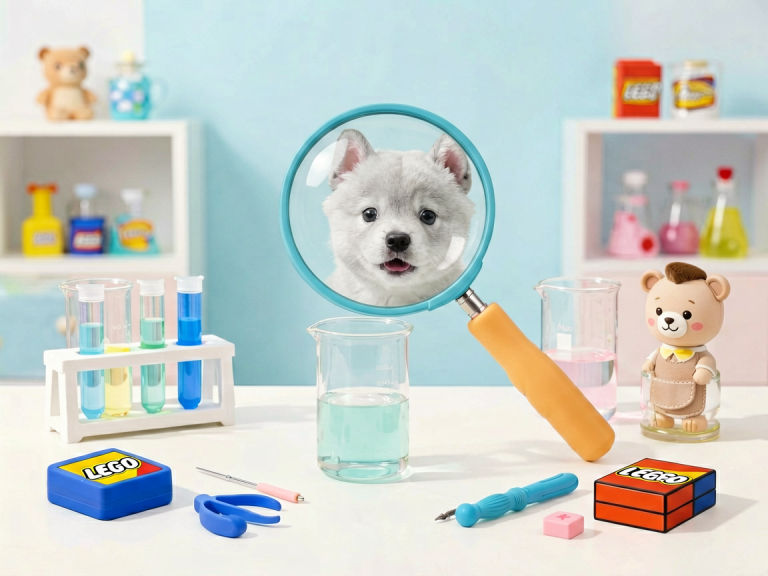
The best early learning toys for 10-year-olds often involve real (but safe) scientific inquiry. Chemistry sets with non-toxic chemicals, crystal-growing labs, and volcano-building kits allow children to hypothesize, observe, and record results. A simple example: a kit that lets a child create a homemade lava lamp using oil, water, and effervescent tablets teaches concepts of density and chemical reactions. These experiences plant seeds for future interest in STEM fields by making abstract concepts concrete and exciting.
2. Robotics and Coding Toys
In an increasingly digital world, understanding programming logic is as fundamental as learning a second language. Toys like littleBits, Sphero BOLT, or LEGO Boost introduce block-based coding and robotics. A 10-year-old can program a robot to navigate a maze, respond to light, or even dance. These toys develop computational thinking—breaking down complex problems into smaller, manageable steps—a skill that transfers directly to math, writing, and daily planning.
3. Microscope and Nature Exploration Kits
While screen-based gadgets are prevalent, a classic microscope or a bug-catching kit offers a different kind of learning: patient observation of the natural world. Examining a leaf’s cell structure or the intricate legs of a beetle fosters scientific curiosity and attention to detail. Paired with a field guide, these toys can ignite a passion for biology or geology that lasts a lifetime.
—
Creativity and Self-Expression: Toys That Nurture Imagination
1. Advanced Art and Craft Sets
At ten, children often move beyond simple coloring books. They are ready for watercolor palettes, charcoal drawing sets, pottery wheels, or jewelry-making kits. These toys encourage aesthetic judgment, fine motor control, and the ability to visualize a finished product before starting. Moreover, creating something original builds confidence. When a child designs a plaster mask or paints a self-portrait, they are learning to express emotions and ideas non-verbally—a skill that supports mental health and communication.
2. Storytelling and Role-Playing Games
Toys that involve narrative creation—such as Rory’s Story Cubes, magnetic storytelling boards, or even elaborate dollhouses and action figure sets—stimulate language development and empathy. A 10-year-old who invents a dialogue between two characters is practicing perspective-taking. Role-playing games (like simplified Dungeons & Dragons for kids) require collaboration, negotiation, and improvisation. These activities are especially valuable for children who may struggle with social cues, as they provide a safe space to experiment with different roles and outcomes.
3. Music and Sound Exploration
Learning an instrument at age ten is ideal because fine motor skills have developed, yet the brain remains highly plastic. However, not every family can afford formal lessons. Electronic keyboards, kalimbas, or even a set of hand drums serve as accessible early learning toys. Some kits allow children to build their own simple instruments, such as a rubber-band guitar, teaching principles of pitch and vibration. Making music boosts memory, coordination, and emotional regulation.
—
Social and Emotional Learning: Toys That Build Character
1. Cooperative Board Games
Unlike competitive games, cooperative board games (like “Forbidden Island” or “Outfoxed!”) require players to work together toward a common goal. For a 10-year-old, this teaches the art of compromise, active listening, and shared decision-making. These toys are especially important in an era where screen time often isolates children. Playing with siblings or friends fosters empathy: a child learns that sometimes the team’s success matters more than individual glory.
2. Emotion Cards and Conversation Starters
While less common as “toys,” card decks designed to prompt discussions about feelings—such as “The Conversation Card Game” or “Feelings in a Jar”—can be powerful tools. A 10-year-old is navigating complex social dynamics at school: cliques, peer pressure, bullying. These toys create a low-stakes environment to talk about anger, jealousy, or embarrassment. They help children develop emotional vocabulary and coping strategies that serve them well into adolescence.
3. DIY Kits with a Community Focus
Some kits, such as “Friendship Bracelet Looms” or “Build a Birdhouse,” can be done collaboratively. The act of making something together—whether a bracelet for a best friend or a shelter for a garden creature—reinforces generosity and responsibility. These toys subtly teach that learning is not just about individual achievement; it is also about contributing to the world and caring for others.
—
Choosing the Right Toy: A Parent’s Guide
Not every toy labeled “educational” is genuinely beneficial for a 10-year-old. Here are a few criteria to consider:
- Open-endedness: The best toys allow multiple ways to play. A set of wooden blocks can become a castle, a spaceship, or a math manipulative. In contrast, a single-purpose electronic toy often loses its appeal after one use.
- Challenge level: A toy should be slightly above the child’s current ability—not so easy that it bores, and not so hard that it frustrates. The “zone of proximal development” applies here. For example, a 500-piece jigsaw puzzle might be perfect for one child while another thrives with a 1000-piece puzzle.
- Interest alignment: A child who loves dinosaurs will learn more from a paleontology excavation kit than from a general chemistry set. Personal interest drives deeper engagement.
- Social potential: Toys that can be played alone or with others offer flexibility. Solo play builds independence; group play builds social skills. Both are essential.
- Screen balance: While coding toys often involve screens, parents should seek a balance with tactile, screen-free toys. The physical act of building, drawing, or manipulating objects activates different neural pathways than swiping a tablet.
—
Conclusion: Play as the Foundation for Lifelong Learning
Early learning toys for 10-year-olds are not a luxury; they are a vital investment in a child’s cognitive, creative, and emotional future. At this age, children are capable of deep concentration, abstract thinking, and complex social interactions. The toys they engage with can either amplify these capacities or leave them dormant.
A well-chosen toy does more than occupy time—it sparks a question: “What happens if I try this differently?” It builds resilience: “My bridge collapsed, but I can rebuild it stronger.” It fosters connection: “Let’s figure this out together.” In an era of standardized tests and screen addiction, the humble toy remains one of the most profound instruments of early learning. Whether it is a box of gears, a pack of artistic pastels, or a deck of strategy cards, the right plaything can transform a ten-year-old’s world from one of passive consumption to active discovery.
So the next time you see a child bent over a chessboard or carefully assembling a circuit, remember: they are not just playing. They are learning how to think, how to feel, and how to become the curious, capable adults of tomorrow.
—
*Word count: approximately 1,480 words.*