Screen-Free Play for Babies: A Vital Alternative to Tablet Time
In an era where digital devices are woven into nearly every aspect of daily life, it is tempting to hand a tablet to a fussy baby for a few minutes of quiet. The glowing screen, the colorful animations, and the instant entertainment seem like a modern parenting miracle. Yet a growing body of research and developmental expertise warns that this convenience comes with hidden costs. For babies—whose brains are developing at an astonishing rate—screen time cannot replace the rich, multi-sensory, and interactive experiences of real-world play. Replacing tablet time with screen-free play is not merely a nostalgic preference; it is a developmental necessity. This article explores why screen-free play is essential for babies and offers practical guidance for making the transition.
The Risks of Early Tablet Exposure for Babies
The American Academy of Pediatrics recommends avoiding all screen media for children under 18 months, with the exception of video chatting. Yet many parents introduce tablets well before that age, often as a pacifier or a distraction. The risks are significant. First, excessive screen time during infancy has been linked to delayed language development. Babies learn language primarily through back-and-forth interactions with caregivers—the coos, the pauses, the facial expressions. A tablet, no matter how educational its app claims to be, cannot replicate this human contingency. When a baby taps a screen and gets a pre-programmed response, the neural wiring for social communication is not strengthened in the same way.
Second, screen exposure can interfere with sleep. The blue light emitted by tablets suppresses melatonin production, and the stimulating content can make it harder for babies to settle. Poor sleep in infancy is associated with a cascade of developmental and behavioral issues. Third, there is concern about attention regulation. Rapidly changing visuals on a screen can overstimulate an infant’s developing brain, potentially making it harder for them to focus on slower-paced, real-world activities like stacking blocks or examining a leaf. Replacing tablet time with screen-free play is therefore a protective measure for a baby’s long-term cognitive and emotional health.
The Cognitive and Sensory Riches of Screen-Free Play
Babies are born scientists. They explore the world through every sense: they taste, they touch, they shake, they drop. Screen-free play offers a sensory banquet that no digital interface can match. Consider the simple act of playing with a set of wooden blocks. A baby feels the smoothness of the wood, the weight in their hand, the clatter when dropped, the slight resistance when trying to stack one block on top of another. Each of these experiences sends rich sensory information to the brain, building neural connections that support problem-solving, spatial reasoning, and fine motor control.
In contrast, a tablet app that simulates stacking blocks requires only a swipe or a tap. The feedback is two-dimensional and immediate, but it lacks the proprioceptive input that tells a baby’s brain “I did that; I caused this object to move in the real world.” Screen-free play also encourages cause-and-effect learning in a more profound way. When a baby pushes a ball and watches it roll under a couch, they learn about object permanence, trajectory, and physics—not through an animation, but through lived experience. This kind of embodied cognition is foundational to later learning in mathematics, science, and even reading.
Furthermore, screen-free play fosters creativity and open-ended exploration. A cardboard box can become a castle, a car, or a hiding place. A spoon and a metal bowl become a drum set. Digital play, by contrast, is often bounded by the app’s design. The baby can only tap where the developer intended. Real-world play has no limits—it is the ultimate sandbox for the imagination.
Physical and Motor Skill Development: Why Hands-On Play Matters
The first three years of life are a critical window for gross and fine motor development. Crawling, pulling up, cruising, walking, reaching, grasping—these milestones depend on opportunities to move freely and to manipulate objects in three-dimensional space. When a baby spends time with a tablet, they are often sitting or lying still, eyes fixed on a screen, hands making only repetitive tapping motions. This sedentary posture does little to strengthen the core muscles, shoulder girdle, or hand muscles needed for later skills like writing, cutting, or buttoning.
Screen-free play encourages movement. A baby chasing a rolling ball develops balance and coordination. A baby stacking rings practices the pincer grasp. A baby pulling themselves up on a low table builds leg strength and stability. Even the simple act of picking up a toy that has fallen to the floor involves a whole-body sequence: looking, reaching, twisting, and grasping. These movements are not just exercise—they are the raw material for the brain’s motor maps. Every time a baby successfully grasps a small object, the brain strengthens the connections between the visual system and the motor system. Replacing tablet time with active, screen-free play is essential for building a healthy, capable body and a well-integrated brain.
Social and Emotional Growth Through Unplugged Interaction
Perhaps the most profound benefit of screen-free play lies in the social and emotional realm. Babies learn about relationships, emotions, and self-regulation through face-to-face interaction. When a caregiver sits on the floor and plays peek-a-boo, the baby experiences emotional attunement—the adult matches the baby’s excitement, slows down when the baby is overwhelmed, and celebrates when the baby succeeds. These moments build secure attachment, which is the foundation for empathy, resilience, and future social competence.
Tablet time, by its nature, replaces human interaction with machine interaction. A baby may be entertained, but they are not learning how to read a caregiver’s facial expressions, how to take turns in a conversation, or how to soothe themselves after a frustration. In fact, some studies suggest that screens can actually reduce the amount of parent-child talk, because both parties are absorbed in their devices. Replacing tablet time with screen-free play—especially play that involves a caregiver—nurtures the emotional bond that is the baby’s first and most important relationship.
Screen-free play also teaches emotional regulation. When a baby struggles to fit a shape into a shape-sorter, they may become frustrated. With a caring adult nearby to offer gentle encouragement or to model calm persistence, the baby learns that frustration is manageable. A tablet game, however, often avoids frustration by making the task too easy or by providing immediate rewards. The baby never develops the tolerance for challenge that is crucial for later learning.
Practical Strategies for Replacing Tablet Time
Transitioning away from tablets may feel daunting, especially if the device has already become a habitual crutch. But with intentional planning, parents can create a screen-free environment that is rich, engaging, and surprisingly manageable. Start by identifying the times when a tablet is most likely to be used—perhaps during diaper changes, while preparing meals, or during car rides. For each of these moments, prepare a low-tech alternative. A basket of interesting objects like a silicone spatula, a crinkly cloth, or a set of plastic measuring cups can be a delightful distraction during a diaper change. A mirror or a soft book can engage a baby in a highchair while you cook.
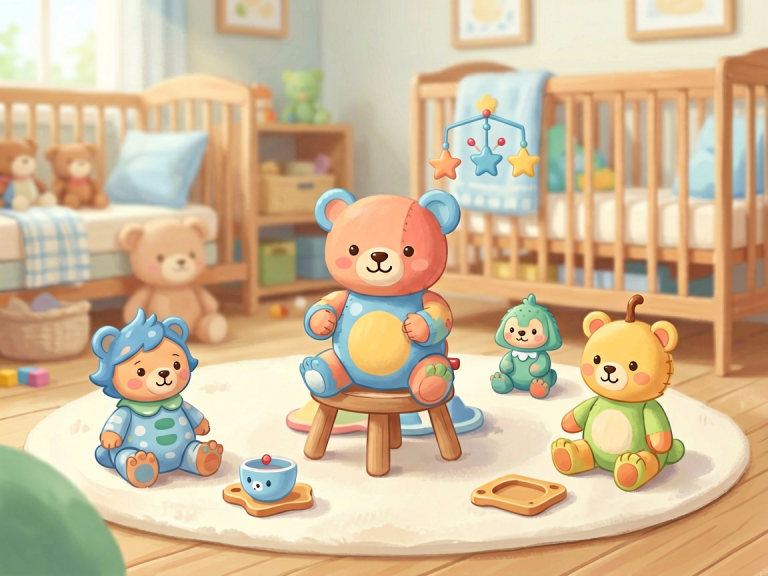
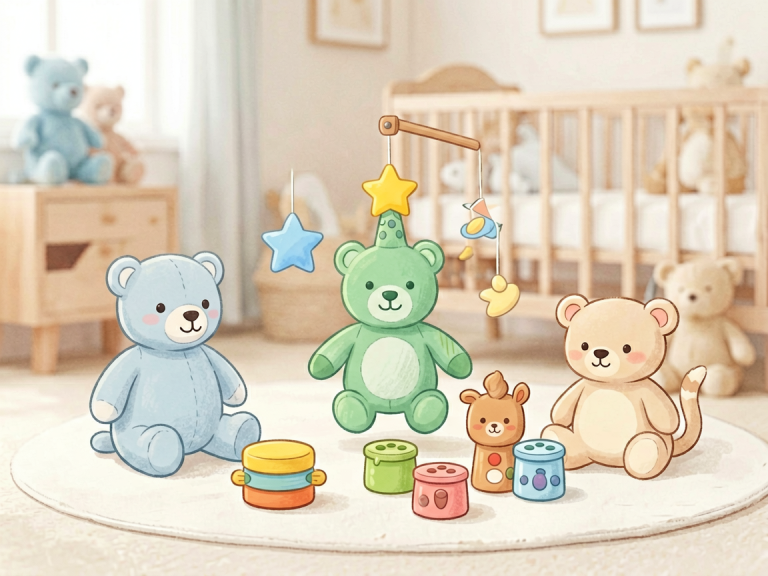
Another key strategy is to create a “yes space”—a safe area where the baby can explore freely without constant “no”s and prohibitions. A baby-proofed room with a few carefully chosen toys, a low shelf, and access to natural light invites hours of independent play. Rotating toys weekly keeps interest fresh. Remember that babies are often fascinated by household objects: wooden spoons, empty boxes, fabric scraps, and pots and pans can provide as much stimulation as any high-tech toy.
Perhaps most importantly, model screen-free behavior yourself. Babies learn by watching. If you reach for your phone during every quiet moment, your baby will perceive the screen as the default source of entertainment. Instead, make a conscious effort to put your own device away during playtime. Sit on the floor, make eye contact, and follow your baby’s lead. You might be surprised at how deeply satisfying this unplugged connection can be for both of you.
Conclusion
The tablet is a powerful tool, but it is not a suitable babysitter for a developing infant. The first years of life are too precious, too formative, to be spent in the two-dimensional world of digital media. Screen-free play offers everything a baby truly needs: rich sensory input, opportunities for movement, social connection, and the freedom to explore at their own pace. By choosing to replace tablet time with hands-on, interactive play, parents give their babies the gift of a strong developmental foundation—one that will serve them well in a world that increasingly demands both digital literacy and deep human connection. It is not an easy choice, but it is one of the most important a parent can make.