Beyond the Screen: Rethinking Play for 6-Month-Olds in a Digital Age
—
Introduction: The Hidden Cost of Early Digital Exposure
In many modern households, tablets and smartphones have become the default pacifiers—a quick fix to calm a fussy baby, entertain a restless infant, or buy a busy parent ten minutes of peace. However, for a six-month-old, the screen is not a window to the world but a barrier to it. At this critical stage of rapid brain development, every waking moment is an opportunity for sensory exploration, motor skill refinement, and social-emotional bonding. Replacing screen time with screen-free play is not merely a nostalgic preference; it is a developmental necessity. This article explores why tablets have no place in a six-month-old’s life and offers a rich, practical guide to replacing digital engagement with meaningful, hands-on activities.
—
The Case Against Tablet Time for Infants
1. Developmental Risks of Early Screen Exposure
The American Academy of Pediatrics recommends avoiding all screen media for children under 18 months, with the sole exception of video chatting. For a six-month-old, the risks are particularly pronounced. At this age, the brain is forming connections at an astonishing rate—over one million neural connections per second. Screen time, even passive viewing, can interfere with this process by overstimulating the visual system while under-stimulating other crucial sensory pathways. Studies have linked early tablet use to delayed language acquisition, reduced attention span, and poorer executive function later in childhood. A baby staring at a glowing rectangle is missing out on the rich, three-dimensional, multi-sensory input that real-world play provides.
2. Disruption of Parent-Child Interaction
Tablets create a false substitute for genuine human connection. Six-month-olds thrive on reciprocal interaction—the back-and-forth of facial expressions, cooing, touch, and shared attention. When a parent hands a baby a tablet, the screen becomes a one-way communication channel. The baby watches, but no one responds to their gaze, their babble, or their movements. This disrupts the “serve and return” interactions that are foundational for language development, emotional regulation, and attachment. Even background TV has been shown to reduce the quantity and quality of parent-child verbal exchanges. The tablet, with its hypnotic animations and sounds, is even more distracting.
3. Physical and Sensory Consequences
A six-month-old’s body is busy learning to roll, sit with support, reach, grasp, and transfer objects from hand to hand. Tablet time keeps infants in a static, passive posture, often reclining or propped up, which limits opportunities for core strengthening, head control, and bilateral coordination. Furthermore, the flat, smooth surface of a tablet offers limited tactile feedback. Babies learn about texture, weight, temperature, and cause-and-effect through gripping, mouthing, dropping, and banging real objects. A virtual image of a bouncing ball provides none of that kinesthetic learning.
—
The Rich World of Screen-Free Play: What Six-Month-Olds Truly Need
Before we dive into specific activities, it’s essential to understand what developmentally appropriate play looks like at six months. At this age, babies are:
- Sensory explorers: They learn through sight, sound, touch, taste, and smell. Everything goes into the mouth.
- Emerging movers: They may roll from back to tummy, push up on their arms, rock on hands and knees, or sit briefly with support.
- Social beings: They respond to faces, imitate simple gestures (like sticking out a tongue), and love interactive games like peek-a-boo.
- Cause-and-effect learners: They repeat actions that produce interesting results, such as shaking a rattle or kicking a mobile.
Screen-free play should honor these developmental milestones. The goal is not to “entertain” the baby but to provide an environment rich in opportunities for exploration, discovery, and interaction.
—
Engaging Screen-Free Activities for Six-Month-Olds
1. Sensory Bags and Bottles
Create a no-mess sensory experience by sealing objects in a sturdy, double-bagged zip-lock bag or a clear plastic bottle. Fill a bag with hair gel and a few drops of food coloring, then add small items like beads, buttons, or sequins. Tape the bag firmly to the floor or a high chair tray. The baby can pat, squeeze, and slide the gel without ingesting anything. A water bottle filled with oil, water, and glitter provides mesmerizing swirls. These activities stimulate visual tracking, cause-and-effect understanding, and fine motor exploration—all without a single pixel.
2. The Treasure Basket
A classic Montessori-inspired activity, the treasure basket for a six-month-old should contain safe, natural, and varied objects. Use a shallow, low-sided basket and fill it with items such as:
- A wooden spoon with a smooth handle
- A large, soft silk scarf (bright colors)
- A crinkly fabric square
- A metal whisk (supervised—baby will love mouthing the wires)
- A small, unbreakable mirror
- A cloth bag filled with lavender or rice (for texture)
Place the basket within reach while the baby sits supported on the floor. Let them explore independently, reaching, grabbing, mouthing, and shaking. This activity encourages curiosity, concentration, and sensory discrimination.
3. Mirror Play and Facial Games
A six-month-old is fascinated by faces—especially their own reflection. Place an unbreakable, baby-safe mirror on the floor or lean it against a wall. Lie down next to the baby and make exaggerated expressions: smile, raise eyebrows, puff out cheeks. Watch as the baby touches the mirror, looks at you, then back at the reflection. This simple activity fosters self-awareness, social-emotional development, and visual tracking. Pair it with songs like “Where Is Baby?” or “If You’re Happy and You Know It” to add a language component.
4. Tummy Time with a Twist
Many babies resist tummy time, but you can make it engaging with screen-free props. Place a small, low pillow under the baby’s chest for support. Lay a colorful scarf or a metallic emergency blanket just beyond their reach. The crinkling sound and shiny reflection will motivate the baby to lift their head, push up, and reach. Alternatively, attach a mobile of black-and-white patterned cards or soft toys within arm’s reach. You can also lie face-to-face with the baby during tummy time—make funny noises, blow raspberries, or sing. This strengthens neck, back, and shoulder muscles while building intimacy.
5. Interactive Songs and Rhymes
Your voice is the most powerful tool for screen-free play. Sing nursery rhymes with actions: “Row, Row, Row Your Boat” can be done while holding the baby on your lap, gently rocking back and forth. “Pat-a-Cake” introduces rhythm and hand-eye coordination. “The Wheels on the Bus” invites you to move the baby’s arms in circles. Babies at six months begin to anticipate patterns and may smile or coo when they recognize a familiar song. This active, responsive interaction is far more valuable than a recorded video, because it adjusts in real time to the baby’s cues—a slower tempo when they are drowsy, a faster beat when they are excited.
6. Hand Puppets and Simple Dramatic Play
A simple hand puppet—even just a sock with two button eyes—can captivate a six-month-old. Make the puppet “talk” to the baby: “Hello, little one! Where is your nose?” Move the puppet slowly from side to side, encouraging the baby to track it. Bring it close enough for the baby to reach, grab, and mouth (ensure all parts are securely attached). This activity promotes visual tracking, object permanence, and social reciprocity. You can also use the puppet to act out simple stories or imitate the baby’s sounds.
7. Water Play (Supervised)
Fill a shallow basin with a few inches of lukewarm water and place it on a waterproof mat. Sit the baby on your lap or in a supportive seat. Add floating objects: a plastic cup, a small sieve, a rubber duck, a washcloth. Let the baby splash, grab, and drop. The sensation of water on their skin, the sight of ripples, and the sound of splashes provide rich sensory input. Always supervise closely, and keep sessions short to avoid overstimulation.
8. Grasping and Reaching Games
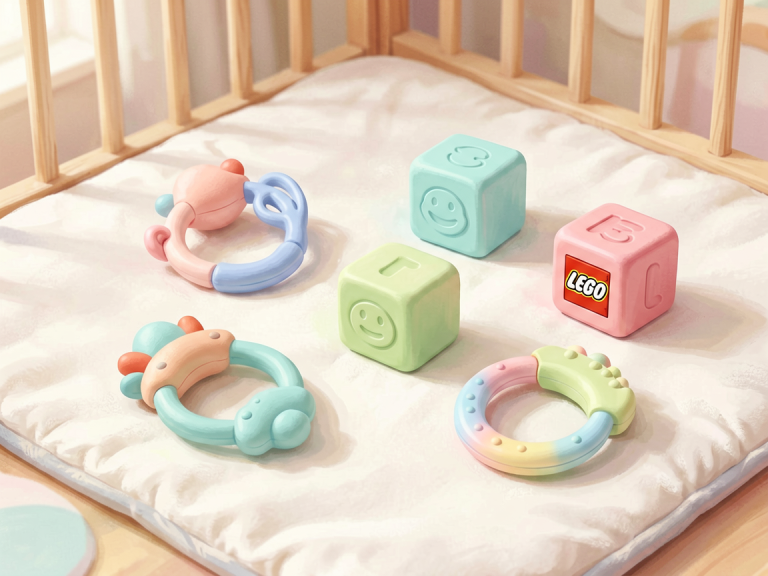
At six months, babies are refining their pincer grasp and hand-eye coordination. Offer a variety of safe objects with different shapes and textures: a rubber teether, a wooden ring, a fabric cube with a bell inside. Hold an item just out of reach and encourage the baby to grab it. Then let them hold it, shake it, and transfer it from one hand to the other. You can also tie a soft toy to a string and gently pull it away after the baby grabs it—this simple “tug-of-war” teaches cause-and-effect and persistence.
—
Building a Screen-Free Daily Routine
Replacing tablet time doesn’t happen overnight. The key is to create a daily rhythm that naturally incorporates screen-free play. For a six-month-old, awake windows are typically 1.5 to 2.5 hours. During each wakeful period, aim for a balance of:
- Independent play (10–20 minutes): The treasure basket or a mirror on the floor allows the baby to explore at their own pace.
- Interactive play (10–20 minutes): Songs, puppet play, or tummy time with you.
- Sensory-rich moments: A quick water play session, a walk outside to feel the breeze, or lying on a blanket under a tree to watch leaves move.
- Caregiving as play: Diaper changes, feeding, and bathing are all opportunities for face-to-face interaction. Narrate what you are doing: “Now I’m washing your little toes. Splish, splash!”
If the baby becomes fussy, resist the urge to reach for a tablet. Instead, try changing their position, offering a different toy, or simply holding and rocking them. Often, what a six-month-old needs is not distraction but connection.
—
Overcoming Challenges and Parental Guilt
Let’s be honest: raising a baby without any screen time is difficult in a world saturated with devices. You may face judgment from family members who think a quick video “won’t hurt,” or you may feel tempted yourself when exhaustion hits. Here are a few strategies to stay on track:
- Create a “phone-free” zone: When you are playing with your baby, put your phone in another room or in a drawer. Use a timer if you need to check messages later.
- Prepare play kits in advance: On a Sunday evening, assemble three or four sensory bags, a treasure basket, and a few puppets. Having them ready reduces the impulse to grab a tablet.
- Join a parent-baby group: Interaction with other caregivers and babies provides screen-free stimulation for your child and emotional support for you.
- Forgive yourself: If you have used a tablet in the past, do not dwell on guilt. Every day is a new opportunity to choose screen-free play. Your baby will thrive on the consistent, loving, and responsive interactions you offer now.
—
Conclusion: The Gift of Undivided Attention
A six-month-old does not need entertainment; they need engagement. They do not need pixels; they need presence. By replacing tablet time with screen-free play, you are giving your baby the most precious resource you have: your focused, responsive, loving attention. You are laying the foundation for a curious, confident, and connected human being—one who learns from the real world, not from a screen. The mess of a spilled treasure basket, the giggles during a puppet show, the drool-covered sensory bag—these are the true building blocks of childhood. Choose them, and your baby will thank you with every coo, every smile, and every triumphant roll across the floor.