Unlocking Words Through Play: Creative Activities for Language Development
Language development is not a dry classroom exercise; it is a vibrant, evolving process that thrives in moments of joy, curiosity, and interaction. For children, the most powerful engine for acquiring vocabulary, grammar, and communication skills is play. When children engage in playful activities, they are not merely amusing themselves—they are actively constructing meaning, negotiating with others, and experimenting with sounds and sentences. This article explores a variety of play ideas specifically designed to foster language growth, organized by different play contexts. Each idea is grounded in research on early childhood development and can be adapted for children from toddlers to early elementary age.
—
1. Dramatic and Pretend Play: Building Narrative and Vocabulary
Dramatic play is arguably the richest arena for language development. When a child pretends to be a doctor, a shopkeeper, or a superhero, they must enter a new linguistic world. The key is to provide open-ended props and a supportive environment that encourages verbal exchange.
Setting Up a Mini-World
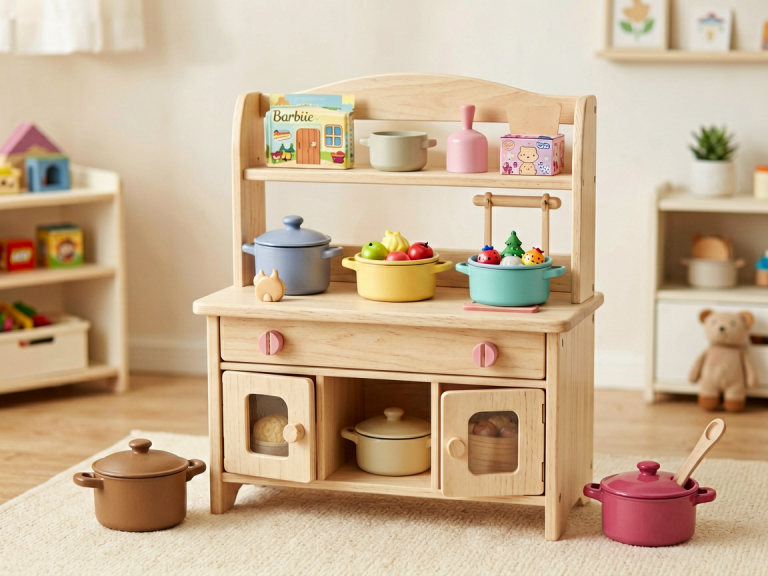
Create a play scenario such as a grocery store, a post office, or a veterinarian’s clinic. Stock it with simple props: empty food boxes, a toy cash register, notepads, and puppets. As children take on roles—customer versus cashier, patient versus doctor—they naturally use specific vocabulary (“I need a bag of rice,” “The dog has a broken leg”). To deepen the language experience, an adult can join the play and model more complex sentences or ask open-ended questions: “What happened to your pet? How did it get hurt?” This type of interaction pushes children to organize their thoughts into coherent stories.
Puppet Conversations
Puppets are excellent tools for shy or reticent speakers. When a child holds a puppet, the puppet becomes the speaker, lowering the child’s anxiety about making mistakes. An adult can initiate a puppet dialogue: “Hello, Mr. Bear. What did you eat for breakfast today?” The child’s response, though simple, is a real communicative act. Over time, the puppets can engage in longer conversations, introduce new words (like “grumpy” or “enormous”), and even act out simple conflicts that require verbal resolution.
Why It Works: Dramatic play requires children to use language in context, shifting between listener and speaker roles. They practice turn-taking, expand their vocabulary through thematic words, and construct narratives—all foundational skills for literacy.
—
2. Language Games: Word Play and Phonological Awareness
Structured games that focus on sounds, rhymes, and word meanings are both fun and instructionally powerful. These games sharpen phonological awareness—the ability to hear and manipulate sounds in words—which is a strong predictor of reading success.
Rhyme Time Bingo
Create bingo cards with pictures of simple objects (cat, hat, bat, mat). Call out words, and children mark the picture that rhymes. For younger children, just saying the rhyming word (“bat”) and having them find the same sound family is enough. For older children, ask them to generate new rhymes: “Can you think of a word that sounds like ‘log’?” This game can be played with clapping, snapping, or tapping to emphasize syllables.
I Spy with Sounds
The classic “I Spy” game can be revamped for language purposes. Instead of colors, use initial sounds: “I spy with my little eye something that starts with /b/.” Children must scan the environment and produce the word “ball” or “book.” This sharpens phonemic awareness and listening skills. To increase difficulty, ask for the final sound: “I spy something that ends with /t/.” Alternatively, use adjectives: “I spy something that is soft and round.”
Story Dice
Use two or three large dice with pictures (a cat, a castle, a rain cloud, a bicycle, etc.). Children roll the dice and must create a sentence or a short story using the images that appear. For example, “The cat rode the bicycle to the castle, but then it started to rain.” This exercise builds sentence structure, imaginative thinking, and narrative sequencing. For beginners, just labeling the pictures is enough; for advanced learners, challenge them to connect multiple dice into a coherent tale.
Why It Works: These games focus attention on the sound structure and meaning of words in a low-stress, high-engagement format. Repetition and rhythm help cement new vocabulary and grammatical patterns.
—
3. Storytelling and Book-Based Play: From Listening to Creating
Books are natural springboards for language play, but passive reading alone is not enough. Active, interactive storytelling turns books into engines for language growth.
Interactive Read-Aloud with Props
Choose a picture book with strong rhythmic text (e.g., *Brown Bear, Brown Bear, What Do You See?* by Bill Martin Jr.). As you read, pause and let children fill in repeated phrases (“I see a … red bird looking at me!”). Provide simple props (felt animals, finger puppets) for them to hold as the characters appear. This multisensory approach reinforces vocabulary and teaches sentence patterns through repetition.
Story Retelling with a Sequence
After reading a simple story, give children picture cards showing key events in the story. Ask them to arrange the cards in order and retell the story in their own words. For younger children, you can help by asking leading questions: “What happened first? Then what did the bunny do?” For older children, encourage them to change the ending or add a new character. This builds comprehension, memory, and expressive language.
Create a Story Box
Fill a box with small objects: a plastic dinosaur, a feather, a button, a tiny cup. Invite children to pick three objects and weave them into a story. You can start: “Once upon a time, a dinosaur found a beautiful feather…” The child continues, using the objects as prompts. This open-ended activity stimulates creativity and forces children to connect ideas logically—a sophisticated language skill.
Why It Works: Storytelling links oral language to written text, expands vocabulary through context, and develops narrative competence. When children retell or invent stories, they practice using past tense, conjunctions, and descriptive language.
—
4. Outdoor and Movement Play: Language in Action
Physical activity and language learning are not separate realms. Moving the body—jumping, running, climbing—can be paired with words to create powerful memory anchors.
Action Simon Says with Verbs
Instead of simple commands (“Simon says touch your nose”), use action verbs in the past or future tense: “Simon says pretend you jumped over a puddle.” Then ask the child to describe what they did: “What did you just do?” The child answers, “I jumped over a puddle.” This game teaches verb tenses, following multi-step instructions, and using complete sentences. For advanced players, add adverbs: “Simon says walk slowly like a turtle.”
Obstacle Course Instructions
Set up a simple obstacle course with cones, hula hoops, and a tunnel. Before the child begins, they must listen to a sequence of directions: “First crawl through the tunnel, then hop three times inside the hoop, finally run around the cone.” After completing it, ask them to give the directions to you or a sibling. This strengthens receptive language (listening comprehension) and expressive language (giving clear instructions).
Nature Scavenger Hunt with Descriptive Language
Create a list of items to find: something rough, something smooth, something softer than your palm, something that makes a sound. As children collect each item, they must describe it in detail: “This leaf feels rough on one side but smooth on the other. It is green and shaped like a hand.” This encourages comparative adjectives, sensory vocabulary, and precise expression.
Why It Works: Physical actions help embed language in memory through embodied cognition. Children learn prepositions, action verbs, and descriptive words naturally while moving and having fun.
—
5. Music, Rhymes, and Chants: The Rhythm of Language
Before children can master complex grammar, they are drawn to the musicality of language. Rhymes, songs, and chants provide a predictable structure that makes language accessible and memorable.
Call-and-Response Songs
Use simple folk songs or create your own. For example, one person sings “Who has the red crayon?” and the children respond, “I have the red crayon!” Then they switch roles. This activity reinforces subject-verb agreement and vocabulary for colors and objects. You can vary the question structure: “What did you eat for lunch?” → “I ate a sandwich.”
Tongue Twisters and Alliteration Games
Introduce short tongue twisters like “She sells seashells by the seashore.” Say it very slowly, then faster, clapping on each syllable. Children practice articulation and phoneme discrimination. For a game, provide a starting letter and ask children to create their own alliterative phrase: “Peter picked a pretty pink peach.” This is excellent for older preschoolers and early school-age children.
Sing a Story
Take a familiar nursery rhyme like “Row, Row, Row Your Boat” and change the lyrics to tell a new, simple story. For example: “Fly, fly, fly your kite, high up in the sky. See it dancing in the wind, watch it floating by.” This encourages children to manipulate language rhythmically and expand their vocabulary with synonyms.
Why It Works: Music activates multiple areas of the brain simultaneously. The repetition and rhyme patterns of songs provide a scaffold for learning new words and grammatical structures. Children often remember vocabulary longer when it is set to a melody.
—
6. Sensory and Fine Motor Play: Talking Through Touch
Many language-delayed children benefit from sensory play because it naturally invites commentary. When children dig their hands into sand, water, or playdough, they are motivated to talk about what they feel, see, and do.
Sensory Bins with Vocabulary Prompts
Fill a bin with rice, beans, or kinetic sand. Bury small plastic animals, letters, or objects. As children dig, they must name each item and describe its texture, size, or color. For older children, ask them to compare two objects: “Is the turtle heavier than the key? Which one is smooth?” This activity builds comparative language, adjectives, and early scientific vocabulary.
Playdough Story
Give each child a ball of playdough. Tell a simple story: “A little worm was crawling in the garden. He met a big rock.” As you say each sentence, children shape the playdough into the characters or objects. While they work, ask them to narrate what they are making: “I am making a rock. It is round and bumpy.” This integrates fine motor skills with narrative language.
Cooking Together
Even a simple activity like making a sandwich can be a language lesson. Use sequencing words: “First, we take two slices of bread. Next, we spread peanut butter. Then, we add jelly.” Ask children to repeat the steps back to you. Introduce vocabulary like “spread,” “slice,” “squeeze,” and “dip.” The hands-on nature of cooking creates strong memory links between words and actions.
Why It Works: Sensory play is inherently motivating and calming. It provides natural opportunities for one-on-one conversation, encouraging children to use language to describe, negotiate, and plan.
—
Conclusion: Play as the Foundation of Language
The ideas presented above are not a rigid curriculum but a flexible collection of strategies that can be woven into everyday interactions. Whether a child is pretending to be a pirate, stomping to a rhyme, or describing a slimy sensory bin, they are practicing the building blocks of language: sounds, words, sentences, and conversations. The adult’s role is not to correct every mistake but to model rich language, ask thoughtful questions, and above all, to join the fun. When play is joyful, language learning becomes effortless. So the next time you see a child lost in a world of make-believe or giggling over a silly rhyme, know that they are not just playing—they are unlocking the power of words.