The Best Screen-Free Toys for Babies: Nurturing Development Through Play
Introduction
In an era dominated by digital devices, it is easy to overlook the profound benefits of simple, screen-free play for the youngest members of our families. Babies, from birth to around 18 months, are in a critical window of rapid brain development, sensory exploration, and motor skill acquisition. While tablets and smartphones may offer momentary distraction, they cannot replace the rich, multi-sensory experiences that physical toys provide. Screen-free toys engage a baby’s natural curiosity, encourage hands-on discovery, and foster essential cognitive, social, and physical abilities without the overstimulation or passive consumption associated with screens. This article explores the best screen-free toys for babies, organized by developmental focus, to help parents make informed, enriching choices that support their child’s growth from infancy into toddlerhood.
Why Screen-Free Toys Matter for Babies
Before diving into specific recommendations, it is important to understand the developmental rationale behind choosing screen-free options. The American Academy of Pediatrics discourages any screen time for babies under 18 months (with the exception of video calls), emphasizing that real-world interactions and tangible objects are far more beneficial. Screen-free toys promote active engagement: a baby must reach, grasp, shake, mouth, and manipulate an object, activating neural pathways that build coordination, problem-solving, and sensory integration. Furthermore, such toys encourage caregivers to interact—talking, describing, and playing alongside the baby—which strengthens language development and emotional bonding. In contrast, even educational apps often fail to provide the responsive, three-dimensional feedback that a physical toy offers. By prioritizing screen-free play, parents lay a foundation for sustained attention, creativity, and a healthy relationship with technology later in life.
Sensory Exploration Toys for Newborns and Young Infants
From birth to about four months, babies are primarily sensory beings. They rely on touch, sound, sight, and eventually taste and smell to make sense of their world. The best toys for this stage are simple, high-contrast, and textured.
- Black-and-White Contrast Cards and Soft Books: Newborns’ vision is blurry, and they are naturally drawn to high-contrast patterns like black, white, and red. Soft cloth books with bold shapes or simple faces can be propped near the crib or held during tummy time. These encourage visual tracking and focus. Look for books with crinkly pages or attached rattles for added auditory interest.
- Sensory Balls and Teethers: Lightweight, textured balls—some with bumps, ridges, or soft spikes—are excellent for grasping practice. Babies will explore them with their mouths, hands, and feet. Silicone teethers in various shapes (like a banana or a ring) soothe sore gums while providing different surfaces for oral exploration.
- Musical Instruments for Tiny Hands: Shaker eggs, small maracas, or gentle jingle bells allow babies to discover cause and effect. When they shake a rattle, they produce a sound—a magical lesson in agency. Choose instruments that are large enough to prevent choking but light enough for a two-month-old to hold briefly.
These sensory toys not only stimulate the developing brain but also provide comfort and predictability, helping babies regulate their own emotions.
Fine Motor and Manipulative Toys for Older Infants
Around four to nine months, babies begin to develop intentional grasp, transfer objects between hands, and practice hand-eye coordination. Toys that require precise movements—reaching, picking up, dropping, and stacking—are ideal.
- Oball and Other Easy-Grasp Balls: The classic Oball, with its flexible, open-web design, is perfect for tiny hands. Babies can easily grab it, throw it, and chase it. Its lightweight nature encourages rolling and crawling, while the holes allow for little fingers to poke through, strengthening grip.
- Stacking and Nesting Cups: A set of colorful, graduated cups offers endless possibilities. Initially, babies enjoy banging them together or mouthing them. As they grow, they learn to stack, nest, and eventually pour water or sand during bath or outdoor play. This simple toy teaches concepts of size, order, and spatial relationships.
- Activity Boxes with Buttons, Sliders, and Doors: Look for wooden or plastic activity cubes with simple mechanisms—a sliding bead, a pop-up animal, or a door that opens when a latch is turned. These toys encourage repetitive practice of fine motor skills (pincer grasp, twisting, pushing) and introduce early problem-solving. Always ensure the toy is sturdy and free of small detachable parts.
Through repeated manipulation, babies gain confidence in their ability to control objects, which is a building block for later tasks like holding a spoon or drawing.
Open-Ended and Imaginative Play Toys for Crawling and Cruising
From nine months to toddlerhood, babies become increasingly mobile and curious. Open-ended toys—those that can be used in multiple ways—spark creativity and independent exploration. They do not prescribe a single “correct” way to play, which encourages divergent thinking.
- Wooden Blocks and Building Sets: Simple, smooth wooden blocks in various shapes and sizes are a timeless investment. A crawling baby might knock them down; a standing toddler might stack them. Later, they become houses, towers, or bridges. Natural wood blocks also provide pleasing weight and texture, and they are safe for chewing when they are untreated or finished with non-toxic materials.
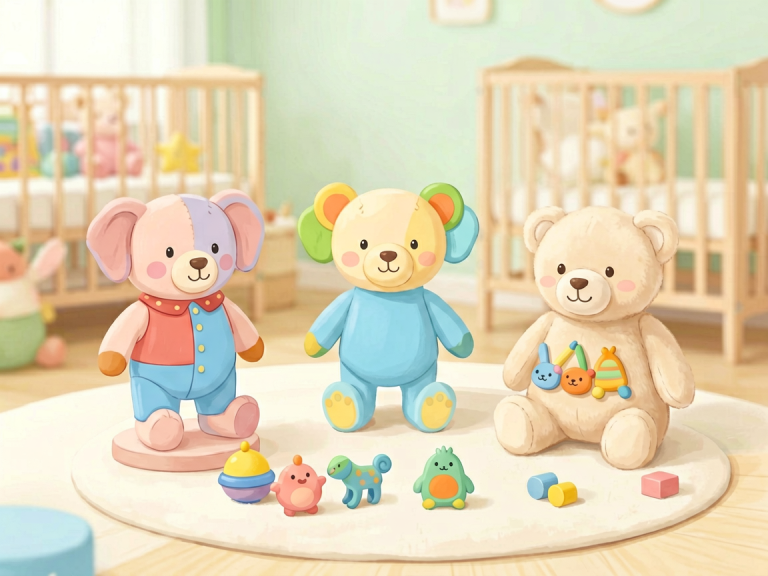
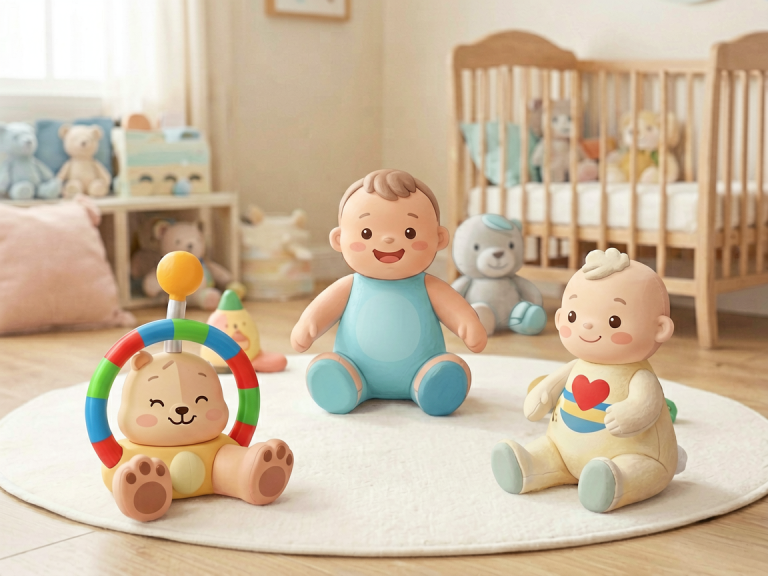
- Plush Dolls and Soft Animal Figures: A simple cloth doll or a soft animal (like a stuffed rabbit or bear) becomes a companion for parallel play. Babies can hug it, “feed” it, or place it in a tiny bed. This type of play nurtures empathy, pretend imitation, and social understanding. Choose dolls with minimal features and no removable parts to avoid choking hazards.
- Push and Pull Toys: As babies begin to cruise, a sturdy wooden push cart or a pull-along animal on a string provides motivation to practice walking. The resistance and sound (e.g., a clickety-clack train) add feedback that delights and encourages persistence. Look for push toys with adjustable weight or a wide base to prevent tipping.
Open-ended toys adapt to the child’s developmental stage, evolving from sensory exploration to simple narratives, thereby offering years of use.
Physical Activity and Gross Motor Toys for Active Babies
Babies need opportunities to move their whole bodies—rolling, crawling, climbing, and walking. Screen-free toys that encourage gross motor development help build strength, balance, and coordination.
- Baby Gyms and Play Mats: A simple floor gym with dangling toys (rings, mirrors, crinkle fabric) invites a newborn to bat and kick. As babies grow, the mat becomes a safe space for tummy time, rolling, and later, sitting and crawling. Choose a mat with contrasting colors and a variety of textures to maintain interest.
- Soft Foam Blocks or Climbing Pads: Large, lightweight foam blocks (sometimes sold as “baby play cushions”) allow babies to practice pulling themselves up, stepping over, and even gentle climbing. These are safer than hard furniture and can be arranged into ramps, tunnels, or soft steps. Always supervise to prevent falls.
- Water Play and Bath Toys: Water is a naturally engaging medium. Simple bath scoops, cups, and floating toys provide resistance and encourage splashing, pouring, and reaching. During supervised play, a shallow water table (with only an inch of water) offers similar benefits outdoors. Water play strengthens shoulder and arm muscles while teaching basic physics concepts like sinking and floating.
Active play not only builds physical health but also releases endorphins, improving mood and sleep patterns.
Tips for Choosing the Best Screen-Free Toys
While the above categories cover many excellent options, here are general guidelines for selecting toys that truly benefit a baby:
- Prioritize simplicity: Avoid toys with batteries, flashing lights, or loud electronic sounds. These can overstimulate and reduce the baby’s need to actively engage. A simple toy often fosters deeper concentration.
- Check safety and age recommendations: Always look for non-toxic materials (BPA-free, phthalate-free, lead-free) and ensure no small parts that could be swallowed. Regularly inspect toys for wear and tear.
- Encourage multi-sensory experiences: The best toys appeal to at least two senses—touch and sound, or sight and texture. A wooden rattle combines visual appeal (color), tactile (smooth wood), and auditory (gentle ring).
- Rotate toys: Babies thrive on novelty but can be overwhelmed by too many choices. Keep out only a few toys at a time and rotate them weekly to reignite interest. This practice also teaches babies to focus and appreciate what they have.
- Remember the role of the caregiver: No toy replaces the warmth of a parent’s voice, face, and touch. Narrate play, imitate baby’s sounds, and celebrate small achievements. The toy is merely a tool; the relationship is the real magic.
Conclusion
Screen-free toys are not merely alternatives to digital devices—they are essential building blocks for a baby’s healthy development. From the black-and-white contrast cards that capture a newborn’s gaze to the wooden blocks that become castles in a toddler’s imagination, each carefully chosen toy supports a unique aspect of growth: sensory perception, fine and gross motor skills, problem-solving, creativity, and emotional connection. By deliberately selecting toys that invite active, hands-on exploration, parents give their babies the gift of unhurried, joyful learning. In a world that increasingly rushes toward screens, the simple rattle, the soft doll, and the stack of cups remain quiet champions of childhood. Invest in these timeless treasures, and watch your baby’s world expand one grasp, one shake, one smile at a time.