Beyond the Castle Walls: How Pretend Play Shapes Learning for 8-Year-Old Boys
Introduction: The Forgotten Classroom
At eight years old, boys are often caught in a strange educational limbo. They have outgrown the simple games of toddlerhood, yet they are not quite ready for the abstract reasoning of pre-adolescence. Many parents and educators, eager to push literacy and math skills, overlook one of the most powerful learning tools available: pretend play. For an 8-year-old boy, a cardboard box is never just a box—it is a spaceship hurtling toward Mars, a medieval fortress under siege, or a submarine exploring the ocean floor. This kind of imaginative play is not a waste of time; it is a sophisticated, multi-layered learning experience that builds cognitive, social, and emotional skills in ways that worksheets and screens cannot. Understanding the depth of learning through pretend play is essential for anyone who wants to support a child’s holistic development.
Cognitive Development: Building the Executive Function Highway
Pretend play for an 8-year-old boy demands a level of cognitive complexity that rivals many classroom activities. When a boy decides to be a pirate captain searching for buried treasure, he must hold multiple rules in his mind: the map leads east, the crew must follow orders, and the rival pirates are dangerous. This requires working memory—the ability to keep information active and manipulate it mentally. Research in developmental psychology consistently shows that children who engage in rich pretend play perform better on tasks measuring executive functions, such as impulse control, cognitive flexibility, and planning.
For example, consider a game where two boys pretend to run a construction company. They must negotiate who is the boss, what materials they need (blocks, toy trucks, paper), and how to build a skyscraper that won’t fall. This real-time problem-solving forces them to generate hypotheses (“If we put the biggest block at the bottom, it might be steadier”), test them, and adjust when something fails. Unlike a math worksheet that has one correct answer, pretend play offers an open-ended environment where trial and error is celebrated. The boy who knocks over his tower learns more about structural integrity than he would from a textbook diagram, and he learns it in a context that feels personally meaningful.
Furthermore, pretend play enhances abstract thinking. An 8-year-old knows that a wooden stick is not actually a magic wand, but he can treat it as one within the game. This ability to hold two contradictory ideas in mind—the real object and its imagined identity—is a cornerstone of higher-order thinking. It is the same mental flexibility that later allows a teenager to grasp metaphors in literature or to understand that a variable in algebra can represent an unknown number. The seeds of scientific reasoning are planted in these moments of make-believe, where a boy learns that the world can be modeled, manipulated, and understood through imagination.
Social and Emotional Learning: Negotiating Power, Empathy, and Identity
At age eight, boys are increasingly aware of social hierarchies and peer relationships. Pretend play provides a safe laboratory for exploring these dynamics. When a group of boys decides to play “superheroes,” they must decide who gets to be the leader, who will play the villain, and how the story will unfold. These negotiations are far from trivial. They require perspective-taking—the ability to see the world from another person’s point of view. A boy who wants to be the hero must understand that his friend also wants that role; he must either compromise, persuade, or alternate. Through such interactions, he learns the give-and-take of friendship and the art of conflict resolution.
Emotionally, pretend play offers an outlet for feelings that may be difficult to express directly. An 8-year-old boy who feels anxious about starting a new school year might play out a scenario where a character is lost and must find their way home. He can control the narrative, make the character brave, and resolve the crisis—all of which builds a sense of mastery over his own fears. Similarly, boys often use pretend play to process experiences of power and powerlessness. A boy who feels bossed around by older siblings might enjoy being the all-powerful wizard in his game. This role reversal is not escapism; it is emotional regulation and identity exploration.
Moreover, pretend play fosters empathy. When a boy takes on the role of a firefighter, a doctor, or even a villain, he must imagine what that character wants, feels, and fears. This repeated practice of stepping into someone else’s shoes builds the neural pathways for compassion. Studies have shown that children who engage in more role-playing games demonstrate higher scores on measures of empathy and prosocial behavior. For boys, who are often socialized to suppress emotional expression, pretend play offers a culturally acceptable space to explore vulnerability, tenderness, and care—qualities that are essential for healthy relationships in adulthood.
Language and Literacy: Stories Come Alive
While eight-year-old boys may groan at the prospect of writing a book report, they often eagerly dictate elaborate narratives during pretend play. Language development flourishes in this context because the motivation is intrinsic. A boy commanding an imaginary army uses vocabulary that might never appear in a reading passage: “ambush,” “retreat,” “reinforcements.” He learns these words not through drill but through necessity—he needs them to make the game more exciting. The same applies to grammar and syntax: describing a plan or a sequence of events requires complex sentence structures.
Pretend play also bridges into early literacy skills in a natural way. A boy designing a treasure map practices symbolic representation—he draws an X to mean a location, creating an early form of written communication. Writing a “menu” for his imaginary restaurant or a “wanted poster” for a story villain introduces print concepts without pressure. Many boys who resist formal writing assignments will happily spend an hour creating a comic strip or a rulebook for a game they invented. This incidental writing practice is far more effective than forced journal entries because it is connected to a personal passion.
Furthermore, storytelling through pretend play strengthens narrative comprehension. When a group of boys acts out a scene from a favorite book or movie, they are essentially summarizing, interpreting, and extending the plot. They learn to identify characters, settings, conflicts, and resolutions—the very elements that teachers try to teach in reading lessons. A boy who can explain why his character is angry and how he will solve the problem is already using the skills of literary analysis. The difference is that he is doing it for fun, not for a grade, which means the learning sticks.
Creativity and Innovation: The Entrepreneurial Mindset
In an era that prizes innovation, pretend play is the original startup incubator. For an 8-year-old boy, pretend play requires divergent thinking—the ability to generate many possible solutions to a problem. If the game requires a spaceship, but there are only blankets and chairs available, the boy must imagine how to turn a blanket into a control panel and a chair into a pilot seat. This kind of resourcefulness is the same skill that later helps an engineer design a prototype from limited materials or a marketer create a campaign on a tight budget.
Pretend play also teaches flexibility and adaptation. The best-laid plans of an 8-year-old’s imagination often go awry: a friend quits the game, a toy breaks, or the story takes an unexpected turn. Instead of giving up, the child must improvise. Maybe the broken toy becomes a magical artifact that grants a new power. Maybe the friend who leaves becomes a ghost who haunts the castle. This improvisational thinking is the heart of creativity—the ability to see opportunity in constraint. In the business world, this is called an “entrepreneurial mindset,” and it begins with a cardboard box and a willing friend.
Additionally, pretend play allows for failure without consequences. A boy can build a kingdom and watch it get destroyed by a dragon; he can start over the next day. This low-stakes experimentation encourages risk-taking. He might try being a character who is funny, or mean, or brave, and see how his peers react. If it goes poorly, he can try again. This iterative process is exactly how artists, scientists, and inventors refine their work. The freedom to fail is one of the greatest gifts of childhood play, and it is essential for developing the resilience that 8-year-old boys need as they face increasing academic and social challenges.
Practical Guidance for Parents and Educators
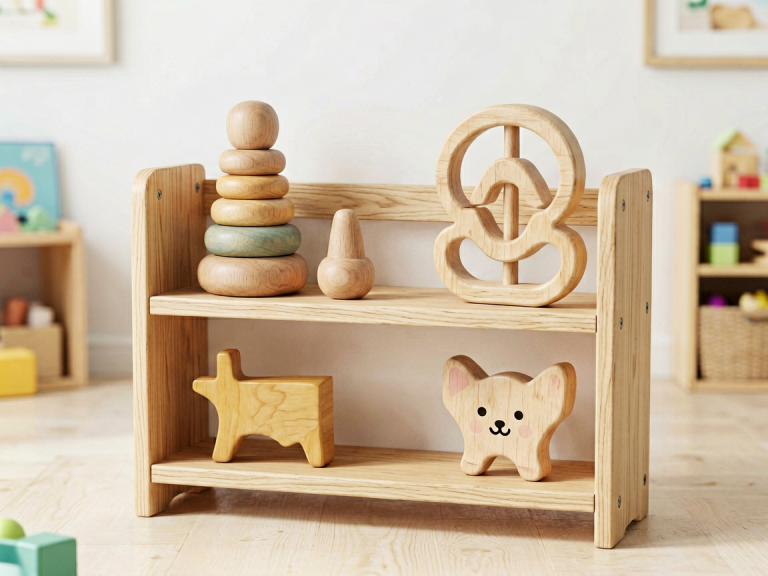
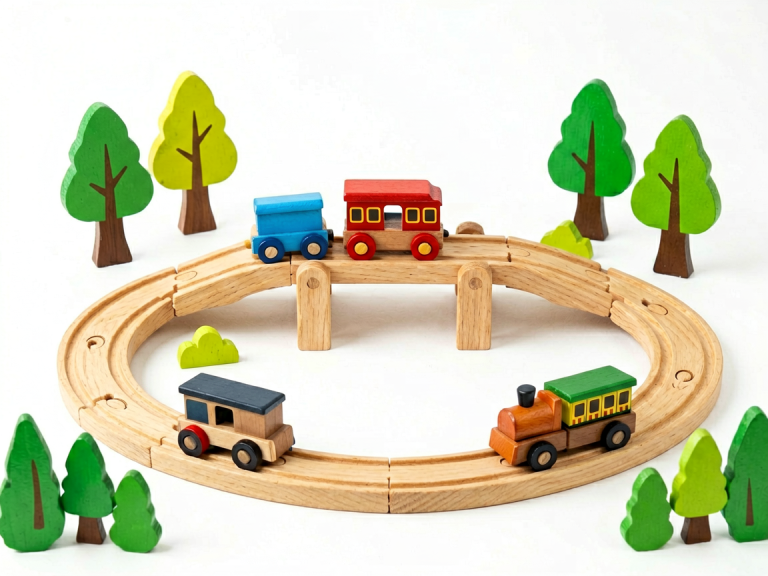
Understanding the value of pretend play is one thing; fostering it in a world of screens and structured activities is another. For an 8-year-old boy, the key is to provide materials and time, not direction. A collection of open-ended props—costumes, blocks, action figures, cardboard boxes, art supplies—invites creation. Avoid toys that dictate a single use; instead, choose items that can become anything. A set of plain wooden blocks is far more valuable than an elaborate plastic castle that comes pre-assembled.
Equally important is unstructured time. Many boys’ schedules are packed with sports, tutoring, and lessons, leaving no room for spontaneous play. Parents should protect at least an hour of free time each day where the child can choose his own activity. This might mean saying no to an extra organized activity. It also means tolerating mess and noise. A game that spills out of the bedroom into the living room is a sign of deep engagement, not a discipline problem.
Adults can also participate as play partners without taking over. For an 8-year-old boy, having a parent join his game is a powerful validation. But the adult should follow the child’s lead, asking questions like “What happens next?” or “What do you think I should do?” rather than directing the story. This maintains the child’s sense of agency while modeling curiosity and collaboration.
Finally, limit screen time in favor of interactive, imaginative play. While some video games can be creative, they often constrain choices. A boy playing with a tablet is following someone else’s rules; a boy playing with a stick is inventing his own. The latter builds the brain’s executive control centers in ways that passive entertainment does not. Setting clear boundaries around technology use creates space for the messy, wonderful, deeply educational world of pretend play to flourish.
Conclusion: The Gift of the Imagined World
Learning through pretend play is not a luxury for 8-year-old boys—it is a necessity. It builds the cognitive muscles of planning, flexibility, and abstract thought. It cultivates social skills of negotiation, empathy, and emotional regulation. It advances language and literacy through authentic, motivated communication. And it fuels the creativity and resilience that will serve them for a lifetime. In a culture that often rushes children toward academic achievement and structured outcomes, we must remember that some of the most profound learning happens when no one is watching, when a boy stands on a fallen log with a stick in his hand and declares, “I am the king of this forest.” That moment of pure imagination is not a break from learning—it is learning at its most powerful. Let us give our boys the time, space, and permission to build castles in the air, because from those castles, they will build the minds that will one day change the world.