Beyond the Screen: The Ultimate Guide to Screen-Free Play for 2-Year-Olds
Introduction: Why Screen-Free Play Matters for Toddlers
In an age where digital devices are ubiquitous, the temptation to hand a tablet or smartphone to a restless two-year-old is understandable. A few minutes of silence, a colorful animation, or an interactive app can seem like a lifesaver for an exhausted parent. Yet research in early childhood development consistently warns against excessive screen time for toddlers. The American Academy of Pediatrics recommends no more than one hour per day of high-quality programming for children aged 2 to 5, and ideally none for those under 18 months. But beyond the “what not to do,” there lies a rich, vibrant world of screen-free play that not only entertains but actively builds the neural architecture of a growing mind.
At age two, children are in a critical window of cognitive, motor, and social-emotional development. Their brains are forming connections at an astonishing rate—roughly 700 to 1,000 new neural synapses per second. Every sensory experience, every physical movement, every social interaction shapes this developing architecture. Screen-based play, even when labeled “educational,” tends to be passive: it delivers images and sounds to the child rather than requiring active participation. Screen-free play, on the other hand, demands that the child engage with real objects, real textures, real gravity, and real people. It is messy, unpredictable, and wonderfully enriching.
This article explores the best screen-free play activities for two-year-olds, organized by developmental domain. Each category includes concrete ideas, the developmental benefits, and practical tips for parents to implement them safely and joyfully.
—
1. Sensory Play: Building the Foundation for Learning
Sensory play is the cornerstone of early childhood development. Two-year-olds are natural explorers who learn by touching, tasting, smelling, hearing, and seeing. Sensory activities stimulate multiple senses simultaneously, strengthening neural pathways and helping children make sense of the world.
Water Play: A shallow plastic tub filled with lukewarm water, a few plastic cups, spoons, and bath toys can occupy a toddler for hours. Let them pour, splash, scoop, and stir. The resistance of water teaches cause and effect (if I pour this cup, the water flows out), develops hand strength, and introduces basic concepts like volume and gravity. Tip: Keep a large towel underneath and dress your child in a waterproof smock to minimize mess.
Play Dough: Store-bought or homemade play dough offers endless possibilities. Rolling, squishing, pinching, and cutting strengthen fine motor muscles needed later for writing. Add natural materials like dried beans, small pebbles, or pinecones for texture exploration. Developmental bonus: Play dough also encourages imaginative thought—a flattened piece becomes a “pancake,” a rolled snake becomes a “worm.”
Sensory Bins: Fill a shallow container with rice, dried lentils, oats, or sand. Hide small toys, scoops, and containers inside. Two-year-olds love the tactile surprise of digging and discovering. This type of play improves concentration, visual discrimination, and problem-solving as they figure out how to extract a buried object. Caution: Always supervise with small items to prevent choking hazards.
—
2. Imaginative and Pretend Play: The Launchpad for Social Skills
Between ages two and three, children begin to engage in symbolic play—using one object to represent another. This is a monumental cognitive leap. Pretend play allows toddlers to process their experiences, practice language, and experiment with social roles.
Dress-Up Box: A small collection of adult-sized hats, scarves, old shoes, purses, and costume pieces invites transformation. A two-year-old wearing a firefighter hat becomes a hero putting out a pretend fire. A scarf becomes a superhero cape. This play fosters creativity, narrative thinking, and emotional regulation as children act out scenarios they’ve observed (feeding a baby, going to the doctor). Pro tip: Include items that are easy to put on and take off, like elastic-waist skirts or Velcro-closure hats.
Kitchen and Food Play: A simple play kitchen—or even a cardboard box turned into a stove—along with plastic fruits, pots, and utensils encourages complex sequences: “First I wash the apple, then I cut it, then I cook it.” Talking through these steps builds vocabulary and sequencing skills. If you have a real, safe kitchen space, let your toddler “help” by washing vegetables with a brush or stirring a bowl of batter (with supervision). The real-world connection is powerful.
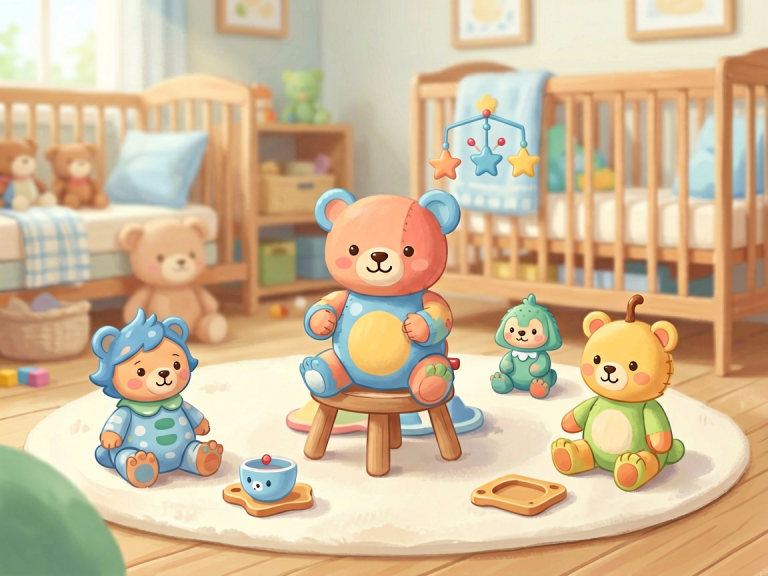
Animal and Doll Play: Stuffed animals, plastic farm animals, and baby dolls are ideal for nurturing play. Two-year-olds often mimic caretaking behaviors: feeding the baby, putting the bear to bed, taking the dog for a walk. This is not just cute—it’s the foundation of empathy and social understanding. Activity idea: Create a “veterinary clinic” with a stuffed cat and a doctor’s kit. Let your child “examine” the cat’s ear, give it a bandage, and say “all better.”
—
3. Gross Motor Play: Strengthening the Body and Brain
Two-year-olds are bundles of boundless energy. They are learning to run, jump, climb, and balance. Gross motor play is essential not only for physical health but also for brain development—movement stimulates the cerebellum and the vestibular system, which are critical for coordination and attention.
Obstacle Courses: Indoors or outdoors, a simple obstacle course can be magical. Use couch cushions to create a “mountain,” place a hula hoop on the floor for jumping into, drape a blanket over chairs to form a tunnel. Guide your child through the sequence: “Crawl through the tunnel, then climb over the mountain, then jump into the hoop.” This works on motor planning, spatial awareness, and following multi-step directions.
Ball Play: Large, soft balls are perfect for this age. Rolling a ball back and forth teaches turn-taking and eye-hand coordination. Kicking a ball builds leg strength and balance. Throwing and catching (with a large, soft ball) helps with hand-eye coordination and depth perception. *Toddler rule:* Always start with a big, lightweight ball that doesn’t roll too fast.
Riding Toys: Push bikes, balance bikes (without pedals), or small scooters that require leg power are excellent. They strengthen leg muscles, improve balance, and give a sense of independence. Even a simple wooden rocking horse or a sit-and-spin toy provides vestibular input that helps with sensory integration.
Dance and Movement Songs: Put on music (not a video) and dance together. Freeze dance, where you stop the music and everyone freezes, teaches impulse control. Action songs like “Head, Shoulders, Knees, and Toes” or “The Wheels on the Bus” combine language learning with full-body movement. Why it works: The combination of rhythm, physical movement, and language activates multiple brain regions simultaneously.
—
4. Fine Motor Play: Preparing Hands for Writing
Fine motor skills—the ability to control small muscles in the hands and fingers—are crucial for later tasks like writing, buttoning, and using scissors. Two-year-olds are developing pincer grasp (using thumb and index finger) and hand-eye coordination. Screen-free play offers countless opportunities to strengthen these skills.
Puzzles: Chunky wooden puzzles with large knobs are ideal. A two-year-old can learn to match shapes, animals, or vehicles. The process of trying to fit the piece into the correct slot requires visual discrimination, spatial reasoning, and persistence. Puzzles also teach problem-solving: “If this piece doesn’t fit, try turning it.”
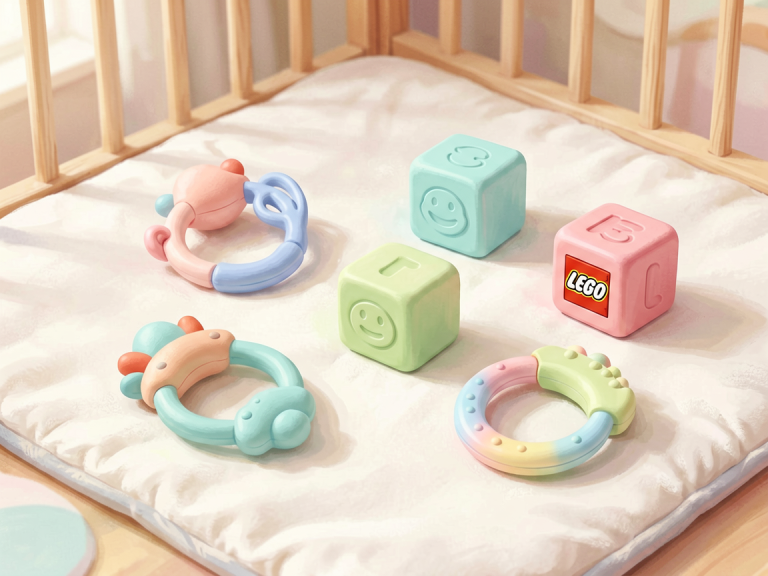
Stacking and Nesting: Classic stackable cups, blocks, or rings teach size relationships, order, and cause and effect. When a tower falls, the child learns about gravity and balance. Extension: Use differently textured blocks (wood, foam, fabric) to add a sensory element.
Lacing and Stringing: Large wooden beads with a thick shoelace (or a piece of yarn with a taped end) allow toddlers to practice threading. This is an excellent hand-eye coordination challenge. Safety note: Supervise carefully and use beads larger than 1.5 inches to avoid swallowing.
Simple Art Activities: Crayons (thick, washable), finger paints, and dot markers allow for creative expression while strengthening hand muscles. The act of scribbling is not random—it is the precursor to writing. Children learn that marks on paper can stand for something. Mess management: Use a high chair tray for painting to contain the chaos, or take the activity outdoors.
—
5. Outdoor and Nature Play: Connecting with the Real World
Nothing beats the stimulation of the natural environment. A two-year-old’s senses are fully engaged by the wind on their face, the texture of grass, the smell of rain, and the sight of a crawling insect. Outdoor play also provides vital Vitamin D and encourages risk-taking in safe boundaries—a crucial part of healthy development.
Sand and Dirt Play: A sandbox or a patch of garden soil offers opportunities for digging, scooping, building, and pouring. Add toy trucks, shovels, and small containers. Sand play develops hand strength and introduces concepts like heavy/light, full/empty, and wet/dry. Bonus: Dirt contains beneficial microbes that may help strengthen a child’s immune system (the “hygiene hypothesis”).
Water Play Outdoors: On a warm day, fill a small kiddie pool with a few inches of water. Provide cups, funnels, and water-safe toys. Splashing and pouring engage the whole body. Extension: Add ice cubes for a temperature surprise.
Nature Walks: A slow, child-led walk is more enriching than a parent-paced stroll. Let your toddler stop to examine a fallen leaf, pick up a stick, or watch an ant. Talk about what you see: “That leaf is red. It feels crunchy. Let’s look for another red leaf.” This builds observational skills and vocabulary. Activity: Collect leaves, acorns, or small stones in a bucket. Later, use them for a nature sensory bin.
Climbing and Balancing: Low, sturdy structures like playground slides, small climbing boulders, or even a big fallen log provide safe climbing opportunities. Supervised climbing builds muscle, confidence, and body awareness. Warning: Always supervise climbing play; two-year-olds have poor judgment about heights and may attempt something beyond their ability.
—
6. Social and Cooperative Play: Learning Together
Though two-year-olds are famously egocentric, they are beginning to understand the existence of peers. Parallel play (playing alongside but not with another child) gradually gives way to more interactive play. Screen-free social play helps children learn sharing, turn-taking, and emotional regulation.
Simple Board Games: Games like “Memory” with large cards or cooperative games like “Hoot Owl Hoot” (where players work together) are age-appropriate. They teach children to wait their turn, follow simple rules, and handle mild disappointment (losing a match). Keep it short: A two-year-old’s attention span is about 5–10 minutes.
Playdates with Structure: A playdate of two toddlers can quickly devolve into toy-grabbing and tears. Offer two of the same popular toys to reduce conflict. Set up a shared activity like building a block tower together, or use a large piece of paper for collaborative scribbling. Model sharing language: “Cara has the truck now. When she’s done, it will be your turn.”
Pretend Play with a Peer: With adult facilitation, two toddlers can engage in early pretend scenarios. “Let’s pretend we’re making tea for the bears!” The adult helps narrate and gently guides turn-taking.
—
Conclusion: The Lasting Value of Unplugged Moments
Screen-free play for two-year-olds is not merely a deprivation of digital entertainment; it is an active, joyful, and deeply educational practice. Each sensory bin, each scribbled crayon mark, each clumsy attempt to stack a block is building a foundation that no app can replicate. The toddler years are too short for passivity. They are a time for hands-on discovery, for falling and getting up, for the mess of paint and the wonder of a ladybug on a leaf.
As parents, we do not need to be perfect entertainers. The best play is often the simplest: a cardboard box, a bowl of water, a pile of leaves. What matters most is our presence—talking, describing, encouraging, and celebrating the small victories. In a world that constantly urges us to plug in, the most radical gift we can give a two-year-old is our undivided attention and a world of real things to explore. The benefits will echo for a lifetime.
*(Word count: approximately 1,620)*