Building Foundations at Home: The Art and Science of Choosing Kindergarten Learning Toys
Introduction
The first five years of a child’s life are a whirlwind of rapid cognitive, emotional, and physical development. During this period, play is not merely a pastime; it is the primary vehicle through which young children explore the world, make sense of cause and effect, develop language, and learn to interact with others. For parents who choose to supplement formal preschool education or who prefer home‑based early learning, the selection of appropriate kindergarten learning toys becomes a critical decision. These toys are more than colorful distractions; they are carefully crafted tools designed to stimulate curiosity, foster problem‑solving skills, and lay the groundwork for academic success. Yet, with an overwhelming array of options on the market—from building blocks to electronic tablets—parents often face the challenge of distinguishing between genuine educational value and mere entertainment. This article delves into the multifaceted role of kindergarten learning toys for home use, offering a comprehensive guide to their benefits, types, selection criteria, and the indispensable role of parental engagement.
The Developmental Significance of Purposeful Play
Before examining specific toys, it is essential to understand why kindergarten‑level play matters so much. Between the ages of three and six, children’s brains are exceptionally plastic, forming neural connections at an astonishing rate. Every interaction with a toy that requires sorting, matching, building, or pretend‑playing reinforces these connections. At home, where the learning environment is less structured than a classroom, toys must bridge the gap between spontaneous exploration and intentional skill‑building. For instance, a simple set of wooden number blocks can teach counting, spatial awareness, and even early arithmetic when a parent suggests, “Let’s see how many blocks we need to make a tower as tall as your teddy bear.” Such moments transform a passive plaything into an active learning catalyst. Research consistently shows that children who engage with open‑ended, manipulative toys at home demonstrate better executive function, including impulse control, working memory, and cognitive flexibility, compared to those who primarily use passive toys or screens.
Categories of High‑Impact Kindergarten Learning Toys
*Cognitive & Math‑Focused Toys*
Mathematics readiness is one of the strongest predictors of later academic achievement, and kindergarten learning toys for home can make abstract concepts concrete. Counting bears, pattern blocks, and simple puzzles with numbers or shapes encourage children to identify, compare, and order. For example, a set of colored counting bears (often used in Montessori settings) can be used for one‑to‑one correspondence, sorting by color or size, and even introducing basic addition through stories like “Three bears went for a walk, and two more joined them. How many are there now?” Similarly, magnetic number boards and lacing beads that follow numerical sequences help develop fine motor skills while reinforcing numerical order. The key is that these toys do not demand rote memorization; instead, they invite discovery through hands‑on manipulation.
*Language & Literacy Toys*
Language acquisition during the kindergarten years is explosive. Toys that promote letter recognition, phonetic awareness, and vocabulary expansion are invaluable. Alphabet puzzles, magnetic letters, and word‑building games allow children to see, touch, and arrange letters. Storytelling props—such as felt boards with characters, finger puppets, or sequence cards—encourage children to create narratives, thereby boosting comprehension and oral language skills. For bilingual or multilingual families, picture‑word matching games in different languages serve a dual purpose: they build vocabulary and cultural awareness. Importantly, these toys should be used in conjunction with reading aloud; a toy that lets a child “write” a letter to a grandparent with a magnetic board can spark a lasting love for written communication.
*Sensory & Motor Skills Toys*
Physical development is equally crucial. Kindergarten learning toys for home that target fine motor skills—such as tweezers and pompoms for transferring, lacing boards, or building with small interlocking bricks—prepare children for handwriting and other precise tasks. Gross motor toys like balance beams, hopscotch mats, or oversized foam building blocks encourage whole‑body movement that strengthens core muscles and coordination. Sensory bins filled with rice, sand, or water beads, paired with scoops, cups, and small figurines, provide rich tactile experiences that calm the nervous system while teaching concepts like volume, sink vs. float, and cause‑and‑effect. These toys are particularly beneficial for children who may have sensory processing differences or who simply need a break from structured learning.
*Imaginative & Social‑Emotional Toys*
Pretend play is the laboratory of social and emotional learning. Play kitchens, tool sets, doctor kits, and dollhouses allow children to rehearse real‑life scenarios, negotiate roles, and express feelings safely. A child who “cooks” a pretend meal for a stuffed animal is practicing sequencing (first chop, then cook, then serve), empathy (ensuring the toy is “happy”), and language (describing the meal). Cooperative board games designed for young children—where players work together to achieve a goal, such as gathering ingredients for a soup before a mouse steals them—teach turn‑taking, patience, and emotional regulation. Such toys are essential because they address the whole child, not just cognitive domains.
How to Choose the Right Toys for Your Home Environment
Selecting kindergarten learning toys requires a thoughtful balance between the child’s interests, developmental stage, and the home’s available space. Here are practical guidelines:
- Follow the child’s lead. Observe what fascinates your kindergartener. Does she love animals? Invest in animal figurines, a simple farm puzzle, or a game that involves matching animal sounds. Intrinsic motivation sustains engagement far longer than any toy chosen solely for its “educational” label.
- Prioritize open‑endedness. Toys that can be used in multiple ways—like wooden blocks, crayons and paper, or a set of stacking cups—encourage creativity and problem‑solving. A single set of blocks can become a castle, a rocket, or a path for a marble run. In contrast, a toy that only does one thing (e.g., a battery‑operated robot that sings a fixed song) quickly loses its appeal.
- Consider durability and safety. Kindergarteners are not gentle. Look for toys made from non‑toxic materials (e.g., solid wood with water‑based paint, food‑grade silicone) that can withstand drops, mouthing, and rough handling. Avoid small parts that pose a choking hazard unless the child is well past the mouthing stage.
- Limit electronic toys. While some well‑designed educational apps or interactive tablets with parental controls can supplement learning, the majority of a kindergarten’s playtime should involve hands‑on, analog activities. Screens tend to over‑stimulate and reduce opportunities for tactile and social interaction. If you do use electronic toys, choose those that encourage active participation (e.g., a talking pen that requires the child to tap pictures to hear words) rather than passive consumption (e.g., videos).
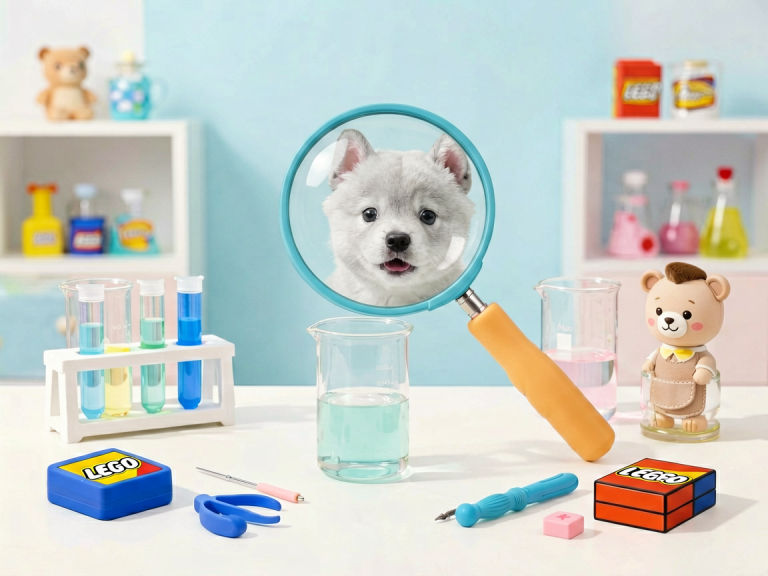
- Incorporate real‑world items. Not all learning toys come from a store. Measuring cups, a child‑safe magnifying glass, a collection of leaves, or a simple stopwatch can be just as educational as expensive marketed products. These items teach children that learning is everywhere.
The Indispensable Role of Parents and Caregivers
No toy, no matter how brilliantly designed, can replace the active presence of a caring adult. Kindergarten learning toys for home are most effective when an adult models engagement, asks open‑ended questions, and extends the play. For example, while a child builds with blocks, a parent might say, “I notice you’ve made a tall tower. What do you think will happen if we put a heavy teddy bear on top?” This prompts prediction and experimentation. Similarly, during pretend play, a parent can introduce new vocabulary: “You are being a very kind doctor. What tool are you going to use to check the patient’s heartbeat?” These interactions build language, critical thinking, and a sense of security.
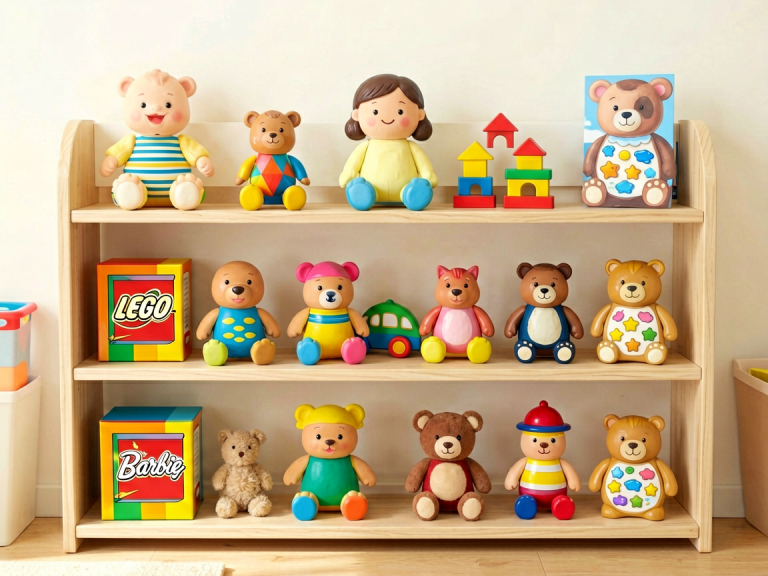
Moreover, parents should establish a routine that balances structured learning activities (e.g., a 20‑minute puzzle session) with free play. The toys themselves should be organized in accessible, low shelves so that children can independently choose what to explore. Rotating toys every few weeks—putting half away and bringing out the others—maintains novelty and prevents overwhelm. Finally, resist the urge to correct every “mistake.” If a child insists on calling a cylinder a “triangle,” gently model the correct term without shaming. The goal is a love of learning, not perfection.
Conclusion
Kindergarten learning toys for home are far more than diversions; they are the building blocks of lifelong curiosity and competence. By carefully selecting toys that nurture cognitive, language, motor, and social‑emotional growth, and by actively participating in the play process, parents can create a rich, supportive environment that complements formal education. The best toys are those that spark questions, invite exploration, and leave room for imagination. In that sense, the most powerful learning tool in any home may not be a toy at all, but the focused, loving attention of an adult who understands that every block stacked, every story told, and every piggyback ride is a lesson in trust, persistence, and joy. So next time you browse the aisles or scroll online for kindergarten learning toys, remember: you are not just buying a product—you are investing in a child’s future ability to think, create, and connect. And that is the most valuable lesson of all.