Empowering Little Voices: Engaging Activities for 6-Year-Old Girls to Boost Language Development
Introduction
Language development in early childhood is a cornerstone of cognitive, social, and academic growth. At the age of six, girls are typically entering a phase of rapid vocabulary expansion, improved sentence structure, and a growing ability to express complex thoughts. However, every child learns differently, and the best way to nurture language skills is through purposeful, playful, and immersive activities. For parents, educators, and caregivers of six-year-old girls, the challenge is not just to teach words but to create environments where language feels natural, exciting, and rewarding. This article presents a comprehensive set of activities specifically tailored to the interests and developmental needs of six-year-old girls. Each activity is designed to be engaging, low-pressure, and easily integrated into daily routines. Whether at home, in a classroom, or during playdates, these exercises will help young girls strengthen their vocabulary, listening comprehension, storytelling abilities, and conversational confidence. The key is to make language a joyful adventure rather than a chore. Below, we explore seven distinct categories of activities, each supported by practical examples and explanations of their linguistic benefits.
1. Storytelling and Puppet Play
Storytelling is one of the most powerful tools for language development. At age six, girls often have vivid imaginations and love to create characters and plots. Combining storytelling with puppet play adds a tactile and interactive dimension that deepens engagement.
*Activity Description:* Provide a collection of simple hand puppets—animal, fairy-tale, or everyday characters—or encourage the child to make her own using socks, paper bags, or felt. Then, invite her to invent a short story. She can use the puppets to act out the story while you or other children serve as the audience. Alternatively, you can start a story and ask her to continue it with the puppets.
*Language Benefits:* This activity encourages spontaneous narrative production, requiring the child to sequence events, use descriptive language, and practice dialogue (e.g., "The rabbit said, 'Let’s go to the forest!'"). It also builds vocabulary around emotions and actions, as she must assign feelings and movements to her characters. The act of speaking as a puppet can reduce performance anxiety, making her more willing to experiment with new words and sentence structures. To maximize learning, ask open-ended questions like, "Why is the bear sad?" or "What will happen next?" This pushes her to explain reasoning and predict outcomes, both of which strengthen syntactic complexity.
2. Rhyming Games and Songs
Phonological awareness—the ability to recognize and manipulate sounds in words—is a critical predictor of reading and writing success. Six-year-old girls often enjoy music and rhythm, making rhyming games a natural fit.
*Activity Description:* Play classic rhyming games such as "I Spy" with a twist: "I spy with my little eye something that rhymes with 'cat' (hat, bat, mat)." Sing nursery rhymes or children’s songs together, pausing before the last word to let her fill it in. Create your own silly rhymes: "The frog sat on a log / and read a book about a dog." Use flashcards or objects around the house to play a matching game where she connects rhyming pairs (e.g., "star" and "car").
*Language Benefits:* Rhyming strengthens auditory discrimination and helps girls recognize that words are made up of smaller sound units. This skill directly supports decoding when learning to read. Singing also improves prosody (the rhythm and intonation of speech), making language more expressive. Furthermore, creating original rhymes encourages creativity and semantic flexibility. For example, if she says "The cat wore a hat," she is practicing subject-verb-object structure while focusing on sound patterns. Over time, these exercises build confidence in manipulating language, which is essential for both oral and written communication.
3. Interactive Reading and Picture Books
While reading aloud is common, interactive reading takes it a step further by turning the child from a passive listener into an active participant. Six-year-old girls are often drawn to stories with strong female characters, animals, or magical elements, which can be leveraged for language growth.
*Activity Description:* Choose a picture book with rich illustrations and captivating text. As you read, pause to ask questions: "What do you think will happen next?" "Why did the princess decide to help the dragon?" "Can you point to something blue on this page?" Encourage her to "read" the pictures and create her own narration. After finishing, ask her to retell the story in her own words, or to change the ending. For a more advanced challenge, introduce books with repetitive phrases or predictable patterns (e.g., "Brown Bear, Brown Bear, What Do You See?") so she can anticipate and join in.
*Language Benefits:* Interactive reading fosters comprehension, inference, and vocabulary acquisition. When a child explains why a character acted a certain way, she practices causal reasoning and uses complex sentence structures (e.g., "She was scared because the monster was loud"). Retelling requires her to organize information sequentially and use transition words like "first," "then," and "finally." Moreover, exposure to new words in context—such as "magnificent" or "disappear"—expands her lexicon naturally. To reinforce learning, keep a "new words" chart where she can write or draw words she discovered during reading.
4. Role-Play and Pretend Play
Pretend play is not just fun; it is a sophisticated language laboratory. Six-year-old girls often engage in elaborate scenarios, such as playing house, school, doctor, or fairy-tale kingdoms. These settings provide authentic contexts for using language.
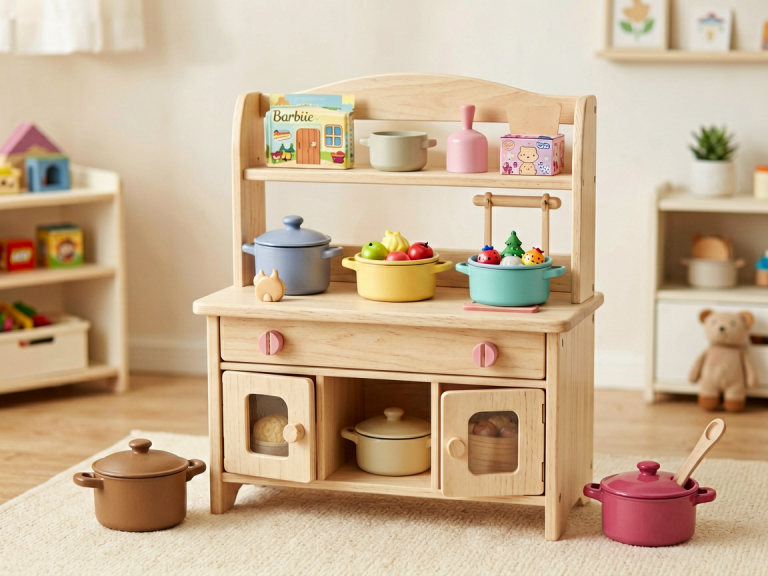
*Activity Description:* Set up a pretend environment: a grocery store with empty food containers, a post office with envelopes and stamps, or a veterinarian clinic with stuffed animals. Let her take on different roles (e.g., shopkeeper, customer, doctor, patient). Join her in the play, but let her lead. Introduce props like a toy phone, menus, or signs to prompt communication. Encourage dialogue by modeling polite requests, questions, and explanations: "Excuse me, how much does this apple cost?" "My dog has a broken wing. What should I do?"
*Language Benefits:* Role-play requires children to adopt different registers and perspectives. When she plays a teacher, she might use instructive language ("Sit down and open your book"). When playing a customer, she practices transactional phrases ("I’d like to buy a loaf of bread, please"). This expands her pragmatic language skills—knowing how to adjust speech based on the audience and situation. It also builds vocabulary specific to the scenario (e.g., "stethoscope," "prescription," "change"). Additionally, negotiating roles and rules with playmates forces her to use persuasive and collaborative language, such as "Let’s pretend I’m the queen and you’re the knight." These interactions are invaluable for social and linguistic development.
5. Word Games and Vocabulary Building
Structured word games can be both educational and entertaining. At this age, girls often enjoy competition (in a friendly, low-stakes way) and the satisfaction of "winning" a word challenge.
*Activity Description:* Play games like "I’m Going on a Picnic" (where each player adds an item that starts with the next letter of the alphabet: "I’m going on a picnic and I’m bringing an apple, a book, a cat…"). Use bingo cards with pictures and corresponding words; call out a word and she covers the picture. Play "Categories" where you name a category (e.g., "animals," "things you wear") and she has to list as many items as possible within a time limit. For a kinesthetic twist, use magnetic letters or letter tiles to spell simple words, then scramble them for her to rearrange.
*Language Benefits:* Alphabet games reinforce letter-sound correspondence and alphabetical order. Categorization tasks enhance semantic organization—the ability to group words by meaning, which aids memory retrieval later. For instance, thinking of "things you wear" pulls out words like "shirt," "hat," "gloves," and "belt," and she learns that these all belong to the superordinate category "clothing." Spelling with tiles strengthens orthographic awareness, linking spoken sounds to written symbols. To make it more challenging, encourage her to use the words in sentences, thereby integrating vocabulary into proper grammar.
6. Journaling and Drawing with Captions
Writing at age six is often still emergent, but combining drawing with simple written captions can bridge the gap between oral and written language. Many girls love to create artwork, and using it as a springboard for writing makes the task feel less daunting.
*Activity Description:* Provide a blank notebook or a stack of paper. After she draws a picture—of a family outing, a favorite pet, or an imaginary creature—ask her to dictate a sentence or two about it. Write her words underneath, or if she is ready, let her copy them. Over time, encourage her to write her own short sentences, even if spelling is inventive (e.g., "I went to the bech" for "beach"). Another variation: create a "daily diary" where she records one thing she did each day, accompanied by a small sketch. You can also make "story starters" by providing a picture prompt (e.g., a picture of a castle) and asking her to write or tell what is happening.
*Language Benefits:* Journaling connects oral language to written form, reinforcing the idea that speech can be recorded. It also encourages reflection and narrative skills. When she describes her drawing, she practices using adjectives (e.g., "a big red flower"), prepositions ("the cat under the table"), and action verbs ("the girl is jumping"). Dictating allows her to express ideas beyond her current writing ability, thus stretching her syntactic complexity. As she attempts to write, she begins to internalize spelling patterns and punctuation. Over time, this builds literacy confidence and a sense of authorship.
7. Conversation Starters and Family Discussions
Perhaps the most underrated language activity is intentional conversation. In our busy lives, we often forget to engage in extended back-and-forth dialogue with our children. Six-year-old girls are capable of surprisingly deep thoughts and benefit immensely from being taken seriously.
*Activity Description:* Set aside time each day for "family discussion" or "talking time"—perhaps during dinner or before bed. Use conversation starters tailored to her interests: "If you could have any superpower, what would it be and why?" "What was the best part of your day?" "Tell me about a time you felt brave." Listen actively, ask follow-up questions, and share your own stories. Avoid correcting her grammar in the moment; instead, model correct language by rephrasing: If she says, "I goed to the park," you can say, "Oh, you went to the park? That sounds fun!" Additionally, play "Tell Me a Story" where each person adds one sentence to a collaborative story, building it together.
*Language Benefits:* Open-ended questions stimulate elaboration and critical thinking. A child explaining why she would choose invisibility over flight must use reasoning and possibly compare concepts. Listening to adult responses exposes her to more sophisticated vocabulary and sentence structures (e.g., "I would choose teleportation because it would save time and allow me to visit my grandmother more often"). Turn-taking in conversation teaches discourse rules—when to speak, how to listen, and how to respond relevantly. Collaborative storytelling forces her to listen closely to prior contributions and add coherently, strengthening narrative cohesion. These daily exchanges are the bedrock of fluent, confident communication.
Conclusion
Language development for a six-year-old girl is not about formal drills or rote memorization. It thrives in environments rich with play, creativity, social interaction, and genuine curiosity. The activities outlined above—puppet storytelling, rhyming games, interactive reading, pretend play, word games, journaling, and family conversations—each target different aspects of language: phonology, vocabulary, syntax, pragmatics, and narrative ability. They are intentionally flexible, allowing adults to adapt them to the child’s mood, energy level, and interests. Importantly, they all share one core principle: they treat the child as an active agent in her own learning. When a girl feels that her words matter, that her stories are interesting, and that her questions are valued, she will naturally want to expand her linguistic repertoire. So pick an activity that sparks joy today, whether it’s building a cardboard castle for pretend play or singing a silly rhyme on the way to school. The words will follow.