Engaging Indoor Play Activities for 6-Month-Olds: Nurturing Development Through Play
Introduction
The sixth month of life marks a remarkable transformation. Your baby has likely doubled their birth weight, can roll over with confidence, may sit with support, and is beginning to grasp objects with increased purpose. Their world is expanding from a blur of shapes and sounds to a vibrant landscape of cause and effect, texture, and interaction. Indoor play activities become crucial at this stage because they provide a safe, controlled environment where curiosity can flourish without the unpredictability of outdoor elements. More importantly, these activities are not merely entertainment; they are the building blocks of cognitive, motor, sensory, and social development. Every rattle you shake, every peek-a-boo game you play, every soft blanket you offer for exploration is a lesson in physics, language, and emotional bonding.
In this article, we will explore a rich variety of indoor play activities tailored specifically for 6-month-olds. Each activity is designed to respect the baby’s limited attention span (typically just a few minutes), while maximizing learning opportunities. We will cover sensory exploration, gross motor skills, fine motor development, cognitive games, and social interaction. Along the way, we will emphasize safety, adaptability, and the joy of shared discovery. By the end, you will have a comprehensive toolkit to turn your living room into a developmental wonderland.
—
Sensory Exploration Activities
At six months, babies are sensory scientists. They learn by tasting, touching, listening, and looking. Indoor spaces offer abundant opportunities for sensory play, which stimulates neural connections and helps babies make sense of their environment.
Textured Treasure Baskets
Fill a shallow, baby-safe basket with objects of various textures: a silk scarf, a crinkly paper, a wooden block, a soft velvet ribbon, a smooth plastic spoon, and a bumpy rubber ball. Sit your baby on your lap or in a supported sitting position, and let them reach, grab, and mouth each item (always under supervision). Describe what they touch: “This is soft,” “This is bumpy.” The variety of sensations on their palms and inside their mouths strengthens tactile discrimination and curiosity.
Sound Shakers and Musical Discovery
Babies this age love cause-and-effect sounds. Create simple shakers by filling small, sealed plastic containers with rice, dried beans, or bells. Ensure the lids are tightly secured and cannot be opened. Let your baby hold and shake them while you shake another one in a different rhythm. Encourage them to listen and imitate. You can also play soft music or sing simple songs, then pause to see if your baby makes sounds in response. This builds auditory processing and early rhythm awareness.
Mirror Time
Place a unbreakable mirror on the floor or prop it against a wall. Let your baby lie on their tummy or sit facing it. They will be fascinated by the reflection – at first they might not recognize themselves, but they will enjoy watching the “other baby” move. Smile, wave, and make faces with them. This activity promotes self-awareness, visual tracking, and social smiling.
High-Contrast Visual Stimulation
While 6-month-olds can see more colors than newborns, they still respond strongly to high-contrast patterns (black and white, bold primary colors). Tape large, simple pictures (circles, stripes, faces) on walls at baby’s eye level or hang them from a mobile above a play mat. Encourage your baby to track the images as you slowly move them. This strengthens eye muscles and visual focus.
—
Gross Motor Skill Development
Gross motor skills involve large muscle groups that control head, neck, trunk, and limb movements. At six months, babies are building strength for rolling, sitting, and eventually crawling. Indoor play can accelerate these milestones in a low-pressure, fun way.
Tummy Time with a Twist
Tummy time remains essential. But by six months, your baby may resist lying flat on the floor for long. Make it enticing: place a colorful, crinkly toy just out of reach, or lie face-to-face with them and sing. Use a small rolled-up towel under their chest to provide a slight incline, making it easier to lift their head and look around. Another idea: put a few plastic cups upside down on the floor; your baby will try to bat or grab them, stretching their arms and strengthening shoulder muscles.
Supported Sitting and Reach Games
Position your baby in a seated position with pillows or a nursing pillow around them for support. Place toys in front, to the side, and slightly behind them. Encourage them to turn their torso and reach. This helps develop trunk control and balance. For a more dynamic challenge, sit your baby on your lap facing outward and slowly tilt your legs side to side, engaging their core as they try to stay upright.
Rolling Races
Help your baby practice rolling by gently guiding them when they are on their side. Place a toy on the side they have not yet rolled toward, and cheer when they make the effort. Once they roll, show excitement. Rolling not only builds strength but also develops the vestibular system, which helps with balance.
Kicking and Leg Exercises
Lay your baby on their back and dangle a lightweight, colorful toy (like a soft ball with ribbons) above their feet. They will instinctively kick. You can also hold their ankles and gently bicycle their legs while singing “Wheels on the Bus.” This strengthens hip and leg muscles, precursors to crawling and walking.
—
Fine Motor Skill Activities
Fine motor skills involve small hand and finger movements. At six months, babies move from a reflexive grasp to a more deliberate, raking grasp – using the whole hand to pull objects toward them. Strengthening these muscles is vital for future self-feeding and writing.
Grasp and Transferring
Offer your baby two small, lightweight toys that are easy to hold (e.g., wooden rings, soft blocks, or teethers). Show them how to pick one up, then transfer it to the other hand. Many babies will initially hold one toy and drop it when given another, but with practice, they learn to pass objects between hands. This bilateral coordination is a major milestone.
“What’s Inside?” Tissue Box Play
Take an empty tissue box or a small cardboard box and stuff it with colorful scarves or pieces of soft fabric. Let your baby pull them out one by one. This simple activity works on pincer grasp (though at this age they mostly use a whole-hand pull), hand-eye coordination, and the joy of discovery. Always supervise to ensure no fabric is placed in the mouth and chokable.
Water Play (Splash Station)
Fill a shallow plastic tray with an inch of lukewarm water (no more than chest-deep when the baby is seated). Add floating toys: a rubber duck, a plastic cup, a sponge. Let your baby splash, grab, and scoop. Water provides unique resistance that strengthens hand muscles. Stay within arm’s reach at all times and never leave the baby unattended.
Stacking and Knocking Down
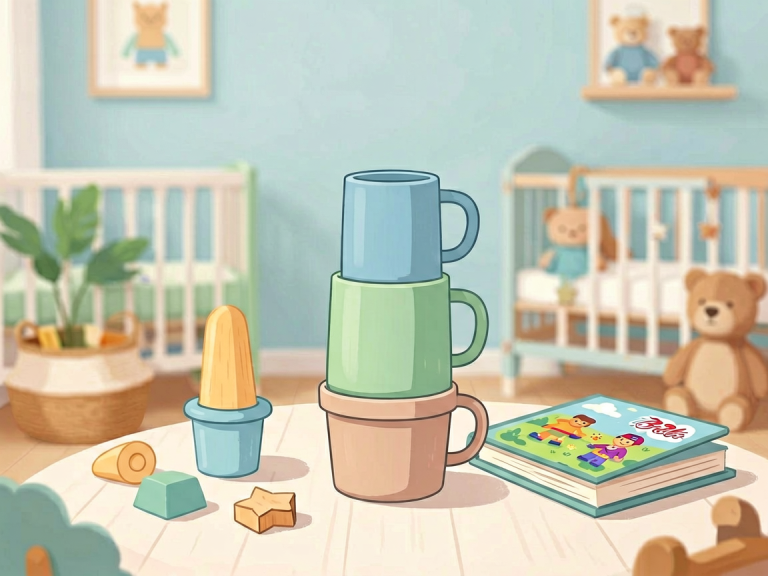
Give your baby two or three lightweight, soft blocks or plastic cups. Show them how to stack one on top of another (they likely won’t succeed yet, but they will try). Then, knock the stack down with a dramatic “boom!” They’ll imitate the knocking action, learning release and cause-and-effect.
—
Cognitive and Social Play
Cognitive development at six months is about understanding that objects exist even when unseen (object permanence), recognizing familiar faces, and beginning to imitate simple actions. Social play reinforces attachment and communication.
Peek-a-Boo Variations
Classic peek-a-boo is a powerhouse game. Use your hands, a blanket, or a small toy to hide your face. Say “Where’s Mama?” then reveal yourself with “Peek-a-boo!” Vary it by hiding a toy under a cup and lifting the cup; your baby will begin to anticipate the reappearance. This teaches object permanence and strengthens memory.
Cause-and-Effect Toys
Use toys that produce a result when acted upon: a pop-up toy that springs up when a button is pushed, a ball that makes music when rolled, or a rattle that sounds when shaken. Guide your baby’s hand to press the button or shake the rattle, then wait for their reaction. Over time, they will intentionally perform the action to trigger the effect, a fundamental cognitive leap.
Simple Finger Puppets and Songs
Put a finger puppet (or just draw a face on your fingertip) and sing a song like “Itsy Bitsy Spider” or “Five Little Monkeys.” Bring the puppet close to your baby’s face, then move it away. Let them grab at it. This encourages visual tracking, auditory processing, and the beginnings of social turn-taking.
Imitative Play
Babies love to imitate. Stick out your tongue; your baby may do the same. Make a gentle “ooo” sound; pause and see if they try to copy. Clap your hands softly; eventually they may clap back. These back-and-forth exchanges are the first conversations.
—
Safety Tips for Indoor Play
Before you begin any activity, ensure the environment is safe:
- Always supervise your baby, especially during water play or when mouthing objects.
- Remove small parts or items that could be choking hazards (anything smaller than a 1.1-inch diameter).
- Keep play mats clean and free of sharp edges.
- Use unbreakable mirrors and non-toxic materials.
- Ensure any container used for water is shallow and never left unattended.
- Follow your baby’s cues – if they seem overstimulated (turning away, fussing), take a break or switch to a calmer activity.
—
Conclusion
Play is the work of childhood, and for a 6-month-old, indoor play activities are the perfect classroom. Through sensory exploration, gross and fine motor challenges, and cognitive social games, you are not just passing time – you are building your baby’s brain, one gentle interaction at a time. Every rattle shaken, every tummy-time giggle, every peek-a-boo surprise strengthens neural pathways that will support learning for years to come.
Remember, the goal is not to achieve milestones faster, but to enjoy the process of discovery together. Your baby’s attention span is short; embrace the fragmentary nature of play. Let them lead – if they want to stare at the ceiling fan for five minutes, that’s a valid form of visual engagement. So spread out a soft blanket, gather a few simple treasures from around the house, and dive into the world of indoor play. Your smile, your voice, and your presence are the most valuable toys of all.