Engaging Play Activities for 6-Month-Olds Using Low-Mess Supplies: A Practical Guide for Caregivers
Introduction
The sixth month of life marks a thrilling developmental leap. Your baby is likely sitting with support, reaching for objects with newfound intention, exploring textures with their mouth, and beginning to understand cause and effect. Play at this age is not just fun—it is the primary vehicle for cognitive, motor, and sensory development. However, for many caregivers, the thought of messy play (paint, water, sand, food) can be daunting, especially on a busy weekday. The good news is that you can provide rich, stimulating experiences using everyday, low-mess supplies that require minimal cleanup and pose no choking or toxicity risks. This article outlines a variety of carefully selected play activities designed specifically for six-month-olds, each requiring only simple, low-mess materials that are easy to source, store, and sanitize. From sensory bags to textured blocks, these activities support your baby’s growing curiosity while keeping your home—and your sanity—intact.
Why Low-Mess Play Matters for Six-Month-Olds
Before diving into the activities, it is important to understand why low-mess play is particularly appropriate for this age group. At six months, babies are still in the oral exploration stage; everything goes into the mouth. Traditional messy play with finger paints, jelly, or water can quickly become a health hazard if ingested in large quantities, and cleanup may involve changing multiple outfits, scrubbing floors, and laundering towels. Low-mess alternatives, such as sealed sensory bags or dry manipulatives, allow babies to explore safely without the risk of ingesting non-food substances. Additionally, low-mess supplies are often more portable—you can take them to the park, to grandma’s house, or even use them during diaper changes. Finally, these activities promote focused attention: because the mess factor is reduced, babies can concentrate on the sensory input (e.g., the sound of crinkling fabric, the sight of moving beads inside a bottle) rather than being distracted by the chaos of dripping, spilling, or sticky fingers.
Activity 1: The Sealed Sensory Bag – A World of Texture Without a Drop of Mess
*Materials needed:* One sturdy, gallon-sized zip-top freezer bag (not the thinner sandwich bags, as they may puncture), hair gel or clear hand sanitizer, a few small safe objects (e.g., plastic buttons, craft feathers, large sequins, or smooth pebbles—all larger than a baby’s fist to avoid choking), and strong tape (such as duct tape or packing tape).
*Setup:* Squeeze about half a cup of hair gel or hand sanitizer into the bag. Add the small objects. Remove as much air as possible, then seal the bag. Reinforce the seal by folding the top over once and taping it securely with a strip of duct tape across the entire top edge. You can also tape the bag to a high chair tray, a window (for light play), or a baby-safe floor mat.
*How to play:* Place the bag in front of your baby. They will likely pat, push, and swipe at it. The gel moves slowly, carrying the little objects in a mesmerizing dance. Your baby may try to mouth the bag, which is safe as long as the bag is intact. Supervise closely to ensure no chewing through the plastic. This activity stimulates visual tracking, cause-and-effect understanding (pushing moves the objects), and tactile exploration without any liquid leaking. Cleanup? Just wipe the bag with a damp cloth and store it for reuse.
*Developmental benefits:* Strengthens hand muscles, encourages bilateral coordination (using both hands together), introduces concepts of motion and viscosity, and provides calming sensory input.
Activity 2: Crinkle and Rustle – Texture Books and Fabric Squares
*Materials needed:* A small selection of fabric squares (cotton, fleece, satin, corduroy, and especially crinkle fabric, which makes a loud crackling sound when scrunched), or a store-bought fabric activity book. Alternatively, you can make your own by sewing or gluing different textured patches onto a piece of cardboard (avoiding small loose threads).
*Setup:* Lay two or three fabric squares on the floor or on your baby’s play mat. You can also attach them to a low-hanging toy bar using Velcro or rings.
*How to play:* Let your baby reach, grab, and scrunch the fabrics. The crinkle fabric is particularly engaging because the sound provides immediate auditory feedback. Babies at this age love repetition, so they may scrunch the same piece over and over, learning that their action produces a predictable sound. You can also rub the fabric gently against their cheek or arm to provide tactile input.
*Why it is low-mess:* No paint, no water, no food. The only potential mess is if your baby drools on the fabric, but most fabrics are machine-washable or can be wiped clean. If you use store-bought books, they often have sewn-in textures and are chew-safe.
*Developmental benefits:* Develops grasping skills (palmar grasp transitioning to pincer grasp), auditory discrimination, and sensory integration. Also encourages social turn-taking if you hold a fabric piece and let your baby pull it away.
Activity 3: The Low-Mess Mirror – Self-Awareness and Facial Expressions
*Materials needed:* An unbreakable baby-safe mirror (acrylic, not glass), or a stainless steel bowl turned upside down can serve as a makeshift mirror. A few non-toxic, large stickers (like foam shapes or eyes) can optionally be added.
*Setup:* Secure the mirror against a wall at floor level, or prop it on a low surface. For tummy time, lay the mirror flat in front of your baby.
*How to play:* Babies are fascinated by faces, especially their own. Encourage your baby to look at themselves. Make exaggerated happy, surprised, or sad faces next to the mirror. Tap the mirror’s surface and say, “Who is that? That’s [baby’s name]!” If you attach a large sticker to the mirror (peel off after play), your baby may try to touch it, developing eye-hand coordination.
*Mess factor:* Zero. Mirrors do not create any residue, and acrylic versions are easy to wipe with a baby-safe wipe. No clothes changes or floor scrubbing required.
*Developmental benefits:* Promotes self-recognition (a precursor to social-emotional development), visual focusing, and imitation skills. It also encourages head lifting during tummy time, strengthening neck and upper back muscles.
Activity 4: Quiet Bottles – Visual Stimulation in a Sealed Container
*Materials needed:* An empty, clear plastic water bottle with a secure screw cap (Gatorade or soda bottles work well, as they are sturdy). Small, lightweight objects that will not fit through the bottle’s opening (e.g., dry pasta, uncooked rice, small jingle bells, or colored pom-poms). Glue (to seal the cap permanently) and strong tape.
*Setup:* Place a handful of objects inside the bottle. Fill it about one-quarter full. Do not add water or oil—keeping it dry ensures zero leaks and easy cleanup. Screw the cap on tightly, then apply a line of hot glue or super glue around the rim of the cap and screw it back on. Let it dry. For added security, wrap a strip of duct tape around the cap and neck.
*How to play:* Hand the bottle to your baby (always under supervision). They will shake it, roll it, and watch the objects tumble. The sound of rice against plastic or bells ringing is delightful. Because the bottle is sealed, there is no risk of choking on loose parts. You can also lie the bottle on its side and let your baby push it, watching the contents cascade.
*Mess factor:* None, provided the cap is sealed. If the bottle ever breaks, discard immediately. But with a sturdy bottle and careful supervision, this is a extremely low-mess activity.
*Developmental benefits:* Introduces cause and effect (shaking produces sound), enhances visual tracking, develops grip strength, and provides calming auditory input. Many babies find the rhythmic sound soothing.
Activity 5: Tissue Paper Pulling – A Fine Motor Challenge
*Materials needed:* A small cardboard box (like a shoe box or tissue box), and several sheets of lightweight tissue paper (any color) cut into strips about 2 inches wide and 6 inches long. Avoid shiny wrapping paper as it can be slippery and less textured.
*Setup:* Cut a slit in the top of the box, just wide enough to insert the tissue paper strips. Tuck one end of each strip into the slit, leaving the other end sticking out. You can also simply place the strips loosely in an empty tissue box, mimicking the way tissues come out.
*How to play:* Show your baby how to grab the end of a strip and pull it out. Babies are natural pullers—they will love the sensation of the paper sliding through their fingers. The crinkling sound adds auditory interest. Once all strips are pulled out, you can stuff them back in and repeat. Some babies enjoy crumpling the paper into a ball, which is also safe but slightly more messy (small pieces may fall). To keep it low-mess, use large strips that do not tear easily.
*Mess factor:* Very low. A few paper scraps may fall, but they are dry and easy to sweep up. No liquids, no stains. You can even use recycled tissue paper from gift bags.
*Developmental benefits:* Strengthens finger muscles, promotes the development of the pincer grasp, teaches object permanence (the paper appears and disappears), and encourages problem-solving (how to get the paper out).
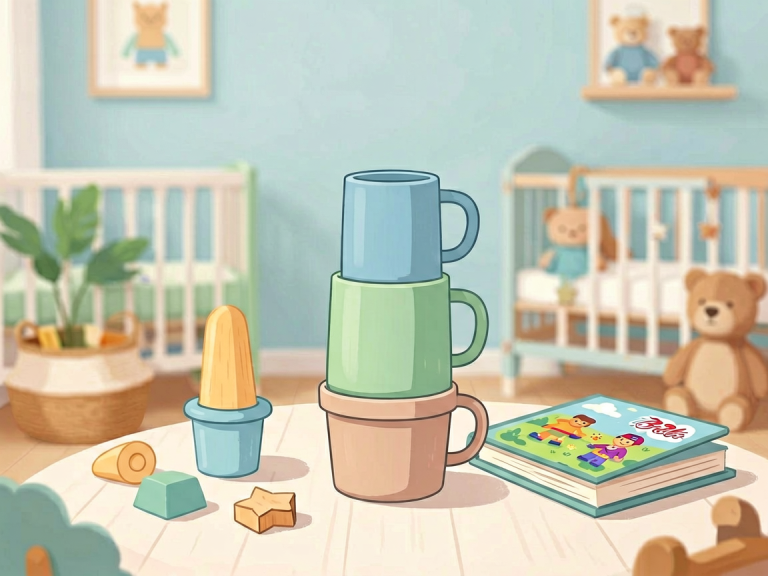
Activity 6: Stacking Cups – The Ultimate Low-Mess Manipulative
*Materials needed:* A set of 4–8 lightweight plastic nesting cups or stacking cups. Avoid any with sharp edges or small handles that could be bitten off.
*Setup:* Simply scatter the cups on the floor or a high chair tray.
*How to play:* At six months, your baby will likely not be able to stack cups yet, but they can grasp, bang, and mouth them. Show them how to put a smaller cup inside a larger one (nesting). They may also enjoy holding a cup in each hand and banging them together, or banging them against the floor. You can even place a small, safe toy (like a plastic ring) under a cup and let your baby discover it by lifting the cup.
*Mess factor:* Zero. Cups are plastic and can be wiped down. No paint, no water, no food. They are also dishwasher safe.
*Developmental benefits:* Develops hand-eye coordination, spatial awareness (inside/outside concept), cause and effect (banging makes noise), and bilateral coordination. The slight resistance when nesting cups together also strengthens arm muscles.
Activity 7: Sock or Silicone Teethers – Oral Exploration Meets Sensory Play
*Materials needed:* Clean, unused baby socks (different colors or patterns) or silicone teethers with varied textures (bumpy, ridged, smooth). You can also use a clean, large wooden spoon or a silicone spatula (ensure no loose parts).
*Setup:* Place several socks on the floor, or attach a silicone teether to a toy clip.
*How to play:* Babies at six months are teething and exploring orally. Let them grasp, mouth, and chew on the socks or teethers. To make it more engaging, you can crinkle the sock slightly or tie it in a knot (supervise closely to ensure the knot does not come undone). Rotate different textures to keep novelty high.
*Mess factor:* Minimal. Socks can be tossed into the laundry; silicone teethers can be boiled or wiped. No sticky fingers, no gooey residue.
*Developmental benefits:* Soothes sore gums, provides tactile and oral stimulation, enhances grasping skills, and introduces different temperatures (room temperature vs. refrigerated teether).
Activity 8: High Chair Treasure Basket – Independent Exploration
*Materials needed:* A shallow basket or bin, and a collection of low-mess safe items: a wooden egg shaker, a large metal measuring spoon, a silicone whisk, a crinkly fabric ball, a small board book, a plastic key ring with large keys (choking-size keys removed), and a smooth stone (washed and larger than baby’s mouth).
*Setup:* Place the basket on your baby’s high chair tray or on the floor during supervised play.
*How to play:* Let your baby independently choose items, mouth them, shake them, and drop them. The beauty of a treasure basket is that it encourages open-ended exploration without adult-led instructions. Rotate the items every few days to maintain interest.
*Mess factor:* Low to zero. Most items can be wiped with a disinfectant wipe. Drool is inevitable, but since the basket is contained, cleanup is quick.
*Developmental benefits:* Fosters independent play and decision-making, develops concentration, exposes baby to a variety of textures, weights, and sounds, and builds vocabulary as you name each object.
Safety Considerations for Low-Mess Play
While all the activities above use low-mess supplies, safety remains paramount. Always supervise your baby during play. Check all items for choking hazards (any object that can fit through a toilet paper tube is too small). Inspect sealed bags and bottles for leaks or tears before each use. Avoid items with sharp edges, loose strings, or toxic materials. Wash hands before and after play, and sanitize toys regularly, especially if they have been mouthed. Finally, watch for signs of overstimulation (crying, turning away, arching back) and offer a calm break.
Conclusion: The Joy of Mess-Free Exploration
Play activities for six-month-olds do not require a bathtub full of paint or a kitchen covered in flour. With a bit of creativity and everyday household items, you can create a rich sensory environment that supports your baby’s rapid development while keeping cleanup to a minimum. The activities described above—sealed sensory bags, texture fabrics, mirrors, quiet bottles, tissue paper pulling, stacking cups, teethers, and treasure baskets—are all proven to engage a six-month-old’s curiosity, motor skills, and cognitive growth. They are safe, reusable, and, best of all, low-mess. As your baby grows, you can adapt these ideas: add more objects to the sensory bag, introduce new textures, or use larger cups. Remember that the goal is not perfection but connection. So put away the mop, pick up a crinkle cloth, and enjoy watching your baby discover the world—one low-mess play session at a time.