The Essential Parent Guide to Choosing Age-Appropriate Toys for 1-Year-Olds
Introduction
The first birthday marks a monumental leap in a child’s development. Your little one is no longer a passive infant but an active explorer, a budding communicator, and a curious little scientist. At 12 to 24 months, toddlers undergo rapid changes in mobility, cognition, language, and social-emotional skills. Choosing the right toys during this critical window is not merely about entertainment—it is about fostering neural connections, building motor control, and nurturing a lifelong love for learning. However, the sheer volume of options on store shelves can be overwhelming, especially with marketing claims that blur the line between “educational” and “developmentally appropriate.” This guide will empower you with evidence-based criteria, practical tips, and a curated philosophy to select toys that are safe, stimulating, and perfectly suited for your one-year-old’s stage of growth. Remember, the best toy is one that meets your child where they are—challenging them just enough to spark curiosity without causing frustration.
Understanding the Developmental Milestones of a 1-Year-Old
Before diving into toy recommendations, it is essential to understand what is happening inside your toddler’s brain and body. At this age, children are typically:
- Gross Motor Skills: Many one-year-olds are pulling themselves up to stand, cruising along furniture, and some may even take their first independent steps. They enjoy squatting, climbing low objects, and throwing balls.
- Fine Motor Skills: The pincer grasp (using thumb and index finger) is becoming refined. They can pick up small objects, point with one finger, and begin to stack two or three blocks. Hand-eye coordination is improving rapidly.
- Cognitive Development: Object permanence is now fully established—they know a hidden toy still exists. They engage in simple problem-solving, such as pulling a string to retrieve a toy. Cause-and-effect experiments are their favorite pastime.
- Language and Communication: Vocabulary may range from a few words to about 50 words by 18 months. They understand far more than they can say. Babbling becomes more intentional, and they imitate sounds and gestures.
- Social-Emotional Growth: Separation anxiety peaks. They show attachment to caregivers, may be shy with strangers, and begin to assert independence (often through saying “no” or having tantrums). Parallel play (playing alongside others, not with them) is normal.
Any toy you choose should support one or more of these domains. Avoid toys that demand skills far beyond their reach—like puzzles with many pieces or complex electronic games—as they only lead to frustration.
Safety First: Non-Negotiable Criteria for Toy Selection
Safety is the absolute foundation for any toy given to a one-year-old. At this age, everything goes into the mouth. Here are the golden rules:
- No Small Parts: Use a toilet paper roll as a test. Any toy or part that can fit entirely inside the roll is a choking hazard. Avoid toys with batteries that are easily accessible, buttons that detach, or any loose pieces.
- Non-Toxic Materials: Look for labels that indicate BPA-free, phthalate-free, and lead-free. Wooden toys should be painted with water-based, non-toxic finishes. Avoid cheap plastics that may off-gas harmful chemicals.
- Sturdy Construction: Toys should not break easily. Avoid anything with sharp edges, splinters, or points. Check for durability—a one-year-old will throw, bang, and drop toys repeatedly.
- No Long Cords or Strings: Anything longer than 12 inches poses a strangulation risk. Pull toys with short cords (under 12 inches) are acceptable only under supervision.
- Age Labels Matter: While some manufacturers stretch the truth, always check the recommended age. Toys marked “3+” are often unsafe for one-year-olds not only due to small parts but also because of complexity.
- Battery Compartments: If a toy requires batteries, ensure the compartment is secured with a screwdriver. Loose button batteries are extremely dangerous if swallowed.
- Supervision Is Key: No toy replaces active adult presence. Always watch your child during play, especially with new items.
Categories of Age-Appropriate Toys: What to Look For
Now, let’s explore specific types of toys that align with a one-year-old’s abilities and interests.
Toys for Gross Motor Development
These toys encourage movement, balance, and coordination.
- Push and Pull Toys: A sturdy wooden push cart or a wagon that your child can hold onto while walking provides support for early steps. Look for models with a wide base to prevent tipping. Pull toys with a short string (e.g., a wooden caterpillar on wheels) are great once walking is established.
- Ride-On Toys: Simple, low-to-the-ground ride-on toys that require leg power (no pedals) help develop leg strength and balance. Ensure they are stable and have a wide wheelbase.
- Soft Balls: Large, soft cloth or foam balls (4–6 inches in diameter) are perfect for rolling, throwing, and chasing. They encourage hand-eye coordination and gross motor movement.
- Ramps and Tunnels: A simple foam ramp or a fabric tunnel invites crawling, creeping, and walking. These open-ended toys promote spatial awareness.
Toys for Fine Motor Skills and Sensory Exploration
Fine motor control is built through manipulation, grasping, and sensory feedback.
- Stacking Rings and Nesting Cups: Classic stacking rings (with a wide base and a cone that prevents incorrect stacking) teach size sequencing and hand control. Nesting cups offer endless possibilities: stacking, pouring, hiding, and banging.
- Shape Sorters: Choose a sorter with large, chunky shapes (circle, square, triangle) and a lid that is easy to lift. Avoid sorters with many small pieces—a simple three- or four-shape version is ideal.
- Sensory Balls and Textured Toys: Balls with bumps, ridges, or soft spikes provide tactile stimulation. Silicone teethers with varied textures are also excellent.
- Peg Puzzles: A wooden puzzle with a single piece per shape (e.g., a farm animal puzzle with large knobs) introduces matching and problem-solving. Ensure the pieces are too large to choke on.
- Art Supplies (Supervised): Non-toxic, washable crayons (jumbo size) or edible finger paints can be introduced at around 15 months. Always supervise to prevent ingestion.
Cognitive and Cause-and-Effect Toys
One-year-olds are little scientists who love to see what happens when they act.
- Simple Musical Instruments: A wooden shaker, a tambourine, or a small drum allows them to create sounds. The instant feedback reinforces the concept of cause and effect.
- Pop-Up Toys: Toys with buttons, levers, or knobs that make a character pop up are incredibly engaging. They require pressing or sliding—perfect for developing finger strength.
- Action-Reaction Toys: A ball track (where a ball rolls down a ramp) or a spinning top teaches that actions have predictable outcomes. Watch your child drop a ball repeatedly to see it bounce—this is learning.
- Mirrors: Unbreakable safety mirrors (acrylic) fascinate toddlers. They begin to recognize themselves, which supports self-awareness and social-emotional growth.
Language and Pretend Play Toys
While full imaginative play emerges later, one-year-olds enjoy imitation.
- Simple Puppets: A hand puppet that you animate encourages language—talk to your child through the puppet. They may try to grab it or pat it.
- Board Books: Thick, durable board books with high-contrast images, real photographs, and simple words or rhymes are essential. Touch-and-feel books add a sensory layer.
- Toy Phones or Keys: Plastic toy phones (without small parts) allow imitation of adult behavior. Pretend play helps develop social understanding.
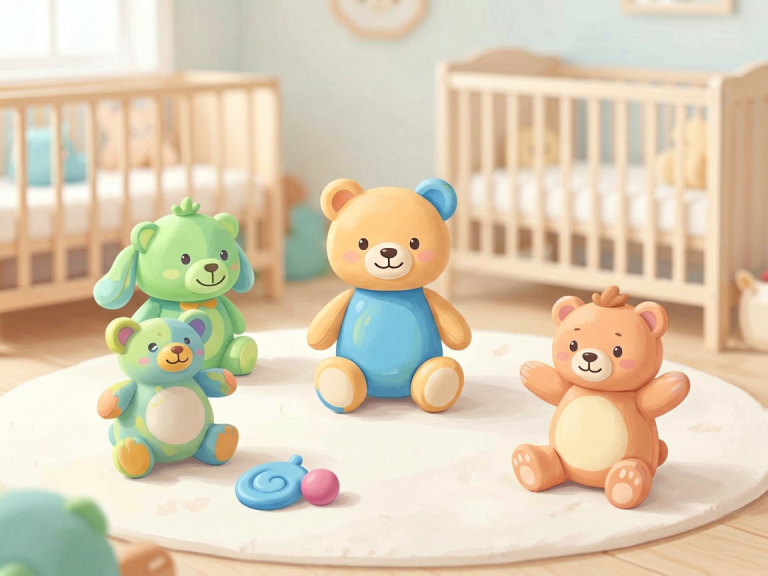
- Dolls or Stuffed Animals: A simple soft doll without detachable accessories (like eyes or buttons sewn on) can be hugged, fed, or put to bed. This nurtures empathy.
What to Avoid: Toys That Are Not Right for 1-Year-Olds
Equally important is knowing which toys to skip:
- Electronic Screens or Battery-Operated Flashy Toys: Avoid toys with loud noises, flashing lights, and limited interactivity. They overstimulate and reduce opportunities for creative, open-ended play. A one-year-old learns best from real-world interactions, not passive screen-like experiences.
- Toys with Magnets or Button Batteries: Both are extremely dangerous if ingested.
- Latex Balloons: They pose choking and suffocation risks.
- Toys with Sharp Edges or Protrusions: Always inspect for safety.
- Complex Construction Sets: Blocks that are very small or require precise fitting are frustrating.
- Hanging Mobiles: By one year, mobiles should be removed from cribs as they can become strangulation hazards if pulled down.
Practical Tips for Selecting and Using Toys
- Rotate Toys, Don’t Overload: A toddler can only focus on a few toys at a time. Keep 5–7 toys accessible and rotate them weekly. This maintains novelty and reduces overstimulation.
- Observe Your Child: Watch what they are naturally drawn to. If they love putting things in containers, offer more nesting cups. If they are obsessed with sounds, provide instruments. Tailor choices to their current interests.
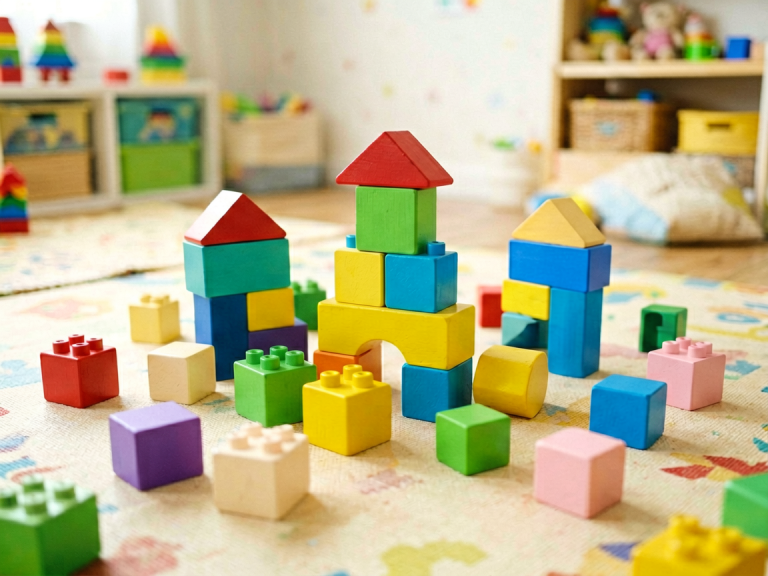
- Focus on Open-Ended Play: The best toys are those that can be used in multiple ways. A set of wooden blocks can be stacked, knocked down, sorted, or used as pretend food. Open-ended toys encourage creativity and problem-solving.
- Include Your Child in Play: No toy substitutes for your engagement. Narrate what you are doing: “I’m putting the red ring on the peg. Now you try!” This builds language and bonding.
- Check for Wear and Tear: Regularly inspect toys for cracks, loose parts, or chipped paint. Discard any damaged items immediately.
Conclusion: The Gift of Play
Choosing age-appropriate toys for your one-year-old is an act of love and intentionality. The right toys do not need to be expensive or high-tech. A simple set of wooden blocks, a sturdy ball, a few board books, and a push cart can provide months of enriching play. Remember that at this age, the process matters far more than the outcome. A child who spends ten minutes trying to fit a shape into a sorter is building patience, hand strength, and cognitive flexibility—even if they never get it “right.” Your role as a parent is to create a safe, inviting environment where exploration feels joyful. Trust your instincts, prioritize simplicity, and celebrate each small discovery. After all, the most important “toy” in your child’s life is you—your attention, your voice, and your loving presence. Happy playing!