From Make-Believe to Machine Logic: How Pretend Play Toys Are Teaching Coding Basics
Introduction
In the bright, cluttered playrooms of contemporary childhood, a quiet revolution is taking place. On one side of the room, a child might be donning a firefighter’s helmet and rescuing a stuffed cat from a cardboard tower. On the other, a sibling might be tapping a tablet, dragging colorful blocks of code to make a robot roll forward. For decades, these two worlds—the wild, unstructured realm of pretend play and the precise, rule-based universe of coding—seemed to exist in separate galaxies. Yet today, a new generation of toys is deliberately bridging that gap, transforming the way children learn foundational skills. These toys do not ask children to choose between imagination and logic; instead, they invite them to merge the two. This article explores how toys for pretend play are evolving to teach coding basics, why this combination is pedagogically powerful, and what it means for the future of early childhood education.
The central thesis is straightforward: when children engage in pretend play with toys that incorporate coding elements, they develop not only computational thinking but also creativity, narrative skills, and social-emotional competencies. The best coding toys for young children do not present code as an abstract, screen-bound exercise. Instead, they embed programming logic into tactile, story-driven experiences—a magic wand that lights up when a sequence of gestures is followed, a programmable train that delivers imaginary cargo, or a set of robot figurines that act out a child’s quest. By doing so, these toys honor the developmental power of make-believe while gently introducing the building blocks of algorithms, sequencing, and debugging.
The Power of Pretend Play: Cognitive and Social Benefits
Before examining how coding fits into pretend play, it is essential to understand why pretend play itself is so valuable. Developmental psychologists have long recognized that pretend play—also called symbolic play or imaginative play—is a cornerstone of cognitive growth. When a child pretends a cardboard box is a spaceship, she is engaging in abstract thinking: she understands that one object can stand for another, a foundational concept for later symbolic reasoning in mathematics and reading. Similarly, when two children negotiate who will be the doctor and who the patient, they practice perspective-taking, turn-taking, and language skills. Pretend play is, in essence, a natural laboratory for problem-solving, emotional regulation, and social collaboration.
Moreover, pretend play encourages what psychologist Lev Vygotsky called the "zone of proximal development"—the sweet spot where a child can accomplish with guidance what she cannot yet do alone. A child acting out a restaurant scenario might spontaneously count pretend money or create a menu with drawings, stretching her literacy and numeracy skills in a context that feels meaningful and safe. These benefits are not trivial; a 2019 meta-analysis published in the journal *Child Development* found that structured pretend play interventions significantly improved children’s executive functions, including working memory and inhibitory control.
Given these well-documented advantages, it makes sense that educators and toy designers would want to preserve the essence of pretend play while layering in new competencies. The challenge has been to introduce coding—a domain often associated with rigid syntax and screen time—without squashing the very spontaneity that makes imaginative play so effective.
The Rise of Coding Toys: From Screen to Tangible
The market for coding toys has exploded over the past decade. Early entrants, such as the Bee-Bot (a simple floor robot activated by directional buttons) and Scratch (a visual programming language on screen), proved that even preschoolers can grasp concepts like sequence and cause-and-effect. However, many of these tools remained somewhat disembodied from natural play scenarios. A child programming a bee-shaped robot to move across a grid is certainly learning algorithmic thinking, but the activity often resembles a lesson more than a game. The robot does not have a name, a personality, or a role in an unfolding story.
Recognizing this gap, toy companies began to reimagine coding as a component of pretend play. Instead of a separate coding toy, the toy itself became a character in a child’s imaginary world. For example, the popular robot toy Cozmo by Anki (though now discontinued, its lineage continues) was designed with a digital face and expressive movements that made it seem like a pet. Children could program Cozmo with a block-based coding interface, but they also instinctively talked to it, cuddled it, and invented scenarios where Cozmo was an explorer, a trickster, or a friend. The coding was not divorced from the relationship; it was a way of communicating with the character.
Another pivotal example is Osmo’s Coding Starter Kit, which uses physical blocks and a reflective camera to turn an iPad into a game board. Children arrange real plastic blocks to guide a character named Awbie through a strawberry-picking adventure. The tangible nature of the blocks—their weight, color, and size—makes the coding feel concrete and playful. Importantly, the narrative is central: Awbie is a hungry little monster, and the child’s mission is to help him find fruit. This story-driven frame transforms the coding task into a collaborative pretend play scenario. The child is not just debugging a sequence; she is saving the day.
The Intersection: Toys That Blend Storytelling and Code
The most successful toys at this intersection are those that do not require a child to choose between imagination and logic. Instead, they integrate coding commands seamlessly into the narrative fabric. Consider Mattel’s Code & Go Robot Mouse Activity Set. The set comes with a small, mouse-shaped robot, a cheese wedge “goal,” and interlocking maze pieces. The child’s task is to program the mouse to reach the cheese by pressing directional buttons on its back. While this might sound like a pure coding exercise, the toy’s design encourages narrative play. Children naturally give the mouse a name, invent obstacles (a “cat” that must be avoided, a “piece of bread” to pick up along the way), and create stories around each maze challenge. The coding becomes a means of advancing an imaginative plot.
Another compelling example is the Fisher-Price Think & Learn Code-a-Pillar. This toy consists of a caterpillar head and multiple segments, each representing a command: go straight, turn left, turn right, or make a sound. Children attach the segments in a sequence, then press a button to watch the caterpillar move accordingly. The toy is brightly colored and soft, designed for toddlers as young as three. When a child connects the segments, she is literally building an algorithm. But because the Code-a-Pillar looks like a friendly insect and can be “fed” pretend leaves or used to “follow” a child around the room, the coding activity is embedded in a pretend play context. The child is not simply debugging a program; she is the commander of a tiny adventurer exploring the playroom terrain.
More advanced toys push this blend even further. Sphero’s BOLT and LittleBits systems allow children to build their own interactive inventions, from a programmable light-saber to a music-making machine. Here, the line between coding, engineering, and pretend play dissolves entirely. A child who builds a “magic wand” that lights up when waved in a specific pattern is engaging in coding (the pattern is a sequence of code), pretend play (the wand is magical), and engineering (assembling the components). The coding is not an add-on; it is the enchantment that makes the pretend world come alive.
Practical Examples: Top Toys on the Market
To ground this discussion, here are several currently available toys that exemplify the integration of pretend play and coding basics:
- Learning Resources Botley the Coding Robot (Activity Set) – Botley is a screen-free robot that can be programmed with a remote control (for up to 120 steps). The toy’s packaging includes a “storybook” with missions, such as helping Botley deliver a message or escape a maze. Children readily invent their own narratives—Botley becomes a delivery driver, a space explorer, or a pet. The coding itself (sequencing, loops, if-then logic with the optional physics-based obstacles) is woven into these adventures.
- KiwiCo’s Koala Crate & Kiwi Crate – While not exclusively coding-focused, Koala Crate (ages 2-4) and Kiwi Crate (ages 5-8) include hands-on projects that often involve mechanical and simple electrical logic. Recent crates have featured a “shadow puppet theater” that requires sequencing puppet movements, and a “marble run” that teaches cause-and-effect. Though not computer coding, these activities build the same kind of algorithmic thinking. The crates are designed around stories (e.g., “Help the knight cross the drawbridge”), which invites pretend play.
- Wonder Workshop’s Dash and Dot – Dash is a responsive robot that can be programmed via a tablet app. While Dash’s coding interface is robust (offering block-based and even JavaScript-based options for older children), the robot’s design is intentionally cute and engaging. Children can attach a bulldozer arm, a ball launcher, or even a smartphone to make Dash act out scenarios. The company provides “challenge cards” with narrative themes: “Dash the Race Car,” “Dash the Assistant Chef.” Children often collaborate, taking turns as the “programmer” and the “director” of the pretend play story.
- PlayShifu’s Plugo Link – This kit uses a magnetic gamepad and physical blocks that snap together to form a chain. The blocks include commands for movement, sound, and light. Children build a sequence to guide a character on a screen through a story-based puzzle (e.g., “Help the astronaut return to his ship”). The blocks are large and satisfying to click, and the narrative keeps the coding activity engaging.
Each of these toys demonstrates that coding instruction does not have to be dry. By wrapping programming concepts in the warm blanket of pretend play, they make learning feel like an adventure.
Pedagogical Insights: Why This Combination Works
From an educational perspective, the union of pretend play and coding is not merely a marketing gimmick; it is grounded in solid developmental theory. One key concept is embodied cognition—the idea that cognitive processes are deeply rooted in bodily interactions with the environment. When children manipulate physical blocks (like Code-a-Pillar segments) to create a program, they are not just thinking abstractly; they are using their hands, their eyes, and their full bodies to construct meaning. This tactile feedback is especially crucial for young learners who have not yet developed strong abstract reasoning skills.
Another important principle is intrinsic motivation. Pretend play is intrinsically rewarding—children engage in it because it is fun, not because an adult told them to. By embedding coding tasks within a compelling narrative, toy designers tap into this natural motivation. A child who might resist a workbook exercise about sequencing will happily “save the robot from the lava” by arranging commands in the correct order. The external goal (completing a story) drives the internal engagement with the code.
Furthermore, pretend play provides a safe space for failure and debugging. In traditional coding, a bug can be frustrating because the goal is often abstract (e.g., “make the square move 10 pixels”). In a pretend play scenario, a bug becomes part of the story. If the Code-a-Pillar crashes into a pretend wall, the child can decide that the wall is made of jelly, or that the caterpillar took a wrong turn—and then she can revise her sequence. This reframing reduces anxiety and encourages persistence. Research in early childhood education consistently shows that children learn best when they are allowed to make mistakes in low-stakes, playful environments.
Finally, the combination fosters computational creativity, a term used by computer science educators to describe the ability to generate novel solutions through algorithmic thinking. When a child designs a program for a robot to perform a “magic trick” or act out a short play, she is blending creative storytelling with logical planning. This is the precise skill set needed in the modern workforce, where innovation often arises at the intersection of technical rigor and imaginative vision.
Challenges and Considerations
Despite the promise of these toys, there are legitimate concerns. One is the risk of over-commercialization—some toys claim to teach coding but only offer superficial interactions that do little to build true computational thinking. Parents and educators must evaluate toys critically: does the toy require active problem-solving, or does it simply entertain? A toy that lights up when a child presses a button may be marketed as “coding,” but if there is no sequencing, cause-and-effect logic, or debugging, it is just a fancy button.
Another challenge is screen time balance. Many coding toys incorporate tablets or smartphones, which can raise concerns about excessive screen exposure, especially for very young children. The best toys, like Botley or Code-a-Pillar, are screen-free, relying entirely on physical components. Others, like Osmo, use screens as a secondary tool while keeping the primary interaction tactile. It is crucial to prioritize toys that minimize passive screen consumption.
Finally, there is a gender and cultural equity issue. Historically, pretend play toys have been heavily gendered (trucks and action figures for boys, dolls and kitchen sets for girls), and coding toys have often been marketed predominantly to boys. The new generation of pretend-play coding toys has the potential to break down these barriers—if designed and marketed inclusively. For example, a programmable tea set or a robot veterinarian kit could appeal to all children, regardless of gender. Toy companies must be intentional about representation in their characters and narratives to ensure that coding does not become another domain of inequality.
Conclusion: Imagining a Future of Playful Learning
The toys we give our children shape not only their skills but also their attitudes toward learning. By combining the timeless appeal of pretend play with the emerging necessity of coding literacy, the toy industry is offering a powerful gift: the chance for children to see logic as a tool for creativity, and imagination as a partner to reason. A child who learns to code by helping a robot rescue a dragon will not remember the syntax of a loop command; she will remember the joy of bringing her story to life. And that joy is the foundation upon which all future learning is built.
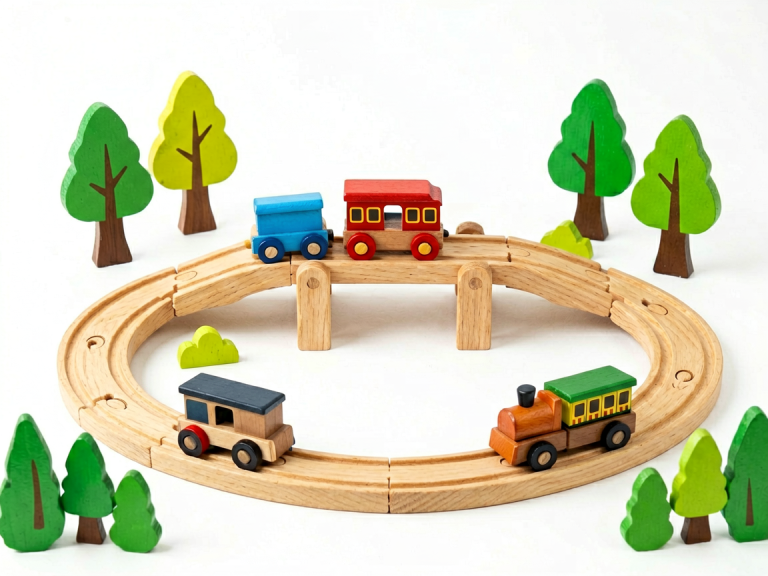
As artificial intelligence and automation transform the world, the ability to think computationally—to break down problems, recognize patterns, and design solutions—will be as essential as reading and arithmetic. But we do not have to sacrifice childhood’s most precious resource: the freedom to pretend. Instead, we can design toys that honor both worlds. The next time you see a child racing a programmable train through a castle built of pillows, or commanding a robot to “pretend to be a cat,” you are witnessing the future of education—one where logic and make-believe dance together, and where every algorithm begins with a story.