The Power of Play: Designing Educational Play Activities for Babies’ Early Development
—
Introduction: Why Educational Play Matters
From the moment a baby enters the world, every sight, sound, touch, and movement becomes a building block for learning. During the first 12 to 18 months, the brain undergoes an explosive period of growth, forming more than one million new neural connections every second. This is a critical window for laying the foundation of cognitive, motor, social, and emotional skills. But how do we best support this natural process? The answer, backed by decades of child development research, is simple and joyful: educational play activities. Play is not merely a pastime for babies; it is their primary mode of exploring, understanding, and mastering their environment. In this article, we will explore a range of thoughtfully designed, age-appropriate educational play activities that foster holistic development. Each activity is rooted in developmental science, yet practical enough for any caregiver to implement with everyday household items. Let us dive into the wonderful world of baby play—where learning and laughter go hand in hand.
—
I. Sensory Play: Building the Foundation of Perception
The Importance of Sensory Stimulation
Babies are born with an innate drive to make sense of the world through their senses—touch, sight, hearing, taste, and smell. Sensory play provides rich, varied input that strengthens neural pathways, enhances memory, and supports language development. Simple activities that engage multiple senses simultaneously are particularly valuable.
Activity 1: “Magic Texture Basket”
Collect a small, safe basket and fill it with objects of different textures: a soft piece of silk, a smooth wooden block, a crinkly piece of fabric, a rubber teether, and a small, clean sea sponge. Let your baby sit in a secure position (with support if needed) and explore the basket. As they grab, squeeze, and mouth each item, describe what they are experiencing: “This is soft and silky, can you feel it?” “That one makes a crinkle sound!” This activity not only stimulates tactile senses but also introduces early vocabulary and cause-effect relationships (e.g., “When I squeeze this, it makes a sound”).
Activity 2: “Rainbow Sound Shakers”
Fill several small, clear plastic bottles with different materials—a few dry beans, rice, bells, or water beads (only for supervised use, as these can be a choking hazard; always ensure containers are securely sealed). Tape the lids shut. Let your baby shake, roll, and even kick the bottles. Each bottle produces a unique sound, encouraging auditory discrimination. You can also paint or cover the bottles with colored cellophane to add visual stimulation. Sing a simple song while shaking the bottle in rhythm, which integrates auditory, visual, and motor coordination.
—
II. Gross Motor Play: Strengthening Bodies and Brains
Why Gross Motor Skills Matter
Gross motor skills—the control of large muscle groups for movements like rolling, sitting, crawling, and walking—are closely linked to cognitive development. Research shows that movement activates brain regions responsible for attention, memory, and problem-solving. Educational play activities that encourage whole-body movement are essential.
Activity 3: “Tummy Time Treasure Hunt”
Tummy time is crucial for strengthening neck, shoulder, and arm muscles, which are prerequisites for crawling. To make tummy time engaging, place a few high-contrast toys or safe mirrors just out of your baby’s reach. As they lift their head and push up, they can visually track the objects. Gradually place interesting items slightly to the side to encourage them to pivot and reach. This not only builds strength but also promotes visual tracking and spatial awareness. Narrate the activity: “Look, the red ball is rolling! Can you crawl toward it?” For older babies (around 6–9 months), you can create a “tunnel” using a large cardboard box with openings—crawling through it provides both motor challenge and a sense of adventure.
Activity 4: “Baby Yoga with Songs”
Gentle, guided movement games are a wonderful way to combine motor skills with bonding. Sit on a soft mat with your baby on your lap. Slowly lift their arms up while singing “The Itsy Bitsy Spider,” then bring them down. Gently bicycle their legs while reciting a nursery rhyme. For babies who can sit independently, you can place a small, soft ball in front of them and encourage them to lean forward to grab it—this works on balance and core strength. Always follow your baby’s cues; if they seem fussy or tired, stop and try again later. The key is to make movement feel like a game, not a workout.
—
III. Cognitive Play: Early Problem-Solving and Curiosity
Developing Thinking Skills
Cognitive play involves activities that require a baby to think, remember, and figure out how things work. Object permanence, cause-and-effect, and simple categorization are all within the reach of infants. These activities build the foundation for logical reasoning and executive function later in life.
Activity 5: “Peek-a-Boo Variations”
Peek-a-boo is more than just giggles—it teaches object permanence, the understanding that objects (and people) continue to exist even when out of sight. To make it educational, vary the game. First, cover your face with your hands, then reveal with a big smile. Next, hide a favorite toy under a small blanket and ask, “Where did the teddy bear go?” Encourage your baby to pull the blanket away. For older babies (10–12 months), use two blankets and hide the toy under one, then switch them around while the baby watches. See if they can still find it—a prelude to more advanced memory tasks.
Activity 6: “Stack and Knock-Down”
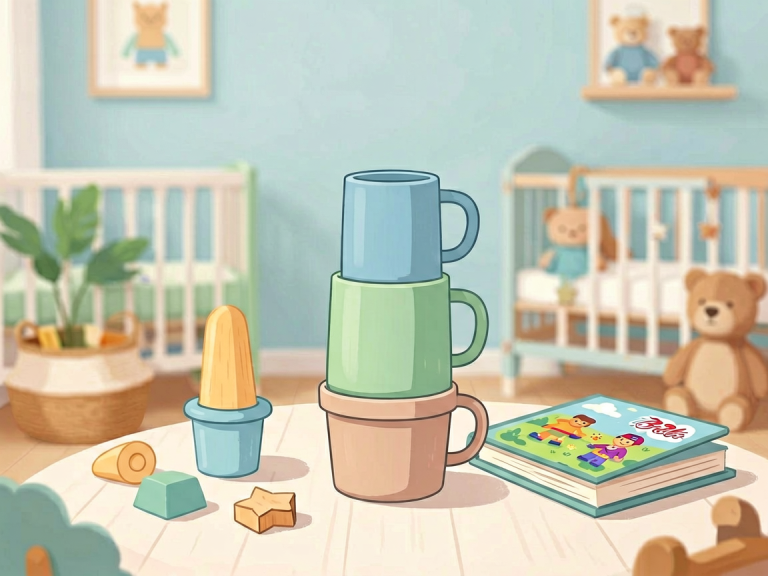
Provide a set of soft, lightweight blocks or stacking cups. Show your baby how to stack one block on top of another, then encourage them to knock the tower down. While this might seem like simple destruction, it actually teaches cause and effect, spatial relationships, and hand-eye coordination. As your baby grows, you can progress to stacking two, then three blocks. Celebrate both the building and the knocking-down moments. You can also sort the blocks by color or size as you sing, “Red block on top, blue block below,” introducing early math concepts.
—
IV. Social-Emotional Play: Building Connection and Confidence
The Role of Interaction
Educational play is not just about skills—it is about relationships. Babies learn best in the context of secure, responsive interactions with caregivers. Social-emotional play activities help babies regulate emotions, develop empathy, and build a sense of self.
Activity 7: “Mirror Time and Facial Expressions”
Place a sturdy, baby-safe mirror on the floor or in the crib (during supervised play). Sit behind your baby so they can see both your face and their own reflection. Make exaggerated happy, surprised, and sad faces. Pause and label the emotions: “I see a happy baby!” “Look, Mama is surprised!” Research shows that mirror play helps develop self-awareness and emotional recognition. You can also gently touch your baby’s nose, then point to the mirror and say, “That’s your nose!” This simple activity builds body awareness and emotional vocabulary.
Activity 8: “Gentle Turn-Taking Games”
Even young babies can begin to understand the rudiments of turn-taking, a core component of social interaction. Sit facing your baby and hold a soft ball. Roll it toward them, then gently guide their hands to roll it back to you. When they roll it (or even just push it), say, “Your turn!” Then take the ball back and say, “My turn!” This back-and-forth pattern reinforces the joy of mutual engagement and builds patience. For babies who are not yet rolling objects, you can take turns making sounds: you make a “ba-ba” sound, wait, and see if your baby coos back. Then respond, “Oh, you said something too!”
—
V. Language Play: Building the Roots of Communication
Early Literacy and Vocabulary
Language development thrives on rich, interactive experiences long before a baby says their first word. Educational play activities that involve songs, rhymes, labeling, and open-ended narration can significantly boost a baby’s language readiness.
Activity 9: “Storytime with Props”
Choose a sturdy board book with simple, bright illustrations. As you read, bring a corresponding prop to life—for example, if the book shows a cat, hold a soft toy cat. Let your baby touch it, and meow while pointing to the picture. This multisensory pairing helps babies connect words to real objects and meanings. For babies 6 months and older, encourage them to turn the pages (even if they do it clumsily). This fine motor action also supports pre-reading skills.
Activity 10: “Singing Lullabies with Gestures”
Singing is one of the most powerful educational play activities because it combines melody, rhythm, and emotion. Choose simple songs like “Twinkle, Twinkle, Little Star” and add hand gestures: open and close your fingers for “twinkle,” point up for “star.” Babies will begin to imitate these gestures long before they can sing the words. Gestures actually bridge the gap between nonverbal and verbal communication, and they are known to accelerate language development. For an extra boost, slow down the tempo and exaggerate the consonant sounds—babies learn to distinguish phonemes through clear, deliberate speech.
—
VI. Safety and Practical Tips for Caregivers
Creating a Playful but Safe Environment
While educational play is invaluable, safety must always come first. Ensure that all objects used in play are larger than a baby’s mouth to prevent choking, free of sharp edges, and non-toxic. Always supervise your baby during play, especially during sensory activities with small parts or water. Rotate toys and activities regularly to maintain novelty and prevent overstimulation. Follow your baby’s lead: if they seem tired, hungry, or fussy, stop and try again later. The goal is not to “teach” in a rigid sense, but to create a warm, responsive environment where learning happens naturally through joy.
—
Conclusion: The Lifelong Gift of Play
Educational play activities for babies are far more than a pastime—they are the threads that weave together the tapestry of a child’s early development. Through sensory exploration, movement, problem-solving, emotional connection, and language-rich interaction, babies gain the skills they need to become curious, confident, and resilient learners. As caregivers, we do not need expensive toys or elaborate lesson plans. We need only our presence, our voice, our smile, and a handful of simple, safe objects. Every time we roll a ball, sing a song, or peek-a-boo with a wide grin, we are building the architecture of a brain. And that is the most beautiful, educational play of all.