The Power of Pretend: Nurturing Development Through Role Play Activities for 6-Month-Olds
Introduction
At six months old, a baby’s world is a kaleidoscope of new sensations, faces, and sounds. While traditional “role play” might conjure images of toddlers dressing up as firefighters or doctors, the concept is far more fundamental for infants. For a six-month-old, role play is not about elaborate scripts or costumes—it is about the earliest forms of imitation, social interaction, and emotional bonding. Parents often underestimate the power of simple games like making funny faces, using different voices, or pretending to talk to a stuffed animal. Yet these seemingly trivial activities lay the groundwork for language acquisition, empathy, and cognitive flexibility. This article explores the science behind role play for babies as young as six months, provides a host of safe and engaging ideas, and offers practical tips for turning everyday moments into rich developmental opportunities.
Understanding Your 6-Month-Old’s Developmental Landscape
Before diving into specific activities, it is crucial to grasp what a six-month-old is physically and cognitively capable of. At this age, most infants have achieved several milestones: they can sit with support or even independently, reach and grasp objects, roll over in both directions, and enjoy bringing things to their mouths. Socially, they begin to distinguish between familiar and unfamiliar faces, respond to their own name, and initiate “conversations” through babbling and cooing. They also exhibit early signs of object permanence—the understanding that objects continue to exist even when hidden—which makes games like peek-a-boo so thrilling.
Crucially, six-month-olds are masters of social referencing: they look to their caregivers for cues on how to react to new situations. When a parent smiles while holding a silly hat, the baby learns that the hat is safe and fun. This is the essence of role play at this stage: the adult takes on a pretend role, and the baby absorbs the emotional and behavioral signals. The baby’s own “role” is that of an observer, a participant, and a co-creator of the interaction. They may not be able to say “I’m a cow,” but they can recognize the mooing sound and giggle when you pretend to eat like a cow. This is the foundation of symbolic thinking.
Key Benefits of Age-Appropriate Role Play for Infants
Why should parents invest time in role play with a baby who cannot yet talk or follow directions? The benefits are profound and multifaceted:
- Emotional bonding and attachment: When you put on a goofy voice or pretend to be a friendly monster, you create a shared, joyful experience. This strengthens the secure attachment that is vital for the baby’s emotional health. The baby learns that interaction is rewarding, which builds trust.
- Language development: Role play naturally exposes babies to varied tones, pitches, and rhythms of speech. Repeating sounds like “moo” for a cow or “baa” for a sheep introduces phonemes, and the exaggerated facial expressions help babies associate sounds with meanings. Studies show that infant-directed speech (often high-pitched and melodious) enhances language processing.
- Cognitive growth: Pretending that a block is a phone or that a stuffed animal can talk encourages the earliest forms of symbolic thought. It also exercises memory and anticipation: when you hide your face behind a scarf and reappear as “Grandma,” the baby learns to predict, a key cognitive skill.
- Social skills: Through role play, babies learn the rules of back-and-forth interaction—taking turns, reading facial expressions, and responding to cues. For example, when you pause after a pretend sneeze, the baby may babble or laugh, completing the “conversation.”
- Motor skill stimulation: Many role play activities involve reaching, grabbing, and moving. Pretending to feed a teddy bear encourages fine motor control, while “flying” the baby like an airplane (with gentle support) stimulates vestibular development.
Practical Role Play Activities for 6-Month-Olds
The following activities are designed to be safe, simple, and adaptable to your baby’s mood and energy level. Each one focuses on a different developmental domain while keeping the spirit of pretend play alive.
Animal Sound Imitations
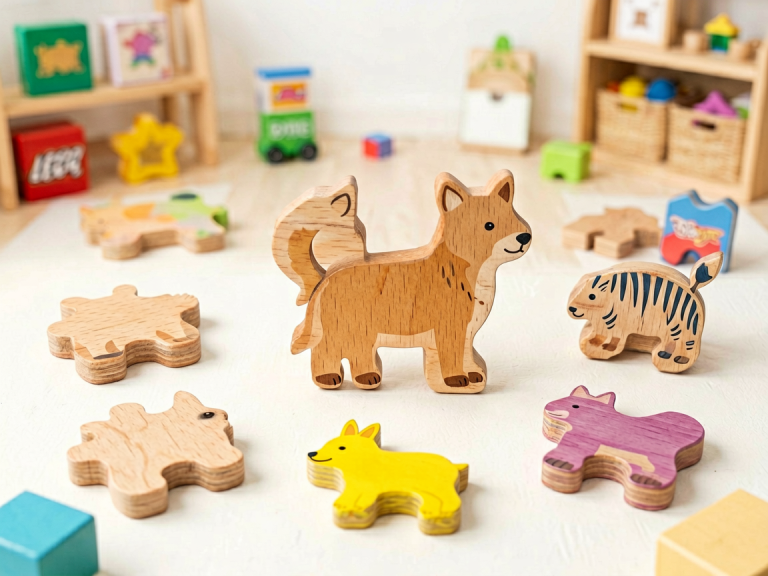
This classic activity is perfect for six-month-olds because it relies on sound and facial expression rather than complex props. Sit facing your baby, make eye contact, and clearly enunciate an animal sound: “Moo! Moo! The cow says moo.” Exaggerate your mouth movements and add gentle physical cues. For example, when you say “moo,” bring your hands to your head like horns. Repeat with different animals: “Baa” (sheep), “Quack” (duck), “Oink” (pig). You can also use a soft stuffed animal to demonstrate. Baby will likely respond with babbling, smiles, or even attempts to mimic the sound. This activity strengthens auditory discrimination, phonics awareness, and emotional connection through turn-taking.
The “Mirror, Mirror” Role
Babies are fascinated by their own reflections. Use an unbreakable baby mirror (or hold them safely in front of a larger mounted mirror). Take on the role of a “reflection guide”: point to different body parts and name them in a playful voice. Then, pretend to be someone else in the mirror. For instance, drape a bright scarf over your head and say, “Look, it’s Grandma! Hello, baby!” Move the scarf away and say, “Now it’s Mommy again!” The baby will track the changes and may reach toward the mirror. This activity supports self-awareness, object permanence, and visual tracking—all crucial for later role play development.
Peekaboo with a Twist
Peekaboo is the ultimate role play for infants because it introduces the idea of disappearance and reappearance, mimicking separation and reunion. To elevate it into a structured role play, assign a character to the hidden position. For example, hold a soft animal puppet or a family photo in front of your face. Then say, “Here comes the bunny! Where is the bunny? Peekaboo!” When you reveal the animal, use a different voice: “I’m the bunny! Hop, hop, hop!” You can also vary the hiding place—behind a pillow, under a blanket, or around the corner of a chair. This helps the baby understand that different objects can “play” different roles, a foundational concept for symbolic play.
Costumed Hand Puppets
Hand puppets are ideal for six-month-olds because they are easy for the parent to control and highly intriguing for the baby. Choose soft, washable puppets with no small parts. Introduce the puppet slowly—let it “peek” over the edge of a couch or table. Use a higher-pitched voice for the puppet and a lower one for yourself. Have the puppet “talk” to the baby: “Hello, sweet baby! My name is Puppy. Can you touch my nose?” Gently guide the baby’s hand toward the puppet’s nose. Then switch to a different puppet, changing the voice again. The baby will learn to associate different sounds with different characters, which is an early step toward understanding narrative roles.
“Pretend Mealtime”
During feeding time, you can incorporate role play by using two spoons or bowls. One is for the baby, and one is for a stuffed animal or doll. Say, “Teddy is hungry too! Let’s feed Teddy.” Bring the toy up to the spoon, make exaggerated chewing sounds, and say, “Yummy! Teddy likes applesauce!” Then turn to the baby and offer the real spoon. This simple activity encourages imitation, turn-taking, and social awareness. It also makes mealtime more engaging and reduces resistance. For breastfed or bottle-fed babies, you can pretend the doll is drinking and make matching slurping sounds.
“Flying” and “Dancing” Characters
Movement-based role play is especially beneficial for vestibular and proprioceptive development. Hold your baby securely under the arms and gently lift them up and down while narrating: “You are a little bird! Fly, fly, fly! Tweet, tweet!” Alternatively, you can be the “dancing partner”: hold your baby close and sway to a simple rhyme, pretending to be a waltzing couple or a swaying tree. Another variation: sit on the floor with your legs extended, place the baby on your shins facing you, and gently rock them back and forth while singing “Row, Row, Row Your Boat.” This builds trust and coordination, and the baby learns to associate physical sensations with pretend scenarios.
Tips for Successful Role Play Sessions with Your 6-Month-Old
To get the most out of these activities, keep the following guidelines in mind:
- Follow the baby’s lead. If your baby seems overwhelmed, overstimulated, or fussy, take a break. The goal is joy, not performance. Watch for signs of engagement: eye contact, cooing, reaching, smiling. If the baby looks away or arches their back, switch to a calmer activity.
- Keep it short and sweet. Six-month-olds have short attention spans—often just two to five minutes. You can repeat the same activity multiple times throughout the day. Quality trumps quantity.
- Use exaggerated expressions and sounds. Babies are drawn to animated faces and voices. Don’t be shy about using a high-pitched, sing-song tone. This is scientifically proven to hold their attention and facilitate learning.
- Choose safe props. Avoid anything with small parts that could be swallowed, sharp edges, or loose strings. All props should be washable and free of toxic materials. Always supervise closely.
- Incorporate familiar routines. Tether role play to everyday activities like diaper changes, bath time, or getting dressed. For instance, while changing a diaper, you can pretend the diaper is a “magic hat” and place it on your head, then on the baby’s head. This makes the activity feel natural and not like a chore.
- Be consistent but flexible. Repetition helps babies form expectations. If you use the same “cow voice” every time you show a cow toy, the baby will start to anticipate and respond. But also be ready to invent new scenarios spontaneously based on what the baby finds interesting.
Conclusion
Role play activities for six-month-olds are far from frivolous—they are powerful, science-backed tools for nurturing cognitive, emotional, and social development. By engaging in simple, repetitive, and joyful pretend play, parents can create a rich environment where babies learn to read facial expressions, anticipate outcomes, and build the neural pathways that underpin later language and empathy. The beauty of these activities lies in their simplicity: you do not need fancy toys or elaborate scripts. Your voice, your face, and your willingness to be silly are the most effective props. So put on a silly hat, moo like a cow, and watch your six-month-old’s eyes light up with wonder. In that moment of shared pretense, you are not just playing—you are building the foundation of human connection.