Quiet Play: The Silent Pathway to Language Development
Introduction
In the bustling modern world, children are often surrounded by constant noise—televisions, tablets, electronic toys, and structured activities. Yet a growing body of research suggests that the most profound language growth may occur not in loud, interactive settings, but in moments of calm, solitary, or minimally guided play. Quiet play—defined as self-directed, low-stimulation activities such as puzzles, drawing, building blocks, or quietly flipping through a book—offers a unique environment for language acquisition. This article explores how silence, focus, and internal reflection during quiet play nurture vocabulary, narrative skills, and syntactic understanding. By understanding these mechanisms, parents and educators can intentionally integrate quiet play into daily routines, allowing children’s linguistic abilities to flourish in the most natural way possible.
The Role of Solitude and Focus in Language Acquisition
Language is not only learned through direct conversation; it is also internalized through quiet observation and self-directed practice. When a child engages in quiet play, they are freed from the pressure of immediate social response. This freedom allows for a phenomenon known as “private speech”—the act of talking to oneself during play. Lev Vygotsky, the renowned developmental psychologist, argued that private speech is a crucial step in the transition from external communication to internal thought. For example, a four-year-old building a tower with blocks might murmur, “This one goes here, no, too big, try the small one.” These self-directed verbalizations help the child organize actions, test hypotheses, and rehearse language structures without fear of criticism. Quiet play provides the perfect backdrop for such dialogue because it minimizes external interruptions, enabling the child to maintain a coherent internal monologue. Over time, this private speech becomes internalized as inner speech, forming the foundation of higher-order thinking and advanced language use.
Types of Quiet Play That Foster Language Skills
Not all quiet play is created equal when it comes to linguistic development, but several forms are particularly effective.
*Puzzles and Matching Games*: When a child works on a puzzle, they often narrate their thought process: “The blue piece goes here… no, it’s the edge.” This self-talk reinforces spatial vocabulary (e.g., “above,” “next to,” “corner”) and comparative language (e.g., “bigger,” “darker”). Moreover, completing a puzzle provides a sense of accomplishment that encourages further verbal expression.
*Building Blocks and Construction Sets*: Similar to puzzles, block play naturally elicits planning language. A child might say, “I need a red block for the roof,” practicing color words, sequencing words (e.g., “first,” “then”), and conditional sentences (e.g., “if I put this here, it will fall”). The quiet, concentrated nature of block play allows children to repeat and refine such phrases.
*Art and Drawing*: Creating art is a silent activity that often prompts storytelling. As children draw, they may describe their imagined scenes: “This is a castle, and a dragon lives here.” This emergent narrative ability strengthens understanding of story structure—beginning, middle, and end—and expands vocabulary related to emotions, actions, and objects.
*Reading or Looking at Books Alone*: Even pre-readers benefit from silently “reading” pictures. They construct their own narratives based on illustrations, which builds comprehension and sequencing skills. The quiet environment allows them to dwell on details, formulate questions, and make predictions—all essential components of language development.
*Listening to Audio Stories*: While not purely silent, listening to a narrated story while engaging in a quiet activity (e.g., coloring or assembling a puzzle) enables dual processing: the child absorbs complex sentence structures and new vocabulary through the audio while their hands stay busy. This state of relaxed attention is ideal for implicit language learning.
The Neuroscience Behind Quiet Play and Language
Cognitive neuroscience offers compelling explanations for why quiet play supports language growth. During low-stimulation activities, the brain activates its “default mode network” (DMN), a system associated with introspection, memory consolidation, and creative thinking. Functional MRI studies have shown that the DMN becomes active when a person is at rest, daydreaming, or focused on a simple task. This state is crucial for language because it allows the brain to rehearse recent linguistic input, make connections between words and concepts, and generate novel combinations.
Furthermore, quiet play reduces the cognitive load caused by multitasking and external distractions. When a child is not simultaneously processing loud noises, instructions, or peer interactions, their working memory can devote more resources to language processing. For instance, a toddler learning the word “water” might say it repeatedly while pouring from a plastic cup during quiet water play. The repetition, unimpeded by interruptions, strengthens neural pathways associated with that word. Neuroplasticity research indicates that such focused, repetitive practice is more efficient for language encoding than passive exposure.
Additionally, quiet play often involves repetitive motor actions—stacking, sorting, fitting—which engage the cerebellum and prefrontal cortex. These motor regions communicate with language areas like Broca’s area, facilitating the integration of action and speech. This is why children often utter words simultaneously with physical actions; the brain naturally binds movement and language. Quiet play provides an ideal low-threat environment for this binding to occur without performance anxiety.
Practical Strategies for Parents and Educators
To harness the benefits of quiet play for language development, adults can design environments and routines that encourage it.
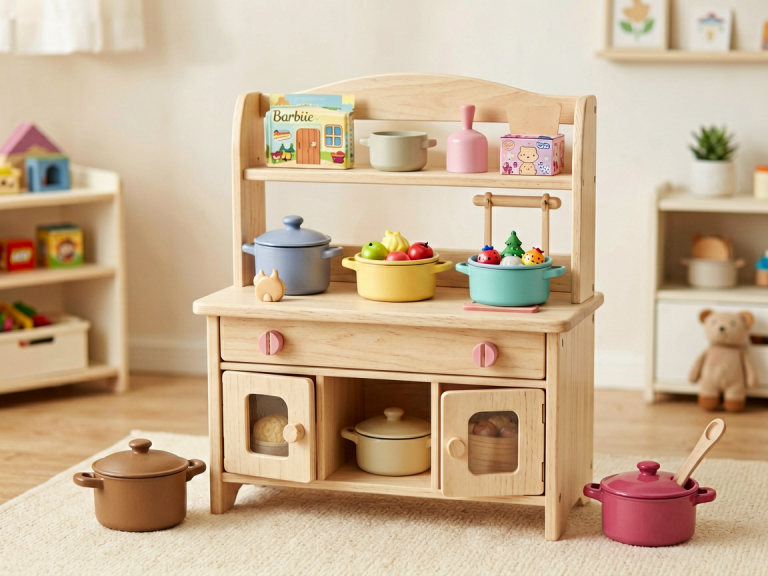
*Create a “Quiet Corner”*: Designate a small, comfortable space free from screens and loud toys. Include a few carefully chosen materials: wooden blocks, a felt board, wordless picture books, and drawing supplies. The scarcity of options prevents overstimulation and invites deeper engagement.
*Model Quiet Play*: Children imitate adults. If parents occasionally sit nearby reading a book or doing a puzzle themselves, children learn that quiet, focused activity is valued. They may also overhear the adult’s occasional murmured comments, reinforcing that quiet time can involve language.
*Observe Without Interrupting*: Resist the urge to ask questions or correct grammar during quiet play. Instead, wait until the child finishes or initiates conversation. Afterward, you can offer a reflective comment: “I noticed you said the block was ‘wobbly.’ That’s a great word to describe something not steady.” This validates their language use without disrupting their flow.
*Provide Open-Ended Materials*: Toys that have a single correct answer (like electronic games) often limit language use. By contrast, open-ended materials like clay, sand, or loose parts allow children to create their own scenarios, producing richer verbal narratives.
*Balance with Interactive Dialogue*: Quiet play does not replace conversation; it complements it. After a period of silent building, invite the child to tell you about their creation. “Tell me a story about your castle.” This bridges internal language and social communication, reinforcing the vocabulary and structures practiced during quiet play.
Balancing Quiet Play with Social Interaction
It is important to note that quiet play is not a substitute for interactive language experiences. Social conversation—with adults and peers—remains essential for pragmatic language skills, turn-taking, and real-time comprehension. Rather, quiet play serves as a foundation upon which those skills are built. Children who have ample solitary time to process language internally often become more articulate speakers because they have had the chance to experiment with words and phrases in a low-risk environment.
Educators can structure daily schedules to include both quiet play and group discussions. For example, a preschool classroom might begin with 20 minutes of independent quiet play, followed by a circle time where children share what they created. This sequence allows children to first solidify their thoughts quietly, then express them socially—a powerful combination. For older children, journal writing or silent reading before class discussions yields richer contributions, as students have already formulated ideas in their minds.
Conclusion
Quiet play is far from empty time; it is a fertile ground for language development. In the silence of solitary puzzles, the murmur of private speech, and the focused repetition of building blocks, children construct the very architecture of language. By intentionally incorporating quiet play into daily routines, parents and educators offer children the gift of unhurried linguistic exploration. In a world that often equates noise with learning, we must remember that the most profound words sometimes emerge from the quietest moments. Let us value the silence, for it is there that language truly finds its voice.