Screen-Free Activities for 4-Year-Olds: Nurturing Imagination, Creativity, and Development
In today’s hyperconnected world, where tablets, smartphones, and televisions are often the default babysitters, the idea of keeping a four-year-old engaged without a screen can feel daunting. Yet, the early years are a critical window for brain development, social skills, and emotional regulation—none of which are best served by passive screen time. Four-year-olds are bursting with curiosity, energy, and a voracious appetite for hands-on exploration. Screen-free activities not only protect their developing eyes and attention spans but also foster creativity, problem-solving, and deep connections with the real world. This article explores a rich array of screen-free activities specifically designed for four-year-olds, organized by developmental domains, to help parents, caregivers, and educators replace digital distractions with meaningful, joyful experiences.
The Case for Screen-Free Play at Age Four
Before diving into specific activities, it is worth understanding why screen-free time is especially crucial for a four-year-old. At this age, children are refining fine and gross motor skills, learning to regulate emotions, building vocabulary at an astonishing rate, and developing the foundations of logical thinking. Screens, even educational ones, often provide a passive, two-dimensional experience that limits sensory integration, physical movement, and real-time social interaction. The American Academy of Pediatrics recommends no more than one hour of high-quality screen time per day for children aged 2 to 5, and emphasizes that unplugged play remains the gold standard for learning. Activities that involve touch, smell, sound, movement, and face-to-face conversation stimulate multiple brain regions simultaneously, laying neural pathways that will serve the child for life.
Creative and Imaginative Play
Building Forts and Dens with Household Items
One of the most beloved screen-free activities for four-year-olds is constructing forts, castles, or secret dens using blankets, pillows, chairs, and sofa cushions. This activity is deceptively simple yet immensely powerful. As the child drags a blanket across the backs of two chairs, she must solve spatial problems: Will this blanket be long enough? How do I keep the fabric from sliding off? When she crawls inside with a flashlight and a stuffed animal, she enters a world of her own making—a spaceship, a cave, a palace. This kind of unstructured, imaginative play builds executive function skills: planning, flexibility, and self-control. Moreover, it requires no batteries, no instructions, and no expensive toys. Parents can join in by asking open-ended questions: “What should we name our castle? Who lives here with us?” Such interactions turn a simple activity into a rich language and storytelling experience.
Dress-Up and Role-Play
A cardboard box filled with old scarves, hats, shoes, costume jewelry, and discarded ties is a goldmine for a four-year-old’s imagination. Dressing up as a firefighter, a princess, a doctor, or a robot allows children to experiment with identities, practice social roles, and process emotions. When a child puts on a stethoscope and declares, “I need to listen to your heart, teddy bear,” she is not just playing—she is building empathy and narrative skills. Role-play also provides a safe space to work through fears, such as visiting a doctor or starting preschool. Caregivers can extend this activity by setting up simple scenarios: a pretend grocery store with empty food boxes, or a post office where the child can “deliver” letters. The key is to let the child lead; the adult’s role is to observe, support, and occasionally provide a gentle scaffold without taking over.
Sensory and Fine Motor Activities
Playdough Creations and Homemade Alternatives
Playdough is a classic for good reason. Squeezing, rolling, pinching, and cutting playdough strengthens the small muscles in a child’s hands and fingers—essential for future writing and self-care tasks like buttoning or using utensils. But the benefits go far beyond motor skills. Four-year-olds can spend 30 minutes or more shaping “snakes,” “pancakes,” and “cookies,” all while engaging in pretend play. To elevate the experience, consider making playdough from scratch with the child. Measuring flour, salt, and water, then mixing and kneading, becomes a science lesson and a bonding activity. Add natural scents (cinnamon, lavender) or textures (sand, glitter) to stimulate the senses. Provide tools like plastic knives, cookie cutters, a garlic press, and small rolling pins. The open-ended nature of playdough encourages experimentation: “What happens if I roll it very thin? Can I make a ball that bounces?” Mistakes are part of the fun, and the medium is forgiving.
Water Play, Sand Play, and Sensory Bins
Water and sand are two of the most powerful learning tools for a four-year-old. A plastic tub filled with water, plus cups, funnels, spoons, and waterproof toys, can occupy a child for an hour. Pouring water from one container to another teaches concepts of volume, cause and effect, and conservation (the realization that the same amount of water looks different in a tall, thin glass versus a short, wide one). Similarly, a sandbox or a sensory bin filled with rice, beans, or birdseed invites scooping, sifting, burying, and digging. These activities are deeply calming and help children regulate their emotions. (Many occupational therapists recommend sensory play for children who are easily overwhelmed.) To keep things fresh, vary the materials: add ice cubes to water, hide small toys in the sand, or mix in different-colored pasta. Always supervise water play for safety, but resist the urge to “teach” too much—let the child discover.
Outdoor Adventures and Gross Motor Development
Nature Scavenger Hunts
Taking a screen-free activity outside is a wonderful way to combine physical movement with learning. A nature scavenger hunt for a four-year-old doesn’t need to be elaborate. Write or draw a list of simple items to find: a smooth rock, a feather, a yellow leaf, a pinecone, something that makes a sound. The child can check off items as they are collected, building early literacy and observation skills. The hunt encourages walking, bending, reaching, and even running—valuable gross motor practice. More importantly, it cultivates a sense of wonder and connection to the natural world. A child who stops to examine a beetle or watch a spider spin a web is practicing scientific thinking: asking questions, noticing details, forming hypotheses. After the hunt, the collected treasures can be used for a craft project: gluing leaves onto paper to make a tree, painting rocks, or arranging pinecones into a tiny forest.
Obstacle Courses and Movement Games
Four-year-olds crave movement, and an obstacle course can be set up in a backyard, a park, or even a large living room. Use cushions to jump over, a low bench to crawl under, a cardboard box tunnel, and a line of tape on the ground for walking like a tightrope. The child can hop on one foot, skip, crawl backwards, or carry a beanbag on his head. These activities improve balance, coordination, and body awareness. Add a timer or a simple challenge—“Can you do it without touching the red cushion?”—to encourage persistence. Movement games like “Simon Says,” “Red Light, Green Light,” or “Freeze Dance” (with music, but no video screen) are also excellent. They teach listening skills, impulse control, and the joy of moving rhythmically. Best of all, these games require no equipment other than an adult willing to be silly.
Language, Literacy, and Cognitive Activities
Storytelling with Puppets and Props
Reading aloud to a four-year-old is irreplaceable, but screen-free literacy goes beyond books. Children at this age can become storytellers themselves. Provide simple hand puppets (socks with googly eyes work perfectly) or paper bag puppets, and encourage the child to create a story. You might start with a prompt: “Once upon a time, there was a shy bunny who met a noisy duck. What happened next?” This activity weaves together language development, narrative sequencing, and emotional intelligence. The child learns to organize thoughts, use descriptive language, and explore cause and effect. For an extra layer, let the child dictate the story while you write it down. Later, read it back together. Seeing their own words transformed into text is empowering and builds pre-reading skills.
Puzzles, Memory Games, and Simple Board Games
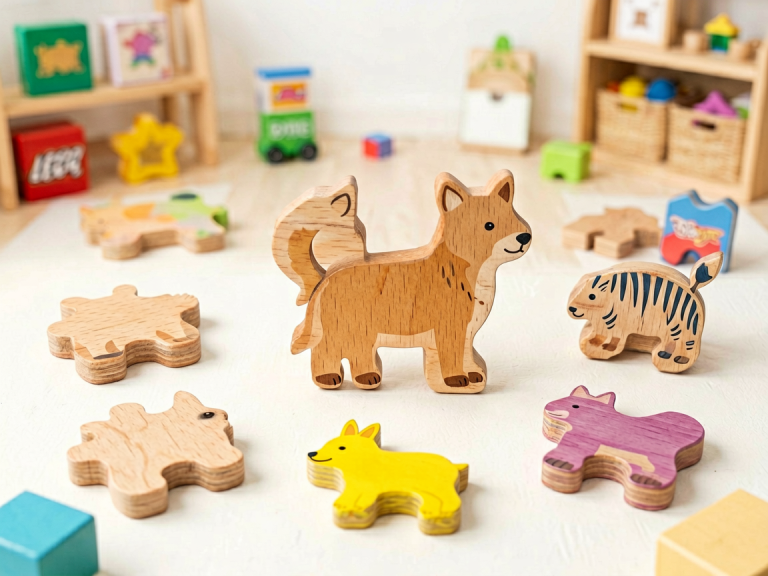
Cognitive skills like pattern recognition, spatial reasoning, and working memory are beautifully exercised through puzzles and games. Choose jigsaw puzzles with 12 to 24 large pieces featuring familiar images (animals, vehicles). Four-year-olds often need encouragement to complete a puzzle, so work alongside them, talking through strategies: “Let’s find all the edge pieces first. This blue piece looks like it belongs next to the sky.” Memory card games (matching pairs of animal pictures) are another favorite. They require focused attention and visual recall, and turn-taking teaches patience and social rules. Simple board games like Candy Land or a homemade “race to the finish” game with dice and tokens introduce counting, one-to-one correspondence, and the concept of rules. Winning and losing gracefully are lessons that can only be learned through real, face-to-face interaction—not through a screen that resets instantly.
Practical Tips for Successfully Implementing Screen-Free Activities
Transitioning away from screens may not be easy, especially if a child is already accustomed to regular digital entertainment. Here are some strategies to make the shift smoother:
- Prepare the environment: Keep art supplies, dress-up clothes, and sensory materials accessible in low bins so the child can choose independently.
- Set clear screen boundaries: Instead of focusing on what is forbidden, create a daily rhythm where screen use is limited to a specific, short window (e.g., 20 minutes after lunch) and the rest of the day is filled with engaging alternatives.
- Join in, then step back: Initial resistance often melts when an adult participates enthusiastically. Once the child is absorbed, quietly withdraw to allow independent play.
- Embrace boredom: It is tempting to feel that every moment must be structured. In truth, a few minutes of boredom can spark a child’s own creativity. Resist the urge to immediately offer a new activity.
- Rotate toys and materials: A four-year-old’s attention span is short, but novelty can re-engage them. Put away half the toys for a few weeks, then swap them out.
Conclusion: The Lifelong Gift of Unplugged Play
Screen-free activities for four-year-olds are not merely a way to “keep them busy.” They are the building blocks of a healthy childhood—a childhood rich with the smell of playdough, the feel of cool water on tiny hands, the laughter of a fort collapsing, and the quiet satisfaction of finishing a puzzle. These experiences cannot be replicated by an app or a video. They require time, patience, and presence from the adults who love them. By choosing screen-free play, we give our children the most valuable gift: the chance to discover the world through their own senses, to solve problems with their own minds, and to connect with others in real, messy, beautiful ways. In an age of digital overload, that gift is more precious than ever.