Screen-Free Toy Rotation for Kids: A Path to Deeper Play, Creativity, and Calm
In an era where digital screens dominate childhood—from educational apps to YouTube videos—many parents are searching for intentional ways to bring back the magic of simple, hands-on play. One powerful strategy is screen-free toy rotation, a method that involves systematically swapping out a child’s available toys to reduce overwhelm, spark curiosity, and encourage deeper engagement. This approach is not just about decluttering; it is a philosophy rooted in developmental psychology, minimalism, and the belief that less truly can be more. In this article, we will explore what screen-free toy rotation is, why it works so well for children, and how to implement it effectively in your own home—all without relying on screens for entertainment.
What Is Screen-Free Toy Rotation?
At its core, toy rotation is a simple organizational system. Instead of keeping every toy the child owns accessible at all times, you divide the toys into several distinct sets. Only one set is available for play at any given time, while the others are stored away out of sight. After a period—typically one to three weeks—you rotate the sets, bringing out a fresh batch and putting the previous one away. The “screen-free” aspect emphasizes that none of the toys involved are electronic, app-based, or screen-dependent. This means traditional building blocks, wooden puzzles, art supplies, action figures, dolls, pretend-play props, and open-ended materials like playdough and sensory bins are the stars of the show.
The key is that children are not bombarded with an endless array of choices. Research in child development suggests that when young children face too many options, they often flit from one toy to the next, never truly diving into deep, imaginative play. By limiting the number of available toys, you actually invite focus, invention, and sustained attention. As pediatric occupational therapist Angela Hanscom writes in her book *Balanced and Barefoot*, “When children have fewer toys, they become more creative and resourceful.” Screen-free toy rotation is a practical way to put that wisdom into action.
Why Screen-Free Toy Rotation Matters in a Digital Age
Children today spend an average of 4–6 hours per day in front of screens (according to the American Academy of Pediatrics), often at the expense of unstructured, sensorimotor play. Board-certified pediatrician Dr. Catherine Steiner-Adair notes that excessive screen time can hinder the development of empathy, problem-solving, and self-regulation. Toy rotation directly counteracts these trends by prioritizing physical, tactile, and social play. Here are some of the most profound benefits:
1. Sparks Deep Engagement and Flow
When a child has only a handful of toys available, they are more likely to choose one and stick with it. This is the gateway to “flow”—a state of complete absorption where time seems to disappear. For example, a four-year-old with a set of wooden train tracks and a few animal figures might spend 45 minutes building a whole landscape, narrating a story about the animals’ adventures. That kind of immersive play is nearly impossible when a basket overflowing with 50 toys is screaming for attention. Screen-free toy rotation naturally sets the stage for flow because the environment is calm and manageable.
2. Fosters Imagination and Problem-Solving
Screens often provide ready-made narratives and solutions. A video game tells the child exactly what to do; a toy that lights up and sings leaves little room for interpretation. But a set of plain wooden blocks? Those can be a castle, a car, a bridge, or a birthday cake. Rotating toys keeps novelty alive while still demanding creativity. Each rotation becomes a “new” adventure—the child must invent the game, not just follow the instructions. Over time, this builds cognitive flexibility, divergent thinking, and resilience.
3. Reduces Overwhelm and Behavioral Challenges
Many parents report that an overstuffed playroom leads to whining, arguing, and messes. When toys are everywhere, children feel anxious—“Which one should I play with?” or “What if I miss something better?” This can trigger meltdowns. Toy rotation eliminates the paradox of choice. A study published in the *Journal of Environmental Psychology* found that children in simpler, less cluttered environments showed increased concentration and decreased stress. By rotating toys, you create a serene, inviting space where play feels effortless rather than chaotic.
4. Extends the Lifespan of Toys and Saves Money
Children often lose interest in toys after a few days because of overexposure. But after a month in storage, that same doll or puzzle becomes exciting again. This means you don’t need to constantly buy new things. Many parents find that with a good rotation system, their kids are thrilled to “rediscover” old favorites. It’s a cost-effective, sustainable approach that also teaches children to value what they have.
5. Naturally Limits Screen Dependency
When a child’s environment is full of delightful, screen-free options that change regularly, the pull of a tablet or television weakens. Toys that invite hands-on exploration—like a balance board, a set of magnetic tiles, or a simple felt-food play set—provide the sensory stimulation that screens cannot replicate. Over time, children begin to associate boredom with opportunity rather than with the need for a screen. This is a vital skill in a world where digital devices are omnipresent.
How to Start a Screen-Free Toy Rotation System
Implementing a rotation system may sound daunting if your home is already overflowing with toys, but it is surprisingly simple. Follow these steps to create a system that works for your family.
Step 1: Audit and Categorize Your Toy Collection
First, gather every toy in the house—including those stashed in bedrooms, the car, and the basement. Sort them into broad categories: building and construction, pretend play, arts and crafts, puzzles and games, vehicles, dolls and action figures, sensory play (e.g., playdough, kinetic sand), and outdoor toys. Next, ruthlessly purge anything that is broken, missing pieces, or no longer age-appropriate. Donate or recycle them. You want only high-quality, engaging items that your child actually enjoys.
Step 2: Divide into Smaller Sets (Rotations)
Now, divide the remaining toys into 3–5 distinct sets. Each set should be balanced—include a mix of categories so that your child has options for different kinds of play. For example, Set A might include a wooden train set, a few animal figures, a puzzle, and a coloring book. Set B might have a dollhouse with small furniture, a set of stacking cups, and a playdough kit. The number of items per set depends on your child’s age and personality. For toddlers, 8–12 items may be enough; for older children, 15–20 items can work. The goal is not to starve them, but to offer a curated, inviting selection.
Step 3: Store Off-Screen (and Out of Sight)
Place the sets in clearly labeled bins, tubs, or shopping bags. Store them in a closet, under the bed, or on a high shelf—anywhere the child cannot see them. The magic of rotation depends on the element of surprise. Out of sight truly means out of mind. If a child sees a closed bin of toys, they will likely beg to open it. So make sure the storage is hidden.
Step 4: Set a Rotation Schedule
There is no hard-and-fast rule. Some families rotate once a week; others every two weeks or once a month. The key is consistency. I recommend starting with a two-week cycle. On the rotation day, you and your child can celebrate the “new” toys. Bring out the new set, and put the current set away. You might also involve your child in the process—they can help carry bins, count the toys, and guess what’s inside. This builds anticipation and ownership.
Step 5: Observe and Adjust
Pay attention to your child’s play patterns. Do they ignore certain toys even after a rotation? Perhaps those toys should be removed or set aside for later. Do they ask for a specific toy that is currently stored? You can make exceptions for a beloved friend (a special teddy, a favorite car) and keep it permanently accessible. The system is meant to serve the child, not the other way around.
Practical Tips for Different Age Groups
Screen-free toy rotation works for children from infancy through middle childhood, but the implementation varies.
For Babies and Toddlers (0–2 years)
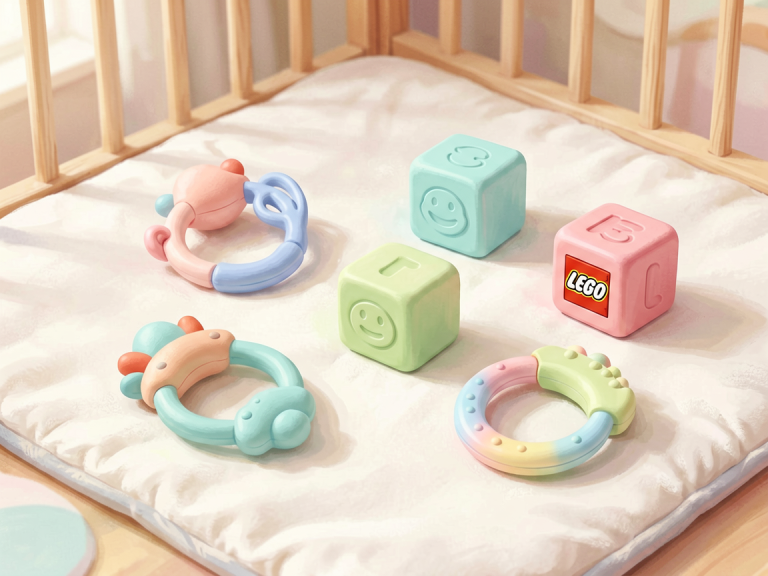
At this stage, sensory exploration is key. Rotations should be frequent—every few days—because babies build neural connections through repetition and novelty. Include items like rattles, textured balls, stacking rings, soft books, and simple cause-and-effect toys. Avoid small parts. A good rotation might consist of 4–6 objects arranged on a low shelf or in a basket. For example, one week you offer a crinkle toy, a wooden egg shaker, and a fabric block; the next week, you swap in a mirror toy, a silicone teether, and a board book.
For Preschoolers (3–5 years)
This is the golden age of pretend play and construction. Rotations of two weeks work well. Include open-ended materials like magnetic tiles, Duplo blocks (but only one set at a time), doctor kits, dress-up clothes, and simple art supplies. Avoid too many themed sets—one firetruck is enough, not a whole fleet. A sample rotation: Set A: Wooden train tracks + animal figures + a puzzle. Set B: Playdough with cookie cutters + a dollhouse with furniture. Set C: A balance board + a set of stacking cups + a magnetic fishing game.
For School-Age Children (6–10 years)
School-age kids can handle more complex and longer-term rotations—three to four weeks is common. They enjoy board games, craft kits, intricate building sets (LEGO, K’NEX), and strategy puzzles. You can also include non-screen toys that mimic real-life skills, like a cash register for math play, a simple sewing kit, or a chemistry set. At this age, involve your child in planning the rotation. Let them vote on which toys should come out next. This builds decision-making skills and encourages them to take ownership of their play.
Common Challenges and How to Overcome Them
Even the best-laid plans can hit snags. Here are typical roadblocks with practical solutions.
Challenge: “My child only wants one toy and ignores everything else.”
That is perfectly fine! The purpose of rotation is not to force variety, but to allow deep engagement. If your child falls in love with a particular set of blocks and plays with them for hours every day for two weeks, consider that a win. You can extend the rotation time for that set or even keep it out permanently while rotating other minor toys.
Challenge: “My child asks for stored toys constantly.”
This is common in the first few weeks. Be gentle but firm. Explain the system: “Your castle blocks are having a rest in the closet. They will come back in two weeks. Look, here are your train tracks—what adventure can you make?” You can also create a “wish list” where your child draws or writes the toys they miss, which builds patience. If the begging persists, consider making a few “evergreen” toys (like a favorite stuffed animal or a set of LEGO) always available.
Challenge: “There’s too much clutter despite rotation.”
This likely means you have too many toys overall. Re-evaluate your initial purge. A general rule is that a child can meaningfully play with *at most* 15–20 distinct items at a time. If you have 100 toys, even rotating 20 at a time, the sheer volume of stored toys can feel overwhelming to you as a parent. Donate more. Remember that children thrive with less.
Challenge: “My child still asks for screens.”
Screen-free toy rotation is not a magic wand. It works best when combined with other elements: ample outdoor time, parental involvement in play, and clear screen rules. Rotate toys on a weekend morning when you can also model screen-free engagement. Get down on the floor and play alongside your child. Your presence is the most powerful “toy” of all.
The Long-Term Rewards of Screen-Free Toy Rotation
When you commit to this practice, you are not just managing stuff—you are reshaping your child’s relationship with play. Over weeks and months, you will likely notice how your child’s attention span lengthens, how their stories become richer, and how they learn to entertain themselves without external stimulation. You will also reclaim your own mental space from the tyranny of toy clutter. The home becomes calmer, the floor stays tidier, and you spend less money on new toys because the old ones feel new again.
Most importantly, screen-free toy rotation builds a foundation for a childhood that is rich in tactile experience, unbounded imagination, and genuine connection. In a world that constantly begs for our children’s attention through glowing rectangles, offering them the gift of a curated, screen-free play environment is one of the most loving and intentional choices a parent can make. Try it for a month. You may be surprised at what grows in the space left by less.