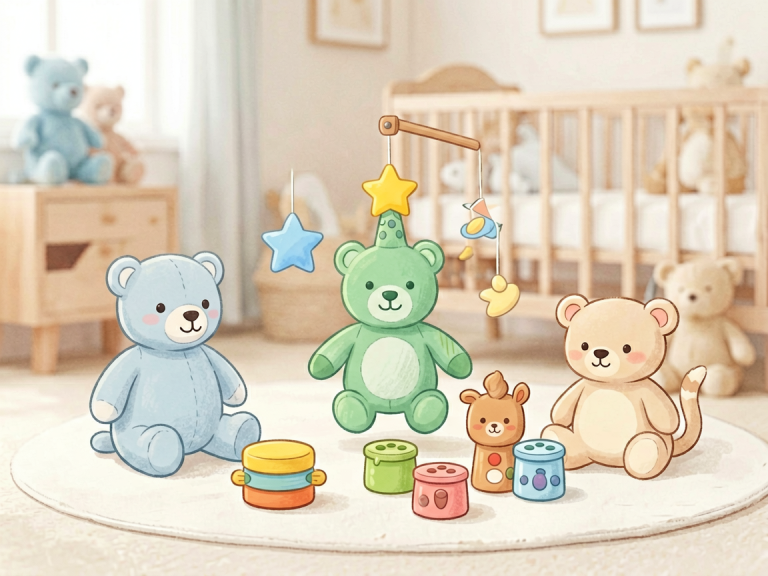
Screen-Free Toys to Keep Kids Busy: Unlocking Creativity and Development in a Digital Age
In a world where screens dominate our daily lives, from smartphones and tablets to televisions and video game consoles, parents are increasingly seeking alternatives that can keep their children engaged without the glow of a pixelated display. The challenge is real: how do we entertain and educate our kids while stepping away from passive digital consumption? The answer lies in a carefully curated selection of screen-free toys that not only keep kids busy but also foster imagination, problem-solving skills, and physical activity. This article explores the profound benefits of screen-free play, offers a comprehensive guide to the best types of toys, and provides practical strategies for integrating them into your child’s routine—all while ensuring your little ones remain happily occupied for hours on end.
The Quiet Crisis: Why Screen-Free Play Matters Now More Than Ever
We are living through an unprecedented experiment in childhood development. According to a 2023 report from the American Academy of Pediatrics, children aged 8 to 12 now spend an average of 4 to 6 hours per day in front of screens, while teenagers often exceed 8 hours. This digital immersion comes with hidden costs: reduced attention spans, increased rates of anxiety and depression, and a decline in creative, unstructured play. Screen-free toys offer a counterbalance, providing tactile, sensory, and cognitive experiences that screens simply cannot replicate.
When a child builds a block tower, they are not just stacking shapes. They are learning about balance, gravity, spatial reasoning, and even patience as the structure wobbles and falls. When they manipulate clay or play with a simple wooden train set, they engage in open-ended storytelling and fine motor development. These are not luxuries — they are essentials for healthy brain growth. Moreover, screen-free toys encourage children to occupy themselves without constant external stimulation, fostering independence and the ability to find joy in their own imagination. In a society that often equates “busy” with “productive,” these toys teach that being busy can also mean being calm, focused, and deeply absorbed.
Top Categories of Screen-Free Toys That Keep Kids Engaged
Building and Construction Sets: The Foundation of Creative Problem-Solving
Perhaps the most iconic category of screen-free toys, building sets ranging from classic wooden blocks to interlocking plastic bricks offer limitless possibilities. Unlike digital games that provide predefined outcomes, construction toys place the child in complete control. A four-year-old might arrange blocks into a simple tower, while an eight-year-old can follow complex instructions to create a detailed castle or invent an entirely new structure.
What makes these toys so effective at keeping kids busy is their inherent “flow” state — the feeling of being completely immersed in an activity that is challenging but not overwhelming. Studies show that children who regularly engage with construction toys develop stronger spatial reasoning skills, which later correlate with success in STEM fields. Additionally, the process of building, failing (when a tower collapses), and rebuilding teaches resilience in a tangible, low-stakes way. Brands like LEGO, Mega Bloks, and simpler sets like Tegu magnetic wooden blocks are timeless choices, but even household items like cardboard boxes and empty containers can serve as impromptu building materials.
Art and Craft Supplies: Unleashing the Inner Creator
When given access to paints, colored pencils, glue, scissors, and modeling clay, children often lose themselves for hours. Art is one of the purest forms of screen-free engagement because it engages multiple senses: the smell of a new crayon, the texture of playdough, the sound of a brush against paper. Unlike a drawing app on a tablet, where an “undo” button erases mistakes, traditional art forces children to embrace imperfections — a valuable lesson in self-acceptance and perseverance.
Craft kits that include step-by-step projects (like making friendship bracelets, painting ceramic figures, or assembling model airplanes) offer structured fun, while open-ended materials like a blank sketchbook, watercolors, or a box of beads encourage improvisation. For younger children, finger painting or stamping sets provide sensory stimulation that screen-based drawing tools cannot match. Importantly, art toys develop fine motor skills, hand-eye coordination, and the ability to plan and execute a vision. They also give children a tangible sense of accomplishment — a painting that can be hung on the refrigerator holds far more emotional weight than a digital image that vanishes with a swipe.
Puzzles and Brain Teasers: Cognitive Exercise Without Electricity
Jigsaw puzzles, logic puzzles, tangrams, and Rubik’s cubes are classic screen-free toys that challenge the mind in ways that passive screen time never does. A 500-piece jigsaw puzzle demands concentration, pattern recognition, and patience — skills that are increasingly rare in the age of TikTok-length attention spans. Similarly, a set of wooden logic puzzles (like the classic “snake cube” or “hexagon puzzle”) forces children to think three-dimensionally and persist through trial and error.
What makes puzzles particularly appealing for keeping kids busy is their tangible feedback. Each correct piece clicks into place, each solved riddle brings a rush of dopamine that is both natural and healthy. Unlike digital games that provide constant, shallow rewards (like shiny animations for tapping a button), puzzles offer genuine, earned satisfaction. For families, large floor puzzles can become collaborative projects, encouraging teamwork and conversation — a welcome alternative to four family members staring at separate screens.
Pretend Play and Role-Playing Toys: The Antidote to Passive Entertainment
Toy kitchens, doctor kits, tool benches, dress-up costumes, and dollhouses are the engines of imaginative play. When a child pretends to cook a meal for their stuffed animals or diagnoses a teddy bear’s ailment with a toy stethoscope, they are not just playing — they are practicing empathy, language skills, and social roles. Screen-free pretend play allows children to act out scenarios they observe in the real world, processing emotions and building narrative structures in their minds.
This type of play is especially valuable for keeping kids busy because it is self-sustaining. A well-equipped play kitchen can occupy a child for an entire afternoon as they “prepare” multiple courses, set the table, and serve invisible guests. Unlike a video game that has predetermined levels and endings, imaginative play has no boundaries. It can evolve from a restaurant into a spaceship, then into a castle, all within the same session. The only limit is the child’s creativity, which is exactly the point. Brands like Melissa & Doug, KidKraft, and Green Toys offer durable, non-electronic options that encourage open-ended role play.
Outdoor and Active Toys: Burning Energy While Having Fun
Screen-free does not have to mean sitting still. Bicycles, scooters, jump ropes, hula hoops, kites, frisbees, and simple ball games provide physical exercise while keeping children fully occupied. In an era when children’s outdoor play has declined by 50% over the past two decades, according to the National Recreation and Park Association, reintroducing active toys is a public health priority.
The beauty of outdoor toys is that they naturally combat restlessness. A child who has spent two hours riding a bike or playing catch is not only physically tired but also mentally refreshed. They have breathed fresh air, used their muscles, and experienced the rhythm of their own body — something no screen can replicate. Even simple items like a set of sidewalk chalk can turn a driveway into a canvas for hopscotch, drawing, and letter practice. For families with limited outdoor space, portable options like a skipping rope or a mini basketball hoop can transform a small backyard or even a hallway into an active play zone.
How to Choose the Right Screen-Free Toys for Your Child
Selecting the perfect screen-free toys depends on your child’s age, interests, and developmental stage. For toddlers (ages 1-3), focus on toys that engage the senses and cause-and-effect relationships: stacking cups, shape sorters, textured balls, and simple musical instruments like shakers or xylophones. At this age, safety is paramount — ensure no small parts that could be swallowed.
For preschoolers (ages 3-5), look for toys that encourage narrative and fine motor skills: train sets, dollhouses, puzzles with 12 to 48 pieces, washable markers, and modeling clay. Children at this stage love repetition and mastery, so a toy they can use again and again — like a wooden train track that they rearrange — offers lasting value.
School-age children (ages 6-12) are ready for more complex challenges: advanced LEGO sets (like the Creator or Technic lines), strategy board games (such as Catan Junior or Ticket to Ride), science kits (like crystal-growing or volcano-making sets), and outdoor equipment like skateboards or sports gear. At this age, incorporating “projects” — like building a birdhouse or knitting a scarf — can keep kids busy for days or weeks.
Finally, remember that the best screen-free toys are often the simplest. A cardboard box can become a car, a castle, or a time machine. A set of fabric scraps can turn into costumes. Parents should not underestimate the power of everyday objects when combined with a child’s imagination. The goal is not to buy the most expensive or elaborate toy, but to provide opportunities for active, engaged play.
Practical Tips for Encouraging Screen-Free Play
Even with the best toys, transitioning from screens to physical play can be challenging. Start by creating a designated “no-screen zone” in your home — perhaps the living room or the child’s bedroom — filled with accessible screen-free toys. Rotate toys every few weeks to keep them novel and exciting. Children often ignore a toy that is always available but rediscover it with enthusiasm when it reappears after being stored away.
Lead by example. If your child sees you reading a book, building with blocks, or gardening, they are more likely to value screen-free activities. Set aside dedicated “family playtime” where everyone participates in an analog activity: a board game night, a puzzle race, or a collaborative art project. The key is to make screen-free time feel special, not like a punishment.
Another effective strategy is to link screen-free play to your child’s interests. Does your child love dinosaurs? Invest in a dino excavation kit or a set of dinosaur figurines. Do they adore stories? Provide a blank book and ask them to illustrate and write their own tale. By tapping into existing passions, you make the transition from screen to hands-on play feel natural and exciting.
Conclusion: A Gift That Lasts a Lifetime
In a world that constantly pushes digital stimuli, choosing screen-free toys for your children is an act of rebellion — a quiet, loving decision to prioritize depth over speed, creativity over consumption, and connection over distraction. The toys we have discussed are not just “busy work”; they are tools for building resilient, imaginative, and capable human beings. When a child spends an afternoon constructing a cardboard city, designing a clay sculpture, or solving a complex puzzle, they are not merely passing time. They are learning how to learn, how to persist, how to create, and how to find joy in the tangible world.
So the next time your child asks for a new game or app, consider offering them a set of wooden blocks instead. You might be surprised at how engaged, content, and wonderfully busy they become — without a single screen in sight.