Smart Play: The Ultimate Parent Guide to Choosing Age-Appropriate Toys for 4-Year-Olds
As your child turns four, the world of play expands dramatically. No longer a toddler but not yet a full-fledged preschooler in the structured sense, a four-year-old is a whirlwind of curiosity, imagination, and burgeoning independence. Choosing the right toys at this stage isn’t just about keeping them occupied—it’s about nurturing their cognitive, social, emotional, and physical development. Yet with store shelves overflowing with blinking, buzzing, and often overstimulating options, parents can feel overwhelmed. This guide will help you navigate the toy aisle with confidence, ensuring every purchase supports your child’s unique growth journey while keeping safety and fun at the forefront.
Why Age-Appropriate Toys Matter for 4-Year-Olds
Every stage of childhood comes with distinct developmental milestones, and toys that align with these milestones do more than entertain—they teach. At age four, children are transitioning from parallel play (playing alongside others) to cooperative play (playing with others). Their fine motor skills are sharpening, their vocabulary is exploding, and their ability to follow simple rules is emerging. A toy that is too advanced (e.g., a complex board game with multi-step instructions) can lead to frustration and loss of interest. A toy that is too simple (e.g., a baby rattle) offers no challenge and fails to stimulate growth. Age-appropriate toys strike the perfect balance: they are just challenging enough to engage a child’s developing skills without causing undue difficulty. Moreover, they reduce safety risks—small parts, sharp edges, or toxic materials are common hazards in toys meant for older children. By understanding what a four-year-old is ready for, you can create a play environment that fosters confidence, creativity, and joy.
Understanding the 4-Year-Old Mind and Body
Before shopping, it’s essential to grasp the key developmental areas that toys should address:
Cognitive Development
Four-year-olds are masters of “why?” They love to ask questions, solve simple puzzles, and engage in pretend play. Their memory is improving, and they can follow two- to three-step directions. Toys that encourage problem-solving, sequencing, and imaginative thinking are ideal. For example, a simple memory card game or a set of animal figurines for storytelling.
Physical Development
Gross motor skills are advancing rapidly: hopping, skipping, balancing, and climbing become more coordinated. Fine motor skills also improve—children can hold a pencil with a tripod grasp, use scissors, and manipulate small objects like beads or Lego Duplo bricks. Toys that promote movement (tricycles, balls, tunnels) and hand-eye coordination (lacing cards, pegboards) are excellent.
Social and Emotional Development
At four, children begin to understand turn-taking, sharing (though it’s still a work in progress), and empathy. They enjoy role-playing family scenarios, doctor visits, or superhero adventures. Toys that facilitate cooperative play—such as simple board games, dress-up costumes, or play kitchens—help them practice social rules and emotional regulation.
Language Development
Vocabulary grows to around 1,000–1,500 words. Children use complete sentences, ask questions, and enjoy rhyming games and stories. Puppets, picture books with engaging plots, and toys that encourage conversation (like a toy telephone) bolster language skills.
Top Toy Categories for 4-Year-Olds
Based on these developmental needs, here are the most effective toy categories, each with specific examples and purchase tips.
## Building and Construction Toys
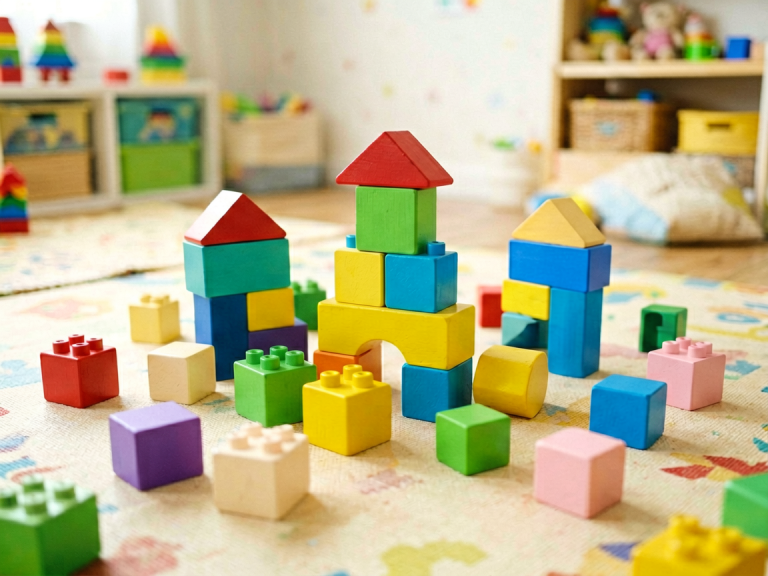
Building sets are a classic for a reason. They strengthen fine motor skills, spatial awareness, and creativity. For four-year-olds, avoid tiny bricks (like standard Lego) that pose choking hazards. Instead, opt for larger interlocking blocks such as Lego Duplo, Mega Bloks, or wooden unit blocks. These allow children to build towers, houses, and simple structures while learning about balance and symmetry. Magnetic tiles (e.g., Magna-Tiles) are another fantastic option—they click together easily and teach geometry through colorful shapes. Tip: Look for sets that include people, animals, or vehicles to spark pretend play.
## Pretend Play and Role-Playing Toys
Imagination peaks at this age. Costumes (doctor, firefighter, princess, chef), play kitchens, tool benches, and dollhouses let children reenact real-life scenarios. This type of play builds empathy, language, and problem-solving skills. A simple cash register with play money teaches early math concepts like counting and exchanging. Safety note: Avoid costumes with long cords or masks that restrict breathing. Choose well-made plastic food kits without small detachable parts.
## Art and Creative Supplies
Four-year-olds love to express themselves through drawing, painting, and modeling. Provide washable markers, chunky crayons, finger paints, play dough, and safety scissors. Art promotes fine motor control, creativity, and emotional expression (they can draw how they feel). A child-sized easel or a roll of paper on the floor invites mess-free creativity. Parent tip: Let the process matter more than the product. Avoid correcting their drawings—praise the effort and colors instead.
## Educational and STEM Toys
Simple puzzles (up to 24 pieces), matching games, and shape sorters enhance logic and memory. Counting bears, number puzzles, and alphabet blocks introduce pre-math and pre-literacy skills. Science kits designed for preschoolers—like planting seeds, magnet wands, or water play toys—spark curiosity about the natural world. What to avoid: Electronic learning toys that claim to teach letters but replace human interaction. The best learning happens when a child talks with you about what they’re doing.
## Ride-On Toys and Outdoor Play
Physical activity is crucial. A tricycle, balance bike (no pedals), scooter with three wheels, or a sturdy wagon builds leg strength and coordination. Outdoor toys like a small slide, sandbox, or bubble machine encourage active play. Balls (soft and size-appropriate), a kiddie golf set, or a beanbag toss game develop throwing and catching skills. Safety: Always supervise outdoor play, especially near water or streets. Ensure ride-on toys have a low center of gravity to prevent tipping.
## Simple Board Games and Cooperative Games
By age four, children can handle very simple games with few rules. Look for games that require no reading—like “Hi Ho! Cherry-O,” “Cariboo,” or “The Sneaky Snacky Squirrel.” Cooperative games (where everyone plays together against the game, not against each other) teach teamwork and reduce frustration. Games like “Hoot Owl Hoot!” or “Peaceable Kingdom’s Racing Turtle” are excellent choices. Key point: Keep game sessions short (10–15 minutes) and focus on having fun, not winning.
Safety and Quality Considerations
Even the most educational toy is useless if it’s unsafe. For four-year-olds, remember these guidelines:
- No small parts: Anything that fits inside a toilet paper tube (1.25 inches in diameter) can be a choking hazard. Avoid toys with small pieces unless you are actively supervising.
- Check for sharp edges or points: Inspect wooden toys for splinters, plastic for cracks, and metal for burrs.
- Non-toxic materials: Look for labels like “BPA-free,” “phthalate-free,” and “non-toxic paint.” Avoid toys with strong chemical smells.
- Battery safety: If a toy requires batteries, ensure the battery compartment is secured with a screw—not tape or a simple latch—to prevent children from accessing batteries.
- Sturdy construction: Four-year-olds are not gentle. Toys should withstand drops, throws, and enthusiastic play. Avoid very cheap plastic that breaks easily, creating sharp fragments.
How to Shop Smart: Final Parent Tips
- Watch your child play first. Before buying, observe what your child already gravitates toward. Do they love building? Drawing? Acting out stories? Let their natural preferences guide you.
- Less is more. A handful of high-quality, open-ended toys (toys that can be used in many ways, like blocks or art supplies) are far better than a mountain of single-purpose plastic gadgets. Open-ended toys grow with the child.
- Rotate toys. Keep your child engaged by putting away half the toys for a few weeks, then swapping them. This reignites interest and reduces clutter.
- Avoid screen-based toys. At age four, passive screen time (videos, apps) offers limited developmental benefit compared to hands-on, interactive play. If you choose a tablet game, use it sparingly and together.
- Involve your child. If possible, let your four-year-old pick from two or three appropriate options. This builds decision-making skills and ensures they’ll actually play with the toy.
Conclusion: Play That Grows With Them
Choosing age-appropriate toys for a four-year-old is not about buying the most popular or expensive item. It’s about understanding that at this magical age, a cardboard box can become a spaceship, a set of blocks can become a castle, and a simple board game can teach patience and kindness. By prioritizing safety, development, and imagination, you set the stage for countless hours of meaningful play—play that builds the foundation for lifelong learning, creativity, and social connection. So step away from the blinking electronic toy and reach for the wooden blocks, the dress-up chest, or the picture book. Your four-year-old will thank you with laughter, stories, and a million questions. After all, the best toy in the world is one that invites them to dream.