Unlocking Imagination: The Power of Open-Ended Play Activities for Six-Year-Olds
Introduction
At the age of six, children stand at a fascinating crossroads of development. Their cognitive abilities are expanding rapidly, their social skills are blossoming, and their imaginations are at their most vivid. Yet in a world increasingly dominated by structured schedules, screen time, and educational pressure, the simple joy of unstructured play is often sidelined. Open-ended play activities—those with no predetermined outcome, fixed rules, or single “correct” way to engage—offer a uniquely powerful antidote. For six-year-olds, these activities are not just fun; they are essential tools for building creativity, problem-solving skills, emotional resilience, and social competence. This article explores the profound benefits of open-ended play for this age group and provides a rich collection of practical activities that parents, teachers, and caregivers can easily implement.
Understanding Open-Ended Play: What It Is and Why It Matters
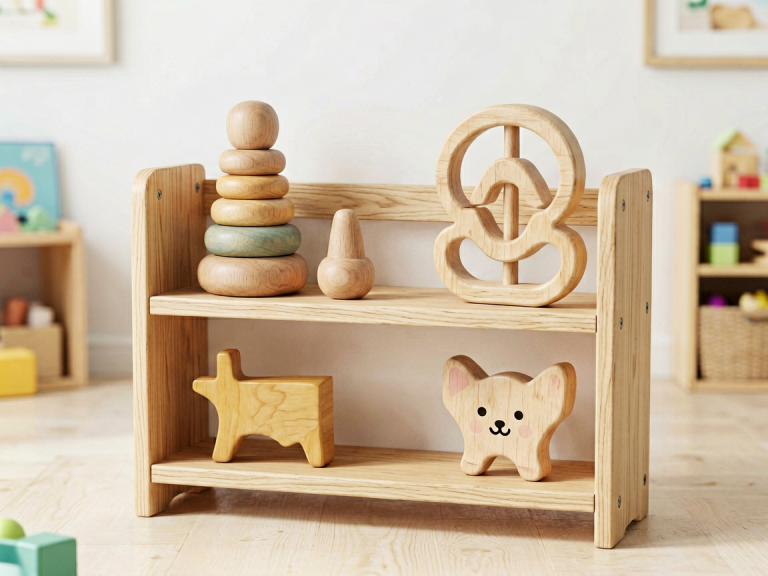
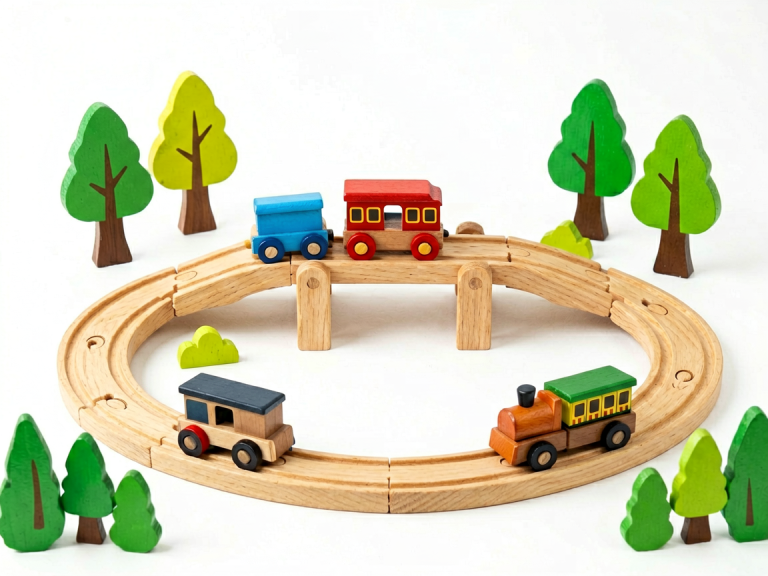
Open-ended play is precisely what the name suggests: play that has no fixed endpoint. Unlike a jigsaw puzzle with a single correct picture or a board game with rigid rules, open-ended activities invite children to explore, experiment, and create without the pressure of “getting it right.” A cardboard box becomes a spaceship, a castle, a time machine, or a turtle shell—depending entirely on the child’s imagination. A pile of wooden blocks can transform into a towering skyscraper, a winding road, a zoo for imaginary animals, or a fortress defending against invisible dragons. The materials themselves are mere catalysts; the true magic lies in the child’s mind.
For six-year-olds, this type of play is particularly valuable. At this age, children are transitioning from the purely sensory, exploratory play of toddlerhood into more complex cognitive and social play. They begin to understand cause and effect, develop narrative thinking, and engage in cooperative play with peers. Open-ended activities provide a safe sandbox for these emerging skills. They allow children to make mistakes, revise their ideas, and try again—all without fear of judgment. In an open-ended context, there are no failures, only discoveries.
Developmental Benefits: Why Six-Year-Olds Need Open-Ended Play
Cognitive Growth and Problem-Solving
When a six-year-old engages in open-ended play, they are constantly exercising executive function skills. Deciding how to build a bridge out of recycled materials that will actually support a toy car involves planning, sequencing, and flexible thinking. If the bridge collapses, the child must analyze what went wrong and try a new approach. This iterative process mirrors real-world problem-solving far more effectively than any worksheet or app. Research in developmental psychology consistently shows that children who engage in frequent open-ended play develop stronger divergent thinking abilities—the capacity to generate multiple solutions to a single problem. This is a cornerstone of creativity and innovation later in life.
Social and Emotional Intelligence
Open-ended play with peers is a rich arena for learning social dynamics. When six-year-olds build a fort together, they must negotiate who brings the blankets, who holds the pillows steady, and what the fort’s purpose will be. They learn to share ideas, compromise, and manage disagreements. They also practice emotional regulation when their carefully constructed tower topples or when a friend has a different vision. Because there is no “right” way to play, children learn to respect diverse perspectives and appreciate that their own ideas are not the only valid ones. This builds empathy and cooperation in a way that structured team sports or academic group work often cannot.
Language and Narrative Development
Six-year-olds are natural storytellers. Open-ended play provides a stage for their emerging narrative skills. A child who sets up a pretend grocery store with empty food boxes and a toy cash register is not just playing shop; they are constructing a social script, inventing dialogue, assigning roles, and weaving a story. When they explain their play to a parent or sibling, they are practicing sequential reasoning and vocabulary. Over time, these experiences build a strong foundation for reading comprehension and written expression.
Top Open-Ended Play Activities for Six-Year-Olds
1. The Ultimate Building Kit: Loose Parts
One of the most versatile open-ended play tools is a collection of loose parts. This can include wooden blocks, LEGO bricks, cardboard tubes, fabric scraps, bottle caps, pinecones, stones, and old keys. The key is variety in shape, size, texture, and weight. Present these materials to a six-year-old with no instructions—simply invite them to create. Some children will build elaborate structures; others will sort and categorize; still others will use the items as props in a fantasy game. This activity can occupy a child for hours and can be revisited endlessly with new outcomes each time. Over time, you may notice your child developing engineering concepts like balance and symmetry, or artistic sensibilities about color and form—all through their own discovery.
2. The Great Outdoors: Nature’s Playground
Nature is the ultimate open-ended play environment. A walk in the woods or a session in the backyard can become an adventure for a six-year-old. Provide them with a simple magnifying glass, a small bucket, or a digging tool, and watch their curiosity unfold. They might build a fairy house from twigs and leaves, create a “soup” from mud and flower petals, follow the trail of ants, or construct a dam in a shallow stream. The possibilities are endless, and the natural world offers constant surprises that no manufactured toy can replicate. Importantly, outdoor play also supports physical development—climbing, balancing, running, and jumping—all while engaging the imagination.
3. The Dress-Up Box and Role-Play
A well-stocked dress-up box is a gateway to infinite worlds. Include old hats, scarves, costume jewelry, capes, vests, shoes, and simple fabric pieces. For six-year-olds, adding props like toy stethoscopes, plastic food, cardboard swords, or play telephones can spark specific scenarios. Role-play allows children to experiment with adult roles, rehearse social interactions, and process emotions. A child who has just started school might play “teacher” to process the experience; a child who visited the doctor might become a doctor themselves. There is no script, and the stories shift from day to day. Parents can gently participate by asking open-ended questions like, “What happens next?” or “How does that character feel?” without directing the play.
4. Art without Boundaries: Process-Focused Creativity
Traditional art projects often have a predetermined result—a specific shape, a holiday decoration, a matching color scheme. Open-ended art, by contrast, values the process over the product. Set out paper, paint, glue, scissors, markers, chalk, and a variety of found objects like leaves, feathers, buttons, and yarn. Invite your six-year-old to create anything they wish. No samples or examples. No “correct” way to use the materials. Some children will produce abstract collages; others will paint stories; still others will fold and cut paper into unrecognizable shapes. The important thing is self-expression without critique. When a child proudly shows you their creation, instead of saying “What is it?” (which implies it must represent something specific), you can say “Tell me about your work.” This validates their imagination and encourages them to articulate their thought process.
5. The Blanket Fort: Building a Private World
Few activities capture the essence of open-ended play like building a fort. Armed with blankets, pillows, chairs, clothespins, and perhaps a flashlight, a six-year-old can construct a secret hideaway. The fort might become a reading nook, a spaceship, a castle, a cave, or a hospital for stuffed animals. The process of construction itself involves problem-solving spatial relationships and physics (will the blanket stay up? how do I make the entrance stable?). Inside, the child creates a world of their own rules, offering a powerful sense of autonomy. When multiple children are involved, the fort becomes a social microcosm requiring negotiation and cooperation.
How Parents and Educators Can Support Open-Ended Play
Creating an environment that fosters open-ended play requires a shift in mindset. Instead of asking, “What did you make?” or “Are you doing it right?” adults should adopt a posture of curiosity and permission. Provide open-ended materials in accessible, organized bins so children can choose freely. Resist the urge to demonstrate the “proper” use of items—a paper towel tube is not for looking through; it is for whatever the child imagines. Allow messiness and noise within reasonable boundaries. More importantly, protect time: in our overscheduled culture, true open-ended play requires unhurried blocks of time, at least 45 minutes to an hour, so that children can fully immerse themselves.
When invited to play, join in as a co-player, not a director. Follow the child’s lead. If they are building a city, ask questions like, “What happens in this part of the city?” or “I wonder who lives here?” This type of language encourages narrative thinking without imposing your own agenda. If they become frustrated, resist the urge to offer solutions immediately. Instead, ask, “What could we try next?” This builds resilience and self-efficacy.
Conclusion: The Gift of Openness
In a world that often values measurable outcomes and structured learning, open-ended play may seem frivolous. Yet the evidence is overwhelming: the skills cultivated through unstructured, imaginative play—creativity, flexibility, social intelligence, and emotional resilience—are exactly the capacities that children need to thrive in an unpredictable future. For a six-year-old, a cardboard box and a handful of blocks are not just toys; they are tools for building a mind that can think, connect, and dream without limits. By making space for open-ended play, we give our children the most valuable gift of all: the permission to be the authors of their own worlds. And in that authorship, they discover not only the joy of creation but also the beginning of true self-knowledge.