Unlocking Potential: The Role of Educational Toys in Early Learning for Age 5
Introduction: The Critical Window of Age Five
At the age of five, children stand on the threshold of formal education. They are no longer toddlers but curious explorers who have begun to grasp abstract concepts, recognize letters and numbers, and engage in complex social interactions. This developmental stage is often referred to as the "kindergarten peak" — a time when cognitive, emotional, and motor abilities are expanding rapidly. Educational toys designed specifically for this age group are not mere playthings; they are carefully engineered tools that can scaffold a child's natural curiosity into structured learning. The right toys can transform a five-year-old's bedroom into a laboratory of discovery, a workshop of creativity, and a stage for problem-solving. Yet, with an overwhelming array of options on the market, parents and educators must understand what makes a toy truly educational for a five-year-old and how to integrate it meaningfully into daily play. This article explores the multifaceted role of educational toys for early learning at age five, offering insights into their types, benefits, selection criteria, and practical applications.
Why Age Five Matters: Developmental Milestones and Toy Alignment
Cognitive Development: From Concrete to Abstract
By age five, children typically demonstrate the ability to count to at least 20, recognize most letters of the alphabet, and understand basic concepts of time (yesterday, today, tomorrow). They are entering what developmental psychologist Jean Piaget called the preoperational stage, where symbolic thinking begins to flourish. An educational toy that capitalizes on this transition might include a set of wooden number rods paired with counting cards, or a magnetic alphabet board that encourages letter-sound association. These toys bridge the gap between concrete manipulation and abstract understanding, allowing the child to physically move objects while mentally forming connections. For instance, a simple puzzle that requires matching quantities to numerals — three apple pictures with the number "3" — reinforces both counting and numeral recognition simultaneously. The tactile feedback of a puzzle piece clicking into place provides an immediate sense of accomplishment, which is crucial for maintaining motivation at this age.
Language and Communication Skills
Five-year-olds are linguistic sponges. Their vocabularies expand from roughly 2,000 to 5,000 words between ages four and six. They begin to understand and produce complex sentences, grasp simple jokes, and follow multi-step instructions. Educational toys that promote language development include storytelling dice (where children roll dice with pictures and create a narrative), rhyming games, and "I Spy" style card sets. More sophisticated options include interactive storybooks with recorded voices that pause to ask comprehension questions. The key is that these toys should encourage verbal expression, not passive listening. For example, a puppet theater with character puppets allows a five-year-old to construct dialogues, practice turn-taking in conversation, and explore emotional nuances through role-play. This type of play is not only educational but also profoundly social, as it often involves peers or family members.
Motor Skills: Fine and Gross
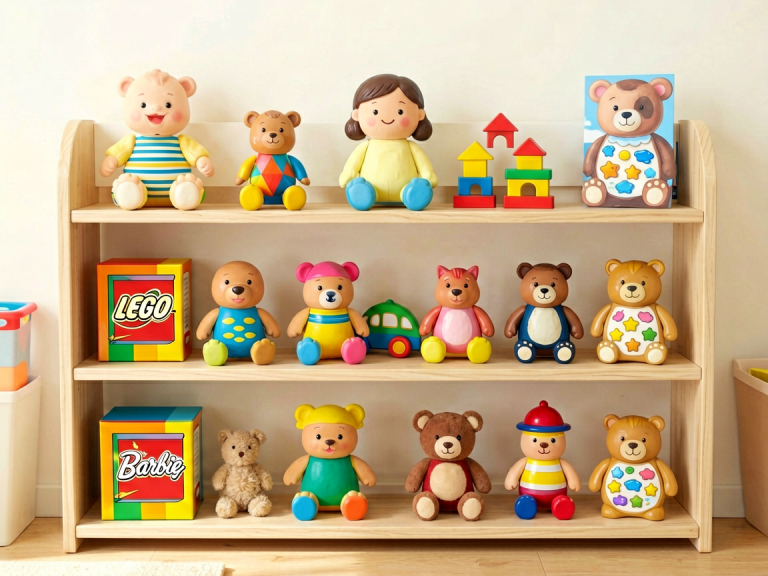
At age five, children are refining their fine motor skills — the ability to use small muscles in their hands and fingers. They can typically use scissors, draw recognizable shapes, and write some letters. Educational toys that strengthen these skills include lacing boards, threading beads, and construction sets with interlocking pieces (such as LEGO Duplo or Mega Bloks). However, it is also important to address gross motor skills — running, jumping, balancing — which remain crucial for overall physical development. Toys like balance boards, hopscotch mats, and child-sized obstacle course kits can combine physical activity with cognitive challenges, such as hopping to a number or spelling a word while balancing. The integration of physical and mental exercise is especially valuable at this age because it supports the development of the cerebellum, which coordinates movement and thinking.
Categories of Educational Toys for Five-Year-Olds
1. Cognitive and Logic Building Toys
These toys target reasoning, memory, and problem-solving. Examples include:
- Board games designed for young children: Games like "Sequence for Kids," "Zingo!" (a bingo-like game for letter and number recognition), or "Hi Ho! Cherry-O" help children practice counting, turn-taking, and strategic thinking. The competitive element, when handled gently, teaches winning and losing with grace.
- Pattern blocks and tangrams: These geometric shape sets encourage spatial reasoning and pattern recognition. A five-year-old can copy a design card or create her own, which fosters creativity within a structured framework.
- Simple coding toys: Products like the "Coding Critters" or "Code-a-Pillar" introduce basic programming logic — sequencing, loops, and debugging — without screens. The child arranges physical pieces to make a toy move forward, left, or right, learning cause and effect in a tangible way.
2. Language and Literacy Toys
Reading readiness is a primary goal for this age group. Effective educational toys in this category include:
- Alphabet puzzles and matching games: These reinforce letter identification and the concept that letters have sounds. Some puzzles have pictures underneath the letter pieces (e.g., "A" pictures an apple), aiding phonetic association.
- Word-building tiles: Magnetic letters on a whiteboard allow children to form simple three-letter words (CVC words) and then read them aloud. Many sets include picture cards as prompts.
- Story sequencing cards: A set of four to six cards that depict a simple story (e.g., a child waking up, eating breakfast, brushing teeth, and going to school) must be arranged in the correct order. This builds narrative comprehension and logical thinking.
3. Creative and Imaginative Play Toys
Imagination is the engine of learning at age five. Toys that fuel creativity include:
- Art supplies beyond basic crayons: Washable markers, watercolor sets, modeling clay, and stencils. The educational value lies in the process — mixing colors, planning a design, and executing it — which develops planning skills and aesthetic awareness.
- Dress-up costumes and play sets: A doctor's kit, a kitchen playset, or a tool bench allows children to imitate adult roles, which helps them understand social roles, practice vocabulary related to those roles (e.g., "stethoscope," "spatula," "screwdriver"), and explore empathy.
- Open-ended building blocks: Unlike kits with specific instructions, plain wooden blocks or large foam blocks encourage free construction. Children learn physics (balance, gravity) and engineering principles through trial and error.
4. Social and Emotional Learning Toys
Five-year-olds are navigating friendships, sharing, and emotional regulation. Educational toys that address these areas include:
- Emotion cards and board games: Sets of cards showing facial expressions (happy, sad, angry, surprised) help children identify and name feelings. Games like "The Social Skills Board Game" make turn-taking and polite communication a fun challenge.
- Cooperative games: Unlike competitive games, cooperative games require all players to work together toward a common goal (e.g., "The Sneaky Snacky Squirrel Game" where players help a squirrel collect acorns before a storm). These build teamwork and reduce anxiety about losing.
- Puppets and dollhouses: These allow children to act out social scenarios — a puppet might apologize after knocking over a block tower, or a doll might invite another doll to play. This is safe rehearsal for real-life interactions.
Choosing the Right Educational Toys: A Practical Guide
Safety First, Always
For age five, safety considerations include avoiding small parts that could still be choking hazards (though the risk is lower than for toddlers), ensuring non-toxic materials (especially for paints and plastics), and checking for sharp edges. Look for toys that carry the ASTM (American Society for Testing and Materials) or CE (Conformité Européenne) certification. Also, consider the child's individual maturity: some five-year-olds still put objects in their mouths occasionally.
Align with the Child's Interests, Not the Adult's
A child who loves dinosaurs will be more engaged by a dinosaur-themed counting game than a generic number puzzle. Similarly, a child fascinated by construction might prefer a magnetic building set over language flashcards. The best educational toys are those that the child *wants* to play with repeatedly. Observing the child's natural inclinations — whether they gravitate toward art, music, vehicles, animals, or pretend play — provides a roadmap for purchasing decisions.
Avoid Overstimulation: Quality over Quantity
It is tempting to buy every trending educational toy, but research in developmental psychology suggests that an excess of toys can overwhelm a five-year-old's attention span and reduce the depth of play. A small collection of well-chosen toys that can be used in multiple ways (open-ended) is far more valuable than a closet full of single-function gadgets. For example, a set of 100 wooden blocks can become a castle, a bridge, a spaceship, or a balancing challenge, whereas a battery-powered robot that only marches and beeps offers limited stimulation.
Screen-Free or Screen-Based? A Balanced Approach
While many educational apps exist for five-year-olds, the American Academy of Pediatrics recommends that screen time for this age be limited to one hour per day of high-quality programming, and that co-viewing or co-playing with a parent is ideal. Therefore, physical toys that do not rely on screens are generally preferable for hands-on learning. However, some screen-based toys, such as an interactive globe that teaches geography through touch, can be valuable when used sparingly and with adult guidance. The principle is that the toy should require active engagement, not passive consumption.
The Parent's Role: Facilitating Play for Maximum Learning
Educational toys are not self-teaching machines. A toy's potential is unlocked through the interaction between the child and a caring adult. Parents and educators should:
- Model the toy first: Show the child how to use it, but then step back and allow exploration. For instance, with a new puzzle, demonstrate one strategy for sorting pieces, then let the child discover his own method.
- Ask open-ended questions: Instead of "Is that a blue piece?" ask "What do you notice about this piece?" or "How could we sort these?" This encourages observation and higher-order thinking.
- Encourage persistence: When a child struggles with a toy — for example, a construction set that keeps collapsing — resist the urge to fix it immediately. Guide with questions: "What happens if you put a bigger piece at the bottom?" This builds resilience and problem-solving skills.
- Rotate toys: To sustain interest, put away some toys for a few weeks and then reintroduce them. Novelty re-engages a child's curiosity without requiring new purchases.
Conclusion: Play as the Highest Form of Learning
Educational toys for early learning at age five are not shortcuts to academic success; they are invitations to explore, fail, and try again. The best toys respect the child's developmental stage, spark curiosity, and provide just enough challenge to stretch abilities without causing frustration. Whether it is a set of magnetic letters that first appears as a jumble of colorful shapes and later becomes the key to reading, or a simple balance scale that reveals the concept of weight, these objects become instruments of discovery. As the renowned educator Maria Montessori once said, "Play is the work of the child." For a five-year-old, a thoughtfully selected educational toy is not a distraction from learning — it is learning itself, wrapped in the joy of play. By investing in quality toys and, more importantly, in the time to play alongside our children, we are building the foundation for a lifetime of curiosity and intellectual confidence. The next time you see a five-year-old deeply absorbed in building a tower or arranging story cards, remember that this is not just play: it is the brain wiring itself for complex thought, one block, one letter, one story at a time.