Toy Rotation Guide for Parents: Less Clutter, More Engagement
As a parent, you’ve probably experienced the familiar scene: your child’s room is overflowing with toys—dolls, building blocks, puzzles, action figures, art supplies—yet your little one stands in the middle of it all, sighing, “I have nothing to play with.” The paradox is real. The more toys children have access to at once, the less they seem to value or engage with any of them. This is where the concept of toy rotation comes in—a simple, research-backed parenting strategy that can transform playtime, reduce household chaos, and nurture deeper creativity in your child.
Toy rotation is exactly what it sounds like: instead of keeping all toys available all the time, you divide them into smaller sets and rotate them in and out of your child’s play area on a regular schedule. This method is not just about tidying up—it’s about intentionally shaping your child’s environment to foster focus, independence, and joy. In this guide, you’ll learn why toy rotation works, how to set up your own system, and what pitfalls to avoid.
Why Toy Rotation Matters: The Science Behind the Strategy
Reduced Overstimulation and Improved Focus
Young children’s brains are still developing the ability to filter out irrelevant information. When dozens of toys are scattered around, each one sends a tiny signal: “Play with me!” This sensory overload overwhelms the prefrontal cortex, which is responsible for sustained attention. As a result, children flit from one toy to another, never fully immersing themselves in any activity. Toy rotation reduces the number of visual and auditory stimuli, allowing your child to settle into *deep play*—the kind where they experiment, problem-solve, and lose track of time. Studies in developmental psychology suggest that such focused play is essential for building executive functions like working memory and self-control.
Reigniting Interest and Novelty
Children are naturally drawn to novelty, but their interest in a particular toy often wanes after repeated exposure. When you store away half the toys for a few weeks, those items become “new” again when they reappear. The brain’s reward system lights up as if encountering a fresh discovery. This cycle of absence and reappearance keeps toys exciting without requiring you to constantly buy new ones. You’ll be amazed at how a neglected stacking ring suddenly becomes the most fascinating object in the house after a three-week hiatus.
Teaching Respect for Toys
When toys are permanently scattered, children learn to treat them as disposable—because there’s always another one to grab. Rotating toys establishes a sense of scarcity and value. Your child begins to see each toy as a special item that will not be around forever. This subtle shift encourages gentler handling, willingness to put things away, and gratitude. Over time, it also reduces the frequency of toy-related tantrums, because the child knows that a different set will arrive soon.
How to Start a Toy Rotation System: Step-by-Step
Step 1: Audit and Categorize Your Toy Collection
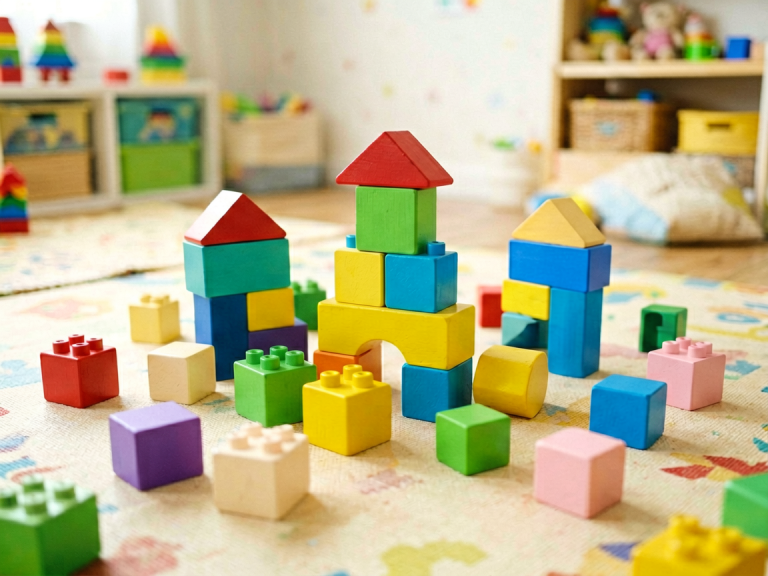
Before you can rotate, you need to know what you have. Empty every toy bin, shelf, and closet. Sort everything into broad categories: building toys (blocks, LEGO, magnetic tiles), pretend play (kitchen sets, costumes, dolls), fine motor (puzzles, lacing beads, pegboards), gross motor (balls, tunnels, ride-ons), art supplies, and sensory items (play dough, sand, water toys).
As you categorize, be honest about what your child actually uses. If a toy has been ignored for three months and isn’t season-specific, consider donating it. Keep only the items that are developmentally appropriate and in good condition. A lean collection makes rotation easier and more effective.
Step 2: Divide into Rotation Sets
Based on your categories, create 3 to 5 separate “baskets” or “sets.” Each set should contain a balance of toy types—for example, one building toy + one pretend play set + one puzzle + one fine motor activity + one open-ended item (like a set of scarves or wooden blocks). Avoid putting all puzzles in one set; instead, spread them across rotations so your child always has some challenge variety.
A good rule of thumb: the total number of items per set should match your child’s age. For a one-year-old, 4–6 items per set is plenty. For a four-year-old, 6–10 items work well. Remember, less is more for younger children.
Step 3: Choose a Rotation Schedule
The frequency of rotation depends on your child’s age and temperament. Most parents find a weekly or biweekly rotation works best for toddlers and preschoolers. Infants may need changes every few days because they outgrow toys quickly. Older children (ages 5–7) can handle longer intervals of three to four weeks.
Pick a consistent day for rotation—say, every Sunday morning. This turns the process into a predictable ritual. On rotation day, store the outgoing set in a closed bin or closet, out of sight. Then bring out the new set and arrange it invitingly on shelves or in a play tray. Do not overwhelm your child with multiple bins at once; the surprise of a single fresh set is more exciting.
Step 4: Observe and Adjust
Pay attention to how your child interacts with each set. Does she spend 20 minutes with the wooden train set but ignore the crayons? Adjust future rotations to include more of what captures her attention. Also, note when a particular toy becomes a favorite—you can keep it out for an extra rotation cycle or two. The goal is not rigid adherence to a calendar but sensitivity to your child’s interests.
If your child seems bored halfway through the week, you might have included too many passive toys (like battery-operated toys that do the playing for the child). Aim for “open-ended” toys—blocks, play silks, stacking cups—that can be used in multiple ways. These never go stale.
Practical Tips for a Smooth Toy Rotation
Storage Solutions That Work
Visibility is key. Use clear plastic bins or open baskets so you can see what’s inside without rummaging. Label bins with photos for pre-readers or simple words for older kids. Store off-rotation bins in a closet, under the bed, or in the garage—anywhere that’s truly out of sight. If your child can find the hidden toys, they’ll beg to have them back, undermining the system.
Involve Your Child
Give your child a role in the rotation process. Let them help choose which toys go into the “rest” bin (for rotation) and which stay out. For preschoolers, use a visual chart showing which day the toys will change. This builds a sense of ownership and reduces resistance. When the new set appears, your child will feel like it’s a gift, not a restriction.
Don’t Forget Books and Activities
Toy rotation isn’t just for physical toys. Apply the same principle to books, puzzles, and even art supplies. Rotate picture books every two weeks to keep storytime fresh. Swap out Play-Doh colors or add a new stamp set. The same novelty effect applies.
When to Break the Rules
There are exceptions. Keep a few “always-available” toys—like a beloved stuffed animal, a favorite blanket, or a set of safety blocks—that never get rotated. These anchor items provide comfort and stability. Similarly, if your child is working through a developmental milestone (e.g., potty training), you might leave a related toy (like a doll potty) out longer.
Common Mistakes and How to Avoid Them
Mistake 1: Rotating Too Often or Too Rarely
If you swap toys every day, your child never has time to form a deep connection. If you wait two months, the toys may become dusty and irrelevant. The sweet spot is usually 1–3 weeks. Watch your child’s cues: if they’re still deeply engaged on day 10, extend the rotation. If they start dismantling the playroom, it’s time.
Mistake 2: Including Too Many Electronic or Passive Toys
Battery-operated toys that sing, flash, and move on their own tend to dominate play. They require little creativity from the child and quickly lose appeal. Limit these to one per rotation set, if any. Focus on toys that require the child to act—building, imagining, manipulating. That’s where the developmental gains lie.
Mistake 3: Forgetting the “Out of Sight” Rule
Storing rotation bins in a visible area (like a stack in the corner of the living room) defeats the purpose. Your child will see them and want to open every bin. Use a closet with a door, or a high shelf that a toddler cannot reach. If space is tight, consider using a large opaque storage ottoman that doubles as seating.
Mistake 4: Overcomplicating the System
You don’t need a spreadsheet or color-coded labels. Toy rotation is meant to *simplify* your life, not add more tasks. Start with just two sets. Rotate every Saturday. That’s it. Once you feel comfortable, you can expand to three or four sets. The best system is the one you can sustain without stress.
The Long-Term Benefits: More Than Just a Tidy Room
When toy rotation becomes a habit, you will notice changes beyond the physical environment. Your child’s play will become more sustained and imaginative. Instead of dumping out every bin, they will focus on one activity for 30 minutes, inventing stories, solving problems, and building perseverance. You will hear fewer complaints of boredom—and more of “Look what I made!”
You will also reclaim your living space. The clutter that once spread from the playroom to the kitchen, hallway, and even your bedroom will shrink. Cleaning up becomes faster because there are fewer items to manage. And your child can participate more easily in tidy-up time when they only have to put away a handful of toys.
Finally, toy rotation models a valuable life skill: intentional curation. Your child learns that we don’t need to have everything out at once to have fun. Quality trumps quantity. This lesson—learned in the safety of a loving home—can carry into adulthood, helping them resist the pressure of consumerism and find contentment in a thoughtfully chosen life.
So start small. Sort one bin. Rotate one set. Notice the difference. Your child’s growing focus and your quieter home will be all the proof you need.