The Ultimate Guide to the Best Language Toys for Babies: Boosting Early Communication Skills
Introduction
From the moment a baby enters the world, their brain is a sponge, absorbing sounds, rhythms, and patterns of language. The first three years of life are a critical window for language development, and the toys you choose can play a transformative role in nurturing this process. But not all toys are created equal. The best language toys for babies are those that engage multiple senses, encourage interaction, and provide meaningful opportunities for listening, imitating, and eventually speaking. In this comprehensive guide, we will explore the science behind language acquisition, identify key features to look for in language-boosting toys, and recommend specific types of toys that have proven effective for infants and toddlers. Whether you are a parent, caregiver, or educator, understanding these tools will empower you to create a rich linguistic environment that sets the stage for lifelong communication skills.
Why Language Toys Matter: The Science of Early Brain Development
The Critical Window for Language Acquisition
Before we dive into specific toys, it is essential to understand why the right toys are so important. Research in developmental psychology and neuroscience shows that the human brain undergoes rapid growth during the first three years, with neural connections forming at a rate of more than one million per second. Language development is not a passive process; it requires active engagement with sounds, words, and social interactions. Toys that stimulate language specifically help strengthen the neural pathways associated with auditory processing, vocabulary acquisition, and comprehension. When a baby hears a rattle, a song, or a caregiver's voice while playing, the brain links these auditory experiences with visual and tactile cues, building a foundation for later speech production.
The Role of Interactive Play in Language Learning
Language is inherently social. Babies learn words not by memorizing flashcards, but by participating in back-and-forth exchanges with responsive adults. The best language toys facilitate this interaction. For example, a simple stuffed animal that "talks" when pressed can prompt a baby to look, listen, and even babble back. These toys create opportunities for turn-taking, which is a precursor to conversation. Moreover, toys that introduce new vocabulary in context—such as a shape sorter that names each shape—help babies associate words with objects and actions. The key is that the toy does not replace human interaction but rather enhances it, providing a shared focus of attention that encourages caregivers to narrate, describe, and expand on what the baby experiences.
Top Categories of Language Toys for Babies
1. Musical and Sound-Emitting Toys: The Rhythm of Language
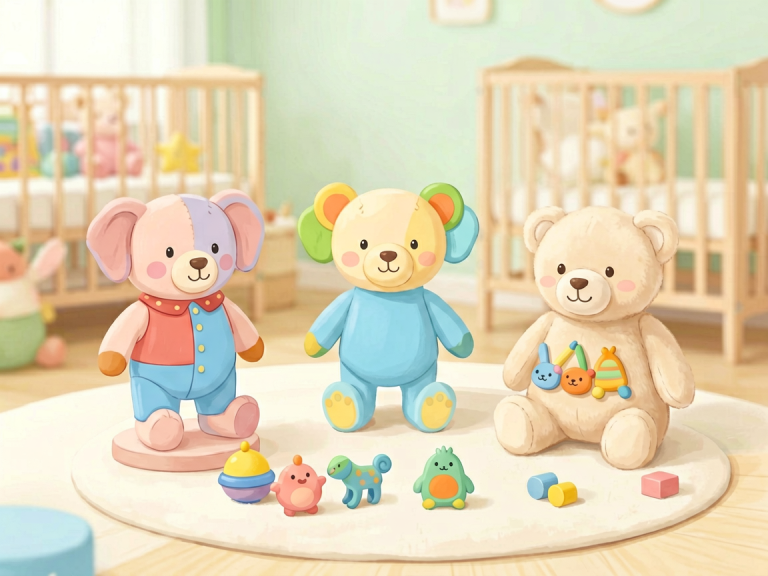
Music and rhythm are deeply connected to language development. The melodic contours of songs mimic the prosody of speech, and repetitive rhymes help babies segment sounds into meaningful units. Toys that produce a variety of sounds—from gentle chimes to animal noises—expose babies to different pitches, tones, and volumes, training their auditory discrimination. For instance, a Montessori-style rainmaker encourages a baby to listen intently as beads fall, creating a calming sound that also teaches cause and effect. Musical instruments designed for tiny hands, like maracas, xylophones, or baby-safe drums, allow babies to produce sounds themselves, fostering an understanding that their actions can create auditory outcomes. Singing toys, such as soft plush animals that play lullabies or nursery rhymes, can become beloved companions that reinforce language patterns through repetition. The key is to choose toys with clear, pleasant sounds rather than harsh or overly loud noises, as babies' ears are sensitive and quality matters for both enjoyment and learning.
2. Interactive Books and Soft Fabric Books: The Gateway to Narrative
Books are perhaps the most powerful language toys, even for the youngest infants. Board books with high-contrast patterns, flaps to lift, or textures to touch engage visual and tactile senses while exposing babies to the cadence of language. Soft fabric books—often crinkly, with mirrors, tags, and squeakers—are especially effective for babies under six months because they are safe to mouth and easy to grasp. As babies grow, books with simple illustrations of familiar objects (bottle, ball, cat) help them build a basic vocabulary. The best language-boosting books are those that invite interaction: "touch-and-feel" pages allow babies to experience adjectives like "soft," "bumpy," or "fuzzy" in concrete ways. When caregivers read aloud, they naturally use exaggerated intonation, pause for responses, and point to pictures, all of which are proven to enhance language learning. Choosing books with repetitive phrases or rhyming text (such as those by Eric Carle or Sandra Boynton) makes it easier for babies to anticipate and eventually join in with sounds or words.
3. Cause-and-Effect Toys That Encourage Vocalization
Toys that respond to a baby's actions with sounds or lights can be highly motivating for early vocalization. For example, a toy telephone that "rings" when a button is pressed, or a pop-up toy that springs a character when a lever is pushed, encourages babies to experiment with cause and effect. When the toy produces a sound, the baby often responds with coos, babbles, or squeals of delight, creating a loop of vocal interaction. Some advanced toys even have voice-recording features, allowing caregivers to record their own voice or the baby's voice, which can be played back. This not only delights babies but also helps them recognize their own vocalizations as meaningful. The crucial point is that these toys should require active participation from the baby—not just passive listening. A toy that lights up and plays music on its own, without any baby involvement, is far less effective than one that activates only when the baby touches it.
4. Language-Focused Electronic Toys: Balancing Benefits and Risks
Modern technology offers a plethora of electronic toys designed specifically for language development—from talking dolls that ask questions to tablets with toddler apps. While these can be useful, they must be chosen with caution. The American Academy of Pediatrics recommends that for children under 18 months, screen time (other than video chatting) should be avoided, and even after that, it should be limited. However, electronic toys that are not screen-based—such as a musical story projector or a talking alphabet block—can be valuable. Look for toys that allow for open-ended play and that do not replace human interaction. For example, a toy that says "What color is this?" and then waits for a response (even silence) encourages a baby to process the question. Ideally, the toy should be used alongside a caregiver who can expand on the experience: "Yes, the toy said red. Can you find something red in the room?" This combination of technology and human scaffolding is where the magic happens.
5. Open-Ended Toys That Inspire Pretend Play and Language
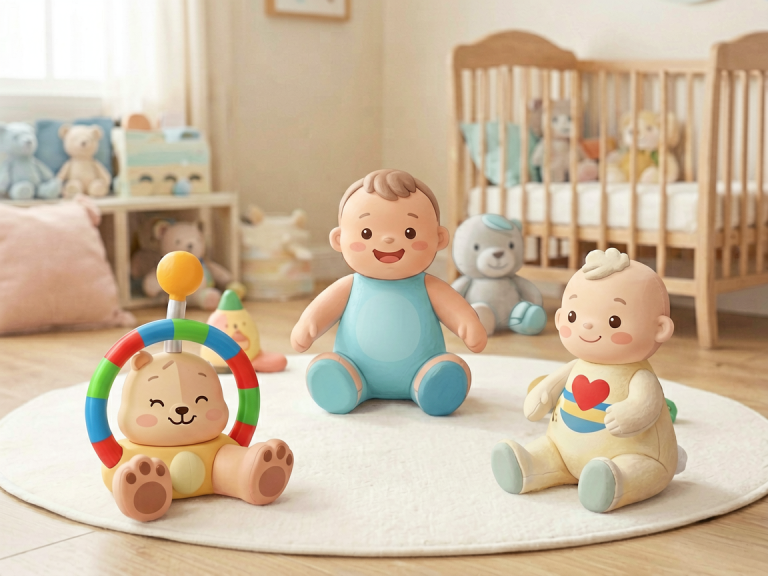
As babies approach their first birthday and beyond, pretend play becomes a rich avenue for language development. Simple, open-ended toys like dolls, animal figures, toy vehicles, and play kitchens allow babies to imitate real-life scenarios and use emerging vocabulary. A baby feeding a toy bear and saying "yum yum" or pushing a car while saying "vroom" is practicing word-object associations and narrative skills. The best pretend-play toys are those that have no fixed purpose; a set of stacking cups can become a tower, a drum, or a hat for a teddy bear. This flexibility encourages creativity and language because caregivers can narrate whatever scenario unfolds. Wooden blocks, nesting dolls, and simple puzzles also qualify, as they prompt descriptive language: "The blue block goes on top. Oh, it fell! Let's try again." The social aspect of pretend play—where a caregiver or sibling joins in—doubles the language input.
Age-by-Age Recommendations for Language Toys
Newborn to 6 Months: Sensory Foundations
During this stage, babies are focused on exploring their environment through their senses. The best language toys are those that provide simple, repetitive auditory and visual stimuli. High-contrast black-and-white picture cards or mobiles help develop visual tracking, which is linked to reading readiness. Soft rattles with gentle sounds, crinkle fabric books, and musical crib mobiles that play lullabies are ideal. A mirror (unbreakable, baby-safe) is also a fantastic language toy because it encourages self-discovery and vocalization—babies often coo at their own reflection. Remember, at this age, the caregiver's voice is the most important "toy." Singing, talking, and reading aloud are the primary drivers of language growth. Use toys simply as props to attract attention and add variety.
6 to 12 Months: Babbling and Imitation
As babies enter the babbling phase (around 6–9 months), they begin to imitate sounds and experiment with their own vocal cords. Toys that produce distinct, clear sounds—like a toy phone that says "hello," a drum that makes a satisfying boom, or a set of plastic keys that jingle—encourage this imitation. Interactive books with flaps and textures become more engaging. A "busy box" with buttons, knobs, and doors that open also works well, as it combines fine motor practice with auditory feedback. At this stage, babies also start to understand simple commands, so toys that respond to a touch or a push help reinforce word-action links. For example, a toy that plays "If You're Happy and You Know It" when shaken can prompt a baby to clap along, associating the song with the action.
12 to 18 Months: First Words and Simple Phrases
Toddlers are now starting to say their first recognizable words, and they are eager to expand their vocabulary. Toys that name objects clearly are invaluable. Look for electronic toys that say "apple" when the apple-shaped block is inserted into the correct slot, or a talking farm that announces each animal's name and sound. Simple puzzles with one large piece per page (like a wooden puzzle with a peg handle) allow babies to practice hand-eye coordination while hearing the names of animals or vehicles. The best toys at this stage also promote turn-taking: a toy ball that rolls back and forth encourages the back-and-forth rhythm of conversation. Additionally, musical instruments like a baby tambourine or a shaker egg allow toddlers to create their own rhythms, which supports phonological awareness—the ability to hear and manipulate sounds in words.
18 to 24 Months: Combining Words and Narration
Between 18 and 24 months, many babies experience a vocabulary explosion, going from a handful of words to several hundred. They also begin to combine two words ("more milk," "daddy go"). Language toys should now support these emerging skills. Interactive storybooks that have buttons to press for sound effects (like a cow mooing when the page shows a cow) enhance comprehension and engagement. Dress-up costumes and simple props (hats, bags) encourage pretend play where toddlers can create short narratives. A toy train set with tracks allows a caregiver to describe actions ("The train is going fast. Now it's stopping."). This is also the age when babies become fascinated by names of body parts, friends, and family members. A doll or stuffed animal that can be "fed" or "bathed" provides endless opportunities for labeling: "Let's wash the bear's nose. Where is the bear's nose?"
24 to 36 Months: Sentence Building and Storytelling
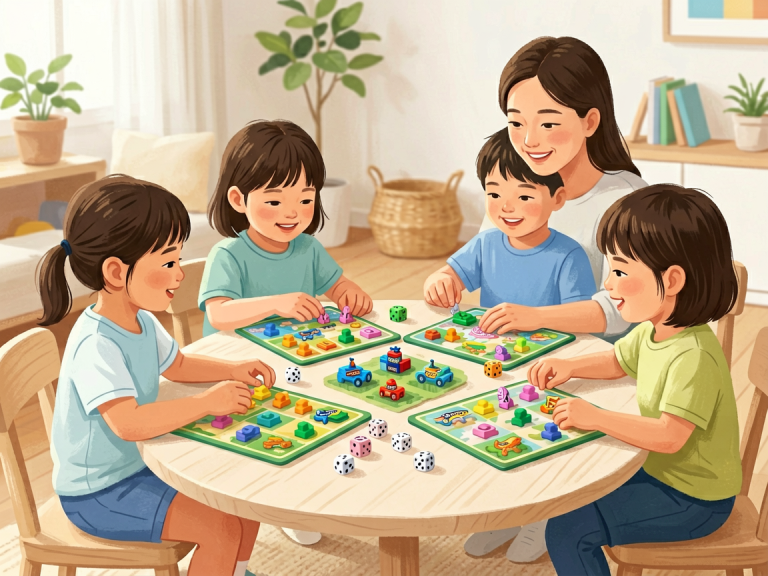
By age two, children are moving toward full sentences and can follow simple storylines. Toys that support complex language include advanced puzzles (with 4–8 pieces), matching games, and simple board games like "Memory" that require taking turns and using language. A toy cash register with play money and a scanner can stimulate vocabulary related to shopping: "I want that apple. How much is it?" Magnetic drawing boards or simple art supplies allow children to draw and then tell a story about their picture. Puppets are particularly powerful at this stage; a child can use a puppet to speak for a character, practicing dialogue and perspective-taking. The key is to provide toys that encourage verbal expression rather than passive consumption. Avoid toys that do all the talking; instead, choose toys that require the child to respond, ask questions, or direct the play.
How to Choose the Best Language Toys: Practical Tips for Parents
Prioritize Quality Over Quantity
It is tempting to buy a large number of toys, but research suggests that fewer, higher-quality toys lead to deeper engagement. For language development, a few well-chosen toys that are used repeatedly—along with active caregiver interaction—are far more effective than a room full of noise-making gadgets. Look for toys that are age-appropriate, durable, and made of safe, non-toxic materials. Check for small parts that could be choking hazards, and avoid toys with overly bright flashing lights that might overstimulate a baby.
Look for Toys That Require a Response
The best language toys are not passive. They require the baby to do something—push, pull, shake, touch, or speak—in order to get a reaction. A toy that simply plays music when turned on does not teach cause-and-effect as powerfully as a toy that lights up only when a specific button is pressed. Even simple toys like a set of nesting cups encourage language because a caregiver can narrate the action ("The big cup. Now the little cup inside."). The test is simple: Will the toy prompt you and your baby to have a conversation? If yes, it is a good choice.
Encourage Back-and-Forth Interaction
Language is social, so the most effective toys are those that facilitate interaction between baby and caregiver. While independent play is important, the richest language learning happens when an adult is present to label, describe, question, and expand. For instance, rather than giving a baby a sound-emitting toy and walking away, sit with them and use the toy as a conversation starter: "Do you hear the bird? The bird says tweet tweet. Can you say tweet?" Look for toys that have multiple ways to interact—like a busy board with doors, latches, and zippers—so that you can take turns exploring each feature.
Avoid Overstimulation: Less Can Be More
Some electronic toys are so overwhelming—with flashing lights, loud music, and multiple buttons—that they actually hinder language learning by overwhelming a baby's sensory system. Babies need quiet moments to process sounds and words. When a toy is overstimulating, babies may tune out or become fussy. Choose toys with simple, clear sounds, and limit the number of toys that play music or talk at once. The American Academy of Pediatrics suggests that for babies under two years, passive screen-based toys (like baby videos) have no proven language benefit, while interactive toys that involve human voices and touch are beneficial.
Conclusion: The Joy of Language Through Play
In the journey of language development, the best toys are not the most expensive or technologically advanced; they are the ones that invite connection, curiosity, and conversation. A simple cloth book that a caregiver reads with enthusiasm, a wooden rattle that makes a gentle sound when shaken, or a set of plastic cups that become a castle—these humble objects can spark a world of words. As you choose language toys for your baby, remember that your own voice, your smile, and your patience are the most powerful tools of all. Toys are simply bridges that help you and your baby meet in a shared space of discovery. By selecting toys that encourage interaction, repetition, and joy, you are laying a foundation not only for speaking but for a lifelong love of language and learning. So go ahead: pick up that crinkly book, shake that maraca together, and say out loud, "Listen! What a beautiful sound!" Your baby will listen, learn, and, one day, reply.