Engaging Indoor Play Activities for Your 6-Month-Old: A Guide to Developmental Fun
Introduction: Understanding Your 6-Month-Old’s World
At six months, your baby is entering a thrilling phase of rapid development. Most infants at this age have gained enough head and neck control to sit with support, can roll over in both directions, and are beginning to reach for objects with purpose. Their vision has sharpened, allowing them to track moving items and recognize familiar faces from across a room. Crucially, they are also developing a keen interest in cause-and-effect relationships and sensory exploration. Indoor play activities designed for 6-month-olds should capitalize on these milestones while prioritizing safety and comfort. The goal is not to “teach” in a formal sense, but to provide rich, repetitive experiences that strengthen neural connections, build muscle tone, and foster a sense of security and curiosity. In this article, we will explore a variety of indoor play activities organized by developmental domains—sensory, fine motor, gross motor, cognitive, and social-emotional—each accompanied by practical tips and the scientific rationale behind them. Whether you are a first-time parent or a seasoned caregiver, these ideas will help you turn everyday moments into joyful, growth-promoting play sessions.
Sensory Play Activities: Awakening the Senses
Sensory play is particularly powerful for a 6-month-old because their brain is forming connections at an astonishing rate. Every texture, sound, and smell helps build the foundation for later learning. Here are several safe, indoor-friendly sensory activities.
1. Texture Treasure Basket
Create a low-sided basket (or use a clean shoebox) filled with safe, varied-textured objects: a soft cotton ball, a crinkly piece of parchment paper (sealed inside a fabric pouch to prevent choking), a smooth wooden block, a rubber teething ring, and a piece of velvet ribbon. Place your baby on a blanket or play mat and let them explore the basket under your supervision. They will likely grab, mouth, and pat each item. This activity stimulates tactile receptors and encourages object differentiation. Always ensure items are too large to swallow (at least 1.5 inches in diameter) and free of sharp edges.
2. Water Play with Warm Towels
Fill a shallow, wide container (like a plastic storage bin) with about an inch of lukewarm water. Lay an absorbent towel at the bottom. Place your baby in a supported sitting position on your lap or in a baby bouncer nearby, and let them dip their hands into the water or pat the wet towel. You can also add a few floating, waterproof toys. The sensation of water on their skin, combined with the sound of splashing, provides rich vestibular and auditory input. Keep the session short (5-10 minutes) and the room warm to prevent chilling.
3. Homemade Sound Shakers
Fill small, sealed plastic bottles (like empty water bottles with secure screw lids) with different materials: rice, dried beans, or a single jingle bell. Reinforce the lids with strong tape. Show your baby how to shake the bottle, or place it within their reach. They will quickly learn that their movements produce sound—a classic cause-and-effect discovery. The varying weights and sounds also develop auditory discrimination. Always check for cracks or loose parts before each use.
Fine Motor Development: Grasping, Reaching, and Manipulating
Fine motor skills involve the small muscles of the hands and fingers, which are crucial for future tasks like holding a spoon or writing. At six months, babies are transitioning from a palmar grasp (using the whole hand) to a more refined pincer grip. These activities encourage that progression.
1. Play Dough Exploration (No-Cook, Edible Option)
Prepare a very simple, edible play dough using flour, water, and a tiny bit of food coloring (optional). Avoid salt or commercial doughs that may contain harmful chemicals. Roll the dough into small, soft balls and let your baby squeeze and poke them. The dough’s resistance strengthens hand muscles, and the sensory input of its cool, pliable texture is enchanting. Supervise closely to prevent eating large chunks, but a tiny taste of flour-and-water dough is harmless.
2. Stacking Cups with a Twist
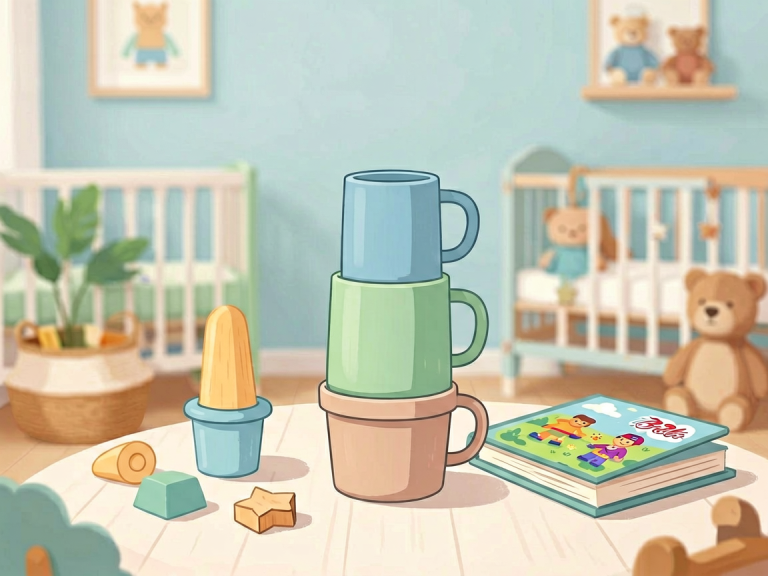
Use a set of lightweight, brightly colored nesting cups. Show your baby how you can place one cup inside another, then let them try. At six months, they will likely enjoy simply banging two cups together or trying to pick one up with both hands. You can also hide a small toy (like a rubber ball) under one cup and lift it to reveal the object, which reinforces object permanence. The different sizes encourage grasping with varying hand shapes.
3. Hand-Over-Hand Transferring
Place a few large, easy-to-grasp rings (from a stacking toy) in front of your baby. Gently guide their hand to pick up one ring and then transfer it to the other hand. This cross-body movement strengthens coordination between the left and right hemispheres of the brain. Once they get the idea, they may attempt it independently. Cheer enthusiastically each time they succeed, as positive reinforcement boosts motivation.
Gross Motor Activities: Building Core Strength and Mobility
Gross motor skills involve large muscle groups needed for sitting, crawling, and eventually walking. For a 6-month-old, the key areas are neck strength, back muscles, and balance. All activities must be done on a soft, clean surface like a play mat or carpet.
1. Assisted Sitting with Playful Challenges
Place your baby in a seated position with pillows or a breastfeeding pillow around them for support. Sit facing them and hold a favorite toy at eye level, then slowly move it to the side or slightly above their head. Encourage them to twist their torso or look up to follow it. This strengthens the oblique and neck muscles needed for independent sitting. Always have a hand behind their back in case they tip over. Five to ten repetitions per session is sufficient.
2. Tummy Time with a Difference
Tummy time remains vital at six months because it builds the muscles used for crawling. Make it more engaging by placing a mirror at the edge of their play mat. Babies love seeing their own reflection and will lift their head higher to get a better view. You can also place a crinkly book or a light-up toy just out of reach to encourage forward movement. If your baby resists tummy time, try doing it in short, 2-minute bursts after a diaper change or when they are in a happy mood.
3. Rolling Practice with a Prop
Help your baby refine their rolling skill by gently guiding an arm and leg to initiate a roll from back to tummy and tummy to back. Lay them on a slightly inclined surface (like a nursing pillow) to make rolling slightly easier. Alternatively, place a favorite toy to one side so they naturally rotate their body to see it. Repeating this motion builds the neuromuscular pathways for independent rolling, which is a foundation for crawling.
Cognitive Play: Cause, Effect, and Problem-Solving
Cognitive development at six months centers on understanding that actions have results and that objects continue to exist even when out of sight. These activities stimulate memory, attention, and early logic.
1. Peek-a-Boo Variations
Classic peek-a-boo is timeless because it teaches object permanence—the understanding that your face does not disappear when covered. Try hiding behind a sheer cloth or a baby-safe scarf, then reappearing with an exaggerated “Boo!” You can also cover a toy with a small blanket and lift the blanket to reveal it. Let your baby pull the blanket off themselves once they get the hang of it. This simple game also supports social bonding and emotional regulation.
2. Cause-and-Effect Switch Board
Purchase or make a simple switch board with a large button that, when pressed, produces a gentle light or sound. Show your baby how pressing the button makes something happen. Initially, you may need to hold their hand and press together. Over a few days, they will connect the action to the effect. This is the earliest form of scientific thinking. Ensure any battery compartment is securely screwed shut.
3. Rattle and Drop Game
Sit on the floor with your baby in your lap. Give them a lightweight rattle and let them shake it. Then, gently take the rattle from their hand (with their permission) and drop it into a small bucket or box beside you. Make a cheerful “plop!” sound. Let them retrieve it (or help them) and repeat. This sequence develops working memory, hand-eye coordination, and understanding of containment.
Social and Emotional Play: Building Attachment and Self-Awareness
Emotional security and social interaction are just as critical as physical skills. At six months, babies begin to show preferences for familiar people and may exhibit separation anxiety. Play that involves back-and-forth interaction strengthens attachment and encourages communication.
1. Mirror Play with Expressions
Hold your baby in front of a child-safe, unbreakable mirror. Point to their reflection and say their name with a happy voice. Then, make exaggerated faces—smile widely, stick out your tongue, raise your eyebrows. Watch as your baby imitates you (or you imitate them). This fosters self-recognition (which emerges around 15–18 months but is prepared by these experiences) and emotional attunement. Mirror play also supports visual tracking and focus.
2. Singing Gesture Songs
Sing simple nursery rhymes like “Itsy Bitsy Spider” or “Pat-a-Cake” while performing the corresponding hand gestures. Even if your baby cannot reproduce the movements, they will watch intently and may attempt to move their hands. The combination of voice, rhythm, and touch (if you gently guide their hands) creates a multi-sensory emotional anchor. This also exposes them to early language patterns and turn-taking.
3. Gentle Tickle and Blow Games
Lie on the floor beside your baby. Gently blow a stream of air on their tummy or arm, then pause and smile, waiting for their reaction. Many babies will giggle or coo in anticipation. Then do it again. This back-and-forth “conversation” is the foundation of social reciprocity. Always watch for signs of overstimulation—turning away, fussing, or arching the back—and stop immediately if discomfort is evident.
Safety Tips for Indoor Play with a 6-Month-Old
No article on infant play is complete without a reminder of safety. The American Academy of Pediatrics recommends the following:
- Supervise constantly. Never leave a 6-month-old unattended during any activity, especially with small objects or water.
- Check for choking hazards. Anything that can fit inside a toilet paper tube is too small. Remove loose buttons, batteries, or removable parts from toys.
- Maintain a clean, soft surface. Use a play mat or blanket on a carpeted floor, away from sharp furniture edges.
- Avoid overstimulation. Watch for cues: if your baby turns their head, rubs their eyes, or becomes fussy, it’s time for a break. Short, frequent sessions (10–15 minutes each) are more beneficial than one long session.
- Follow developmental readiness. If your baby cannot sit with support yet, focus on tummy time and rolling activities. Never force a position.
Conclusion: Play with Purpose, Love with Patience
Indoor play activities for a 6-month-old are not about achieving milestones on a schedule; they are about creating a warm, responsive environment where exploration feels safe and joyful. Each time you shake a rattle, sing a song, or help your baby reach for a textured ball, you are building a relationship based on trust and curiosity. Remember that every child develops at their own pace—some may be rolling confidently while others still prefer tummy time. Adapt these activities to your baby’s moods and abilities, and above all, enjoy the small, fleeting moments of discovery. The messy, giggly, drool-covered path of play is exactly where the most profound learning happens. So spread out that blanket, gather a few simple objects, and dive in—the world of your 6-month-old is waiting for you to explore it together.