The Ultimate Parent Guide to Choosing Age-Appropriate Toys for Toddler Boys
Introduction
Selecting the right toys for a toddler boy can feel like navigating a maze of bright colors, flashing lights, and endless product claims. Every parent wants to provide playthings that are not only fun but also safe, educational, and developmentally appropriate. However, the toy aisles are often cluttered with items that promise too much or miss the mark entirely. Toddlerhood—typically ages one to three—is a period of explosive growth. Boys in this stage are developing gross and fine motor skills, language, social awareness, and problem-solving abilities. The right toys can spark curiosity, encourage physical activity, and build foundational skills without overwhelming or frustrating a young child. This guide will walk you through the key considerations, safety precautions, and specific toy recommendations to help you make informed choices for your toddler boy.
Understanding Toddler Development: What Boys Need at Each Stage
Before diving into specific toy categories, it is essential to understand the developmental milestones common among toddler boys. While every child is unique, general patterns can guide your selections.
- Ages 12–18 months: At this stage, most boys are learning to stand, cruise, and eventually walk independently. They are also developing pincer grasps—using thumb and forefinger to pick up small objects. Language is just beginning; they may say a few words and understand simple commands. Toys that encourage movement, sensory exploration, and cause-and-effect are ideal.
- Ages 18–24 months: Balance improves, and many boys start running, climbing, and pushing or pulling toys. They become more curious about how things work and enjoy simple puzzles, stacking blocks, and shape sorters. Parallel play—playing alongside other children without interacting—is common. Toys should now support early problem-solving and imaginative play, such as pretend vehicles or simple tools.
- Ages 24–36 months: Toddler boys often become more coordinated, with improved balance and the ability to pedal a tricycle or kick a ball. Vocabulary expands rapidly, and they start engaging in simple make-believe scenarios. They may also show preferences for certain themes, such as cars, animals, or construction. Toys for this age should challenge fine motor skills (e.g., building sets, crayons) and encourage social play (e.g., toy phones, play kitchens).
Safety First: Non-Negotiable Criteria for All Toddler Toys
Regardless of how appealing a toy looks or how educational it claims to be, safety must always come first. Toddlers explore the world through their mouths, hands, and whole bodies. Here are critical safety checks for any toy you consider:
- No small parts: Anything that fits inside a toilet paper tube (approximately 1.25 inches in diameter) poses a choking hazard. Avoid toys with detachable buttons, eyes, or wheels that can be pulled off. Check for loose magnets or batteries that could be swallowed.
- Non-toxic materials: Toddlers often put toys in their mouths. Look for labels that indicate the toy is BPA-free, phthalate-free, and made from non-toxic paints or finishes. Choose wood that is smooth and splinter-free, and ensure plastic items are sturdy and not easily cracked.
- Durability and construction: Toys should withstand rough handling, drops, and even the occasional throw. Check for sharp edges, pinch points, or strings longer than 12 inches (which pose a strangulation risk). Avoid toys with cords that could wrap around a neck.
- Age labeling: While not foolproof, the manufacturer’s age recommendation is a helpful starting point. “3+” labels often indicate small parts, while “18 months+” suggests the toy meets specific safety and developmental standards for that age.
Types of Toys That Support Gross Motor Skills
Toddler boys are naturally active, and fostering large muscle development is crucial for balance, coordination, and confidence. Choose toys that invite movement and physical exertion.
- Push-and-pull toys: Classic options like a wooden wagon, a toy lawnmower, or a pull-along animal encourage walking, running, and trunk rotation. Look for sturdy wheels and a handle that is easy for small hands to grip.
- Ride-on toys: For ages 18 months and up, a sturdy, foot-powered ride-on car or a small balance bike (without pedals) helps develop leg strength and spatial awareness. Ensure the toy has a wide base to prevent tipping.
- Balls of various sizes: Soft, lightweight balls (6–10 inches in diameter) are perfect for rolling, throwing, and chasing. They improve hand-eye coordination and gross motor skills. Avoid hard, heavy balls that could cause injury.
- Climbing and stepping toys: A low, padded climbing block or a small slide (under 3 feet tall) allows safe exploration of vertical movement. Always supervise climbing play.
Fine Motor, Cognitive, and Sensory Play
Equally important are toys that refine small hand movements and stimulate thinking. Toddler boys benefit from cause-and-effect experiments and tactile experiences.
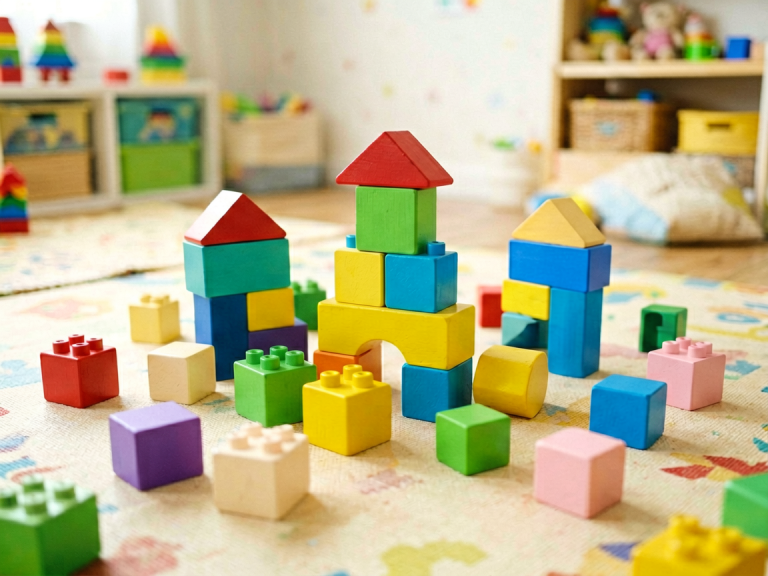
- Building blocks and stacking toys: Simple wooden blocks, nesting cups, or interlocking bricks (large-size Duplo, not regular LEGO) teach spatial relationships, balance, and early math concepts. Boys often enjoy knocking down towers as much as building them—that’s part of learning.
- Shape sorters and simple puzzles: A shape sorter with a few basic shapes (circle, square, triangle) or a chunky wooden puzzle with handles helps develop problem-solving and finger dexterity. Look for puzzles with large, easy-to-grasp pieces.
- Sensory bins and messy play: Fill a low bin with rice, dry beans, or sand, and add scoops, cups, and small toy vehicles. This type of open-ended play promotes tactile exploration, creativity, and focus. For boys who dislike mess, try water play with floating toys during bath time.
- Cause-and-effect toys: Pop-up toys (where pressing a button makes a character jump), simple musical instruments like drums or maracas, and spinning tops teach that actions produce reactions. These toys hold attention and build early scientific thinking.
Encouraging Language, Imagination, and Social Skills
Toddler boys often start imitating adult roles and using language to express needs and ideas. Toys that foster pretend play and communication are invaluable.
- Vehicle sets: Trucks, trains, and cars are perennially popular with many boys. A simple set of wooden or plastic vehicles, along with a play mat representing roads, encourages storytelling and spatial planning. For ages 2+, consider a train set with large, snap-together tracks.
- Play tools and workbenches: Toy hammers, screwdrivers, and a sturdy workbench allow boys to imitate parents or construction workers. These activities strengthen hand muscles and encourage problem-solving (e.g., “How do I make this peg stay?”).
- Animal figures and action figures: Realistic or chunky plastic animals (farm, zoo, dinosaurs) can be used in pretend play scenarios—feeding them, putting them to bed, or building a “cage” with blocks. This develops empathy, vocabulary, and narrative skills.
- Simple dress-up clothes: A child-sized hat, cape, or tool belt opens up role-playing possibilities. Costumes do not need to be elaborate; a cardboard box can become a car or a spaceship. Let your toddler’s imagination lead.
Choosing the Right Toys: Practical Tips for Parents
Even with all the categories above, the actual selection process can still be overwhelming. Here are actionable tips to streamline your shopping:
- Observe your child’s interests. Does he love watching vehicles on the street? Does he try to stack everything? Follow his cues. A toy aligned with his natural curiosity will engage him longer and support deeper learning.
- Focus on open-ended play. Toys that can be used in multiple ways—blocks, play dough, balls, sand—are more valuable than single-purpose, battery-operated gadgets. They grow with the child and encourage creativity.
- Limit electronic toys. Many electronic toys do the thinking for the child, offering limited interaction. Instead, choose toys that require active participation: turning a crank, pressing a lever, or joining pieces together. Silence and simplicity often fuel better brain development.
- Rotate toys. Instead of leaving all toys accessible, keep a small selection out and swap them every week or two. This prevents boredom and helps a toddler appreciate each toy more.
- Check reviews and second-hand options. Other parents’ experiences can reveal durability issues or hidden safety hazards. Second-hand toys can be fantastic if thoroughly cleaned and inspected for damage.
- Consider the play environment. If your home has limited space, choose compact toys that store easily. Outdoor access? A sandbox, a small shovel, and a bucket are perfect for active toddler boys.
Conclusion
Choosing age-appropriate toys for toddler boys does not require a degree in child development—just a thoughtful approach and a clear understanding of what makes a toy safe, engaging, and suited to your child’s current stage. Remember that the best toys are not necessarily the most expensive or the most colorful. Often, a simple set of wooden blocks, a sturdy ball, or a collection of toy cars can provide hours of rich play that builds motor skills, language, and imagination. As your toddler grows, his interests will shift, and your role will be to observe, adapt, and keep safety at the forefront. By focusing on toys that encourage active participation rather than passive entertainment, you will be giving your little boy the tools he needs to explore the world with confidence and joy. Happy playing!