The Power of Play: How Science Toys Ignite Lifelong Curiosity in Elementary School Kids
In an age when digital screens dominate children’s attention, the humble science toy stands as a quiet but mighty counterforce. For elementary school kids—typically aged six to twelve—these hands-on tools are far more than simple playthings. They are gateways to understanding the natural world, incubators of critical thinking, and bridges between abstract concepts and tangible experience. When a child builds a simple circuit, watches crystals grow, or launches a baking-soda rocket, they are not merely having fun; they are practicing the very essence of scientific inquiry: asking questions, making predictions, testing ideas, and learning from failure. This article explores why science toys matter, what types work best for different ages, and how parents and educators can harness their potential to nurture a generation of curious, confident thinkers.
The Educational Benefits of Science Toys
Science toys offer a unique blend of entertainment and education that traditional classroom instruction often struggles to achieve. At the elementary level, children are naturally inquisitive—they want to know why the sky is blue, how magnets stick to the fridge, and what makes a seed grow. Science toys answer these questions not with lectures, but with direct experience.
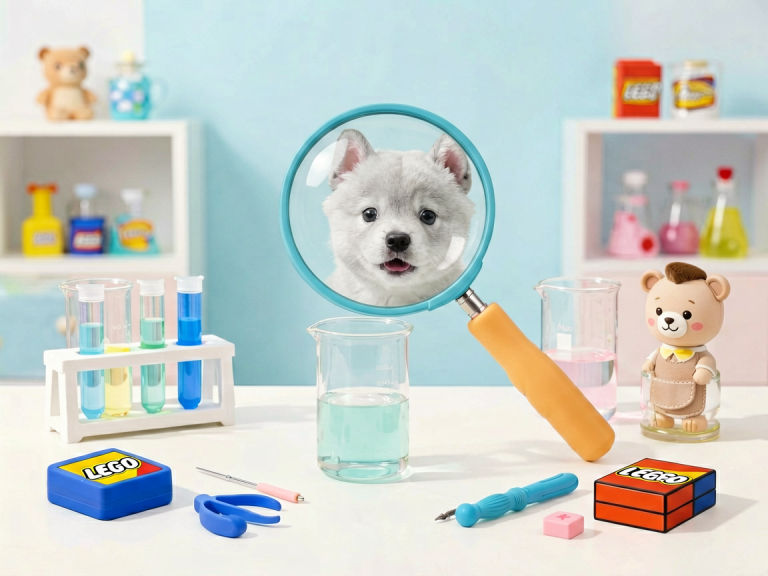
One of the most profound benefits is the development of scientific literacy. When a child uses a magnifying glass to examine an insect, they learn about observation and detail. When they mix vinegar and baking soda, they encounter chemical reactions firsthand. These experiences build a foundation of vocabulary (“reaction,” “volume,” “force”) and process skills (predicting, measuring, recording) that will serve them in later science classes. Research in developmental psychology shows that children who engage in structured, exploratory play with science-oriented materials demonstrate stronger problem-solving abilities and a greater willingness to persist through challenges—a trait known as “grit.”
Moreover, science toys foster cross-disciplinary learning. A simple building set like a wooden block tower teaches physics concepts (balance, gravity, stability) while also encouraging spatial reasoning and even basic engineering design. A gardening kit introduces biology (plant life cycles, photosynthesis) and environmental awareness. Even a coding robot teaches logical sequencing and cause-and-effect. By integrating math, art, and language (through instruction manuals or creative storytelling about experiments), these toys show children that science is not isolated—it’s woven into every aspect of life.
Perhaps most importantly, science toys cultivate a growth mindset. In a world that often emphasizes right answers and perfect results, science play normalizes failure. A volcano that doesn’t erupt, a bridge that collapses, a battery that doesn’t light the bulb—these are not disappointments; they are opportunities to ask, “What if I try a different amount of baking soda?” or “What if I add more supports?” Children learn that curiosity and iteration are more valuable than getting it right the first time. This mindset is crucial for future academic success and for navigating a complex, rapidly changing world.
Types of Science Toys for Different Elementary Ages
Not all science toys are created equal, and what excites a first grader may frustrate a fifth grader. Understanding the developmental stages of elementary school kids helps in selecting age-appropriate tools.
Ages 6–7: Exploration and Sensory Play
For the youngest elementary students, science toys should emphasize sensory exploration and simple cause-and-effect. At this stage, children are still developing fine motor skills and basic reasoning. Ideal toys include:
- Water and sand tables that allow kids to experiment with flow, volume, and density.
- Magnifying glasses and bug viewers that encourage close observation of nature.
- Simple magnet sets with colorful wands and metal objects, letting children discover attraction and repulsion.
- Light-up toys or color-mixing labs that demonstrate how primary colors combine to make secondary colors.
- Growing kits (e.g., chia pets or bean sprouts in a jar) that show visible change over days.
These toys should be durable, safe (no small parts that could be swallowed), and require minimal adult guidance. The goal is to spark wonder, not to teach complex theory.
Ages 8–9: Building and Experimenting
As children enter third and fourth grade, their attention spans lengthen, and they become capable of following simple multi-step instructions. This is the sweet spot for construction kits and basic experiments. Good choices include:
- Snap-together circuit kits (like Snap Circuits) that let kids build working lights, fans, or alarms. They learn about electricity and series vs. parallel circuits without soldering.
- Simple chemistry sets with safe, non-toxic substances (e.g., baking soda, citric acid, pH paper). Kids can make slime, create fizzy reactions, and test household liquids for acidity.
- Weather stations with a thermometer, rain gauge, and wind vane, encouraging kids to track daily conditions and compare patterns.
- Mechanical building sets such as geared robots or simple pulley systems. These introduce leverage, torque, and the idea of mechanical advantage.
- Bug-catching or nature kits with identification guides, encouraging systematic observation and classification.
At this age, children also enjoy science-themed board games that combine luck with knowledge, like “The Brain Game” or “Totally Gross,” which reinforce facts in a playful, competitive setting.
Ages 10–12: Advanced Projects and Real-World Applications
Older elementary students—fifth and sixth graders—are ready for more sophisticated concepts and longer-term projects. They can handle abstract reasoning and enjoy activities that feel “real” and challenging. Recommended toys include:
- Programmable robotics kits (e.g., LEGO Mindstorms, Sphero, or micro:bit-based projects). These teach coding fundamentals, robotics, and iterative design.
- Microscopes (digital or traditional) for examining onion cells, pond water, or fabric fibers. They connect the invisible microscopic world to everyday life.
- Rocket-building kits that use air pressure, water, or chemical reactions (with adult supervision) to explore physics and aerodynamics.
- Solar-powered car or motor kits, introducing renewable energy concepts and efficiency.
- Crystal-growing or electroplating kits, which require patience and careful following of procedures, reinforcing the scientific method.
These advanced toys often require adult involvement, but they also promote independence. Children can plan their own experiments, modify designs, and troubleshoot. The sense of accomplishment from successfully programming a robot to navigate a maze or launching a rocket 50 feet is enormous.
How to Choose the Right Science Toys
With an overwhelming array of products on the market—from bargain-bin chemistry kits to expensive coding robots—parents and educators need a framework for selection. Here are key criteria to consider:
1. Open-endedness over rigid instructions. The best science toys allow multiple outcomes. A set that says “build a rocket that flies 10 feet” is less valuable than one that says “use these pieces to create a vehicle that moves at least 3 feet—then try to make it go faster.” Open-ended toys encourage creativity and repeated play.
2. Safety and age-appropriateness. Check labels for choking hazards, toxic materials, and recommended age ranges. For elementary kids, avoid kits with harmful chemicals (some older chemistry sets contain substances now considered unsafe) or sharp instruments. Look for STEM toys that have passed safety certifications like ASTM or CE.
3. Durability and reusability. Science toys often get rough treatment. Avoid flimsy plastic pieces that break on first use. Kits with reusable components (e.g., blocks, wires, circuit boards) offer more long-term value than single-experiment sets. Consider buying from reputable brands like Thames & Kosmos, Learning Resources, or 4M, which have a track record of quality.
4. Alignment with child’s interests. A child who loves animals may be drawn to a biology dissection kit (e.g., owl pellet study) or a microscope. A child who loves building may prefer mechanical engineering sets. Pushing a child toward a “high-educational” toy that doesn’t match their curiosity can backfire. Instead, find the intersection between learning and their existing passions.
5. Scalable challenge. The best science toys grow with the child. Some robotics kits offer beginner, intermediate, and expert levels. Others come with expansion packs. This ensures the toy isn’t abandoned after a few weeks.
Integrating Science Toys into Learning at Home
Science toys reach their full potential when they are part of a supportive environment. Here are practical strategies for parents and caregivers:
Create a “tinkering space.” Designate a corner of a room or a small table where science toys live and can be left out between sessions. Having a permanent spot eliminates the friction of setting up and cleaning up each time. Include basic tools: safety goggles, a ruler, a notebook, and pencils. Display ongoing projects—a half-built robot, a crystal that’s still growing—which invites daily curiosity.
Use the “ask, don’t tell” approach. When a child encounters a puzzle, resist giving the answer. Instead, ask guiding questions: “What do you think will happen if you add more water?” “How could we find out which material is stronger?” This mirrors the scientific method and empowers the child to be the investigator.
Connect toys to real-world phenomena. After a child plays with a magnetism set, point out how magnets work in your refrigerator door or in a speaker. After a weather kit, check the local forecast together and compare predictions. These links make abstract concepts concrete and relevant.
Encourage journaling and documentation. A simple notebook where kids draw their experiments, write down results, or glue photos of their creations builds scientific communication skills. It also becomes a treasured record of their learning journey.
Embrace mess and failure. Science can be messy—baking soda overflow, spilled water, disassembled robots. Rather than scolding, frame mess as a natural part of discovery. Clean up together and discuss what went “wrong” and what was learned. This removes the fear of making mistakes, which is the single biggest barrier to innovation.
Conclusion: Beyond the Toy Box
Science toys are not a substitute for formal education, nor are they a magic bullet for producing future Nobel laureates. What they do offer is something far more precious: a joyful, hands-on introduction to the process of discovery. For elementary school kids, these toys transform abstract concepts like “gravity” or “chemical reaction” into personal, memorable experiences. They plant seeds of curiosity that, if watered by encouragement and opportunity, can grow into a lifelong love of learning.
In a world that increasingly demands critical thinking, adaptability, and a spirit of inquiry, the simple act of playing with a science toy becomes a profound investment in a child’s future. So the next time you see a child mixing baking soda and vinegar with delighted squeals, or puzzling over why a circuit won’t light up, remember: they aren’t just playing. They are practicing the art of being human—asking questions, making sense of the universe, and, most importantly, never losing the wonder that fuels all great discoveries.