The Ultimate Parent Guide to Choosing Age-Appropriate Toys for 7-Year-Old Boys
Introduction
At the age of seven, boys undergo a remarkable transformation. They are no longer preschoolers, yet they are not quite tweens. This is a golden age of curiosity, independence, and burgeoning social awareness. For parents, selecting the right toys for a 7-year-old boy can feel like a balancing act. You want to encourage his growing intellectual abilities, foster creativity, support physical development, and, of course, ensure safety. But with endless aisles of blinking, beeping, and character-branded products, how do you make choices that are truly age-appropriate? This guide breaks down the key developmental milestones of a 7-year-old boy and provides a clear framework for picking toys that will not only entertain but also enrich his world.
—
Understanding the Developmental Stage of a 7-Year-Old Boy
Before diving into specific toy categories, it is essential to understand what is happening inside a 7-year-old’s mind and body. This awareness is the foundation of any good purchasing decision.
Cognitive Leaps: At seven, children are moving from concrete, literal thinking to more logical, systematic reasoning. They understand cause and effect much better, can follow multi-step instructions, and are beginning to grasp concepts like time, distance, and simple math. Their attention span has increased significantly, often reaching 20 to 30 minutes for activities they enjoy. This means they can now handle more complex board games, building sets with many pieces, and puzzles that require strategy.
Social and Emotional Growth: The 7-year-old boy is deeply influenced by peer relationships. Friendships become more important than ever, and cooperative play often replaces parallel play. He is learning to negotiate, share, and handle disappointment (though sometimes with tears or stomps). This is a prime time for group games, sports equipment, and collaborative projects. Emotionally, he may still need comfort items or calming activities, but he also craves a sense of mastery and accomplishment.
Physical Development: Fine motor skills are becoming quite refined. Handwriting improves, and he can manipulate small objects with precision. Gross motor skills are also advancing – running, jumping, climbing, and throwing are more coordinated. He has endless energy but also benefits from activities that require focus, like drawing or building. Safety awareness is better, but he can still be careless when excited.
Understanding these traits helps parents realize that a toy that was perfect for a 5-year-old (too simple) or a 10-year-old (too complex with abstract rules) will likely frustrate or bore a 7-year-old. The sweet spot is a toy that challenges him just beyond his current ability, providing a "flow" state where he feels engaged but not overwhelmed.
—
Key Factors to Consider When Choosing Toys for a 7-Year-Old Boy
Not all toys marketed for "ages 6–10" are actually appropriate for every child in that range. Use these criteria to evaluate any potential purchase:
1. Safety First, Always: Check for small parts that could be choking hazards, though by age 7 most boys have stopped mouthing objects. However, be wary of sharp edges, toxic paints, or strings longer than 12 inches (strangulation risk). Also, consider weight – a heavy toy that could topple onto a child is a danger. For electronic toys, ensure the battery compartment is secured with a screw.
2. Open-Ended vs. Closed-Ended Play: The best toys for this age allow for multiple uses. A closed-ended toy like a single-use electronic game might be fun for a week, but an open-ended construction set, art supplies, or a versatile play kit can be reinvented in hundreds of ways. Open-ended toys encourage creativity, problem-solving, and longer play.
3. Interest Alignment: By age 7, boys often develop strong passions – dinosaurs, space, superheroes, cars, science experiments, or fantasy novels. While it's fine to encourage new interests, a toy that aligns with his current obsession will be used far more. Observe what he gravitates toward during free play or at the library.
4. Skill Development Potential: Ask yourself: Does this toy challenge his mind? Does it support physical coordination? Does it promote social interaction? A toy that only provides passive entertainment (like a cheap video-watching device) offers little developmental value. Aim for toys that actively engage his hands, brain, and body.
—
Top Categories of Age-Appropriate Toys for 7-Year-Old Boys
Here is a breakdown of specific toy types that are proven winners for this age group, with explanations of why they work.
1. Construction and Building Kits
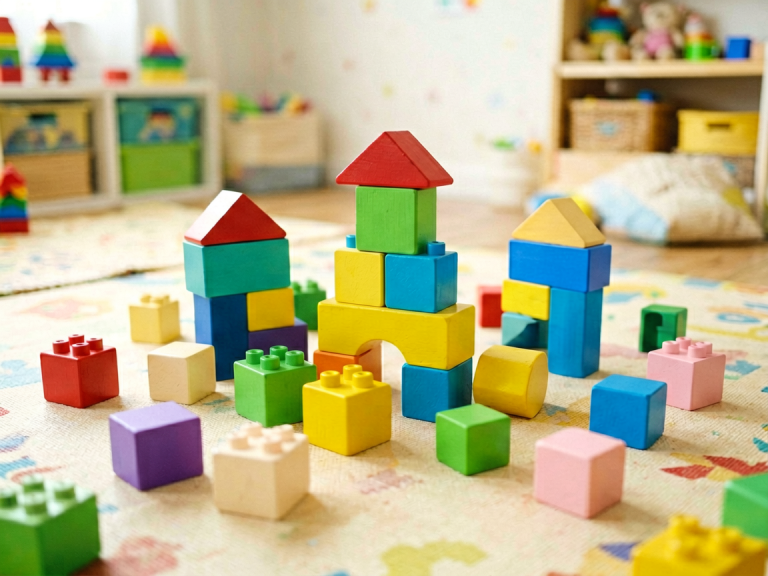
At seven, a boy's spatial reasoning and patience are ready for advanced building. Traditional wooden blocks are now too simple, but complex sets like LEGO Technic, magnetic tiles (e.g., Magna-Tiles), or K’NEX are perfect. These systems require following instructions, planning ahead, and fine motor dexterity. They also teach basic engineering principles. Look for sets that allow for both guided builds and free creation. For example, a LEGO set that builds a working crane or a gear-driven car combines instruction-following with the thrill of a moving result.
Why it works: Building toys provide a sense of accomplishment and are excellent for developing problem-solving skills. They also encourage focus and persistence. Many boys will spend hours modifying their creations, which fuels imagination.
2. Science Kits and Experiment Sets
The natural curiosity of a 7-year-old makes him a perfect candidate for science toys. Simple chemistry sets (with safe materials), crystal-growing kits, volcano eruption kits, or magnet sets are huge hits. Look for kits that have clear, child-friendly instructions and minimal adult supervision requirements (though you should still be nearby). Other great options are microscope sets (with prepared slides and blank slides for collecting), dinosaur fossil dig kits, or weather station kits.
Why it works: These toys turn abstract concepts into tangible experiences. They teach the scientific method – hypothesis, observation, conclusion – in a playful context. Plus, the "wow" factor of a successful experiment provides immense pride and motivation to learn more.
3. Board Games and Strategy Games
This is the golden age for board games. Seven-year-olds can handle games with more complex rules, reading, and strategy. Excellent choices include *Catan Junior*, *Ticket to Ride: First Journey*, *Carcassonne*, *Qwirkle*, *Chess* (beginner sets with larger pieces), and cooperative games like *Outfoxed* or *Castle Panic*. Card games like *Uno*, *Skip-Bo*, or *Rummy-style games* are also great for developing numerical and strategic thinking.
Why it works: Board games teach turn-taking, patience, and how to win or lose gracefully. They foster family bonding and can be a great alternative to screen time. For a 7-year-old boy, the social aspect is crucial – he wants to play *with* someone, not just *near* them.
4. Outdoor and Active Play Toys
Boys of this age have boundless energy. Bicycles (16-20 inch wheels with training wheels removed if ready), scooters, skateboards (with full safety gear), soccer goals, basketball hoops, and frisbees are excellent. Also consider climbing structures, slacklines, or even a basic archery set (with suction-cup arrows). Water play toys like large water blasters or slip-and-slides are perfect for summer.
Why it works: Physical activity is crucial for health, coordination, and stress release. Outdoor play also encourages imaginative scenarios like "spies," "adventurers," or "sports stars." It helps prevent obesity and screens away excessive screen time.
5. Creative and Artistic Supplies
Boys often need encouragement to express emotions and ideas through art. At seven, they have the fine motor control for detailed drawing, painting, and simple craft projects. Consider high-quality colored pencils, markers, watercolor sets, modeling clay or air-dry clay, origami paper and instructions, sticker-making kits, or a simple sewing kit (with blunt needles). Also, think about building models – plastic car or airplane models that require gluing and painting are fantastic for patience and precision.
Why it works: Art toys allow for non-verbal expression and can be very calming for a high-energy boy. They build confidence as he sees his creations take shape. Crafting also improves hand-eye coordination and planning.
6. Vehicles and Action Figures – But with a Twist
While simple cars and action figures are still loved, a 7-year-old often wants more realism or functionality. Remote-controlled cars (especially off-road or stunt cars) are a step up. Toy tool sets that he can use to "fix" his bike or build a simple birdhouse (with supervision) are fantastic. Also, consider detailed model cars, trains (with track systems that he programs), or even a beginner drone (indoor, small, safe).
Why it works: These toys tap into the imagination while offering a sense of control and mastery. They can also be used in elaborate pretend play with friends, creating whole worlds of adventure.
—
What to Avoid: Common Pitfalls
Even with good intentions, some toys can miss the mark. Avoid the following:
- Overly complex instructions: If a toy requires reading pages of text and advanced planning, it may frustrate rather than challenge. Look for picture-based instructions.
- Passive entertainment devices: Avoid toys that just play pre-recorded sounds or videos. They do not encourage active engagement.
- Toys that are too advanced for his emotional maturity: Some "strategy" games involve lying or deception (e.g., *The Resistance*). A 7-year-old typically isn't ready for that kind of social manipulation.
- Cheaply made electronics: They break easily and often have loud, annoying sounds. Invest in durable, well-reviewed products.
- Gender stereotypes: Don't assume a 7-year-old boy won't enjoy dolls, cooking sets, or jewelry-making. If he shows interest, support it. Toys should nurture all aspects of a child, not confine them.
—
Final Tips for Parents
Involve him in the process. Take your 7-year-old boy with you to the store or browse an online catalog together. Ask him what he likes and why. His answers will give you valuable insight into his current interests. However, set a budget and be clear about limits. This is also a teaching moment about decision-making.
Rotate toys. Every few months, put away some toys and bring out others. This renews interest and reduces clutter. It also helps prevent overwhelm.
Remember that less is more. A few high-quality, well-chosen toys will be used far more than a room full of cheap plastic junk. Quality over quantity is a guiding principle.
Finally, play with him. The best toy in the world is still a parent who sits down, laughs, and shares the experience. Your involvement turns a simple building block into a memory. It also gives you a chance to see if the toy truly fits his abilities and interests.
Choosing age-appropriate toys for a 7-year-old boy is not about finding the most popular brand or the biggest box. It is about respecting his growth, nurturing his passions, and giving him tools that spark joy and learning. With this guide, you are now equipped to make smart, heartfelt choices that will enrich his world and strengthen your bond. Happy playing!