Beyond Play: How Science Toys Shape the Teenage Mind
Introduction: Why Teenagers Need More Than Screens
Adolescence is a period of intense cognitive, emotional, and social transformation. Teenagers are no longer children satisfied with simple cause-and-effect toys, nor are they fully formed adults who can grasp abstract scientific concepts purely through textbooks. They exist in a liminal space where curiosity is often stifled by academic pressure, and where the allure of digital entertainment competes with the desire to understand the real world. Science toys—purposefully designed kits, gadgets, and experiments that blend education with engagement—offer a unique bridge across this gap. They do not merely entertain; they cultivate a mindset of inquiry, resilience, and creativity. This article explores the profound impact of science toys on teenagers, examining their cognitive benefits, practical applications, social dimensions, and the criteria for choosing the right one. In an era when STEM skills are increasingly vital, understanding how these toys shape the teenage mind is not just a matter of parenting advice—it is an investment in the future of innovation.
The Cognitive Benefits: From Curiosity to Critical Thinking
The teenage brain undergoes a process of synaptic pruning, where frequently used neural pathways are strengthened and unused ones are eliminated. This period is therefore optimal for developing higher-order thinking skills. Science toys capitalize on this neuroplasticity by demanding active problem-solving rather than passive consumption. For instance, a robotics kit that requires a teenager to program a sequence of movements to navigate a maze forces them to break a complex task into smaller steps, test hypotheses, and debug errors—all core components of critical thinking. Unlike video games that offer immediate rewards, many science toys involve trial and error, teaching teens that failure is a stepping stone rather than a dead end. This resilience is a cognitive asset that extends beyond science class. Moreover, such toys often introduce concepts like variables, controls, and data analysis in a hands-on manner, making abstract ideas tangible. A teenager who builds a simple electrical circuit to power an LED understands Ohm’s law not as a formula to memorize but as a functional relationship they have manipulated. This experiential learning creates deeper neural encoding, improving long-term retention and transfer of knowledge to new contexts.
Bridging Theory and Practice: Hands-On Learning in a Digital Age
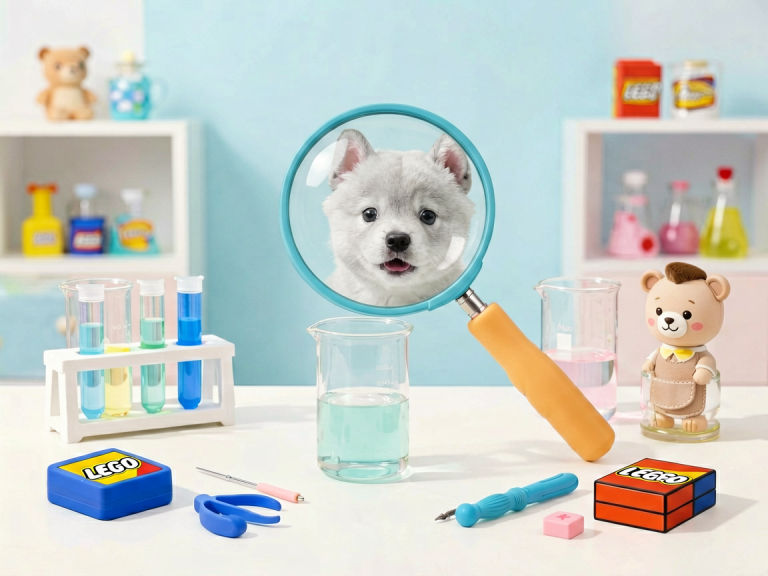
One of the greatest challenges in modern education is the disconnect between theoretical knowledge and real-world application. Teenagers may ace a physics exam on thermodynamics yet have no idea how a refrigerator actually works. Science toys close this gap by providing concrete, interactive experiences that mirror professional scientific equipment in a simplified form. Take, for example, a chemistry set that allows a teenager to synthesize a polymer or measure pH levels of household substances. Instead of reading about acid-base reactions, they witness color changes, temperature shifts, and precipitate formations firsthand. This kinesthetic engagement not only makes learning memorable but also demystifies the process of science. Teenagers begin to see themselves as capable of conducting experiments, of asking “what if” questions and designing procedures to answer them. For those who struggle with traditional classroom instruction, science toys can be a gateway to STEM fields by proving that science is not just about memorizing facts but about exploration and discovery. Furthermore, many modern science toys incorporate digital apps or augmented reality, blending virtual and physical realms. A telescope that connects to a smartphone to identify stars, or a chemistry set that guides reactions via an interactive app, respects teenagers’ digital fluency while redirecting it toward constructive inquiry.
Types of Science Toys That Resonate with Teens
Not all science toys are created equal, and what fascinates a 13-year-old may bore a 17-year-old. The key is to align the complexity and depth of the toy with the teenager’s developmental stage and interests. Below are several categories that have proven particularly effective.
*Robotics and Coding Kits*
These kits, such as those from LEGO Mindstorms, Arduino, or Raspberry Pi, allow teenagers to build and program their own machines. They teach computational thinking, mechanical engineering, and electronics. A teen who creates a line-following robot or a weather station not only learns coding syntax but also grapples with sensors, actuators, and feedback loops. Many kits are open-ended, enabling advanced users to modify designs and write custom scripts. This flexibility encourages self-directed learning, a skill essential for higher education and career readiness.
*Chemistry and Biology Experiment Sets*
Sophisticated kits like Thames & Kosmos chemistry labs or home PCR machines for DNA extraction bring laboratory science into the home. Teenagers can grow crystals, extract strawberry DNA, or test water quality from local streams. These activities foster a respect for lab safety and precision, and they often align with school curricula, reinforcing concepts from biology and chemistry classes. Some sets even allow for citizen science contributions, where data collected at home can be submitted to real research projects.
*Astronomy and Physics Exploration Tools*
Items such as refractor telescopes, spectroscopes, and physics demonstration sets (e.g., Newton’s cradle, gyroscopes, or wave machines) appeal to teens with a cosmic curiosity. A decent telescope can reveal Saturn’s rings or Jupiter’s moons, sparking a lifelong interest in astronomy. Meanwhile, a doppler-effect experiment with a sound sensor can make wave physics audible. These tools often require patience and careful observation, teaching teens the value of systematic data collection.
*Engineering and Electronics Building Kits*
From snap circuits to more advanced solder-it-yourself radio kits, engineering toys let teenagers construct devices that have real-world utility—a flashlight, a radio, a motion-activated alarm. The satisfaction of turning a pile of components into a working device is immense. These kits also introduce concepts like circuit design, power management, and signal processing. For the mechanically inclined, model rocket kits or trebuchet building sets offer lessons in aerodynamics, structural integrity, and trajectory calculations.
Choosing the Right Science Toy: Age, Interest, and Safety
Selecting an appropriate science toy requires balancing challenge with accessibility. A toy that is too simple will be discarded as childish; one that is overly complex may cause frustration and abandonment. Parents, educators, or gift-givers should consider the teenager’s prior exposure to science. A beginner may benefit from a well-guided kit with clear instructions, while an advanced teen might prefer an open-ended platform like a microcontroller that allows complete creative freedom. Interest also matters: a teen fascinated by the human body will enjoy a biology dissection kit or a model of the human skeleton, whereas a tech enthusiast might gravitate toward a drone building kit. Safety is paramount, especially with chemistry sets or tools that involve heat, sharp objects, or chemicals. Look for kits that comply with safety standards (e.g., ASTM, CE) and include protective gear. Online reviews and community forums can provide insights into a kit’s educational value and durability. Additionally, consider whether the toy offers expandability—add-on modules, upgrade paths, or online resources that can sustain engagement over months or years rather than hours.
The Social and Emotional Impact: Collaboration and Confidence
Science toys are often perceived as solitary activities, but many are designed for group or family participation. Building a robot or conducting a chemistry experiment with friends or siblings fosters collaboration, communication, and division of labor—skills that are highly valued in both academic and professional settings. Teenagers naturally engage in peer teaching, explaining concepts to one another, which deepens their own understanding. For introverted teens, a shared project can provide a structured, low-pressure social interaction centered on a common goal. On an emotional level, successfully completing a challenging build or experiment boosts self-efficacy. The phrase “I made this” carries immense psychological weight. This sense of accomplishment can counteract the self-doubt often experienced during adolescence. Moreover, science toys can demystify stereotypes about who can be a scientist. When a teenage girl builds a working camera from a lens and a cardboard box, she internalizes the message that engineering is for her, too. Inclusive marketing and diverse role models featured in toy instructions further reinforce this sense of possibility.
Conclusion: Investing in the Future
Science toys for teenagers are far more than mere gifts or pastimes. They are tools of intellectual empowerment, providing a scaffold for critical thinking, hands-on experimentation, and collaborative problem-solving. In a world increasingly shaped by technology, giving teenagers the opportunity to tinker, fail, and discover on their own terms is an investment in their adaptability and creativity. Whether through coding a robot, mixing chemicals, or tracking constellations, these toys plant the seeds of scientific literacy and lifelong learning. They remind us that science is not a distant, dusty discipline reserved for experts in white coats—it is a dynamic, accessible, and thrilling human endeavor. For parents, educators, and mentors, the choice to support a teenager’s engagement with science toys is a choice to nurture the next generation of thinkers, makers, and innovators. The microscope, the soldering iron, and the programming kit are not just instruments; they are keys to a world of questions, and every teenager deserves the chance to turn those keys and see what doors open.