Building Tiny Scientists: Engaging STEM Activities for Toddler Boys
Introduction
The early years of a child’s life are a whirlwind of curiosity, discovery, and boundless energy. For toddler boys especially, the world is a giant laboratory waiting to be explored. They love to touch, bang, drop, fill, dump, and repeat—all of which are the very foundations of scientific inquiry. Introducing Science, Technology, Engineering, and Mathematics (STEM) concepts at this age doesn’t require fancy equipment or formal lessons. Instead, it’s about harnessing their natural instincts and turning everyday play into purposeful learning.
STEM activities for toddler boys should be hands-on, sensory-rich, and safe. They should celebrate mess, encourage questions, and allow for repetition—because toddlers learn best through doing something over and over again. The goal isn’t to teach complex theories but to build a mindset: *What happens if I try this?* By engaging in simple STEM play, young boys develop fine motor skills, problem-solving abilities, language, and a lifelong love of exploration.
Below are six activity categories, each with concrete ideas, the science behind the fun, and tips for making the most of each experience. All activities are designed for children aged 1–3 years and require close adult supervision.
—
Sensory Science: Exploring the World Through Touch and Play
Toddler boys are wired for sensory input. They learn about texture, temperature, weight, and movement by interacting with materials directly. Sensory science builds vocabulary and introduces basic physical properties.
Activity idea: Ice cube melting
Freeze small plastic toys or berries inside ice cubes. Give your toddler a bowl of warm water (not hot), a dropper, or just his hands. Let him watch the ice melt, feel the cold, and work to free the object inside. This simple experiment demonstrates the concept of state change (solid to liquid) and the effect of temperature.
Why it works for boys
Many toddler boys are drawn to actions that involve force and transformation. Melting ice feels like a mini adventure—it’s active and rewarding when the toy is finally released.
Expansion: Add a sprinkle of salt on the ice and observe how it melts faster. Explain in simple terms: “Salt makes the ice melt quicker because it lowers the freezing point.” Even if he doesn’t understand the words, he will see the effect and store that observation.
—
Simple Engineering: Stacking, Building, and Knocking Down
Engineering for toddlers is all about structural thinking: how high can we go? What happens if I put the big block underneath? Why did it fall? This play type builds spatial awareness, balance, and early physics understanding.
Activity idea: The great block tower
Use lightweight wooden or foam blocks. Encourage your toddler to build a tower as tall as possible. Then deliberately add a block that makes it wobble. Let him experiment with placing blocks of different sizes, and when the tower falls, celebrate the crash together. Talk about why it fell: “The bottom block was too small to hold the big one.”
Why it works for boys
The combination of building and demolishing is irresistible. Knocking down satisfies a natural urge to test limits, while building fosters patience and planning.
Expansion: Introduce ramps made from cardboard. Roll toy cars down them. Change the angle of the ramp and ask, “Will the car go faster if the ramp is steeper?” Let him guess and test. This is an early investigation of gravity and velocity.
—
Water Play: Discovering Buoyancy and Flow
Water is a perfect medium for STEM play. It flows, splashes, fills, and empties. Toddler boys can spend hours at a water table, and every minute is a lesson in cause and effect.
Activity idea: Sink or float
Fill a shallow bin with water. Gather a collection of safe objects: a plastic duck, a small rock, a cork, a metal spoon, a leaf, a sponge. Let your toddler drop each item into the water and observe whether it stays on top or goes down. Say the words aloud: “The rock sinks! The duck floats!” Over time, he’ll start predicting.
Why it works for boys
Boys often enjoy the physical impact of dropping objects and watching the splash. The sink/float game channels that energy into a pattern recognition exercise.
Expansion: Give him a turkey baster or a small cup to transfer water from one container to another. This builds fine motor control and introduces the concept of volume. Ask, “Which cup holds more? How many scoops to fill the big bowl?”
—
Nature Walks: Observing Living Things
STEM isn’t just about indoor experiments. The natural world is the richest laboratory of all. Toddler boys can observe bugs, leaves, rocks, and weather patterns with focused attention if given the right prompts.
Activity idea: Bug hunt
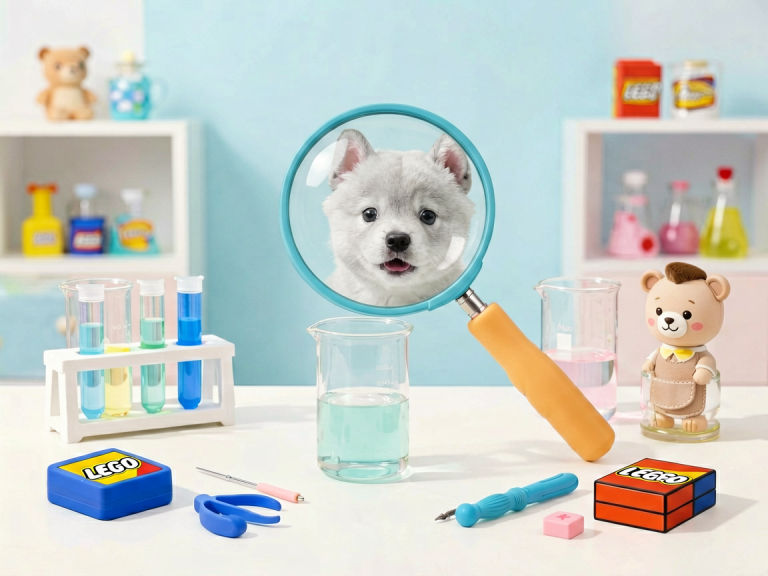
Take a magnifying glass and a small jar on a walk. Look under rocks, on tree bark, or in flower beds. When you find an ant or a pill bug, let your toddler watch it move. Ask simple questions: “Where is the bug going? How many legs does it have? Does it like the sun or the shade?”
Why it works for boys
Many toddlers are fascinated by small, moving creatures. The hunt feels like a game, and the magnifying glass makes them feel like a real scientist.
Expansion: Collect leaves of different shapes and sizes. At home, sort them by color or size. This is a data collection activity—the foundation of mathematics and biology. Use words like “bigger,” “smaller,” “rough,” “smooth.”
—
Color Mixing: A Beginner’s Chemistry Lab
Chemistry for toddlers can be as simple as watching colors change. This activity introduces cause and effect, observation, and the idea that substances can combine to create something new.
Activity idea: Shaving cream color lab
Spread a layer of plain shaving cream (unscented and safe for skin) on a tray. Drop food coloring or liquid watercolors in primary colors (red, blue, yellow). Let your toddler use his fingers or a craft stick to swirl the colors together. He will see red and blue make purple, yellow and blue make green.
Why it works for boys
The messy, squishy texture appeals to many boys’ love of tactile play. The dramatic color changes hold their attention and reward experimentation.
Expansion: Use a clear plastic bag filled with a little paint. Seal it and let him squish the bag to mix colors. No mess, same learning. While he plays, narrate: “You made green! Red and yellow made orange.”
—
Cause and Effect: Simple Machines for Tiny Hands
Toddlers are natural engineers of cause and effect. They love switches, buttons, levers, and pulleys. Introducing very simple machines helps them understand how the world works.
Activity idea: The ramp and car game
Use a long piece of cardboard or a plastic track. Prop one end up on a stack of books. Let your toddler roll a toy car down. Then change the height or the surface (add a towel for friction). Ask, “Which ramp makes the car go faster? What happens if I put a block in the way?”
Why it works for boys
The thrill of watching an object move downhill is captivating. Boys often enjoy the mechanical action and the potential for a crash at the bottom.
Expansion: Make a simple pulley by threading a string through a plastic cup handle and over a broom handle. Hang a small bucket, and let your toddler lift toys up and down. Explain, “The string helps us lift heavy things.” Even if he doesn’t grasp the mechanics, the action builds spatial reasoning.
—
Conclusion
STEM activities for toddler boys are not about formal instruction—they are about creating a rich environment where curiosity thrives. Every time you let him splash water, knock down a block tower, or squish colored shaving cream, you are planting seeds of scientific thinking. You are teaching him to ask questions, make predictions, and observe the results.
Remember that repetition is key. A toddler may want to sink the same rock twenty times. That’s okay—each repetition reinforces the concept. Keep the language simple, the tone playful, and the mess manageable. Most importantly, join in the wonder. When you say, “Wow, look at that!” you model the excitement of discovery.
By engaging in these STEM activities, you are not just entertaining your toddler boy—you are building a tiny scientist who will grow up seeing the world as a place full of problems to solve and mysteries to explore. And that mindset will serve him for a lifetime.