Empowering Little Explorers: The Best Science Toys for Toddler Girls
Introduction
In a world that is increasingly driven by technology and innovation, the importance of early exposure to science, technology, engineering, and mathematics (STEM) cannot be overstated. For toddler girls, the right science toys can do more than just entertain—they can spark curiosity, build confidence, and lay the foundation for a lifelong love of learning. Yet for too long, the toy industry has reinforced gender stereotypes, pushing dolls and pink kitchens toward girls while reserving building blocks and microscopes for boys. This article explores why science toys for toddler girls matter, what to look for in these toys, and how parents can foster a supportive environment that encourages exploration without bias. From sensory experiments to simple engineering challenges, the best science toys for toddler girls are designed to be inclusive, hands-on, and developmentally appropriate, allowing every little girl to become the scientist, engineer, or astronaut she dreams of being.
Why Science Toys Matter for Toddler Girls
The toddler years, roughly ages one to three, are a critical window for cognitive development. During this period, children’s brains form neural connections at an astonishing rate, and their innate curiosity drives them to explore the world through touch, taste, sound, and sight. Science toys tap directly into this natural inquisitiveness. For toddler girls specifically, these toys offer an opportunity to develop spatial reasoning, problem-solving skills, and an understanding of cause and effect—abilities that are often undervalued in traditional gender-normative play.
Research consistently shows that early exposure to STEM activities can close the gender gap in science-related fields. Studies from organizations like the National Science Foundation indicate that girls who engage with science toys during early childhood are more likely to pursue science courses in school and consider STEM careers later in life. However, the key is to start early, before societal messages about “girls’ toys” and “boys’ toys” take hold. By giving a toddler girl a set of magnetic blocks or a simple water table, we tell her that it is perfectly normal—and wonderful—to ask “why” and “how.” We validate her desire to experiment, to get messy, and to fail and try again. These experiences build what psychologist Carol Dweck calls a “growth mindset,” where challenges are seen as opportunities rather than obstacles.
Moreover, science toys for toddler girls help develop fine motor skills, language acquisition, and social-emotional learning. When a toddler girl uses a plastic pipette to transfer colored water from one cup to another, she is not just having fun; she is practicing hand-eye coordination, learning vocabulary like “squeeze” and “drop,” and experiencing the satisfaction of a self-directed accomplishment. These toys also invite collaborative play, whether with a parent, sibling, or friend, teaching early lessons in sharing, turn-taking, and communication.
Key Features of Great Science Toys for Toddlers
Not all toys labeled “science” are suitable for toddlers, especially for girls who may have different interests or developmental paces. The best science toys for toddler girls share several important characteristics. First and foremost, they must be safe. For children under three, choking hazards, sharp edges, and toxic materials are non-negotiable concerns. Look for toys made from BPA-free plastic, natural wood, or food-grade silicone. Many excellent science toys for toddlers are designed to be mouth-safe because mouthing is a primary way toddlers explore.
Second, great science toys are open-ended. Unlike toys that have a single correct outcome (like a puzzle that only fits one way), open-ended toys allow for multiple uses and encourage creativity. A set of colorful stacking cups, for instance, can be used for nesting, pouring, measuring, or building towers. A toddler girl can use them to experiment with gravity, volume, and balance without any predetermined “right” answer. This open-endedness is crucial because it respects the child’s own pace and interests.
Third, the best science toys engage multiple senses. Toddlers learn best when they can see, hear, touch, and sometimes even smell or taste their materials. Toys that involve water, sand, light, sound, or simple chemical reactions (like baking soda and vinegar) provide rich sensory input that anchors learning in real-world experience. For example, a color-mixing lab with squirt bottles and primary colors lets a toddler girl discover that blue and yellow make green—a magical moment that is both scientific and artistic.
Fourth, these toys should promote active exploration rather than passive entertainment. Battery-operated talking toys that simply recite facts may hold a child’s attention briefly, but they do not offer the same learning value as a toy that requires the child to act. A simple wooden ramp and rolling balls encourage a toddler to experiment with angles and speed; a set of plastic gears on a board lets her discover how interlocking pieces turn. The goal is to make the child the protagonist of her own investigation.
Finally, great science toys for toddler girls are visually engaging without being overly gendered. While there is nothing wrong with the color pink, it is a mistake to assume that all girls prefer pink toys. Many science toys now come in bright, gender-neutral palettes—teal, lime green, orange, rainbow—that appeal to all children. The design should be inviting and clear, with large, easy-to-grasp pieces that match a toddler’s developing dexterity.
Top Categories of Science Toys for Toddler Girls
When selecting science toys for a toddler girl, it helps to think in terms of categories that align with different scientific domains. Here are some of the most effective and popular types, each offering unique learning opportunities.
*Sensory Play Kits and Water Tables*
Sensory play is the foundation of early science learning. Water tables, sandboxes, and sensory bins filled with rice, beans, or kinetic sand allow toddler girls to explore the properties of matter. Adding cups, scoops, funnels, and toy animals transforms the activity into an experiment in displacement, flow, and texture. Many companies now produce science-themed sensory kits that include items like “ocean explorers” with plastic sea creatures and a blue gel base, or “dinosaur dig” kits with hidden fossils. These toys encourage descriptive language (smooth, rough, wet, dry) and introduce basic concepts like sinking and floating.
*Magnetic and Building Blocks*
Construction toys are often marketed to boys, but they are equally valuable for girls. Magnetic tiles, such as Magna-Tiles or Picasso Tiles, are a top choice for toddlers because they click together easily and can be used to build towers, houses, castles, or abstract shapes. A toddler girl learns about balance, symmetry, and magnetism as she experiments. Similarly, large wooden unit blocks or Duplo-style bricks help develop spatial awareness and engineering thinking. For an extra science twist, look for blocks that include gears, wheels, or connectors that allow for simple machines.
*Simple Experiment Kits*
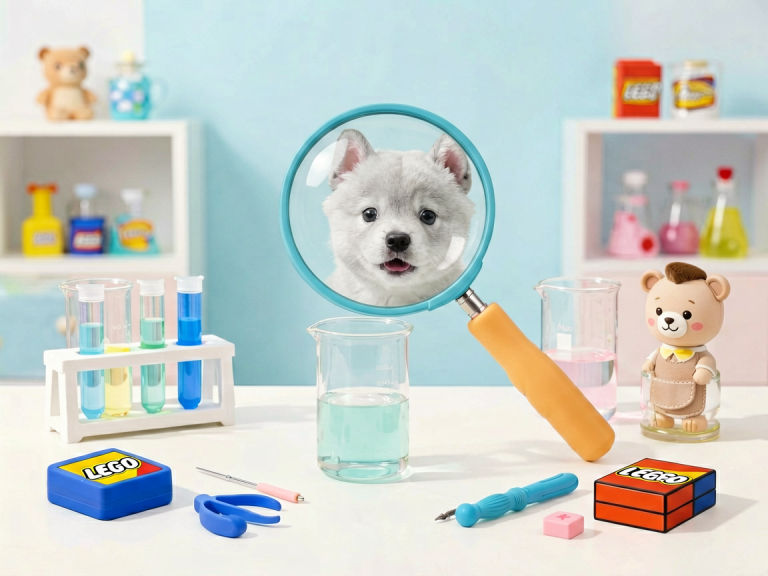
There are now many experiment kits designed specifically for toddlers, often focusing on safe, non-toxic reactions. For example, a “fizzing science” kit might include baking soda, citric acid, and food coloring, along with test tubes and droppers. With adult supervision, a toddler girl can mix ingredients and watch them bubble—a thrilling introduction to chemistry. Color-mixing labs, light-up wands that change colors when you press a button, and “magic” grow capsules that expand in water are other examples. The key is to keep instructions simple and allow the child to lead the exploration.
*Nature Exploration Tools*
Science is not confined to indoors. Nature exploration tools like a child-sized magnifying glass, binoculars, bug catcher, or a simple bird identification chart can turn a walk in the park into a field expedition. For toddler girls, a sturdy magnifying glass with a large handle lets them examine leaves, pebbles, or insects up close. A small, lightweight pair of binoculars (with a strap to prevent dropping) encourages observation of birds, clouds, or distant trees. These tools foster patience, attention to detail, and a sense of wonder about the natural world. Even a simple “I Spy” game using colors and shapes outdoors qualifies as early science exploration.
*Light and Shadow Toys*
Light is a fascinating subject for toddlers. Toys that involve flashlights, color filters, light panels, or shadow puppets allow a toddler girl to explore optics and cause and effect. A set of translucent colored shapes that she can hold over a light source will cast colored shadows. A simple light table (which can be a DIY project with a translucent storage box and an LED light) provides a platform for arranging translucent objects, tracing shapes, or creating patterns. These activities build visual discrimination and introduce the concept that light can be blocked, passed through, or changed.
How Parents Can Encourage Scientific Play
Buying science toys is only the first step. To truly nurture a toddler girl’s interest in science, parents need to adopt a supportive, curious mindset themselves. The most effective way to encourage scientific play is to join in without taking over. When a toddler girl is pouring water from one cup to another, resist the urge to correct her or show her the “right” way. Instead, ask open-ended questions: “What do you think happens if you pour it faster?” or “Why do you think the water makes that sound?” This kind of commentary validates her thinking and encourages her to reflect.
It is also important to embrace messiness. Science is messy by nature. Spilled water, scattered rice, or a slightly sticky floor are small prices to pay for a child’s joyful discovery. Avoid phrases like “Don’t make a mess” or “Be careful” during play, as these can inhibit experimentation. Instead, set up a designated space—a plastic tablecloth on the floor, a shallow tray, or an outdoor area—where mess is allowed. Cleanup can become part of the learning: ask your toddler to help “rescue” toys from the water or to sort blocks by color while putting them away.
Another powerful strategy is to connect play to the real world. If your toddler girl is playing with magnets, point out magnets on the refrigerator or in the car. If she is mixing colors, talk about the rainbow after a rain. By linking her toy experiences to everyday phenomena, you help her see that science is not a separate subject but a way of understanding everything around her.
Finally, model a scientific attitude yourself. Show excitement when you discover something new. Say, “I wonder why that happens?” out loud. If you do not know the answer to a question, say, “Let’s find out together!” and look it up in a child-friendly book or video. This demonstrates that curiosity is a lifelong pursuit and that it is okay not to have all the answers.
Addressing Gender Stereotypes in Toy Choices
Despite progress, gender stereotypes in toys remain prominent. It is not uncommon to see science toys for girls marketed in pastel colors with princess themes, while the same toys for boys come in primary colors and action-hero packaging. These marketing tactics can reinforce the idea that science is a male domain or that girls need special “girly” versions to be interested. As parents and caregivers, we can push back by choosing toys based on a child’s individual interests rather than their gender.
One practical step is to avoid labeling toys as “for boys” or “for girls.” When shopping, let your toddler girl explore all aisles. If she shows interest in a dinosaur excavation kit or a rocket ship puzzle, embrace it. Similarly, if she loves a dollhouse, you can still incorporate science by adding a miniature garden kit or a set of tiny furniture that requires assembly. The goal is not to force science on a child but to ensure that science is an available, normalized option.
Another important consideration is language. When you play with your toddler girl, use neutral terms like “scientist,” “engineer,” “builder,” and “explorer.” Avoid telling her she is “so pretty” while playing with a chemistry set; instead, say “You are so smart to figure that out” or “What a great problem-solver you are.” These small shifts in praise can shape her self-perception and her belief in her own capabilities.
Role models also matter. Expose your toddler girl to images and stories of women in science—whether through books featuring female astronauts, doctors, or inventors, or through videos of real women scientists. When she sees someone who looks like her doing scientific work, she begins to imagine herself in that role. Many children’s books, such as “Ada Twist, Scientist” by Andrea Beaty or “Rosie Revere, Engineer,” are excellent resources that celebrate curiosity and persistence in young girls.
Conclusion
Science toys for toddler girls are far more than playthings; they are tools for empowerment. When a little girl mixes colored water, builds a tower of magnetic tiles, or examines a caterpillar through a magnifying glass, she is not just playing—she is practicing the essential skills of observation, hypothesis, experimentation, and adaptation. She is learning that it is okay to be wrong, that asking “why” is a superpower, and that she can shape her own understanding of the world.
Choosing the right science toys means looking beyond flashy packaging and gender stereotypes. It means valuing open-ended, sensory-rich, and safe materials that invite exploration. It means creating an environment where mess is welcome, curiosity is celebrated, and every question is a doorway. And it means, as parents and caregivers, stepping back and letting her take the lead, with the quiet confidence that she is building a foundation that will serve her for a lifetime.
So the next time you are browsing for a gift for a toddler girl, consider a set of stacking cups, a water table, or a simple set of magnets. You are not just giving a toy—you are giving a message: that she can be a scientist, that her ideas matter, and that the world is full of wonders waiting for her to discover. And that is the most powerful gift of all.