The Vibrant World of Early Learning: How Colorful Toys Shape Infant Development
Introduction
From the moment a baby opens their eyes to the world, they are bombarded with an overwhelming array of sensory information. Among the most powerful and formative stimuli is color. For infants, colors are not merely aesthetic pleasures—they are critical tools for cognitive development, emotional regulation, and motor skill acquisition. Early learning toys designed specifically for babies leverage the psychological and neurological impact of color to create meaningful play experiences. Understanding the interplay between color and early learning toys can empower parents, educators, and caregivers to make informed choices that nurture a child's developing brain during the most sensitive period of growth. This article explores the science behind color perception in infancy, offers guidelines for selecting age-appropriate toys, and highlights specific examples of colorful toys that promote learning from birth through the first two years of life.
The Science of Color Perception in Infants
How Babies See Color
Newborns are not born with full color vision. At birth, a baby's visual system is immature, and they can only perceive high-contrast patterns, particularly black and white. Their cone cells—the photoreceptors responsible for color vision—are still developing. By around two to three months of age, most infants begin to distinguish primary colors such as red, green, and blue. By four to six months, their ability to discriminate between different hues improves dramatically, and they start to show preferences for bright, saturated colors over muted tones. This developmental timeline underscores why early learning toys for babies should evolve with the child's visual capabilities. High-contrast black-and-white toys are ideal for newborns, while progressively more colorful toys become appropriate as the infant's color vision matures.
The Neurological Impact of Color Exposure
Color exposure in early infancy does more than entertain—it actively shapes neural connections. Studies in developmental neuroscience have shown that repeated exposure to a variety of colors stimulates the visual cortex and enhances synaptic pruning, the process by which the brain strengthens useful connections and eliminates weak ones. Bright, contrasting colors capture an infant's attention longer than pastel or monochromatic objects, which increases the duration of focused gaze. This sustained attention is a precursor to concentration and problem-solving skills later in life. Moreover, certain colors can evoke emotional responses: warm colors like red and yellow are often associated with excitement and energy, while blue and green tend to have a calming effect. When babies interact with toys that offer a range of colors, they are not just learning to see—they are learning to associate visual input with emotional states, a foundational aspect of social-emotional intelligence.
Choosing the Right Early Learning Toys: Age Considerations
Birth to 3 Months: High Contrast and Simplicity
During the first three months, an infant's visual system is still in its earliest stage. The best early learning toys for this age group are those with stark black-and-white patterns, such as black-and-white mobiles, striped cloth books, and high-contrast flash cards. These toys do not rely on color recognition because the baby cannot yet perceive hues strongly. Instead, they leverage the baby's natural attraction to sharp contrasts and simple geometric shapes. Toys that feature bold patterns—like concentric circles, checkerboards, or faces—help stimulate the developing retina and optic nerve. Additionally, soft, uncluttered toys with a single bright color (e.g., a red rattle) can be introduced around the second month, as the baby begins to notice primary colors. The key is to keep the visual field simple and avoid overstimulation.
3 to 6 Months: Primary Colors and Texture
By three months, most babies can recognize red, green, and blue. This is the ideal time to introduce toys that feature these primary colors in bold, unmixed forms. Soft blocks, rattles, and teethers in solid primary colors encourage visual tracking and hand-eye coordination. Toys that combine color with texture—such as a crinkly fabric square with a bright yellow center and blue edges—are particularly effective because they engage multiple senses simultaneously. At this stage, babies also begin to use their hands to reach and grasp, so toys should be lightweight and easy to hold. A set of colorful silicone rings or a brightly patterned activity gym can provide hours of exploration. Importantly, the colors should be pure and intense rather than pastel, as pastels are harder for young infants to distinguish.
6 to 12 Months: Complex Color Combinations and Sorting
As babies enter the second half of their first year, their color discrimination abilities expand to include secondary colors like orange, purple, and green-yellow. Toys that incorporate multiple colors in one object—such as stacking cups in a rainbow sequence, shape sorters with multicolored pieces, or musical instruments painted in bright hues—promote color naming and categorization. This is also the age when babies begin to show preferences for certain colors; researchers have found that many six-to-nine-month-olds consistently gaze longer at blue and red than at green or yellow. Toys that allow for sorting and matching, like nesting boxes with colored lids or simple puzzles with colored shapes, introduce the concept of color as a property that can be categorized. These activities lay the groundwork for early math skills, as sorting is a fundamental logical operation.
12 to 24 Months: Naming, Mixing, and Creative Play
Toddlers between one and two years old are rapidly expanding their vocabulary, and color names are among the first adjectives they learn. Early learning toys that encourage color naming include books with labeled color swatches, crayons and non-toxic finger paints, and building blocks in a rainbow of shades. At this stage, children enjoy mixing colors—though they may not yet understand the concept, they love watching what happens when yellow paint touches blue paint. Watercolor sets, color-mixing toys, and light-up toys that change color on command spark curiosity and experimentation. Additionally, toys that use color to convey meaning—such as traffic light toys, colored sorting bowls, or color-coded puzzles—help toddlers understand that color can be a signifier in the real world. This cognitive leap is crucial for later literacy and symbolic thinking.
Top Colorful Early Learning Toys for Sensory Development
High-Contrast Black-and-White Mobiles
One of the most effective early learning toys for newborns is a mobile featuring bold black-and-white images. The classic "Baby Einstein" black-and-white mobile, for instance, uses symmetrical patterns and simple faces that capture a baby's attention and encourage visual tracking. As the baby grows, these mobiles can be replaced with versions that incorporate primary colors. Mobiles should be positioned about 8–12 inches from the baby’s face, within their optimal focal range.
Soft Fabric Blocks with Multiple Textures and Colors
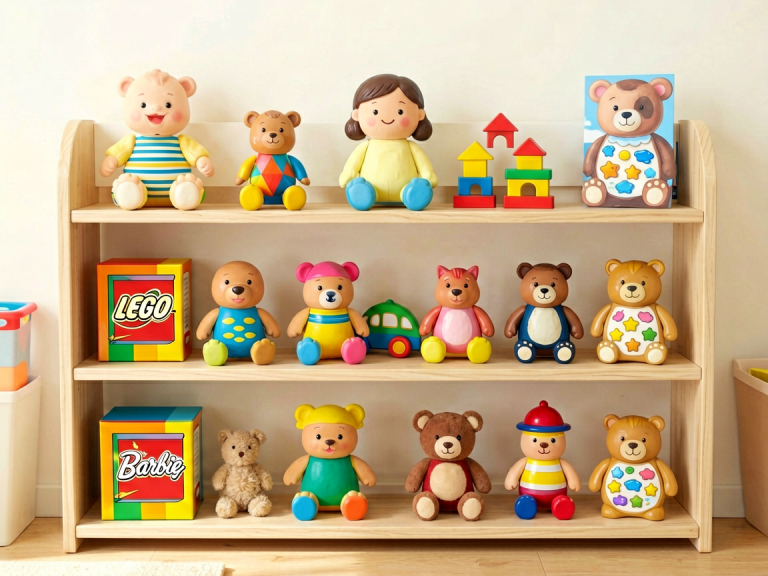
Soft blocks are a staple of early learning because they combine color, shape, and texture. Look for sets that include blocks in primary and secondary colors, with different fabrics (velvet, corduroy, satin) and built-in features like crinkle paper or rattles. These blocks stimulate tactile exploration while reinforcing color recognition. Babies can stack them, knock them down, and later use them for sorting games.
Color Sorting and Stacking Toys
Stacking cups or rings are excellent for developing fine motor skills and understanding of color sequences. A classic example is the Fisher-Price "Rock-a-Stack" toy, which features five brightly colored rings that the baby must place in order of size. More advanced versions, like the "Melissa & Doug" wooden rainbow stacker, introduce color gradients and encourage pattern recognition. Sorting toys, such as a wooden box with holes for differently colored shape pieces, teach cause-and-effect while reinforcing color names.
Musical Instruments in Bright Hues
Musical toys that are visually engaging as well as auditory can boost multisensory learning. A bright red xylophone or a multicolored shaker egg encourages the baby to associate sound with color. When a toddler hits a blue key and hears a higher pitch, they are making cross-modal connections. Even simple instruments like a yellow tambourine or a green rainstick provide opportunities for caregivers to say the color name repeatedly during play.
Color-Changing Light Toys
Toys that change color when touched, shaken, or squeezed offer a dynamic learning experience. For example, stacking rings that light up in different colors as each ring is placed, or a plush toy that glows in a sequence of hues, captivate babies' attention and reinforce the idea that color is not static. These toys are particularly useful for babies who are easily bored with static objects, as the color change provides a novel stimulus that encourages repeated interaction.
The Role of Parents and Caregivers in Color Learning
Language and Labeling
The most powerful tool for color learning is not the toy itself but the adult who plays alongside the baby. Research consistently shows that children learn color labels faster when parents explicitly name colors during play. Instead of simply handing a baby a red ball, a parent should say, "Look at the red ball! Can you roll the red ball to me?" Repeating the color word in context helps the baby form a mental association between the visual sensation and the verbal label. Caregivers should also use color words in everyday situations—pointing to a blue sky, a green leaf, or a yellow banana outside of toy time—to generalize the concept.
Avoiding Overstimulation
While colorful toys are beneficial, there is such a thing as too much color. A playroom or nursery filled with bright, clashing colors from every toy, wall, and piece of furniture can overwhelm a baby's developing visual system, leading to fussiness and difficulty focusing. Experts recommend creating a balanced environment: neutral backgrounds (white, gray, or soft beige) with pops of vibrant color in selected toys. Rotating toys also helps maintain novelty; if a baby sees the same three colored blocks every day, they may lose interest. Introducing a new color-themed toy every week can sustain engagement.
Encouraging Independent Exploration
As babies grow, they should be allowed to choose which colors to engage with. Some babies may show a strong preference for red over green, while others may be drawn to blue. These preferences are normal and may even indicate temperament. Caregivers should follow the baby's lead, offering a variety of colored toys but allowing the child to decide which to pick up and examine. This autonomy fosters intrinsic motivation and a positive association with learning.
Conclusion
Early learning toys for babies are far more than simple sources of amusement. When thoughtfully selected with color in mind, they become catalysts for neural growth, cognitive categorization, and emotional development. From the stark black-and-white patterns that first capture a newborn's gaze to the multicolored building blocks that a toddler uses to construct imaginary worlds, color is the silent guide that leads infants through the earliest stages of learning. By understanding the science of color perception, respecting age-appropriate milestones, and actively engaging in playful labeling, caregivers can transform everyday toy time into a rich educational experience. The vibrant world of early learning is painted in colors that do more than please the eye—they illuminate the pathways of a curious, developing mind.