Beyond the Glow: How Screen-Free Toys Can Reclaim Childhood from Television
Introduction
In the modern living room, the television often reigns as the default source of entertainment. Its glow fills the space, its sounds shape the atmosphere, and its images captivate young minds for hours on end. According to the American Academy of Pediatrics, children between the ages of two and five spend an average of 32 hours per week in front of a screen, much of it passive television watching. While educational programs do exist, the sheer volume of screen time has been linked to attention difficulties, language delays, reduced physical activity, and diminished imaginative play.
Yet there is a quiet revolution gaining momentum: the deliberate replacement of TV time with screen-free toys. These are not mere substitutes; they are powerful tools that engage a child’s hands, mind, and heart in ways that no digital interface can. This article explores why screen-free toys are essential, how they outperform television in developmental terms, and practical strategies for families to make the swap.
—
The Hidden Cost of Television Time
Television, even when “educational,” is fundamentally a one-way medium. The child sits, receives, and processes—but does not act. Over time, this passivity can erode the very neural pathways that drive creativity and problem-solving. Research from the University of Washington found that every additional hour of television watched daily by toddlers was associated with a 7% decrease in vocabulary acquisition, likely because screen time displaces real-world conversations and hands-on exploration.
Moreover, television often encourages a sedentary lifestyle. A child glued to a screen is not climbing, building, or negotiating with peers—all activities that build physical and social competence. The American Heart Association notes that children who exceed two hours of screen time daily have higher risks of obesity, poor sleep, and emotional dysregulation. Screen-free toys, by contrast, demand participation. They invite the child to become a creator rather than a consumer.
—
What Screen-Free Toys Offer That Television Cannot
Physical Engagement and Fine Motor Development
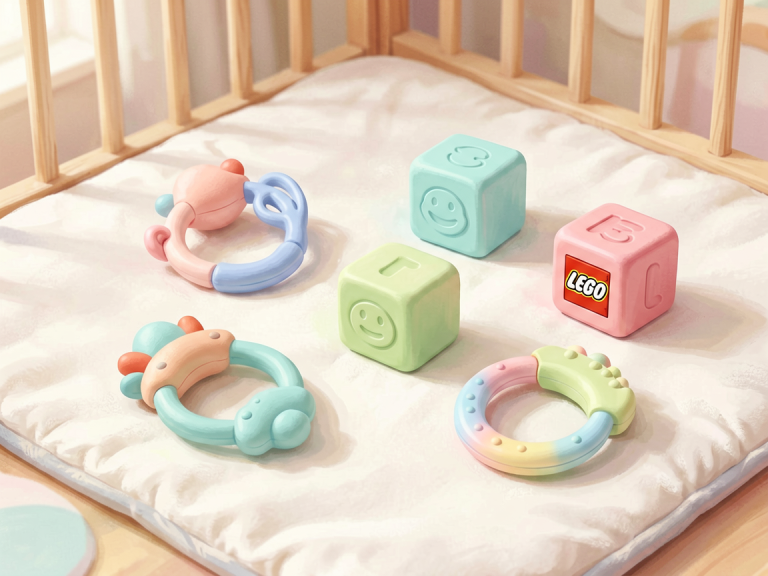
A remote control requires only a thumb. A set of wooden blocks, however, demands the coordination of fingers, wrists, and arms. Fine motor skills—crucial for writing, buttoning, and later academic tasks—develop through repetitive, purposeful manipulation of real objects. Toys like puzzles, lacing beads, building bricks, and playdough strengthen the small muscles of the hand while simultaneously training hand-eye coordination. Television cannot replicate this tactile feedback, which is essential for sensory integration.
Imagination and Open-Ended Play
Television presents a fixed story. Dragons, princesses, and cars appear exactly as the animator drew them. In contrast, a simple set of wooden animal figurines or a bag of LEGO bricks holds infinite possibilities. A child can transform a toy car into a spaceship, a cardboard box into a castle, or a handful of pebbles into a feast. This kind of open-ended play is the birthplace of divergent thinking—the ability to generate multiple solutions to a problem, a skill highly correlated with innovation in adulthood.
Social and Emotional Learning
When children watch TV, they sit alone or passively beside a sibling. When they play with screen-free toys, they negotiate, share, take turns, and resolve conflicts. A board game like “Candy Land” teaches patience and sportsmanship. A set of toy kitchen tools becomes the stage for role-playing family dynamics, where children experiment with empathy and perspective-taking. These interactions are irreplaceable; they build the emotional intelligence that screens can only simulate in the shallowest ways.
Self-Regulation and Sustained Attention
Television programming is engineered to grab attention every few seconds with quick cuts, loud sounds, and bright colors. This trains the brain for constant novelty, making it harder for children to focus on slower, more demanding activities. Screen-free toys, especially those with a clear goal such as completing a 100-piece puzzle or building a stable tower, require sustained effort. The child learns to delay gratification, tolerate frustration, and experience the deep satisfaction of finishing a task—lessons that television rarely provides.
—
Types of Screen-Free Toys That Effectively Replace TV Time
Building and Construction Sets
Classic wooden blocks, magnetic tiles, LEGO Duplo, and K’NEX all belong in this category. They teach spatial reasoning, geometry, and basic physics. A child who builds a bridge and watches it collapse understands load and balance better than any cartoon could explain.
Art and Craft Supplies
Crayons, watercolors, clay, sewing kits, and collage materials allow for self-expression without a prescribed outcome. Unlike a TV show that ends in exactly 22 minutes, art creation can last for hours, evolving organically. It also supports emotional regulation; many children find calm in coloring or kneading clay.
Board Games and Card Games
Games like “Sequence for Kids,” “Uno,” “Chess,” or cooperative games like “Hoot Owl Hoot!” teach logic, turn-taking, and strategic thinking. They are also naturally social—requiring eye contact, conversation, and laughter.
Pretend Play Kits
Doctors’ kits, tool benches, cash registers, dollhouses, and farm sets encourage narrative creation. When children assign roles and invent storylines, they practice language skills and explore real-world scenarios in a safe, controlled environment.
Outdoor and Physical Toys
Bicycles, jump ropes, balls, kites, and gardening tools get children moving. They also connect kids with nature, reducing stress and improving mood. Even a simple “go on a bug hunt” with a magnifying glass can replace a half-hour of cartoons.
STEM and Discovery Toys
Magnetic science kits, microscopes, simple coding games (like programmable toy robots that require physical moves), and chemistry sets engage curiosity about how the world works. They transform passive wondering into active experimentation.
—
Practical Strategies for Families: Moving from TV to Toys
Start with a Cleanse
Psychologist Dr. Catherine Steiner-Adair, author of *The Big Disconnect*, recommends a “digital detox” for at least one week. Removing the TV from the main living area—or at least agreeing on a strict schedule (e.g., only Saturday mornings)—can reset the family’s baseline. Without the TV as an automatic default, children begin to look for other activities.
Curate a Toy Library, Not a Toy Box
A cluttered room overwhelms a child. Instead of dozens of broken toys and neglected remote-control cars, choose a smaller number of high-quality, open-ended items. Rotate them every two weeks. A set of Magna-Tiles might feel new again if it has been stored for a month. This rotation keeps interest high without requiring endless purchases.
Model the Behavior
Children imitate what they see. If a parent picks up a book, a sketchbook, or a woodworking project, the child is more likely to engage in analogous play. Conversely, if a parent spends evenings staring at a tablet, the child will feel that screen time is the adult’s privilege. Make family time a “no-screen zone” for everyone.
Create Inviting Play Stations
Arranging a small table with a puzzle in progress, hanging a felt board with cut-out shapes, or placing a basket of LEGOs near the couch invites spontaneous play. These “nudges” are more effective than telling a child, “Go play.” The environment should whisper, “Come here and create.”
Build Routine Around Screen-Free Activities
Instead of “TV time after dinner,” create “puzzle time” or “storytelling time.” Perhaps every evening from 7:00 to 7:30 the family gathers around a board game. Or the weekend morning begins with a nature walk and a scavenger hunt. A routine is easier to maintain than abstract resolution.
Use Television Strategically, Not Habitually
This article does not argue for banning television entirely; high-quality documentaries, foreign language shows, or carefully selected educational programs can still have a place. The key is intention. Watch a show together, discuss it, and then immediately turn off the screen. Never use TV as a background hum or a babysitter.
—
The Long-Term Benefits: What Research Shows
A longitudinal study published in *JAMA Pediatrics* tracked more than 2,000 children and found that those who spent less than one hour per day on screens and engaged in at least 60 minutes of physical play had higher scores on cognitive tests at age eight. Furthermore, data from the National Institute of Child Health and Human Development indicate that children with fewer screen hours and more unstructured play demonstrate stronger executive functions—the mental skills that enable planning, focus, and self-control.
Screen-free toys do more than fill time; they build brains. A child who spends forty minutes building a marble run is practicing trial and error, persistence, and physics. A child who plays “store” with a sibling is practicing math (counting money), language (dialogue), and social negotiation. Television cannot offer that integrated, multi-domain learning.
—
A Personal Reflection
As a parent who once relied on television to get dinner on the table, I understand the appeal. Screens are convenient, quiet, and guaranteed to hold attention. But I also remember the guilt that followed: the feeling that I had traded a real moment for a digital one. When my family finally moved the TV out of the living room, the first week was hard. There were complaints of boredom. Yet within days, that boredom gave way to invention. My seven-year-old designed a cardboard city. My four-year-old learned to snap together magnetic tiles into a castle. They argued, laughed, and built. They did not miss the screen.
We now keep one small television in a cabinet, brought out only for movie nights. The rest of the time, the living room floor is covered with puzzles, train tracks, and art supplies. The glow of the screen has been replaced by the glow of concentration and joy. It is a trade I would make a thousand times over.
—
Conclusion
Screen-free toys are not a nostalgic trend; they are a vital response to an environment saturated with digital distraction. They offer children what no algorithm can provide: the tactile pleasure of building, the emotional depth of pretending, the physical challenge of moving, and the cognitive reward of solving a real-world problem. Replacing TV time with such toys does not require expensive purchases or perfect parenting—only the courage to turn off the screen and trust that a cardboard box, a set of blocks, and a child’s own imagination are enough.
The television will always be there, ready to flicker back to life. But the childhood it can never give us—the one filled with dirt under fingernails, whispered storylines between dolls, and the triumphant shout of “I did it!”—is best discovered in the quiet, hands-on world beyond the glow.