The Power of Play: How Educational Toys Shape the Toddler Mind
Introduction
The toddler years—roughly from ages one to three—are a whirlwind of discovery. Every day brings new words, new movements, and new questions. At this stage, a child’s brain is developing at an astonishing rate, forming more than one million neural connections every second. This rapid growth is not automatic; it is shaped by the environment, the interactions, and, importantly, the tools a child uses to explore the world. Among the most powerful of these tools are educational toys.
Educational toys for toddlers are not simply “fun distractions.” They are carefully designed instruments that blend entertainment with developmental intention. Unlike passive entertainment such as screens, these toys invite active participation—pushing, pulling, stacking, sorting, and pretending. A well-chosen toy can teach a toddler cause and effect, spatial reasoning, language, social skills, and even early math concepts, all while they laugh and play. In a market flooded with flashing lights and loud noises, discerning which toys truly educate is a challenge every parent faces. This article explores why educational toys matter, what types best support toddler development, how to select them wisely, and the concrete benefits they deliver.
The Importance of Educational Toys in Early Childhood Development
During the toddler period, children are not just learning facts; they are learning *how* to learn. They develop what psychologists call executive functions—working memory, flexible thinking, and self-control. These skills form the foundation for academic success, emotional regulation, and lifelong problem-solving. Educational toys serve as the gymnasium for these emerging abilities.
Take a simple set of stacking cups. A toddler must decide which cup is largest, coordinate hand and eye to place it, and persist when the tower falls. In that process, they practice motor planning, frustration tolerance, and basic physics. Compare that to a battery-operated toy that sings a song when a button is pressed. The child learns only one thing: that pressing the button produces a sound. There is no variation, no challenge, no opportunity for creative thinking. Educational toys, by contrast, are open-ended. A set of wooden blocks can become a castle, a bridge, a farm, or a spaceship. Each construction demands new problem-solving. This open-endedness is critical because it mirrors real-world learning, where solutions are rarely pre-programmed.
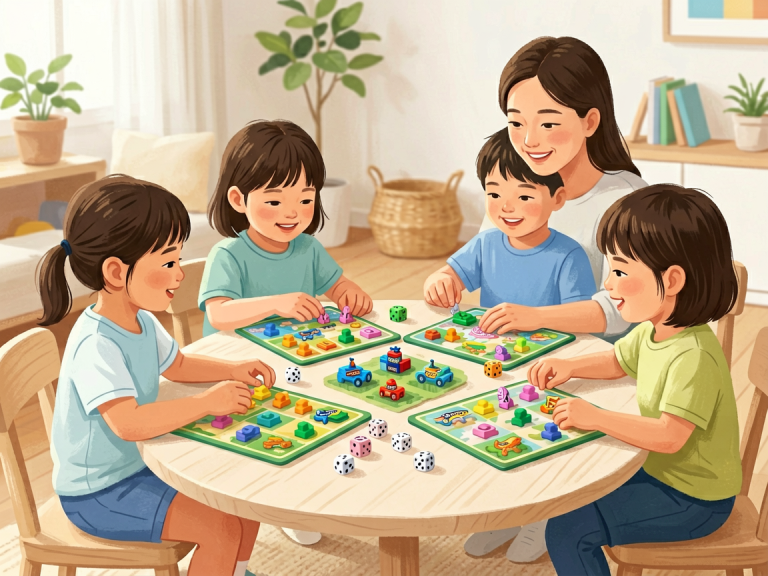
Furthermore, educational toys often promote social interaction. A simple shape-sorter becomes more engaging when a caregiver sits alongside, naming the shapes and cheering when the triangle fits. Toddlers learn vocabulary, turn-taking, and joint attention—skills that are fundamental to language and later reading comprehension. In daycare or playgroup settings, toys that require sharing or cooperative building teach early social norms. Thus, the value of educational toys extends far beyond the toy box; they are catalysts for holistic development.
Types of Educational Toys That Support Key Skills
There is no single “best” educational toy; the ideal toy depends on the child’s age, interests, and current developmental milestones. However, certain categories consistently prove their worth.
Sensory and Manipulative Toys – These engage touch, sight, hearing, and even smell. Examples include textured balls, squishy sensory bags, water play kits, and play dough. For toddlers, sensory play is brain-building. When they squeeze, roll, or squish, they strengthen fine motor muscles and activate neural pathways related to tactile discrimination. Sensory bins filled with rice, beans, or sand, paired with scoops and small containers, teach concepts like volume, pouring, and cause-effect—long before any formal math lesson.
Building and Construction Sets – Wooden blocks, magnetic tiles, interlocking bricks (larger sizes for safety) are classics for a reason. They nurture spatial awareness, creativity, and early engineering thinking. A toddler stacking three blocks to make a tower is experimenting with balance and gravity. When they add a fourth block on top and the tower wobbles, they learn to adjust. This trial-and-error process builds resilience. Construction play also supports symbolic thinking: a block becomes a “telephone” or a “car.” That ability to use one object to represent another is a precursor to reading, where letters represent sounds.
Puzzles and Shape Sorters – Jigsaw puzzles with large knobs, simple shape sorters, and pegboards teach visual discrimination, hand-eye coordination, and logical reasoning. A toddler must match the shape to the hole, or the puzzle piece to its outline. These tasks require concentration and memory. Over time, puzzles with increasing complexity—from two pieces to six, from shapes to familiar objects—scaffold cognitive growth.
Pretend Play Sets – Toy kitchens, doctor kits, tool benches, and dollhouses stimulate imagination and language. When a toddler “cooks” a plastic egg and “serves” it to a stuffed bear, they are practicing narrative sequencing, social roles, and vocabulary (e.g., “hot,” “spoon,” “breakfast”). This type of play also develops theory of mind—the understanding that others have different thoughts and feelings. Educational toys that encourage role-play are especially valuable for emotional development.
Musical Toys – Simple xylophones, drums, shakers, and keyboards introduce rhythm, pitch, and cause-effect (striking a drum produces a sound). Music engages both hemispheres of the brain and has been linked to improved language skills and mathematical reasoning. For a toddler, even banging a pot with a wooden spoon is educational—it’s an experiment in sound production.
Fine Motor Skills Toys – Threading beads, lacing cards, pegboards, and chunky crayons help develop the small muscles in hands and fingers. These skills are essential for future writing, buttoning, and other self-care tasks. Many of these toys also incorporate color or number learning, offering a double benefit.
How to Choose the Right Educational Toys for Your Toddler
With so many options, selection can feel overwhelming. The key is to focus on the child’s current stage and avoid the trap of “buying for the future.” A three-year-old may be ready for simple board games, but a one-year-old needs toys that are safe, durable, and largely solitary. Here are practical criteria for choosing wisely:
1. Age Appropriateness and Safety. Check the manufacturer’s age recommendation. For toddlers under 36 months, avoid small parts that pose choking hazards. Look for non-toxic materials, rounded edges, and sturdy construction. A toy should be able to withstand being thrown, dropped, and chewed. Washable surfaces are a bonus.
2. Open-Endedness Over Single-Use Function. Prioritize toys that can be used in multiple ways. A set of colored rings that can be stacked on a peg is good; a set of rings that can also be used as bracelets, “donuts,” or “wheels” is better. The more a toy invites creative reinterpretation, the longer it holds a child’s interest and the more skills it develops.
3. Simple Design. In our tech-saturated world, it is tempting to buy toys with lights, sounds, and screens. However, research shows that simple, classic toys often provide richer learning. A wooden shape sorter asks the child to do the thinking. A plastic electronic shape sorter that lights up and sings a song when the correct shape is inserted may actually reduce learning because the toy does the problem-solving for the child. The child becomes a passive observer.
4. Interest Alignment. Watch your toddler. Do they love moving objects? Then a push-along train or a ball ramp may be perfect. Do they enjoy imitating adults? Pretend play sets will engage them deeply. When a toy taps into a child’s natural curiosity, learning happens effortlessly.
5. Durability and Longevity. Educational toys should survive the toddler years and perhaps even be handed down. High-quality wood, thick cardboard, and non-peeling paint are worth the investment. Also consider whether the toy can “grow” with the child. For example, simple puzzles can be used at first for visual matching, later for naming colors and shapes, and even later for storytelling about the puzzle image.
The Concrete Benefits: What Research Shows
The case for educational toys is not just anecdotal; a growing body of developmental research supports their impact. A study published in the journal *Pediatrics* found that children who engaged in more structured play with educational materials showed stronger executive function skills at age four compared to peers who spent more time with passive toys. Another study from the University of Texas at Austin demonstrated that block play at age two was a predictor of mathematical achievement at age five, even after controlling for parental income and education.
Language development also benefits. A 2019 study in *Early Childhood Research Quarterly* found that parents who provided their toddlers with toys that encouraged labeling (e.g., puzzles with pictures of animals, shape sorters with color names) used more descriptive language during play. This, in turn, boosted the toddlers’ vocabulary growth. Educational toys act as conversation starters, prompting parents to narrate, question, and expand on the child’s actions.
Emotionally, the right toys can foster self-regulation. When a toddler struggles to fit a puzzle piece and tries again, they are learning to manage frustration. The satisfaction of success builds confidence. Moreover, toys that require waiting—such as a ball track where you place the ball at the top and watch it roll—teach patience and prediction. Over time, these small moments accumulate into a child who is more resilient and focused.
Conclusion: Play with Purpose, But Don’t Forget the Joy
Educational toys for toddlers are not a silver bullet. A child’s most important “toy” is a warm, responsive caregiver who talks, sings, and plays alongside them. Yet in a world where parents are busier than ever, high-quality toys can supplement and enrich that interaction. They offer structure, challenge, and delight.
When choosing educational toys, remember that the word “educational” does not mean boring. The best educational toys are the ones a toddler begs to play with again and again. They are the ones that spark laughter, curiosity, and sometimes a little mess. They honor the child’s natural drive to explore and master their world. So stack the blocks, spin the gears, name the colors, and pretend to sip tea from a toy cup. In those moments, you are not just playing—you are building a brain, one joyful interaction at a time.
Ultimately, the goal is not to turn every play session into a lesson. The goal is to provide an environment rich in opportunities for learning, and then step back and let the toddler lead. Educational toys are the tools that make that environment possible. Choose them carefully, use them playfully, and watch your toddler’s mind bloom.