Building Blocks of Communication: How Toys Foster Language Development in Kindergarteners
Introduction
Language development during the kindergarten years—typically ages three to five—is nothing short of explosive. Children transform from simple two-word utterances to complex sentences, from labeling objects to telling elaborate stories. While direct instruction and adult interaction are critical, one of the most powerful and natural catalysts for this growth is play. Toys, carefully selected and thoughtfully used, become more than mere entertainment; they are the scaffolding upon which children construct vocabulary, grammar, narrative skills, and social communication. This article explores the multifaceted relationship between toys and language development in kindergarteners, offering a framework for educators and parents to choose and use toys that maximize linguistic gains. Through concrete examples and research-based insights, we will see that the right toy can turn a quiet moment into a vibrant conversation, a solitary activity into a collaborative dialogue, and a simple object into a gateway to the world of words.
—
The Role of Play in Language Acquisition
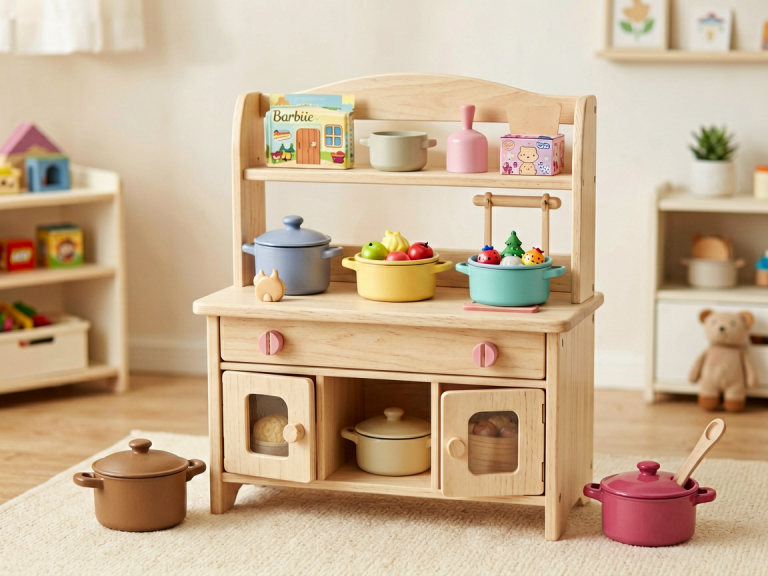
Before diving into specific toys, it is essential to understand why play is so effective for language learning. Young children are not passive recipients of language; they are active meaning-makers. Play provides a low-stakes, intrinsically motivating environment where children can experiment with sounds, words, and sentence structures without the fear of correction. Vygotsky’s concept of the Zone of Proximal Development (ZPD) applies perfectly here: a child playing with a slightly more advanced toy or with a peer/adult can reach language levels beyond their independent ability. Furthermore, play naturally encourages repetition, elaboration, and contextual learning. When a child pretends to cook soup in a toy kitchen, they repeatedly hear and say words like “stir,” “pour,” “hot,” “yummy,” and “more,” embedding these terms in meaningful scenarios. Toys thus serve as the physical props that anchor abstract language in concrete experience, making vocabulary stick.
—
Toy Categories That Boost Vocabulary Expansion
Vocabulary is the cornerstone of language, and certain toys are designed to systematically introduce new words. Picture flashcards and thematic matching games (e.g., animal, food, or vehicle sets) are classic tools. However, their effectiveness depends on how they are used. Instead of simply showing a card and saying “elephant,” an adult can ask, “What does an elephant have on its nose? A trunk! And where does it live? In the jungle.” This turns passive recognition into active retrieval and elaboration. More dynamic are object-based toys, such as a collection of miniature farm animals, dinosaurs, or community helpers (firefighters, doctors). These small, manipulable items allow children to categorize, compare, and describe: “This lion is big and has a mane; this lion cub is small and has no mane.” The tactile nature of these toys also engages multiple senses, reinforcing memory.
Another powerful vocabulary builder is the pop-up book or lift-the-flap book. While technically a book, it functions like a toy due to its interactive elements. Each flap hides a word or image, creating a game of anticipation and discovery. The surprise element boosts engagement and prompts children to request “Open it!”, “What’s under there?”—spontaneous language that practice requesting and predicting. For kindergarteners, books with sturdy pages and simple rhymes (e.g., “Brown Bear, Brown Bear, What Do You See?”) are excellent because they combine repetitive sentence structures with new vocabulary. The key is to let the child turn the flaps and point, encouraging them to label before the adult does.
—
Interactive Toys for Conversational and Pragmatic Skills
Language is not just about knowing words; it is about using them in context to converse, negotiate, and express needs. Puppets and hand dolls are among the most effective toys for this purpose. When a child holds a puppet, they often create a voice and a personality for it. This prompt use of dialogue: “Hello, Mr. Bear. Are you hungry? I have some honey.” The puppet becomes a safe interlocutor, allowing the child to practice turn-taking, asking questions, and responding. Group play with multiple puppet characters can even lead to simple scripts and problem-solving: “The rabbit is sad because she lost her carrot. What can we say to her?” This develops both syntax (question forms, conditionals) and pragmatic skills (empathy, politeness).
Pretend play sets—such as a kitchen, doctor’s kit, or toolbox—are fertile ground for social language. A child playing “restaurant” must use phrases like “Welcome to my restaurant,” “What would you like to eat?” and “The food is ready.” When playing with a peer or adult, they must negotiate roles (“I’ll be the waiter, you be the chef”), which requires clauses like “If you be the chef, then I can serve the customers.” This kind of scenario-based language is far richer than isolated vocabulary drills. Moreover, these toys often come with accessories (plastic food, stethoscope, tools) that require specific verbs: “slice,” “measure,” “saw,” “check.” The combination of roles and props creates a linguistic immersion experience.
Board games designed for kindergarteners also contribute significantly. Simple games like “Candy Land” or “Chutes and Ladders” require children to follow instructions (“Spin the spinner,” “Move your piece two spaces”) and express turns (“It’s my turn!”). More language-focused games like “Spot It!” or “Zingo!”—which are bingo-style games—prompt quick naming and descriptive language (“I see a red car,” “She has a blue star”). The competitive element (even if mild) increases motivation and often leads to spontaneous commentary: “I almost got it!” or “You cheated!” While we might not want to encourage cheating accusations, these utterances reflect real communicative intent. Adults can model more appropriate language: “I think I made a mistake. Let’s check the rules again.” This models negotiation and repair strategies.
—
Storytelling and Narrative Development Through Toys
Narrative ability—telling a story with a beginning, middle, and end—is a complex language skill that develops during kindergarten. Certain toys are specifically structured to support this. Sequencing cards and story cubes (dice with pictures on each side) force children to order events and invent plausible connections. For example, a child rolls dice showing a rabbit, a carrot, a hole, and a happy face. They must create a story: “The rabbit saw a carrot. He dug a hole to plant it. Then he watered it. The carrot grew big. He ate it and was happy.” This demands temporal language (“first,” “then,” “after”), causal conjunctions (“because,” “so”), and descriptive adjectives. Over time, children internalize story grammar (character, setting, problem, resolution).
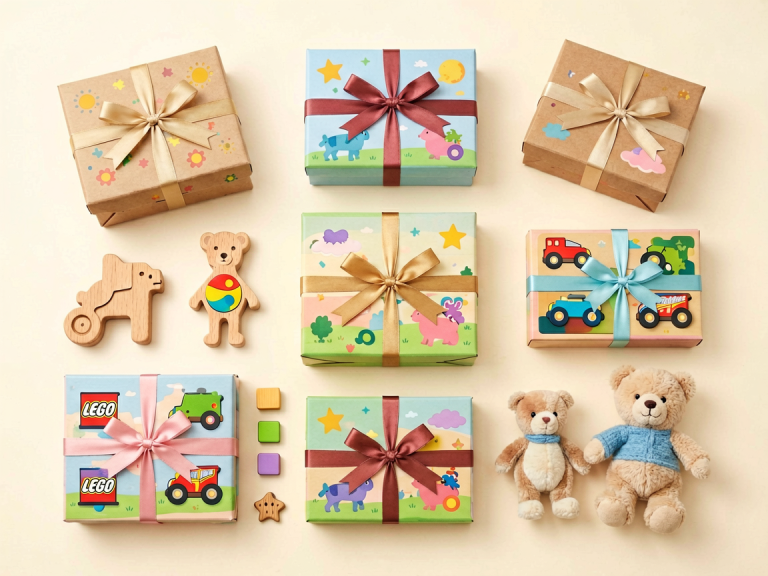
Building blocks and construction sets (like LEGO Duplo or wooden blocks) are less obvious but equally powerful for narrative development. As children build, they often narrate their actions: “I’m making a castle for the princess. She needs a tall tower so she can see the dragon.” The act of constructing becomes a story. If an adult asks open-ended questions (“What’s happening inside the castle? Who lives there?”), the child is prompted to elaborate. Building together also creates shared experiences that generate stories: “Remember when we built the bridge and it fell? Let’s build it stronger this time.” This reflection uses past-tense verbs and mental state language (“remember,” “think,” “hope”).
Dollhouses and play mats (e.g., a city street mat with cars, a farm mat with animals) provide a world for imaginative storytelling. Unlike single-purpose toys, these allow endless scenarios. A child might move a car along a road and say, “Vroom vroom, I’m driving to the supermarket because we need milk.” Another child might place a doctor figure next to a patient and say, “Oh, you have a fever. Let me check your temperature.” These narratives are not predetermined, so children must generate language innovatively. Additionally, when multiple children play together, they must coordinate their stories, leading to expansions and disagreements that require complex language: “No, the doctor is not at the farm. He is at the hospital.” This negotiation is gold for language development.
—
Choosing the Right Toys: Quality over Quantity
With thousands of toys marketed as “educational,” how does a parent or teacher choose wisely? The answer lies not in the toy’s label but in its potential for interaction. Open-ended toys—those that can be used in many ways—typically outperform closed-ended ones. For instance, a set of plain wooden blocks is more language-rich than a single electronic toy that says pre-recorded phrases. Why? Because the blocks demand the child to name their creations, describe spatial relationships (“on top,” “next to”), and invent purposes. Electronic toys often talk *at* the child rather than inviting conversation. A study by the American Academy of Pediatrics found that traditional toys (blocks, puzzles, dolls) elicited more adult-child verbal interaction than electronic ones. Therefore, the best toys are those that foster back-and-forth dialogue.
Furthermore, toys that encourage peer interaction are invaluable. Kindergarten is a time when children move from parallel play (playing alongside others) to cooperative play (playing with others). Toys that require sharing, turn-taking, and joint problem-solving—like a simple seesaw or a cooperative board game (e.g., “The Sneaky, Snacky Squirrel Game”)—prompt language like “Your turn,” “Let’s do it together,” and “I need that piece.” These social-pragmatic skills are essential for school readiness.
Cultural relevance also matters. A toy that reflects a child’s home language and culture can boost engagement and vocabulary in that context. For example, a toy food set with items like “dumplings” or “tortillas” might elicit richer discussion from a child who is familiar with those foods. Similarly, books and puzzles featuring diverse characters allow all children to see themselves, fostering pride and a broader vocabulary for describing identity.
—
Conclusion: Play as the Foundation of Language
Toys for kindergarteners are far from trivial pleasures; they are the tools that shape the architecture of the mind. Through play, children practice the sounds, words, sentences, and stories that form the bedrock of communication. Whether it is a puppet that invites dialogue, a set of blocks that inspires a castle story, or a simple board game that teaches turn-taking, each toy holds the potential to unlock new linguistic abilities. The adult’s role is not to direct the play but to participate, observe, and gently scaffold—asking questions, expanding on children’s utterances, and providing the vocabulary that bridges the gap between what children can say and what they are ready to learn.
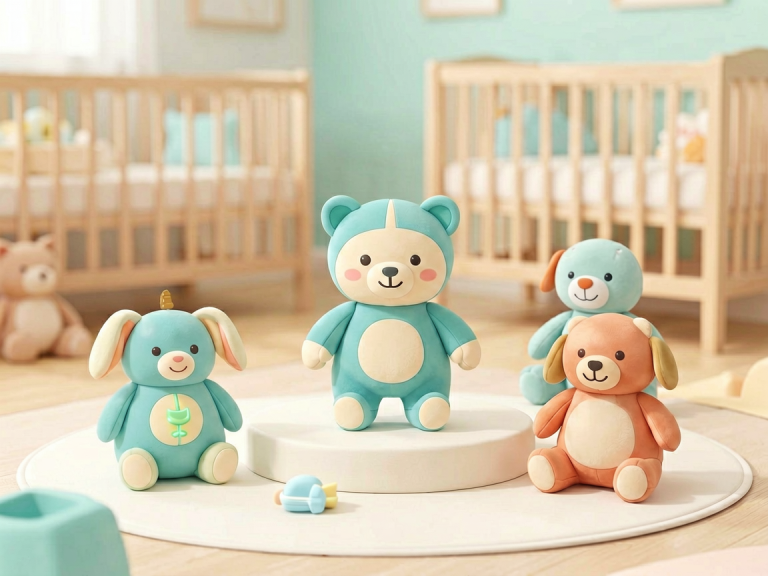
In a world increasingly dominated by screens and passive entertainment, the humble, tangible toy remains a powerful ally for language development. As kindergartners pick up a fire truck, hug a teddy bear, or build a tower of blocks, they are not just playing—they are learning to communicate, one word at a time. The next time you see a child deeply engrossed in play, listen closely. You are hearing the foundations of a lifetime of language being laid, brick by brick, breath by breath, toy by toy.