The Power of Matching: How Early Learning Toys Build Cognitive Foundations for Babies
The first few years of a baby’s life are a period of extraordinary brain development. Every coo, every grasp, every gaze at a colorful object is a neural connection being forged. Among the most effective tools for harnessing this developmental window are early learning toys—specifically, those designed to engage babies in the cognitive skill of *matching*. Matching, often dismissed as a simple game, is in fact a cornerstone of early cognition. It teaches babies to observe, compare, categorize, and think logically. From stacking rings to shape sorters, matching toys provide a structured yet playful environment where babies learn to perceive relationships between objects. This article explores the profound role of matching in early learning, the types of toys that foster this skill, and how parents can use them to nurture their baby's growing mind.
Why Matching Matters: The Cognitive Science Behind the Play
Matching is not merely an amusement; it is a fundamental cognitive operation. When a baby attempts to place a square block into a square hole, they are engaging in a sophisticated mental process. First, they must visually discriminate the shape of the block from others—a task that requires attention to detail. Then, they must hold that shape in working memory while scanning the available holes. Finally, they must execute a motor plan to align the block correctly. This sequence activates multiple brain regions simultaneously: the occipital lobe for visual processing, the prefrontal cortex for decision-making and memory, and the motor cortex for movement coordination.
Research in developmental psychology confirms that matching activities support what is known as "executive function"—a set of mental skills that include flexible thinking, self-control, and working memory. According to a study published in *Child Development*, infants who engaged in matching games showed improved ability to categorize objects by age 18 months, compared to peers who did not have such exposure. This categorization ability is a precursor to more advanced skills like pattern recognition, mathematical reasoning, and even language acquisition. When a baby learns that a "round thing goes with a round slot," they are essentially learning the concept of congruency—a building block for geometry and logic.
Moreover, matching fosters a sense of mastery and predictability. Babies thrive on order. When they successfully match a piece, they experience a small burst of dopamine—the "feel-good" neurotransmitter. This positive reinforcement encourages them to repeat the activity, deepening their neural pathways. In this way, matching toys become a gateway to sustained attention and problem-solving perseverance.
Key Types of Early Learning Toys That Promote Matching
Not all toys are created equal when it comes to cognitive development. The most effective matching toys for babies share common features: they are safe, sensory-rich, and appropriately challenging. Below are several categories that excel in fostering matching skills.
Shape Sorters: The Classic Cognitive Gymnasium
The shape sorter is perhaps the most iconic matching toy. Typically consisting of a cube or ball with cut-out holes and a set of corresponding shapes, this toy requires the baby to match each shape to its correct opening. For babies aged 6 to 12 months, the challenge is twofold: identifying the shape and rotating it to fit. Many modern shape sorters include textured surfaces, bright colors, and even sounds to engage multiple senses. The cognitive benefits are clear: babies learn to recognize geometric forms (circle, square, triangle) and understand that objects have properties that must align with their environment. Parents can scaffold this learning by first demonstrating the matching action, then allowing the baby to attempt it independently. Over time, the baby moves from trial-and-error to deliberate matching—a sign of growing cognitive control.
Color and Pattern Matching Sets
Beyond shapes, color and pattern matching toys offer another layer of complexity. These might include cards with colored dots that the baby must pair with corresponding beads, or wooden boards with slots for different-colored pegs. For a baby around 12 months, a simple activity like placing a red block onto a red circle on a board trains them to ignore shape and focus on color—a different type of attribute matching. Pattern matching, such as pairing stripes with stripes or dots with dots, introduces the concept of visual regularity. These toys are especially valuable because they teach babies that objects can share multiple attributes. A yellow star, for example, can be matched by color (yellow) or by shape (star). This flexibility of thought is a hallmark of higher intelligence.
Puzzle Boards and Insert Puzzles
Puzzles designed for babies often feature large, chunky pieces with pegs for easy gripping. Each piece fits into a specific recess in the board. While seemingly simple, these puzzles require the baby to match the piece's outline to the negative space. This is a form of spatial matching that enhances fine motor skills and hand-eye coordination. For very young babies (around 9 months), single-piece puzzles with a strong contrast—like a wooden duck that fits into a duck-shaped cutout—are ideal. As the baby grows, multi-piece puzzles with animal or vehicle themes add complexity. The act of noticing that "this piece has a curved edge that matches that curved corner" is a vital exercise in visual analysis. Furthermore, puzzles often depict familiar objects (animals, fruits), which aids in vocabulary development when parents label them.
Stacking and Nesting Toys
Stacking rings and nesting cups are another form of matching—not by shape or color, but by size. A classic stacking ring toy has a central post and rings of decreasing diameter. The baby must match each ring to the correct order, from largest to smallest. Similarly, nesting cups fit inside one another only if placed in the correct sequence. This type of matching teaches the concept of seriation—arranging items along a dimension (size). It also introduces cause and effect: if you try to put the big ring first, it won't fit. The baby learns to evaluate size visually and adjust their strategy. Nesting toys are especially good for babies 10 to 18 months because they can be used in multiple ways—stacking, tumbling, hiding smaller objects inside—which encourages exploratory play.
How to Integrate Matching Toys into Daily Routines
To maximize the benefits of matching toys, parents need not turn playtime into a structured lesson. Instead, the key is to follow the baby's lead and create a rich environment. Here are practical strategies.
Create a "Matching Station"
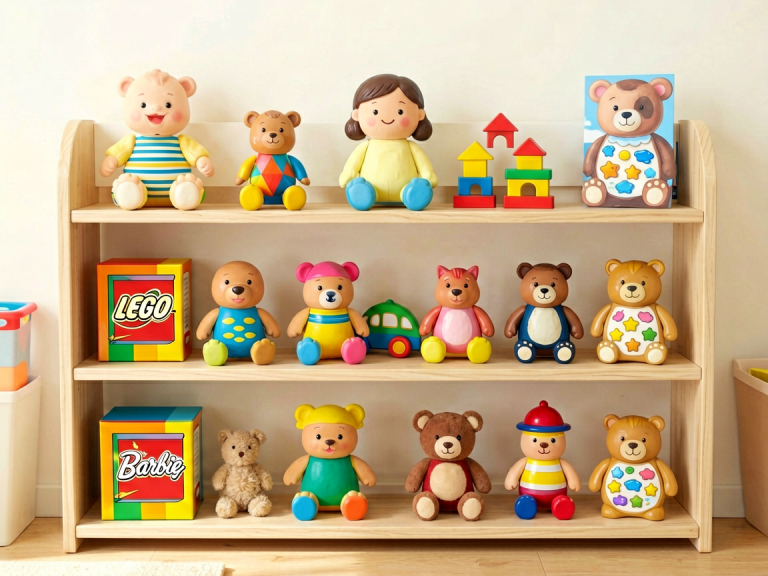
Designate a small area in the living room with a low shelf or basket containing a few carefully selected matching toys. Rotate them weekly to maintain novelty. For example, one week feature a shape sorter and a color matching board; the next week, swap them for puzzles and stacking cups. Babies are naturally curious, so they will gravitate toward these items. By having them accessible, you invite spontaneous matching practice.
Narrate the Process
Language is a powerful companion to matching play. As your baby attempts to match a piece, describe what they are doing: "You are holding the blue circle. Can you find the round hole? Yes! The circle goes in the round hole." This not only reinforces the matching concept but also builds vocabulary. Use words like "same," "different," "match," "fit," and "belongs." Research shows that babies whose parents use descriptive language during play develop stronger categorization skills.
Gradually Increase Difficulty
Babies become bored if a toy is too easy, and frustrated if it is too hard. The "just right" challenge is where growth happens. Start with simple matching tasks—like a single shape sorter with only two shapes (circle and square). Once the baby masters that, introduce a third shape. For color matching, begin with primary colors (red, blue, yellow) before adding secondary colors (green, orange). Adjust the pace based on the baby's cues. If they seem frustrated, offer a hand-over-hand demonstration or simplify the task (e.g., by giving them the correct piece and letting them only place it).
Encourage Matching in Everyday Life
Matching is not confined to toys. Draw your baby's attention to matching patterns in nature (a leaf that matches another leaf from the same tree), in clothing (matching socks), or in books (pointing to two identical pictures). During mealtime, you can match spoons to bowls or different-colored cups to plates. These real-world experiences reinforce the cognitive skill in a natural context, making it more meaningful.
The Long-Term Impact: Beyond the Toy Box
The skills babies develop through matching toys extend far beyond infancy. Children who engage in robust matching play often enter preschool with stronger pre-math abilities. They can sort objects by attribute, recognize patterns, and understand one-to-one correspondence (e.g., counting objects and matching them to number symbols). These are foundational for addition, subtraction, and even early reading, as reading involves matching letters to sounds and words to meanings.
Furthermore, matching fosters self-regulation. When a baby must resist the urge to force a wrong piece into a hole, they practice impulse control. Over time, this translates into the ability to pause, think, and solve problems methodically. In a world of distractions, this is an invaluable gift.
In conclusion, early learning toys centered on matching are not just colorful diversions—they are cognitive engines. From shape sorters to nesting cups, these tools invite babies to observe, compare, and connect. By thoughtfully selecting and using such toys, parents can lay a rich neural foundation for logical thinking, attention, and a lifelong love of learning. The humble act of matching, repeated countless times in play, is actually one of the most profound learning experiences a baby can have. So the next time you see your baby triumphantly place a square block into its matching hole, remember: you are witnessing the architecture of a young mind being built, one match at a time.