A Parents Guide to Reducing Screen Time for 3-Year-Olds: Practical Strategies for Healthier Habits
In today's digital world, screens are everywhere — from televisions and tablets to smartphones and smart devices. For parents of a three-year-old, the temptation to hand over a device for a few moments of peace is understandable. However, research consistently shows that excessive screen time at this critical developmental stage can hinder language acquisition, social skills, and even physical health. The American Academy of Pediatrics recommends no more than one hour per day of high-quality programming for children aged 2 to 5, and ideally with a parent or caregiver co-viewing. Yet many families find themselves far exceeding this limit. This guide offers a comprehensive, science-backed, and empathetic approach to reducing screen time for your three-year-old, without resorting to power struggles or guilt.
Understanding the "Why": The Impact of Screens on a 3-Year-Old's Development
Before diving into strategies, it's essential to grasp why reducing screen time matters so much for a three-year-old. At this age, a child's brain is forming neural connections at a staggering rate — about one million per second. Screens, especially passive ones like videos or fast-paced cartoons, can overstimulate the brain while simultaneously reducing opportunities for real-world, interactive learning. Key areas affected include:
- Language development: Three-year-olds learn language best through back-and-forth conversation, facial expressions, and body language. Screens, even "educational" apps, rarely provide the same responsive interaction. Studies show that for every additional 30 minutes of screen time, a toddler may hear hundreds fewer words from their parents.
- Attention and self-regulation: Rapid scene changes in many children’s shows train the brain to expect constant novelty, making real-world activities (which are slower and less flashy) seem boring. This can lead to difficulty focusing on a single task.
- Sleep disruption: The blue light emitted by screens suppresses melatonin production, making it harder for young children to fall asleep and stay asleep. Sleep is crucial for memory consolidation and emotional regulation at this age.
- Physical development: Excessive screen time often replaces active play, which builds gross motor skills, balance, and coordination. It also contributes to a sedentary lifestyle that can set the stage for childhood obesity.
Understanding these impacts doesn't mean you need to eliminate screens entirely — that would be unrealistic and possibly counterproductive. Instead, the goal is to create a balanced routine where screens are a small, intentional part of the day, not the default activity.
Step One: Set Clear, Consistent Boundaries
Three-year-olds thrive on routine and predictability. Without clear limits, screen time can creep up gradually — a "five-minute" video turns into 30 minutes, then an hour. Establishing firm boundaries from the start is the most effective long-term strategy.
Define "When" and "How Much"
Decide in advance how much daily screen time is acceptable in your home. For a three-year-old, 30 to 45 minutes of high-quality, interactive content is a reasonable limit. You might choose to split this into two 15-minute blocks — for example, one after naptime and one in the late afternoon. Be specific: “You may watch one episode of your show after we finish snack,” not “Maybe later.” Write the schedule on a small whiteboard or a picture chart that your child can understand.
Use a Timer, Not a Clock
Young children don’t grasp the concept of time. Instead of saying “Five more minutes,” use a visual timer (like a Time Timer or an hourglass) that shows the remaining time in a way they can see shrinking. When the timer goes off, it’s a neutral signal — not Mom or Dad being “mean.” Consistency is key: if you give in to “just one more minute,” the boundary weakens.
Create a “Screen-Free” Zone
Designate certain areas of your home as screen-free — ideally the bedroom and the dining table. This reinforces that screens are not part of sleep routines or meal times. It also helps your child learn to associate those spaces with calm, connection, and eating, rather than passive consumption.
Step Two: Replace Screens with Engaging Alternatives
The most successful screen reduction strategies don’t focus on “taking away” but on “adding in.” A bored three-year-old will naturally gravitate toward the easiest source of entertainment, which is often a screen. Your job is to make real-world activities equally (or more) appealing.
Curate a "Boredom Box"
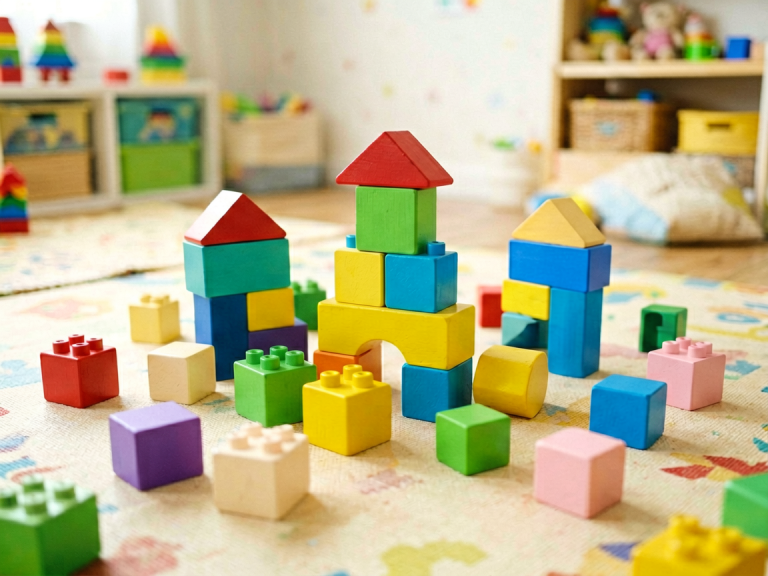
Fill a low shelf or a small bin with open-ended toys and materials that spark creativity: wooden blocks, playdough, finger paints, a child-safe tool kit, puppets, scarves for dress-up, simple puzzles, and picture books. Rotate the contents every week to maintain novelty. When your child asks for a screen, direct them to the boredom box and say, “Let’s see what you can build today!” Then sit down and play alongside them for the first few minutes to get them started.
Prioritize Outdoor Time
Three-year-olds need at least 60 minutes of active physical play every day. Outdoor time is a natural screen replacement. Consider a simple daily “get-outside” rule: before any screen time, your child must spend at least 30 minutes outside (weather permitting). This could be in a backyard, a park, or even just a balcony with a bucket of water and some cups. The fresh air, natural light, and physical activity directly reduce the urge for screens.
Leverage "High-Touch" Alternatives to High-Tech
Many screen-based activities have low-tech counterparts. Instead of a drawing app, give real crayons and paper. Instead of a virtual piano, buy a small xylophone or a toddler keyboard. Instead of a story on a tablet, use felt boards or puppets to tell a tale. The tactile, hands-on experience is far more beneficial for fine motor development and sensory integration.
Step Three: Be a Role Model — Manage Your Own Screen Use
Children learn far more from what they see than from what they are told. If you are constantly checking your phone, scrolling through social media, or watching TV during family time, your three-year-old will internalize that screens are the most valuable activity. This doesn’t mean you must become a perfect screen-free saint, but it does mean being intentional.
Practice "Phone-Free" Family Time
Designate at least one block of time each day — such as during meals, the first 30 minutes after you get home from work, or the hour before bed — when all screens (including yours) are put away. Physically place your phone in a drawer or a basket. Use that time to talk, read, build with blocks, or just cuddle. Your child will feel your full attention, which is the most powerful antidote to screen cravings.
Explain Your Own Choices
When you do need to use a screen, narrate it simply: “Mommy is using the phone to order groceries so we can make dinner. When I finish, I’ll put it away.” This helps your child understand that screens are tools, not toys. Avoid using your phone as a distraction for yourself while your child is playing — the message that you are “busy” and unavailable can make screens more appealing to them.
Step Four: Handle the Inevitable Pushback with Empathy and Firmness
Reducing screen time will almost certainly trigger protests, especially if your child is used to more. Being prepared for this emotional response can prevent you from caving in out of exhaustion.
Acknowledge Feelings Without Changing the Rule
When your child screams “I want my show!” after you turn off the tablet, resist the urge to lecture or give in. Instead, use empathetic validation: “I know you’re sad because you wanted to keep watching. It’s hard to stop when you’re having fun. The timer said it was time to be all done. Let’s go find your blocks.” This acknowledges their emotion while holding the boundary. Over time, they learn that tantrums do not get screens back.
Offer a Limited Choice
Three-year-olds crave autonomy. Instead of saying “No more TV,” offer a choice that still aligns with the limit: “Do you want to turn off the TV yourself, or shall I help you?” or “You can watch one more short video, or we can read two books. Which do you choose?” This gives them a sense of control within the structure you’ve set.
Plan for “Transition Troubles”
The moment of turning off a screen is particularly difficult because children are often absorbed. Give a five-minute, two-minute, and one-minute warning. Use a consistent phrase like “Two more minutes, then the screen goes to sleep.” After the screen is off, immediately offer a highly engaging alternative — a dance party to a favorite song, a trip to the backyard, or a sensory bin filled with rice and scoops. The faster you replace the screen with an attractive activity, the smoother the transition.
Step Five: Gradually Shift the Quality and Context of Screen Time
If eliminating screens entirely feels overwhelming, start by improving the *quality* of the screen time you already have. The goal is not zero screens, but *better* screens — ones that are interactive, educational, and used together.
Co-View and Talk
Whenever your child watches something, sit with them. Ask questions: “What do you think the bear will do next?” “Why is the rabbit sad?” “Let’s count how many ducks are in the pond.” This turns passive viewing into an interactive experience that builds vocabulary and comprehension. Even a 15-minute show can become a rich learning moment.
Choose Slow-Paced, Real-World Content
Fast-paced cartoons with rapid cuts and loud sound effects are overstimulating. Instead, look for shows with gentle pacing, natural scenes, and real actors or simple animation — for example, *Daniel Tiger’s Neighborhood*, *Bluey*, or nature documentaries for young children. Avoid auto-playing and auto-suggestions; select specific episodes in advance.
Use Screens for Connection, Not Babysitting
Reserve screen time for moments when you can be present, such as winding down together after a busy day, rather than as a tool to occupy your child while you cook or work. When you must use a screen as a temporary babysitter (e.g., during a doctor’s waiting room), choose a short, calming game or video, and turn it off as soon as you can engage with your child again.
Step Six: Build a Supportive Environment and Enlist Help
You don’t have to do this alone. Involving family members, caregivers, and even friends can make screen reduction far more sustainable.
Communicate with Your Partner and Caregivers
Make sure everyone who cares for your child — grandparents, babysitters, daycare providers — understands your screen-time rules and the reasons behind them. Write down a simple one-page “screen policy” and share it. Consistency across environments prevents confusion for your child and reduces the chance that a well-meaning relative will undo your hard work.
Create a Community of Like-Minded Parents
Share your goals with other parents of young children. Organize screen-free playdates, swap toys and books, or simply vent about the challenges. Knowing that others are also struggling (and succeeding) can normalize the difficulty and provide new ideas.
Plan Ahead for High-Risk Times
Identify the times of day when screen use tends to spike — for many families, it’s the “witching hour” between 4 and 6 p.m. when everyone is tired and hungry. Prepare a “rescue kit” for these moments: a bin of special toys only brought out at that time, a pre-planned outdoor activity, or a simple recipe like making playdough together. Anticipating the struggle makes it easier to avoid defaulting to the tablet.
Conclusion: Small Steps, Lasting Change
Reducing screen time for a three-year-old is not about perfection. Some days will go beautifully — you’ll have hours of imaginative play, outdoor adventures, and snuggly story time. Other days, you’ll feel like you’re fighting a losing battle against a teething toddler and a dozen work emails. That’s okay. The goal is progress, not purity.
Start with just one change: perhaps a phone-free dinner routine, or a firm 30-minute daily limit, or a commitment to co-view every single video. Once that habit feels natural, add another. Over weeks and months, you will notice subtle shifts — your child will begin to ask for a “book walk” instead of a video, or will independently draw for ten minutes without asking for a screen. These small victories are the foundation of a healthier relationship with technology that will serve your child for years to come.
Remember: you are not depriving your child of something essential. You are giving them the gift of boredom (the birthplace of creativity), the gift of your undistracted presence, and the gift of a childhood rooted in real-world exploration. And in doing so, you are also reclaiming your own peace of mind — because a child who is deeply engaged with the world around them is far more content than one staring at a glowing rectangle.
—
*Word count: approximately 1,780 words.*